
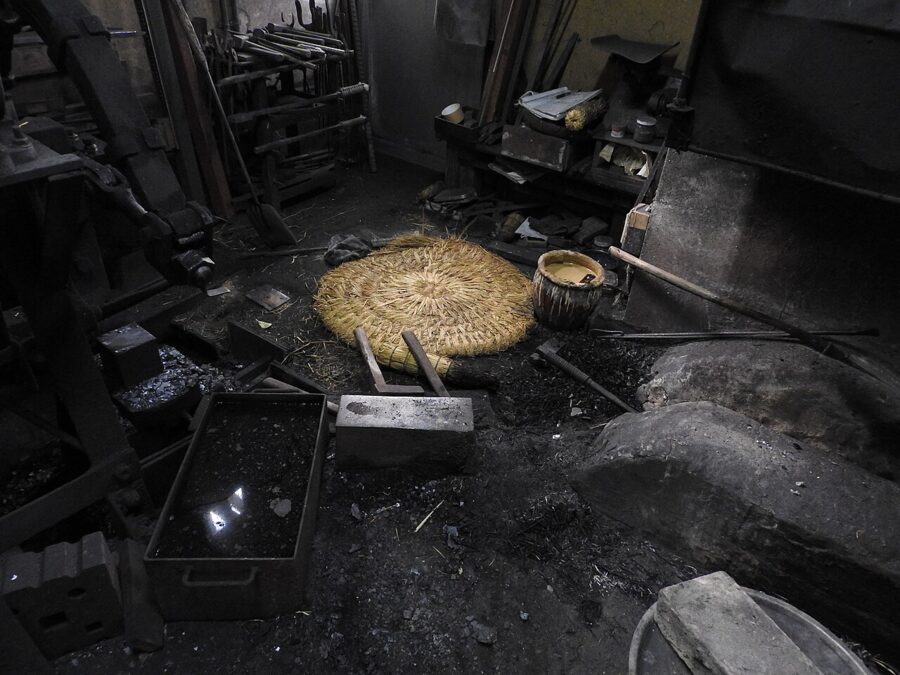
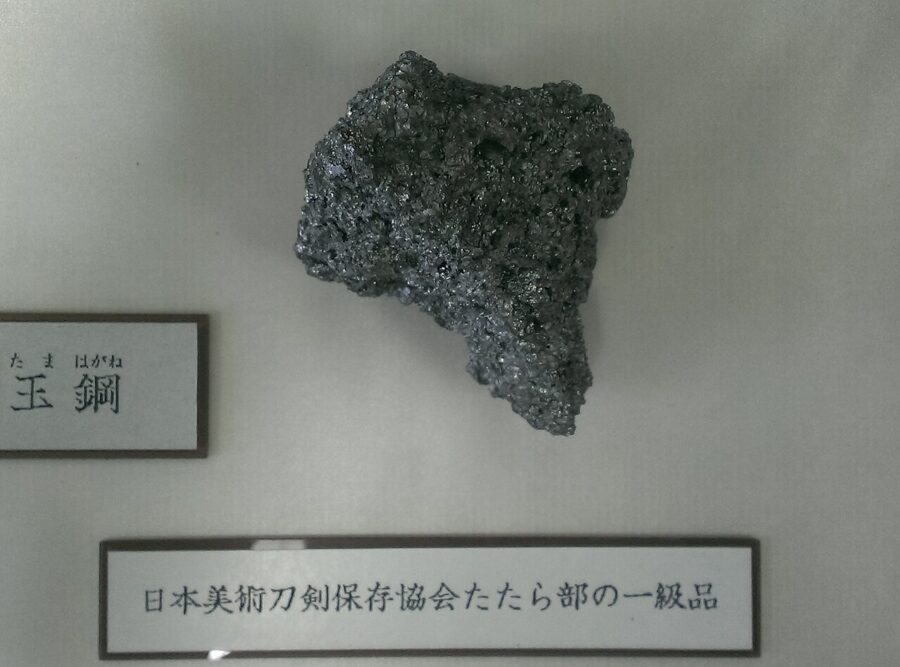
Every winter in the mountains of Okuizumo, in Shimane, a crew feeds iron sand and charcoal into a clay furnace roughly every 30 minutes for three days and nights. On the fourth morning they break the furnace apart and drag out a glowing block of steel weighing several tons. A small share of it is graded as tamahagane (玉鋼), the steel that swordsmiths across Japan forge their blades from.
From there a blade passes through more hands than most people expect. The smith folds the steel, shapes it and hardens the edge under a coat of clay. Then a polisher spends weeks on stones, a collar maker fits a metal sleeve, a scabbard maker carves magnolia, a lacquerer coats the scabbard and a hilt wrapper binds the grip in silk over ray skin. Only the smith needs a government license, and the finished blade needs a government certificate before anyone may own it.
Below is how the work runs today, where to watch it and what you can make yourself. No visitor forges a katana in a day, and I would be wary of anyone who says you can.

In this article
Tamahagane: steel from a three-day fire
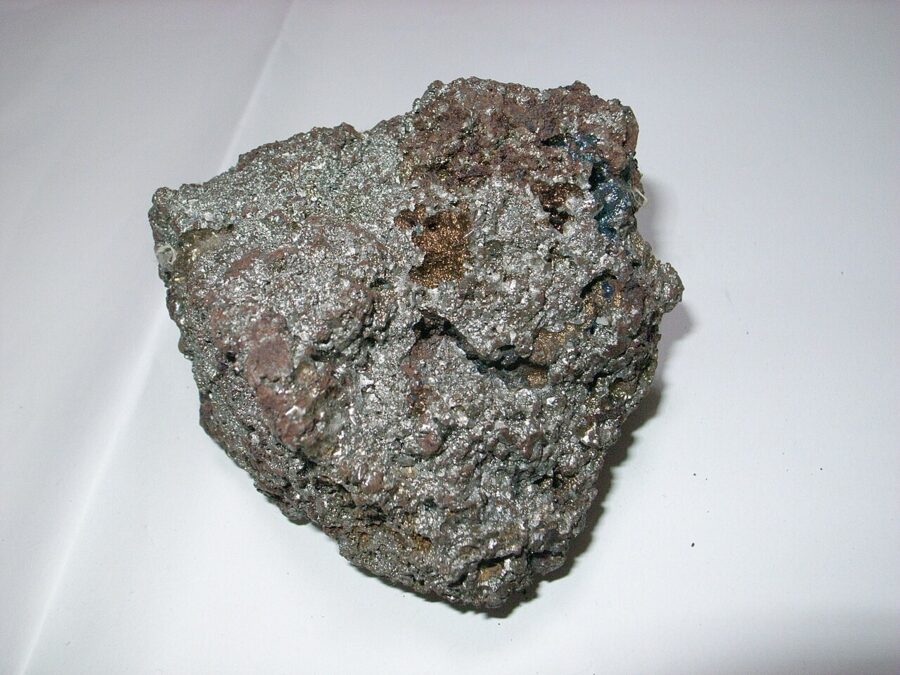
Japan has little iron ore, so for centuries its iron came from black sand washed out of the hills of the Chugoku region. The tatara (たたら) turns that sand into steel: a low clay box, open at the top, with bellows driving air through pipes along its base. The iron never fully melts. The sand is reduced into a spongy mass of iron and steel called the kera (鉧).
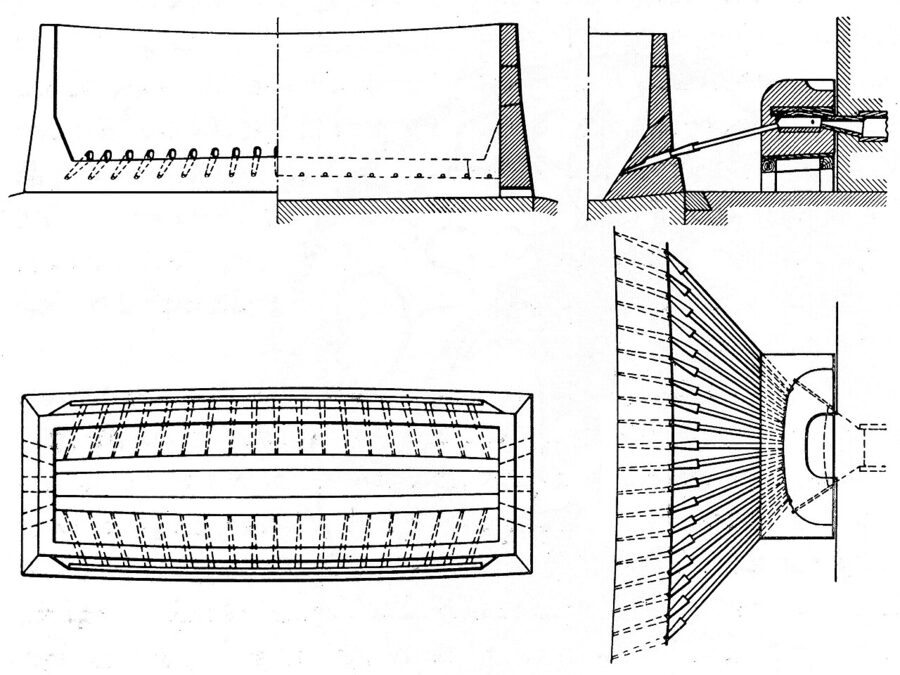
Western furnaces ended the trade. A 1921 comparison put it plainly: a tatara needed 8 tons of iron sand for a ton of pig iron, a reverberatory furnace 2 tons of ore. The last tatara in Okuizumo shut in 1923, a wartime revival for army sabers stopped in 1945, and afterward only 5 to 6 tons of tamahagane remained for the whole country’s smiths.
The Nittoho tatara
In 1977 the Society for Preservation of Japanese Art Swords (NBTHK, or Nittoho) relit a furnace in Yokota, Okuizumo. The method had been a guarded trade, so the society found two men who had worked furnaces in their youth, Abe Yoshizo and Kumura Kanji, to serve as murage, the furnace master. They trained Kihara Akira and Watanabe Katsuhiko, who took apprentices of their own.
The Nittoho tatara runs three smelts each winter, each using roughly 10 tons of iron sand and 12 tons of charcoal over about 70 hours. The crew builds a fresh furnace from nearly 4 tons of clay every time. The murage watches the fire through spy holes and decides each charge.
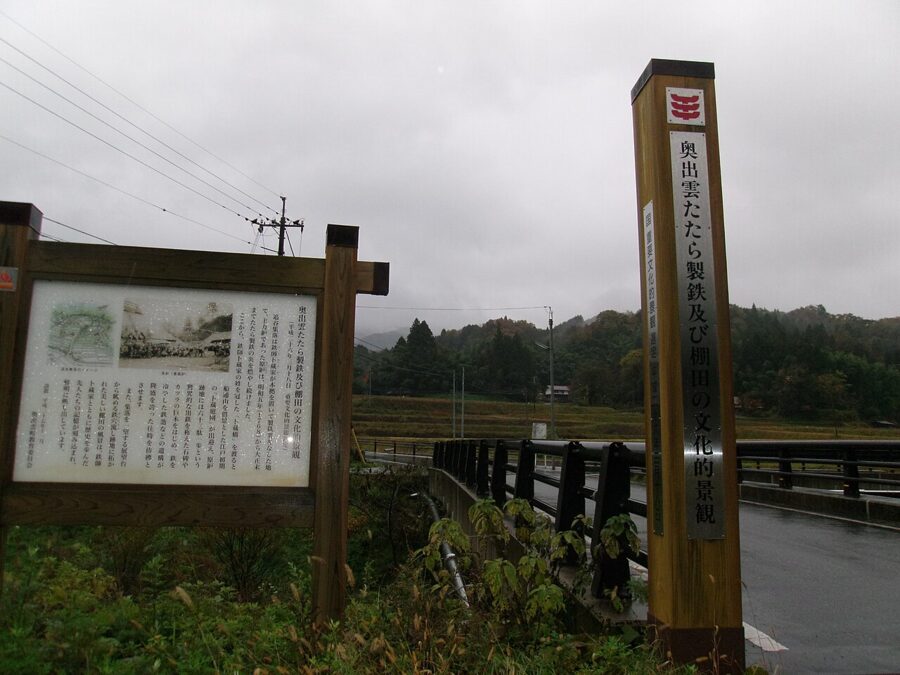

The season opens with a fire-lighting ceremony. In January 2026, Shimane’s governor made the first charge of iron sand for the season’s smelts. On the fourth morning of each smelt the crew demolishes the furnace, hauls out the kera and breaks it with drop hammers. Sorting the pieces is a specialist job, and only the cleanest, most even steel is sold as first-class tamahagane.

The furnace is a working site, and I found no public viewing schedule for the smelts. The place to see it explained is the Okuizumo Tatara and Sword Museum in Yokota, with a full-size cutaway furnace and bellows you can work yourself. Plan around its closure: the museum shuts for renovation on December 1, 2026 and is due to reopen on April 1, 2028.

In the forge: how a smith builds the blade
Nobody knows exactly how the great Kamakura smiths worked, because methods passed from master to a single heir. The sequence most smiths follow now was set down by Suishinshi Masahide at the end of the Edo period, and a public forging shows only one step of it.
Sorting, stacking and folding
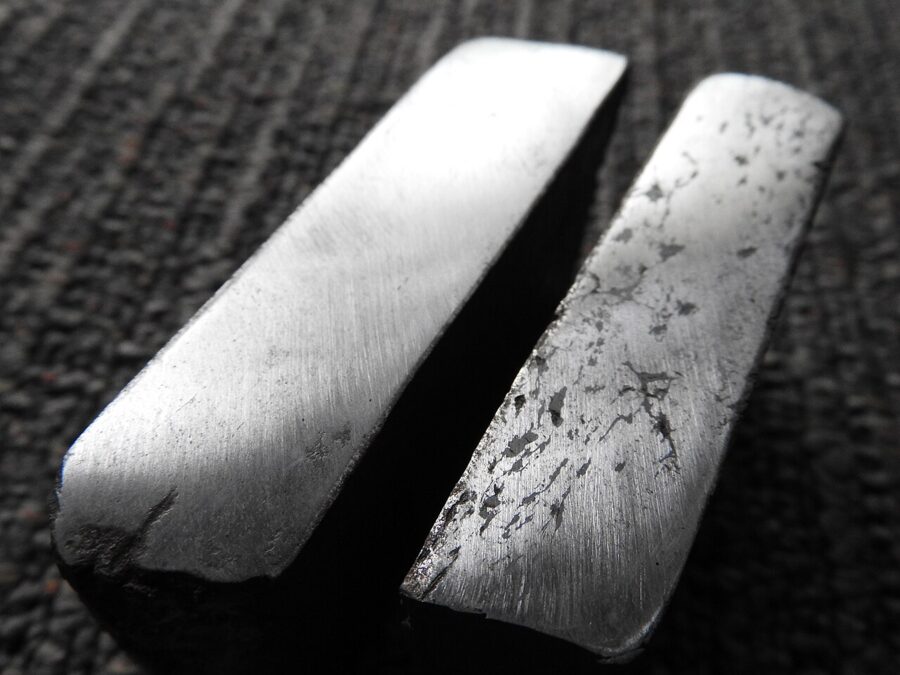
The smith hammers the tamahagane into thin plates, quenches them and snaps them into small pieces. The fracture shows the carbon: harder, cleaner pieces for the skin of the blade, softer ones for the core. The pieces are stacked on a plate of the same steel, coated in clay slurry and ash, and heated in charcoal to around 1,300°C until they weld into a block.

Then comes orikaeshi tanren (折り返し鍛錬), the folding. The block is drawn out, scored across the middle, folded back on itself and welded again, and each fold squeezes slag out in showers of sparks. Smiths usually fold the skin steel more than a dozen times. Ten folds already make over a thousand layers.
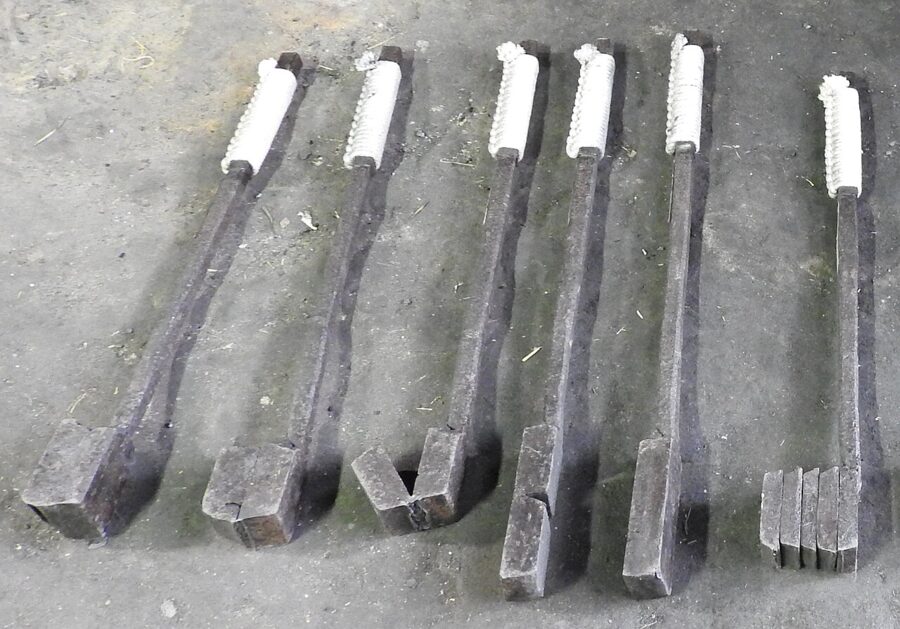

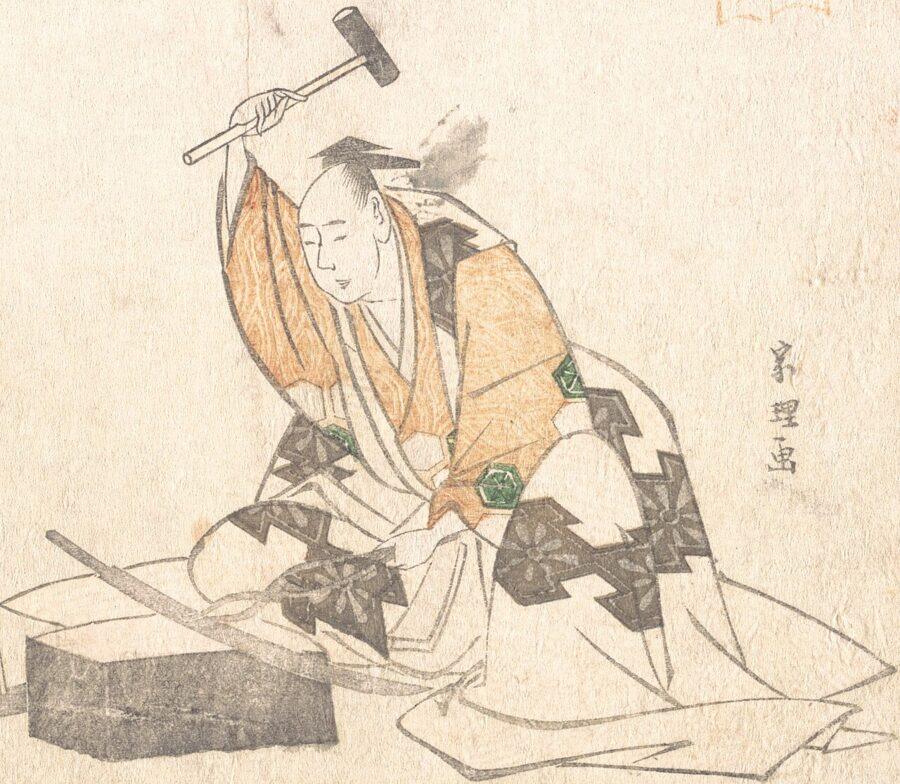
Folding is the step you will see at Seki and Bizen. The smith sits at the hearth with a small hammer and taps where the blow should fall; strikers stand opposite and bring down heavy sledges in rotation, following his rhythm.
Core and jacket
Folded steel alone would make a brittle sword. The smith wraps a soft, low-carbon core, the shingane (心鉄), in a hard, high-carbon skin, the kawagane (皮鉄). Swordsmith Fusahiro Shimojima puts the aim simply: a blade that does not break, does not bend and cuts well. A single steel gives you two of those at most.

Drawing out and shaping
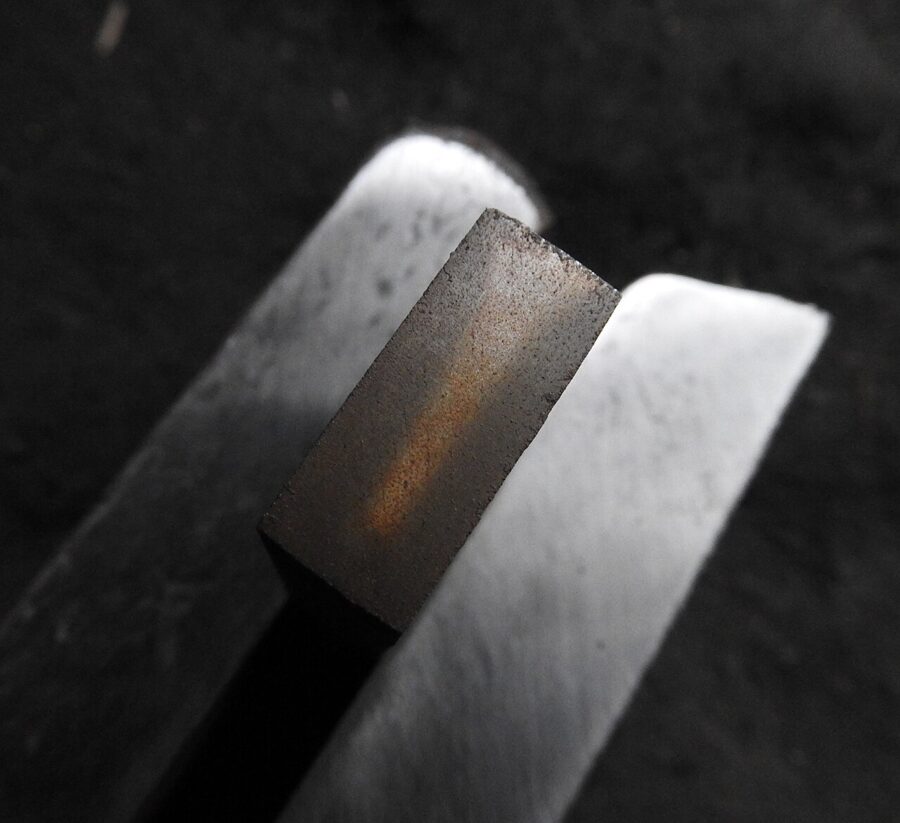
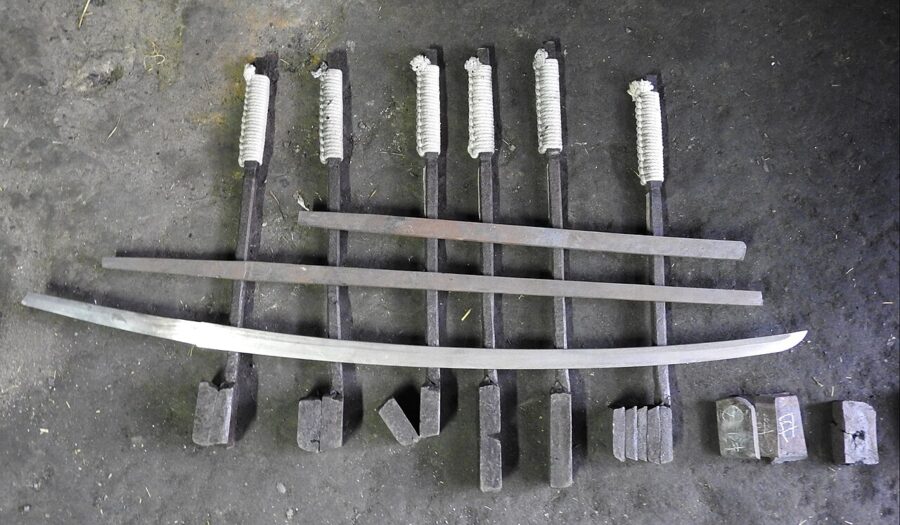
The bar is drawn out to the length of the sword, still straight, in a stage called sunobe. In hizukuri the smith shapes it with a smaller hammer: the ridge line, the taper to the edge and the point, which is hammered out rather than cut. He then scrapes the surface true with a sen, a two-handled steel plane, and files it.

Clay and quench: yaki-ire and the hamon
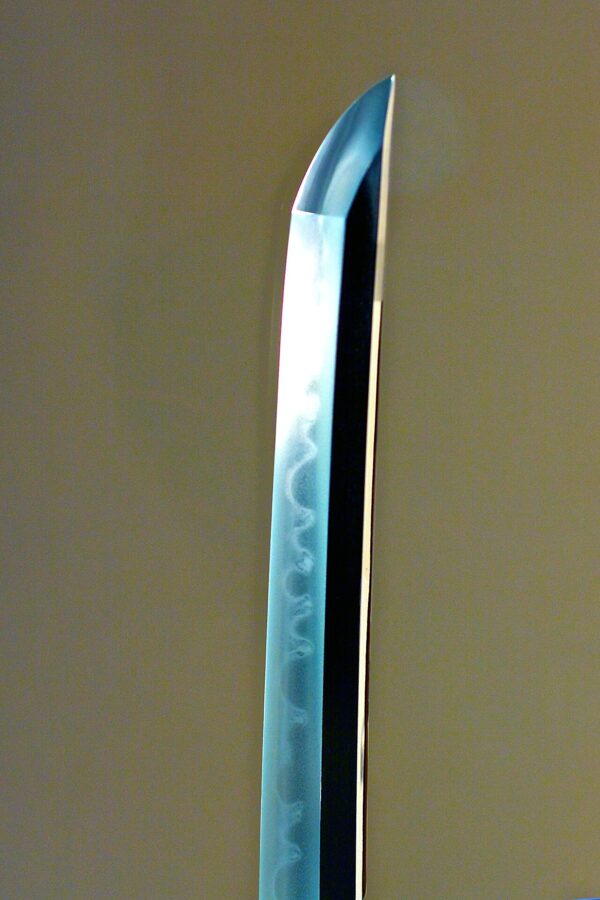
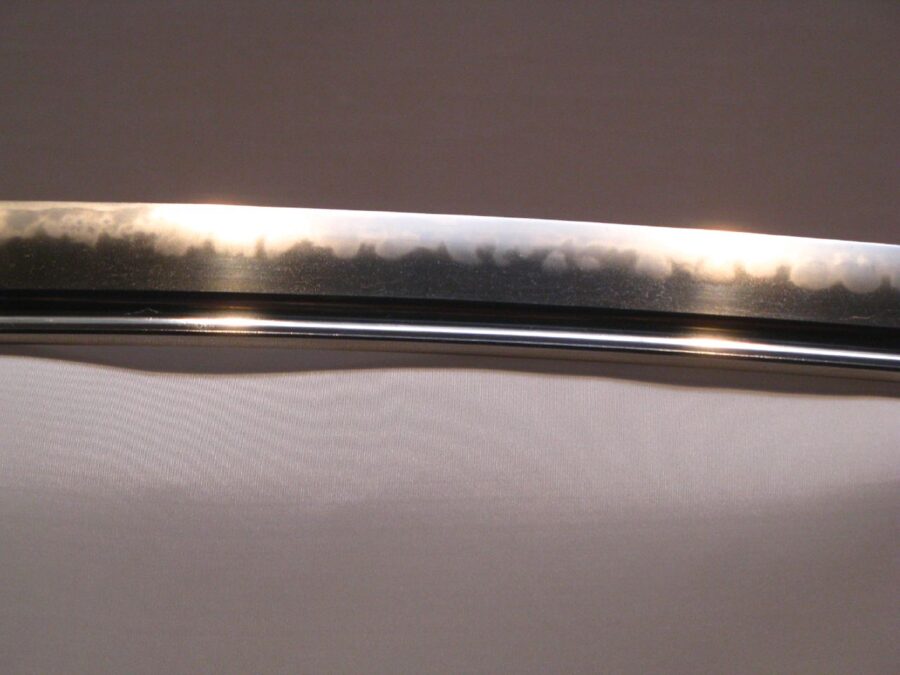
In tsuchioki the smith paints the blade with yakiba-tsuchi, a clay mix whose recipe each smith keeps to himself: thick along the back, thin along the edge. The boundary he paints becomes the pattern on the edge, straight, wavy or clustered like clove buds.
In yaki-ire (焼入れ) the blade is heated evenly, to around 800°C on the small blades taught in workshops, and plunged into water. The thinly coated edge cools in an instant and turns very hard; the back, insulated by clay, cools slowly and stays tough. The two parts shrink by different amounts, and the blade bends in the water to give the sword its curve. Many smiths quench in a darkened forge to judge the color of the steel, and a blade that cracks in the trough is finished before it was begun.

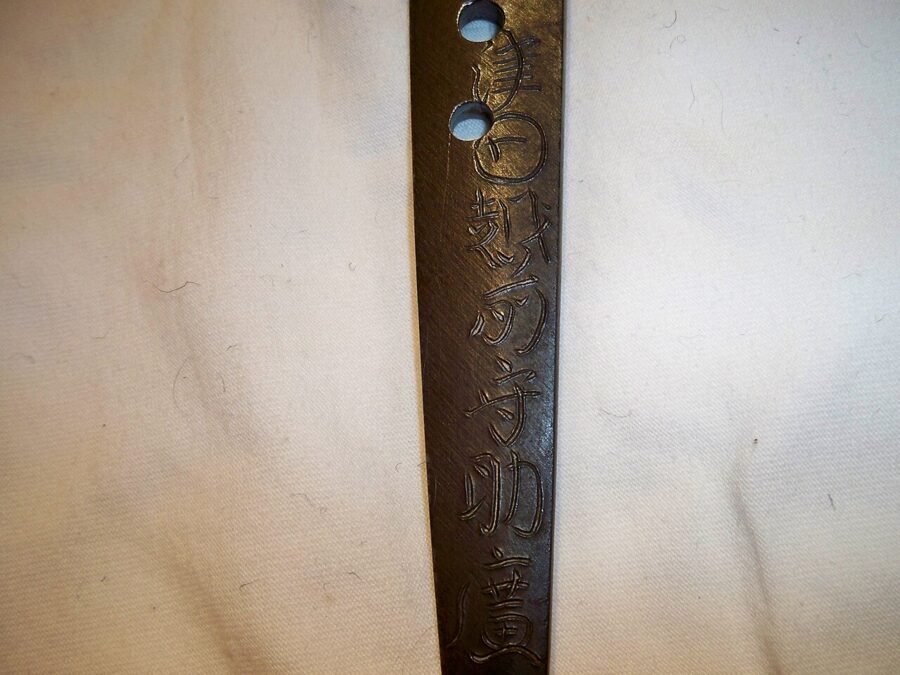
The smith then adjusts the curve, takes the blade over coarse stones to see what the quench produced (kajioshi), and chisels his name into the tang. After that the blade leaves his hands, its gleam and grain still hidden under a gray surface.
After the smith: polisher, scabbard and fittings
The traditional crafts that finish a sword are each a career. Bizen Osafune brings all six to work on its grounds, and that division of labor is the best argument I know against the myth of the lone master.
The polisher
A togishi (研師) does far more than sharpen. He reads the blade first, judging its period and school, then polishes to bring those features out and to repair lost shape or rust. The groundwork, shitaji-togi, runs through seven or eight stones from coarse to fine. Finishing stages then work the dark body of the blade (jizuya and nugui) and, separately, the white of the hamon (migaki).
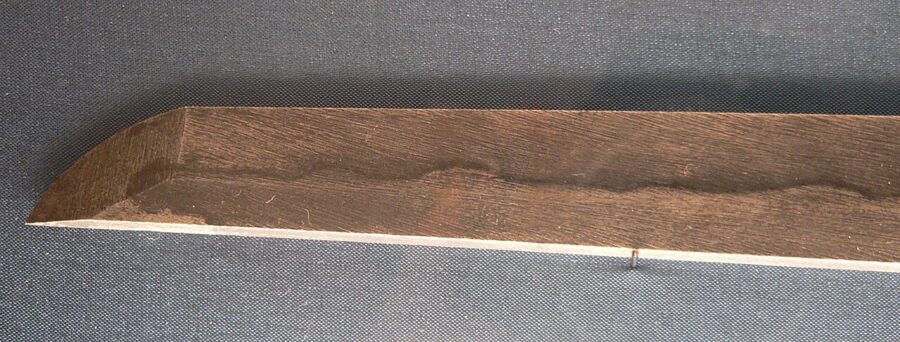

Masaru Nemoto of Buneido, a polishing shop in Setagaya, Tokyo, uses at least seven kinds of stone and reckons two to three weeks per sword. Yasumasa Nagaoka in Asakusabashi quotes a wait of about a year for new polishing work, which tells you how few polishers there are.
Collar, scabbard and lacquer
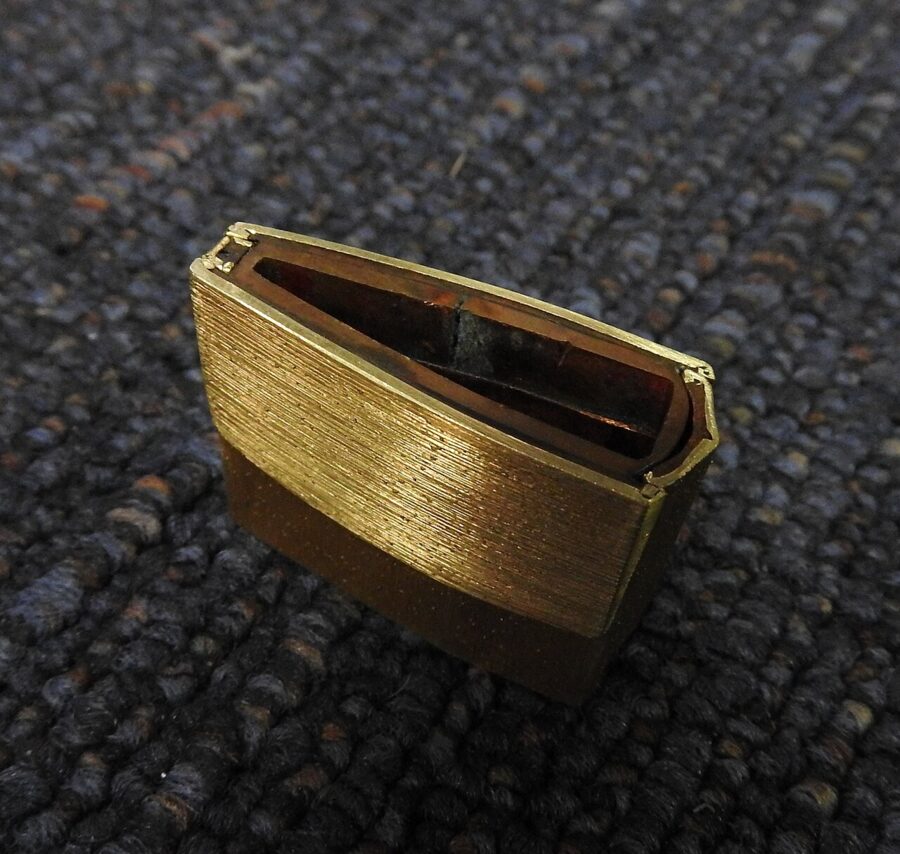
The shirogane-shi (白銀師) makes the habaki, the metal collar at the base of the blade that wedges it in the scabbard so the steel floats without touching wood. It is usually copper, sometimes silver or gold, folded around the blade, joined with silver solder and often covered in thin gold sheet.

The sayashi (鞘師) carves the scabbard from honoki, Japanese magnolia air-dried for ten years or more, because it has no oil or resin to rust the blade. He splits a board, chisels the blade’s shape into both halves and glues them with sokui, a paste of mashed cooked rice that can be opened again later for cleaning, which no modern glue allows.


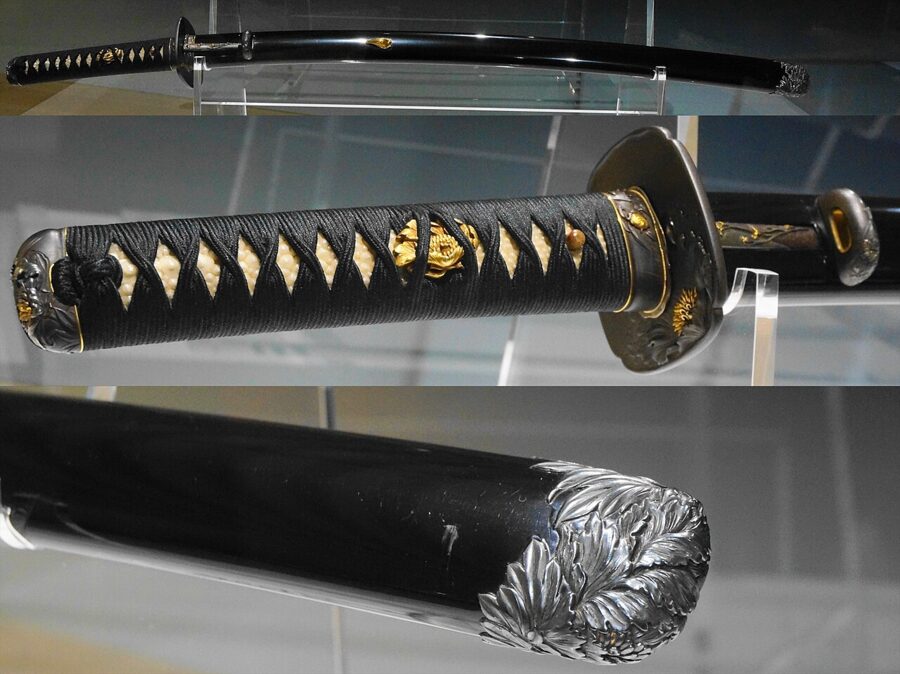
A scabbard for a full mounting, the koshirae, is carved thinner and goes to the nushi (塗師), the lacquerer, who builds up coats of urushi over one to three months. It is the same material, and much the same patience, as kintsugi.
Hilt and fittings
The tsukamaki-shi (柄巻師) wraps the hilt. Under the cord is samegawa, ray skin soaked soft and glued to the wooden core; one ray yields only one good piece. The silk braid is wound in diamonds, with folded washi tucked under each crossing to keep them even.
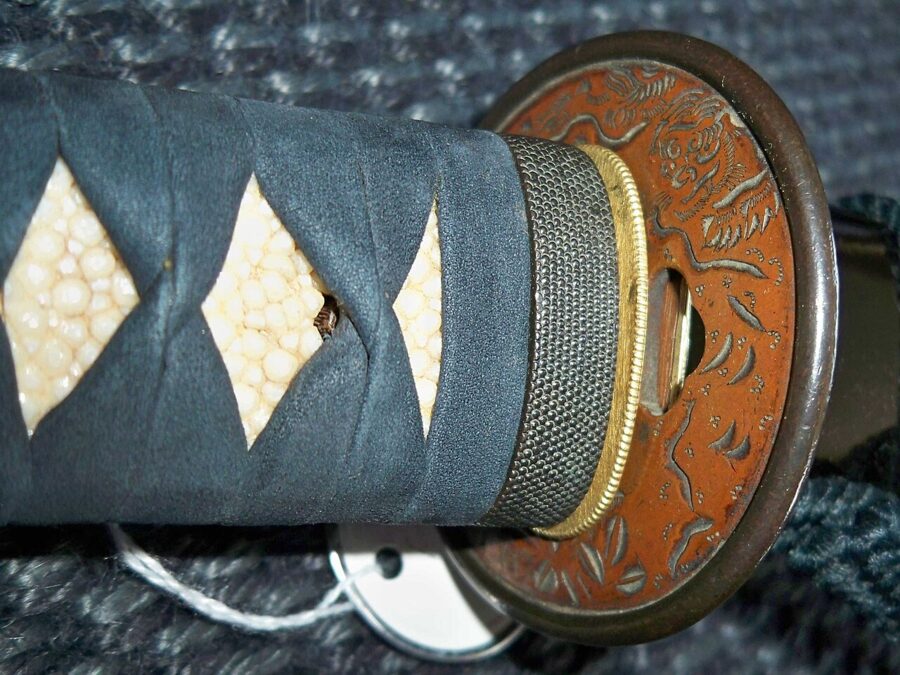

The fittings metalworker, the soken kinkoshi (装剣金工師), makes the guard (tsuba) and hilt ornaments and also carves the blade. The most common carving is a groove along the flat, which lightens the sword without weakening it; others are Sanskrit letters, a dragon coiled round a sword, or pine, bamboo and plum. Fittings were collected as Japanese art in their own right.

The law: who may make a sword, and who may own one
Japan bans swords in principle. Under the Swords and Firearms Control Law, as the Agency for Cultural Affairs explains it, owning guns and blades is prohibited except in set cases. Swords of artistic value are the main exception, protected as something close to cultural property. A registered sword may be owned by anyone, because registration attaches to the object, not the person.
Registration
Each prefecture’s board of education does the registering. Examiners inspect the blade and, if it qualifies, the board issues a torokusho (登録証), a card recording length, curvature, peg holes and signature. The card must go with the sword whenever it is carried, shipped, sold or lent. Anyone who finds an unregistered sword, in an attic say, must report it to the police first.
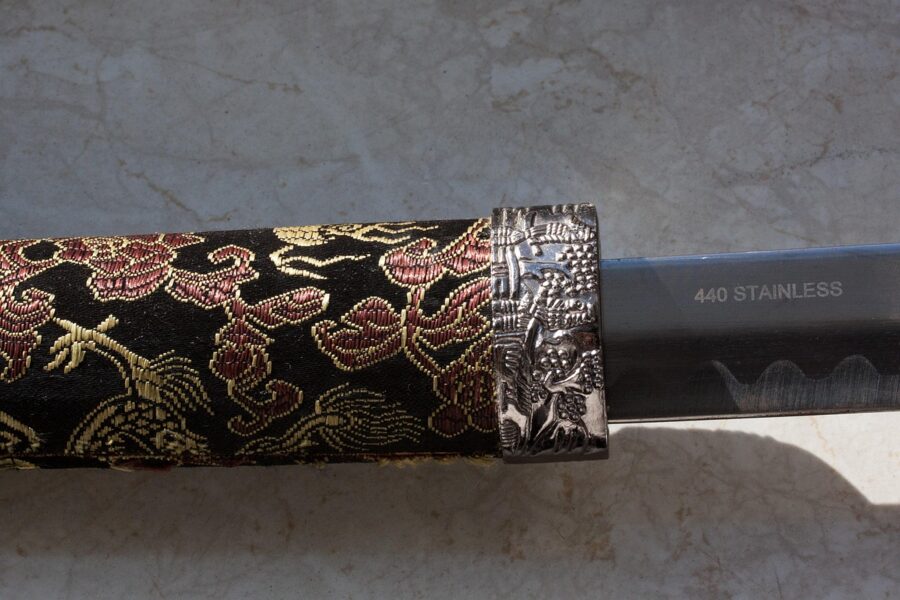
Only a “Japanese sword” qualifies, which the agency defines as a blade forged and quenched by traditional methods. Its list of exclusions is telling: badly rusted or poorly made blades, the unfolded or half-forged blades known as Showa-to, swords of special steels, foreign-made swords, and unhardened blades offered to shrines.
Licensed smiths
Making a sword needs approval under the same law. A first-time applicant goes to the Commissioner for Cultural Affairs. He must have trained continuously for at least five years under an approved smith who certifies his skill, be vouched for by two registration examiners, and complete the agency’s training course for swordsmiths. Later approvals come from his prefecture.
Then there is the rule everyone quotes, that a smith may make only two long swords a month. The agency’s own answer is more careful: it sets no number of swords, but it has fixed by notice a minimum number of working days for each type of blade, which prefectures apply when approving production. In practice that caps output, and it is why a new blade from a known smith is never quick and never cheap.
Where to watch a smith at work
Two museums forge in public on a published monthly schedule, and a third holds the best collection of what the work leads to. Dates below are as of November 2026.
Seki: the monthly forging at the Seki Sword Tradition Museum
Seki in Gifu has made blades since the Kamakura period, and in the Warring States era its swords were carried across the country. Most of its blade-makers now turn out kitchen knives and scissors, the story in my guide to Japanese knives, but swordsmiths still forge in public at the Seki Kaji Denshokan, the Seki Sword Tradition Museum.
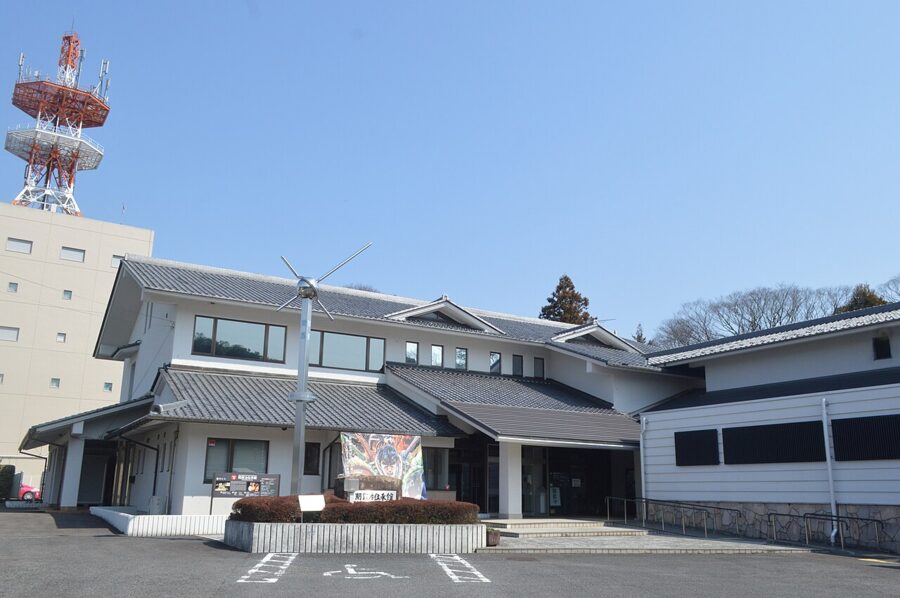

The public forging runs on the first Sunday of February to September, November and December, plus January 2 for the year’s first forging and both days of the Seki Hamono Matsuri knife festival in October. You see the folding: one smith seated at the hearth, strikers swinging in turn, sparks across the floor. Each session holds 130 people.
- Next dates: December 6, 2026 (forging only, because of the renovation); January 2, 2027 (morning only, free, first 90 people); February 7 and March 7, 2027.
- Times: 10:30 to 11:00 and 13:00 to 13:30. Doors open half an hour before; afternoon tickets go on sale at 11:00.
- Price: ¥300 (about $2) for adults, ¥200 for high school students, ¥100 for younger children.
- Wear: dark clothes. Soot drifts through the forge, and the city warns that white shows it.
In normal years each forging is followed by an hour of the finishing crafts in the museum: collar maker, hilt wrapper, scabbard maker and polisher. With the galleries shut until April 2027, check the city’s page before you count on that part.
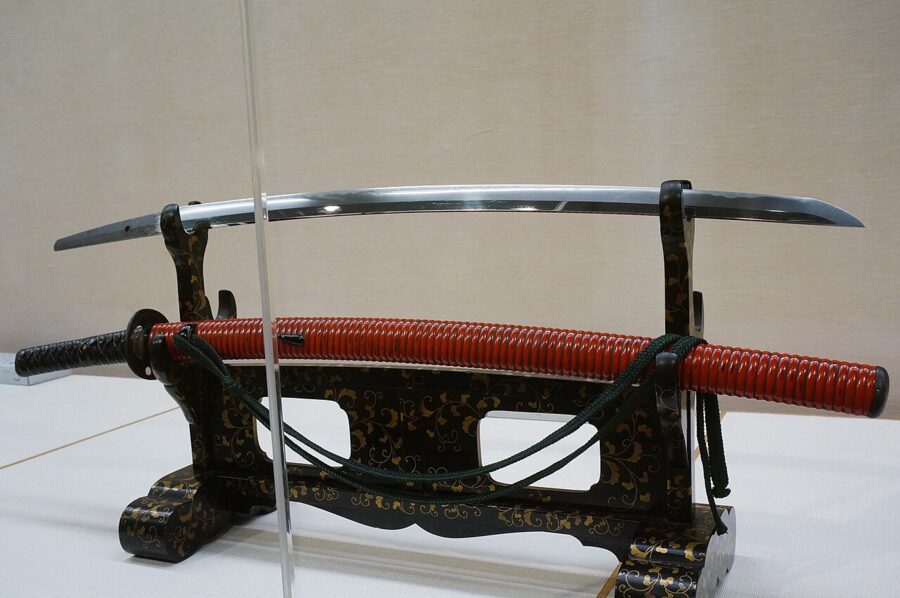

Bizen Osafune Sword Museum, Okayama
Osafune, now part of Setouchi City, was the busiest sword-making center of medieval Japan, and its museum is the one place to watch the whole chain on an ordinary day. A swordsmith, a lacquerer, a collar maker and a fittings metalworker work in open studios on the grounds. Polishers, scabbard makers and hilt wrappers come in on days the museum posts each month.
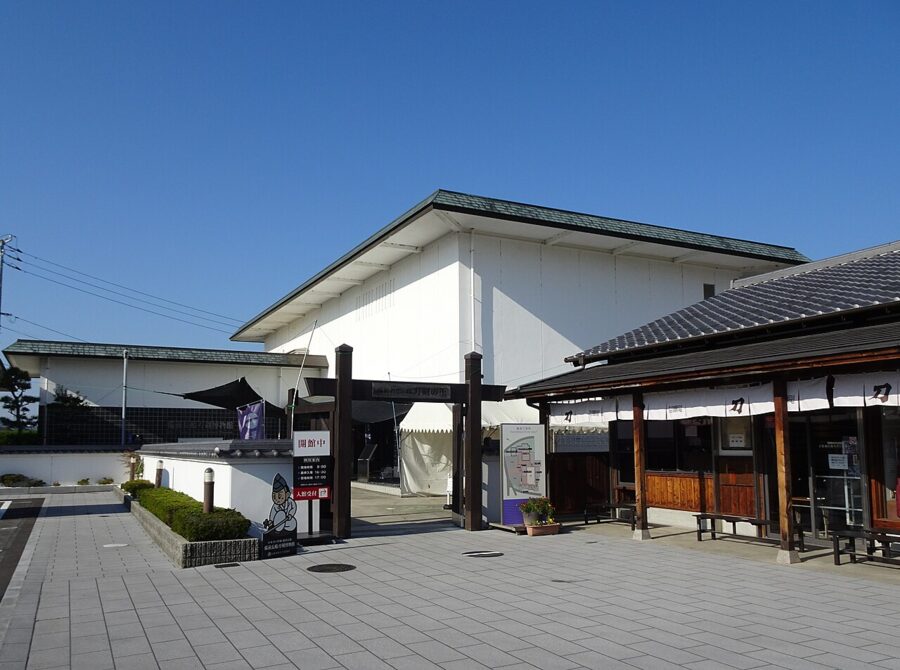
The public old-style forging is on the second Sunday of each month at 11:00 and 14:00, in 30-minute shifts of 15 people, so reserve by phone about a month ahead. The next dates are December 13, 2026, already booking, and January 10, 2027, with booking from 9:00 on December 15. The museum lends goggles; visitors do not strike the steel.
The museum opens 9:00 to 17:00 (last entry 16:30) and closes Mondays, the day after public holidays, and December 28 to January 4. Standard admission is ¥500 (about $3). The winter exhibition on the Ko-Bizen smiths of the late Heian period runs December 5, 2026 to February 14, 2027 at ¥1,200 (about $8). The city’s national treasure, the Ichimonji tachi called Sanchomo, bought by Setouchi in 2020, has finished its 2026 showing; 2027 dates are not yet set.
The Japanese Sword Museum, Tokyo
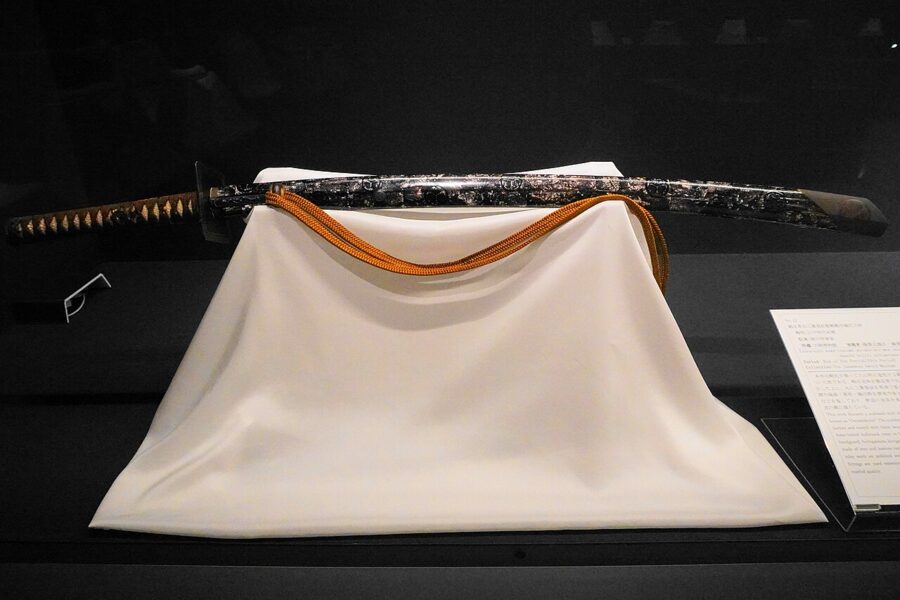
The NBTHK, the society behind the Okuizumo furnace, keeps its museum in Ryogoku beside the old Yasuda garden. There is no forge here, but there are blades and mountings of the highest rank, well lit, and a yearly show of work by living smiths and craftsmen, held in August in 2026.
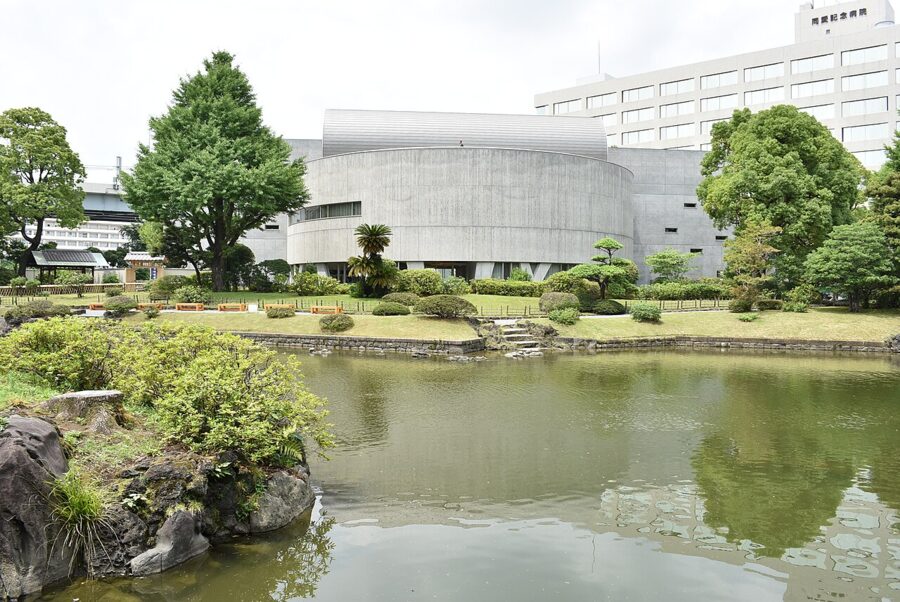

It opens 9:30 to 17:00 (last entry 16:30) and closes Mondays, or Tuesday when Monday is a holiday. Regular admission is ¥1,000 (about $7). Until December 20, 2026 it shows Kotetsu and Sukehiro, the great 17th-century smiths of Edo and Osaka, at ¥1,500 (about $10). If you have learned to look for the hamon, test yourself here: Sukehiro’s rolling “wave” edge and Kotetsu’s beaded one sit in the same rooms.

What you can make yourself
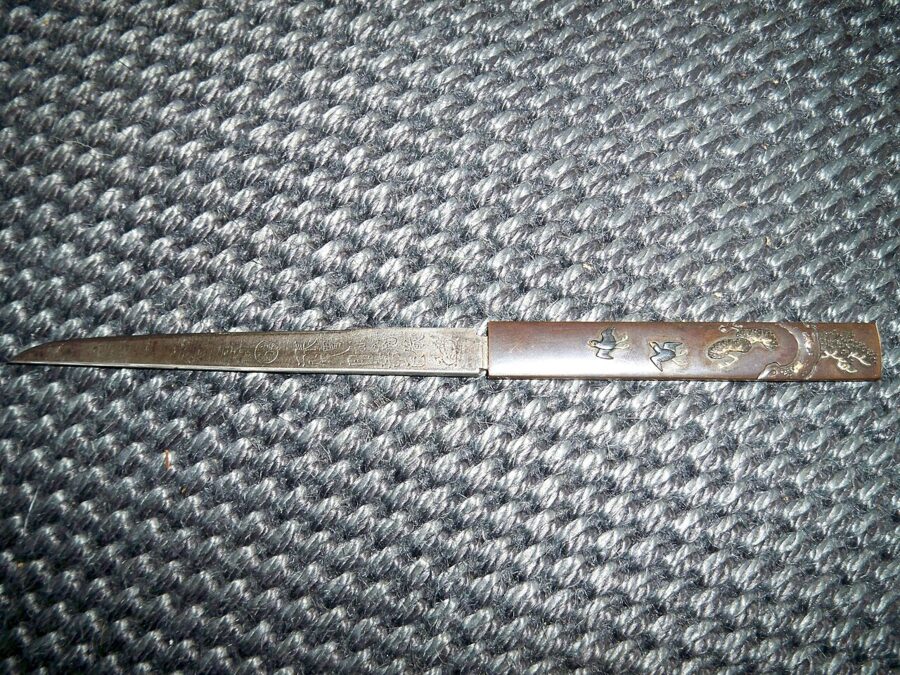
Only an approved smith may make a sword, so every hands-on class makes something smaller: a kogatana (小刀), the little utility knife once carried in a scabbard pocket, a knife or a paper knife. The good ones still take you through forging, clay and quench, and some use tamahagane. If you care more about the finished blade than the forge, a polishing visit puts a real sword in your hands.

| Workshop | Where | What you do | Length | Price (as of Nov 2026) |
|---|---|---|---|---|
| Asano Kajiya | Hashima, Gifu | Forge, harden and sharpen a utility knife about 20 cm long overall; English-speaking host | 6 hours | ¥65,000 (about $435) for one person, down to ¥52,000 each for four or more; lunch included |
| Masahiro Tantojo | Kameoka, Kyoto | Forge a kogatana with a 15 cm blade, tamahagane available; English-speaking guide | 4 hours | On the booking page |
| Katanakaji Fusahiro | Kamikawa, Saitama | Watch tamahagane forged and folded, work the bellows; nothing to take home | 3 hours | On the booking page |
| Buneido | Setagaya, Tokyo | Watch a polisher, then polish a real sword under guidance | 2 hours | On the booking page |
| Bizen Osafune Sword Museum | Setouchi, Okayama | Kogatana course, finished over two to four sessions | 10:00 to 16:00 | ¥2,000 (about $13) a day with admission, plus ¥20,000 (about $135) for materials |
Asano Kajiya is the one I would choose for a full day at a forge. Taro Asano trained as a swordsmith’s apprentice in Seki and teaches in English in an old farmhouse near Gifu-Hashima, one Shinkansen stop from Nagoya, and you take the knife home the same day. It books through Wabunka, groups may be mixed, and a ¥22,000 (about $145) surcharge applies over Golden Week, mid-August and New Year.
Masahiro Tantojo is the forge of Yuya Nakanishi, who trained under a smith in Fukushima. In the four-hour session you shape the blade, anneal it in straw ash, paint the clay and quench it, and he engraves it before you leave. Kameoka is about an hour from central Kyoto by train and taxi.
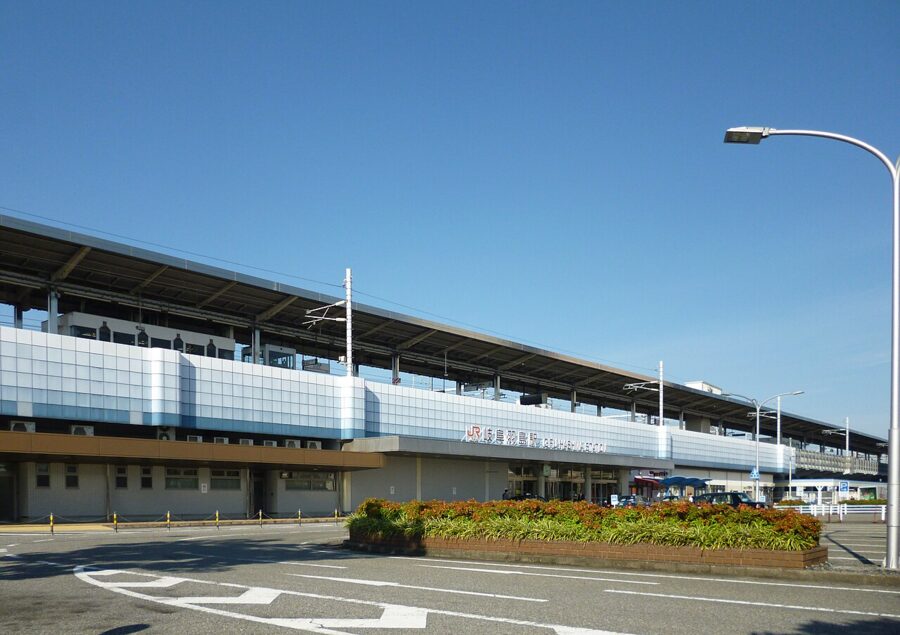
Katanakaji Fusahiro suits someone who wants to see a sword in progress rather than make a knife. Fusahiro Shimojima trained in Seki under the 25th-generation Fujiwara Kanefusa, received his approval in 1998 and opened his forge in 2002. His private visit includes a forging demonstration and a turn at the bellows; take a taxi from Honjo-Waseda Station on the Joetsu Shinkansen.
Polishing is the better choice if your time is in Tokyo. At Buneido you watch Nemoto at the stones, then sit in the polisher’s position and work a real blade. Another option pairs a guided visit to the Japanese Sword Museum with Yasumasa Nagaoka’s polishing shop, 2 hours 20 minutes in all.
The Bizen Osafune courses are cheap and serious, but built for locals. The kogatana course runs on the first and third Saturdays, December 5 and 19, 2026, then pauses from January until at least mid-March 2027; ten places a day, booked by phone, cash only. Groups of five to ten can arrange a paper-knife morning (¥2,000 each) two months to two weeks ahead, though not between January 8 and March 14, 2027.
For the kitchen side of the trade, see my guide to Japanese knife making. At any forge, wear long sleeves, long pants and closed shoes, and pack a finished blade in checked luggage.
Buying a Japanese sword and taking it home
A sword for sale in Japan comes with its registration card. Check the card against the blade first: length, curvature, peg holes and the signature on the tang must all match, and if they do not, walk away. After you buy, the change of owner is reported to the prefecture that issued the card.

Taking a sword out of Japan, even for an exhibition abroad, counts as export. National treasures, important cultural properties and certified important art objects cannot leave, so customs may ask for proof that yours is none of these. That proof is the agency’s export certificate for antique art, the kobijutsuhin yushutsu kansa shomei.
- How to apply: by post only, to the agency in Kyoto: the application in duplicate, color photos of the bare blade on both sides and of the tang, and a copy of the front of the registration card.
- How long: ten working days as standard, but the agency warns that applications have risen sharply and it now takes longer. It takes no progress inquiries until 30 days have passed.
- Validity: one year, for one export only.
- After export: the registration card goes back to the prefecture that issued it.
Ask the dealer whether they handle this paperwork before you buy, and check your airline’s rules and your own country’s import laws.
So ask for the card before anything else. If the length, curve and signature on it match the blade on the table, you are holding the work of half a dozen trades, and if the sword is new, its steel most likely came out of that clay furnace in Okuizumo.