
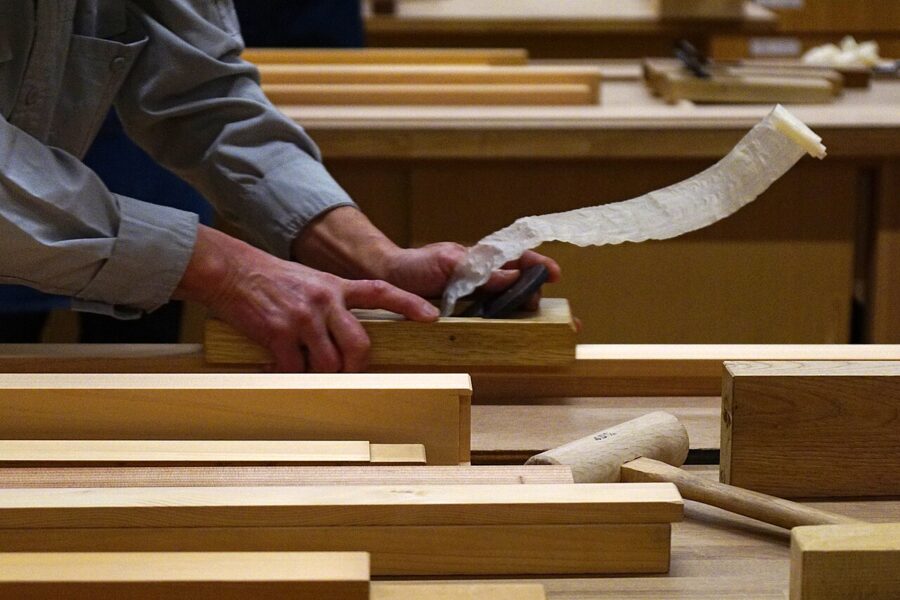
Japan holds a national contest for planing wood, and the winners are decided with a micrometer. At each kezuroukai (削ろう会), carpenters draw a kanna plane down a length of cypress and lift off a shaving so thin it is measured in thousandths of a millimeter. The 43rd national meet, held on November 21 and 22, 2026 in Sosa, Chiba, drew around 400 competitors. The rest of the year, most of them cut joints that hold buildings together with wood alone.
That is Japanese joinery: timber shaped so one piece locks into the next, cut with tools sharp enough to make the fit tight first time. It comes with two families of joints, hand tools that cut on the pull, a line of temple carpenters, and a handful of places where you can watch it, try it and buy the tools.


In this article
Tsugite and shiguchi: lengthening and crossing timber
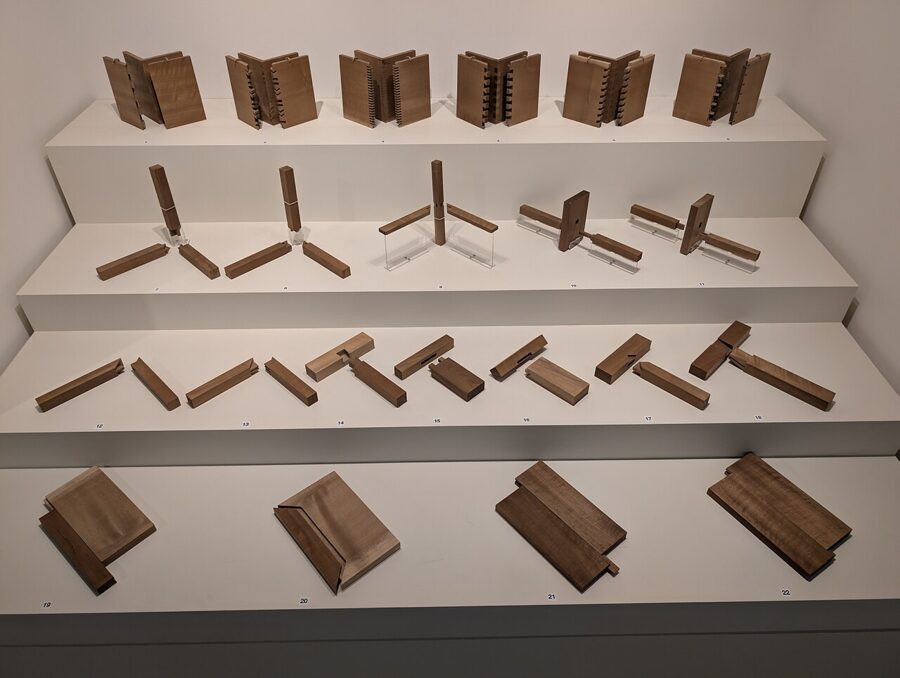
Japanese carpenters sort their joints by what they do. A tsugite (継手) joins two pieces end to end to make one longer member, the way a sill or a ridge beam runs farther than any single tree. A shiguchi (仕口) joins pieces at an angle, where a post meets a beam or two beams cross. Together they are kigumi (木組み).
Each joint answers a particular load. A splice in a sill sits on a foundation and only has to stop the halves pulling apart, so a dovetail does. A splice in a beam spanning open air must also resist bending, which calls for a longer cut locked with pegs or a key. The names give the shape: ari is a dovetail, kama a gooseneck, hozo a tenon.
| Joint | Family | Shape | Where you find it |
|---|---|---|---|
| Koshikake ari tsugi (腰掛蟻継) | Tsugite | Dovetail splice resting on a seat | House sills and lighter beams |
| Koshikake kama tsugi (腰掛鎌継) | Tsugite | Gooseneck splice resting on a seat | Sills and wall plates |
| Okkake daisen tsugi (追掛大栓継) | Tsugite | Long oblique scarf, locked with pegs | Beams and purlins that carry load |
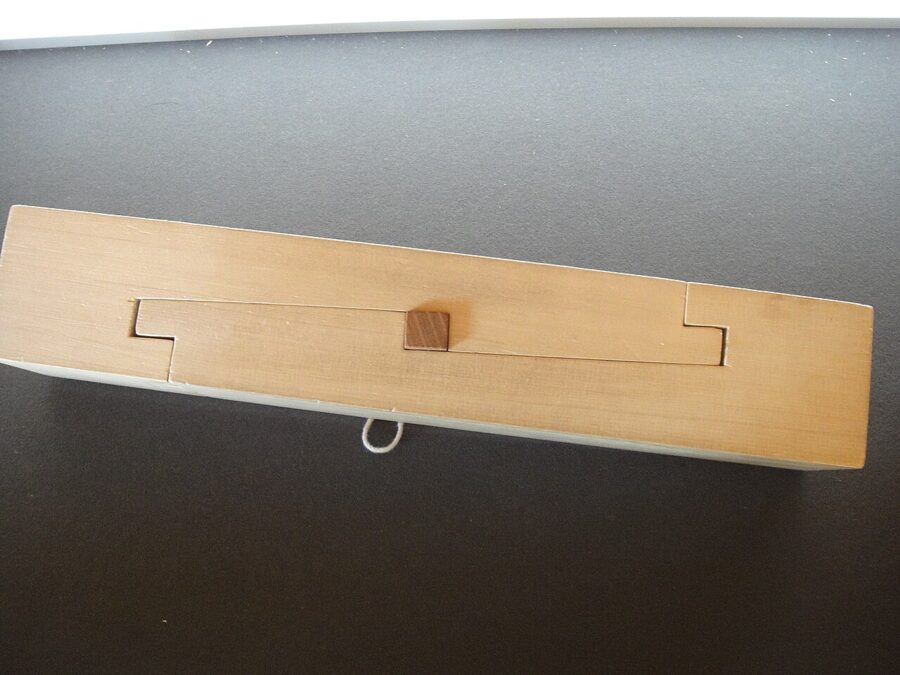
| Kanawa tsugi (金輪継) | Tsugite | Oblique scarf with stub tenons, locked with a key | Beams; replacing the rotten foot of a post |
| Hozo sashi (枘差し) | Shiguchi | Mortise and tenon, pinned or wedged | Posts into sills and beams |
| Watari ago (渡りあご) | Shiguchi | Notched crossing | Beams laid across beams |
| Nuki (貫) | Shiguchi | Flat tie run through mortised posts, wedged | Temple frames, Kiyomizu-dera’s stage |
The kanawa tsugi is the one carpenters show off. Its two halves are cut as mirror images, slid together sideways, and locked with a square key (sen) driven through the center, which pulls the faces tight. It is also a repair joint: when the foot of a temple post rots, a carpenter cuts away the bad wood and splices in new timber without taking the building down.
Which joint is strongest depends on the load, but among splices the kanawa tsugi and okkake daisen tsugi are the ones carpenters trust where a beam carries weight across a gap.
Why so few nails
“No nails” is half true. Horyuji’s oldest buildings contain hand-forged iron nails, wakugi (和釘), and restorers still have them forged for repair work. The joints carry the structure: posts, beams and brackets are held by geometry, and iron is kept where a rusting nail cannot split anything that matters.
Wood shrinks and swells with Japan’s humid summers and dry winters, and a joint moves with it where a nail tears its hole wider. A jointed frame can also be taken apart: temples are dismantled and reassembled every few centuries, and a frame held by wedges and keys goes back together with most of its original timber.
Nuki and the frames that sway
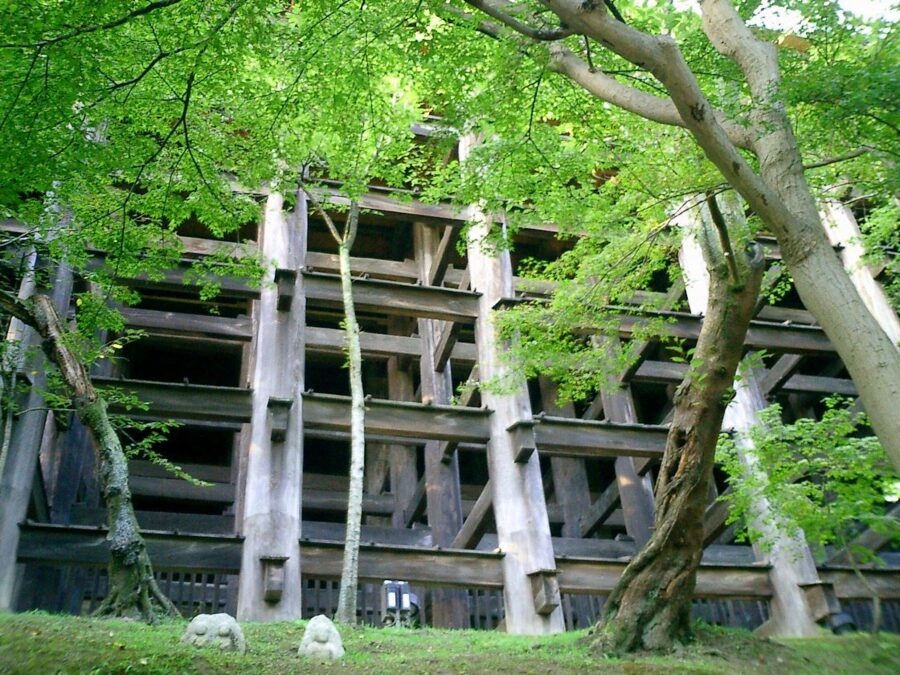
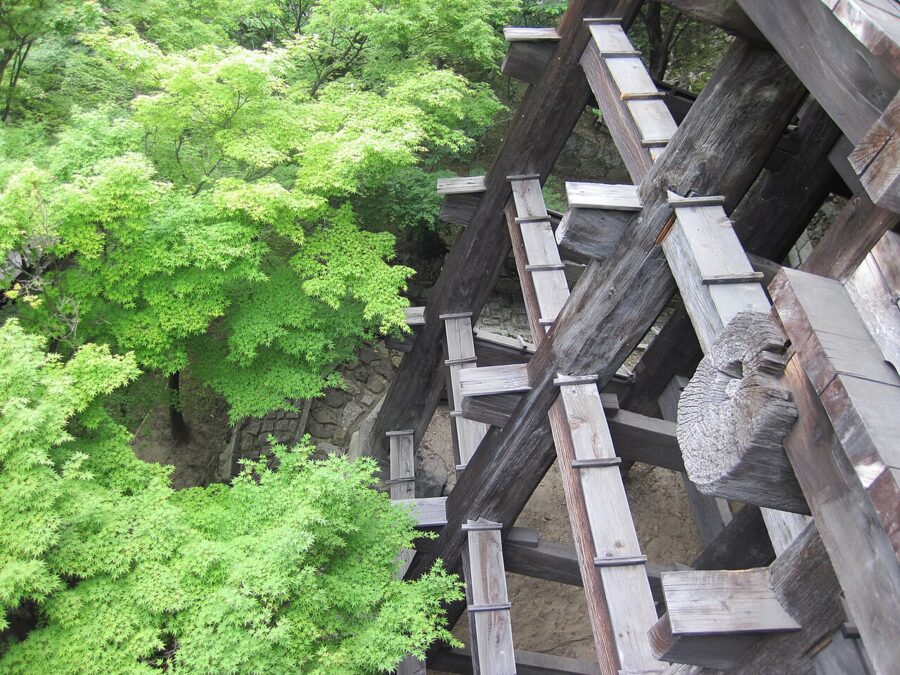
The nuki is a flat tie beam passed through slots in a row of posts and locked with wedges. Under load the wedges let the frame give a little and settle back, which is what you want in earthquake country.
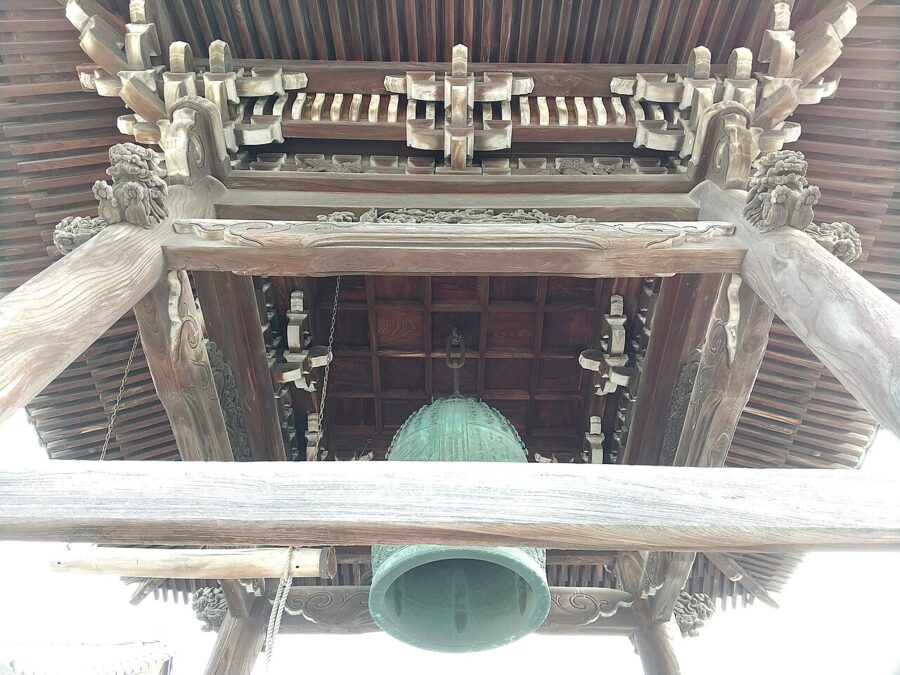

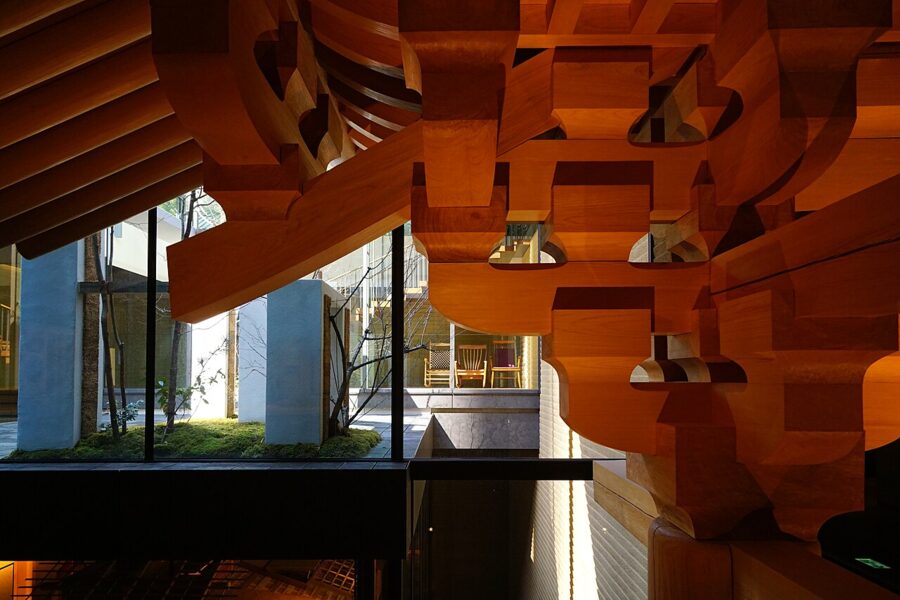
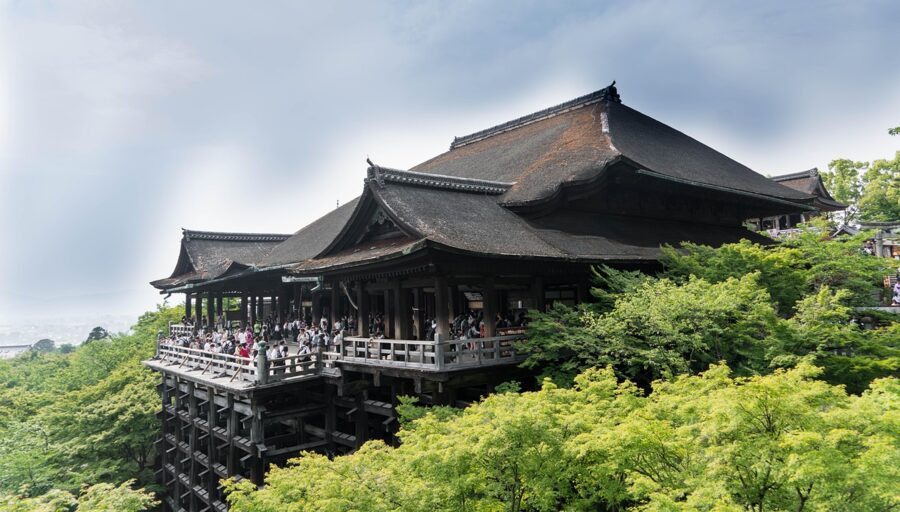
Kiyomizu-dera in Kyoto shows it at scale. Its main hall, rebuilt in 1633, sits on a cliff, and the stage in front stands on a grid of zelkova pillars tied by tiers of nuki. Walk the path below and look up: no diagonal braces, only posts and ties.

Most new timber houses in Japan now arrive on site with their joints cut by machine, often the same shapes as in the table above, and reinforced with the metal plates the building code requires. Hand-cut joinery survives in temple and shrine work, fine houses and furniture.
The tools: pulled, not pushed
Four groups of tools do most of the work: nokogiri (saws), kanna (planes), nomi (chisels) and the marking tools. What sets the first two apart from Western tools is direction: Japanese saws and planes cut on the pull, toward you.
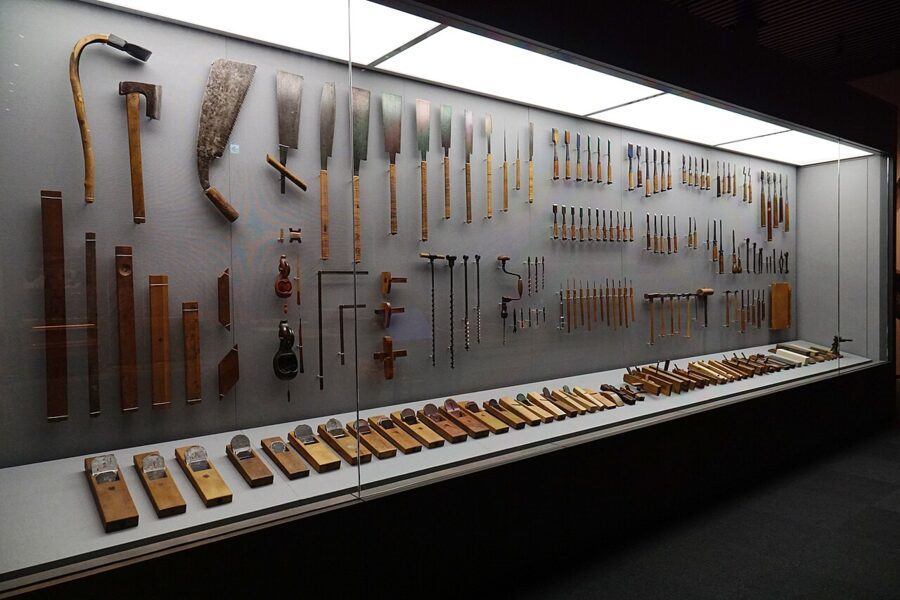

Saws: nokogiri
A saw pulled through wood is under tension, so its blade can be thin without buckling. A thin blade removes less wood, cuts faster and leaves a cleaner face. The trade-off is hard, brittle teeth: twist a Japanese saw in the cut and you can snap them.
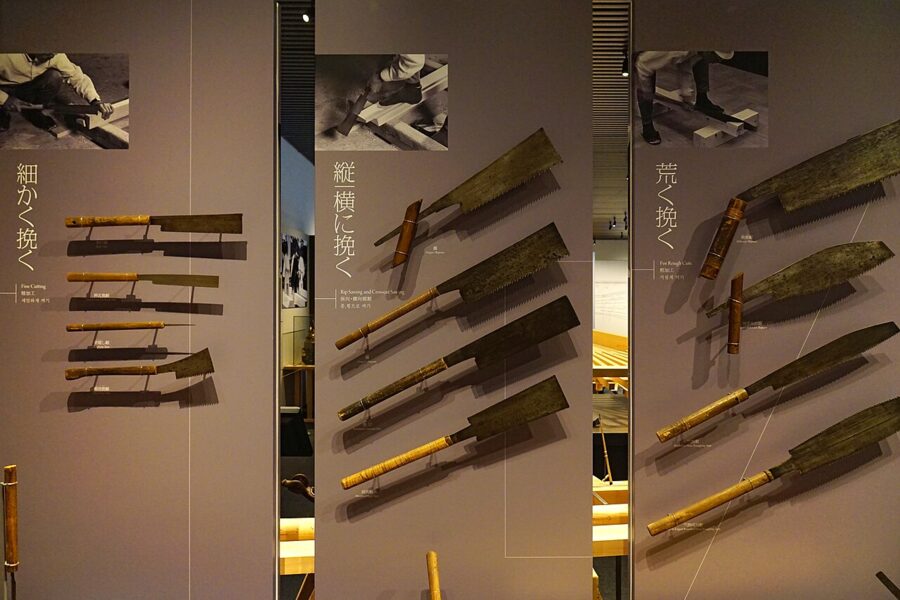

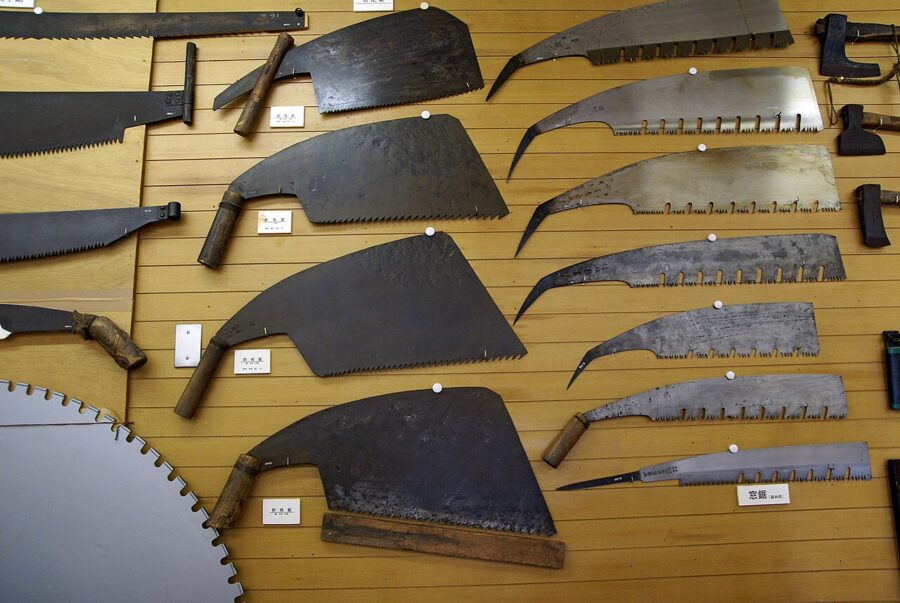
The ryoba (両刃), with rip teeth on one edge and crosscut on the other, is the all-rounder. The dozuki (胴付き) has a stiff metal spine along its back and very fine teeth for the shoulders of joints. The kataba is single-edged with no spine, so it cuts deeper, and the azebiki has a short curved blade for starting a cut mid-board. Most carpenters now use replaceable blades; a hand-filed saw from a named smith is a different purchase.
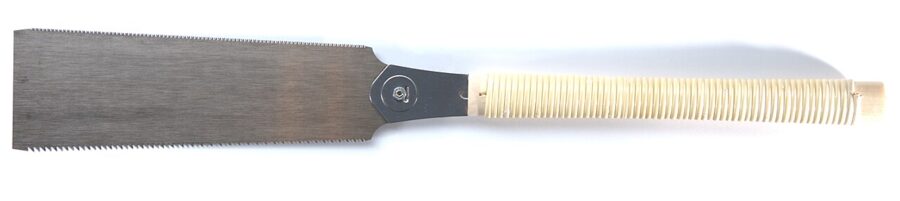

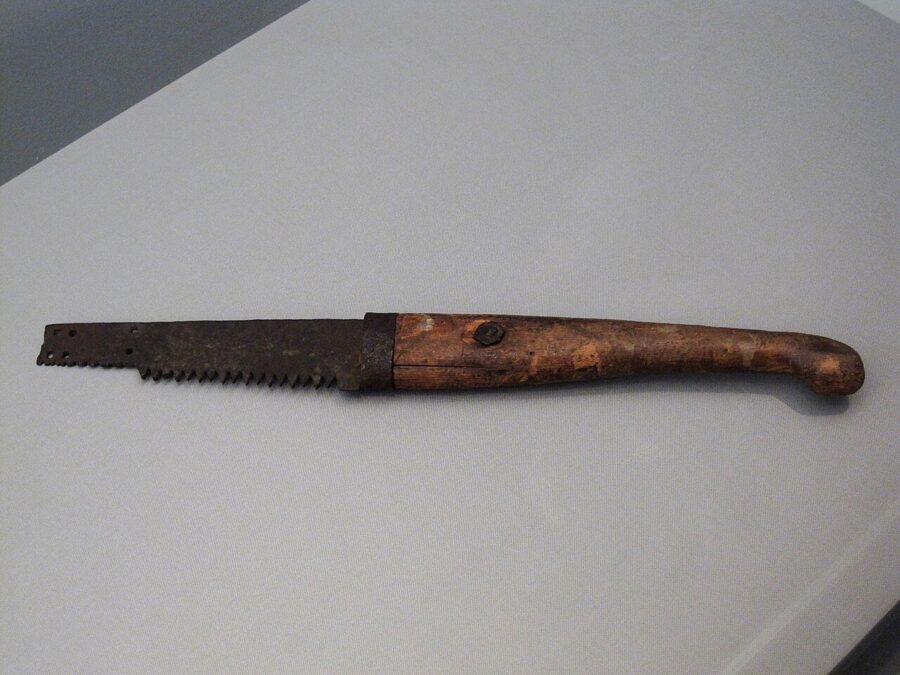
For centuries Japanese builders split logs with wedges and smoothed them with axes and the spear plane; big two-man frame saws for cutting planks only spread in the late medieval period.

Planes: kanna
A kanna is a block of Japanese white oak with a laminated steel blade wedged into it, nothing else. There is no screw adjustment: the carpenter sets the blade by tapping it, or the block, with a small hammer. Oak moves with the seasons, so the sole is checked and re-trued by hand through the year.
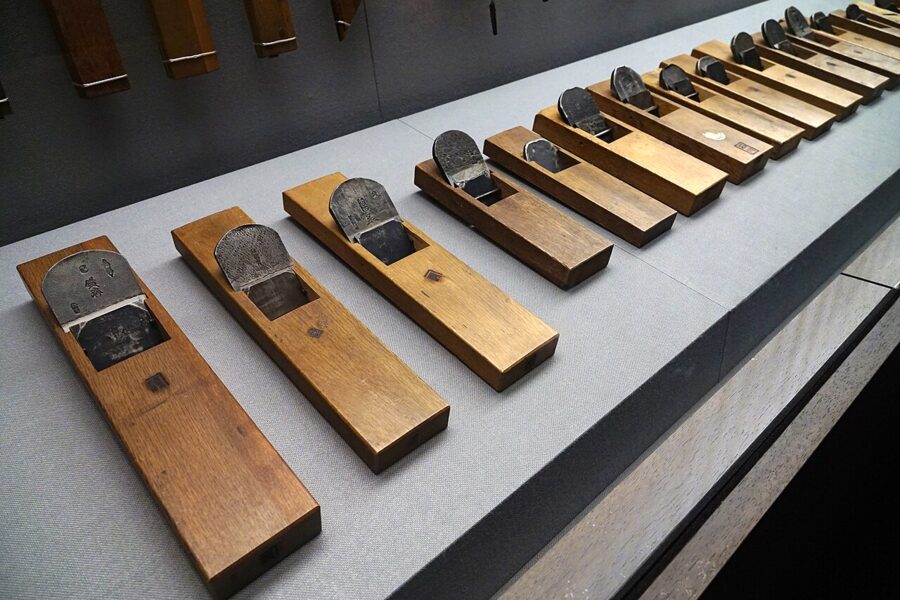

The bench plane is a newcomer, reaching Japan around the sixteenth century. Before that, surfaces were finished with the yariganna (槍鉋), a spear-shaped blade on a long handle. The temple carpenter Nishioka Tsunekazu revived it for his work at Horyuji and Yakushiji.
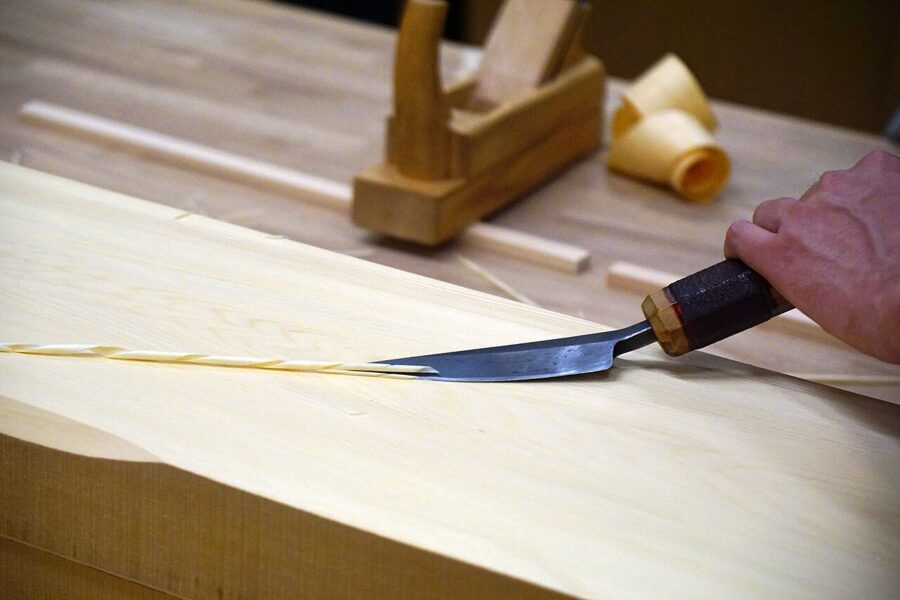

This is the tool the kezuroukai competes with. Entrants set their planes to take the lightest possible cut along a long piece of cypress, and the judges measure each shaving’s thickness with a micrometer. A good one comes off unbroken from end to end and is translucent when you hold it to the light. The contest moves around the country; in 2026 it ran twice, in Miki, Hyogo in June and in Sosa in November.
Chisels: nomi
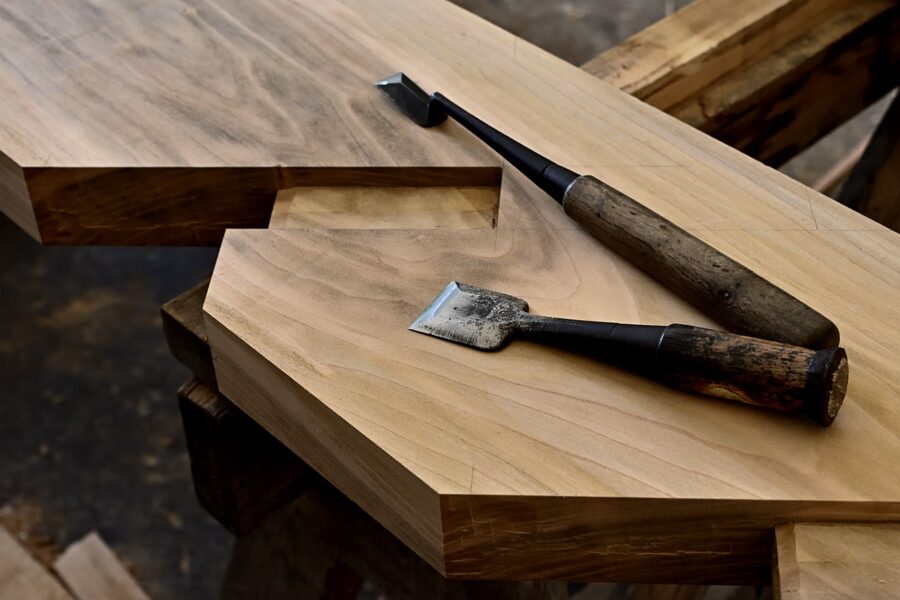
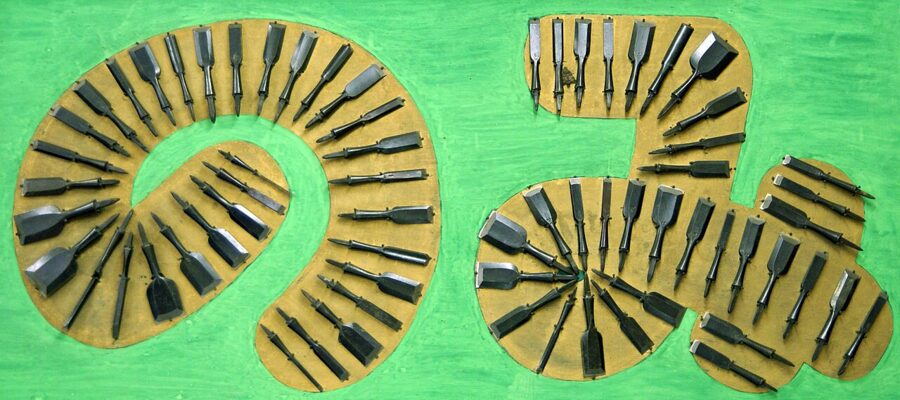
The Japanese word for chisel is nomi, written 鑿. A Japanese chisel has a thin layer of very hard steel forge-welded to a softer iron body, the same construction as a Japanese kitchen knife, and the back of the blade is hollowed so that only a narrow rim needs flattening. A steel hoop on the end of the handle stops it splitting when it is struck.
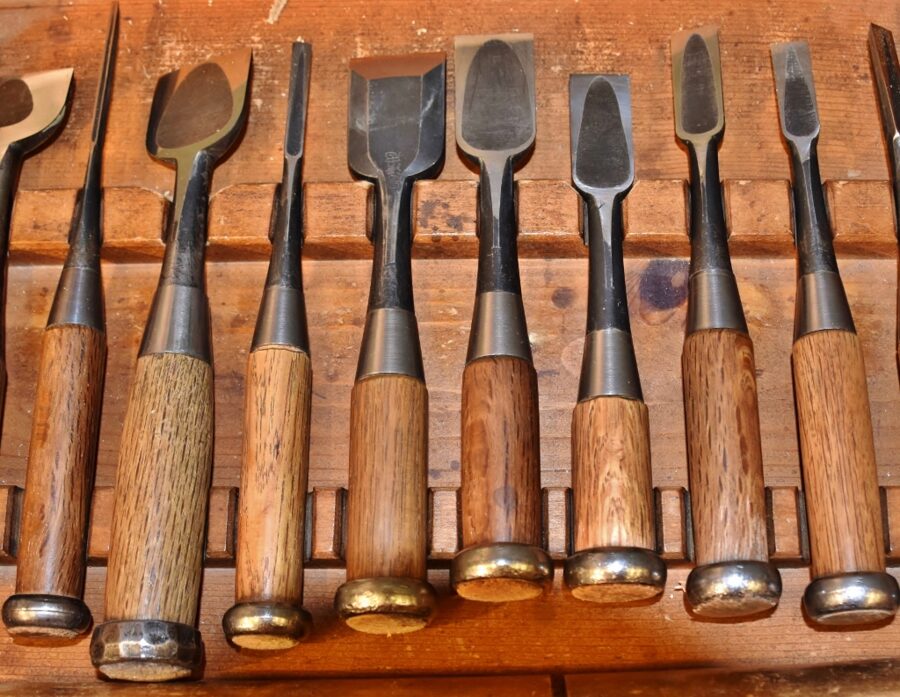

Oire nomi are short bench chisels for general work, tataki nomi heavier timber chisels driven with a genno hammer into the deep mortises of a frame, and tsuki nomi long paring chisels pushed by hand. If the steel interests you more than the wood, the forging is the same as in Japanese knife making.
Marking: sumitsubo, sumisashi and sashigane
Every joint starts as a line. The sumitsubo (墨壺) is an ink pot with a reel of silk line: the line runs through ink-soaked cotton, gets pinned at one end of a log, pulled taut and snapped, and leaves a straight black line the length of the timber. The sumisashi, a bamboo pen split into fine bristles at the tip, draws the joints themselves.
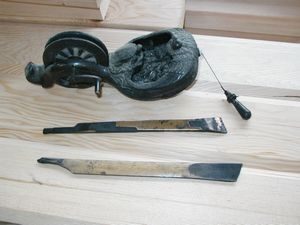

The sashigane (差し金) is the thin steel carpenter’s square. The front carries ordinary centimeters; the back carries a scale multiplied by the square root of two, so laid across the end of a log it reads off the side of the largest square beam the log will yield.
Miyadaiku: the temple carpenters
Town carpenters, machi-daiku, build houses and shops. The miyadaiku (宮大工) builds and repairs shrines and temples, where the frames are bigger, the joints more complex and the work meant to last centuries.
Kongo Gumi, the oldest firm in the trade, traces itself to 578, when carpenters from the Korean kingdom of Baekje were brought to Osaka to build Shitennoji. It ran as a family business for over 1,400 years; since 2006 it has been part of the Takamatsu Construction Group, still doing temple work.


Horyuji and the Nishioka line
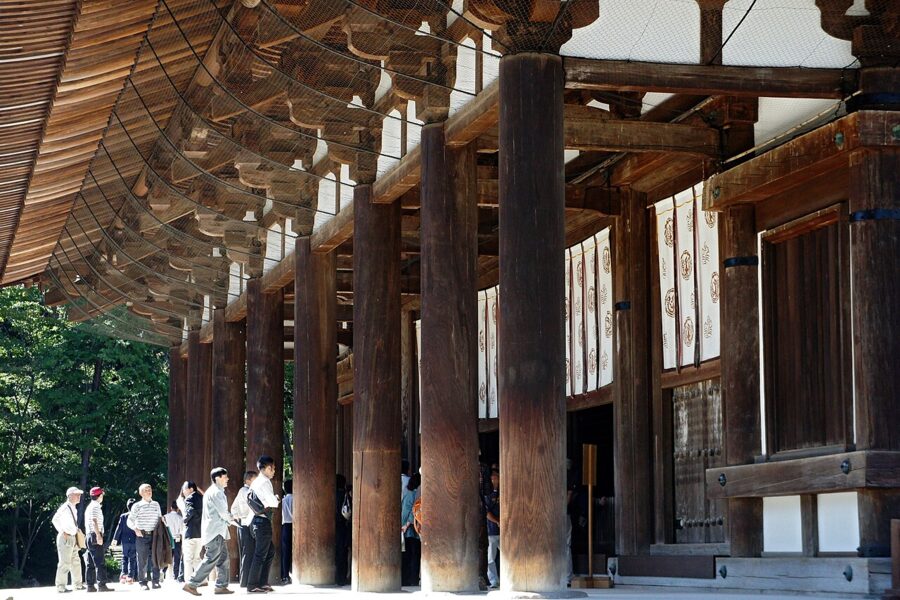
Horyuji in Ikaruga, Nara holds what are generally counted as the oldest surviving wooden buildings in the world. Its Golden Hall and five-storied pagoda date from around 700, and they were taken apart and repaired in a great restoration that ran through most of the twentieth century. UNESCO listed the Horyuji area in 1993.
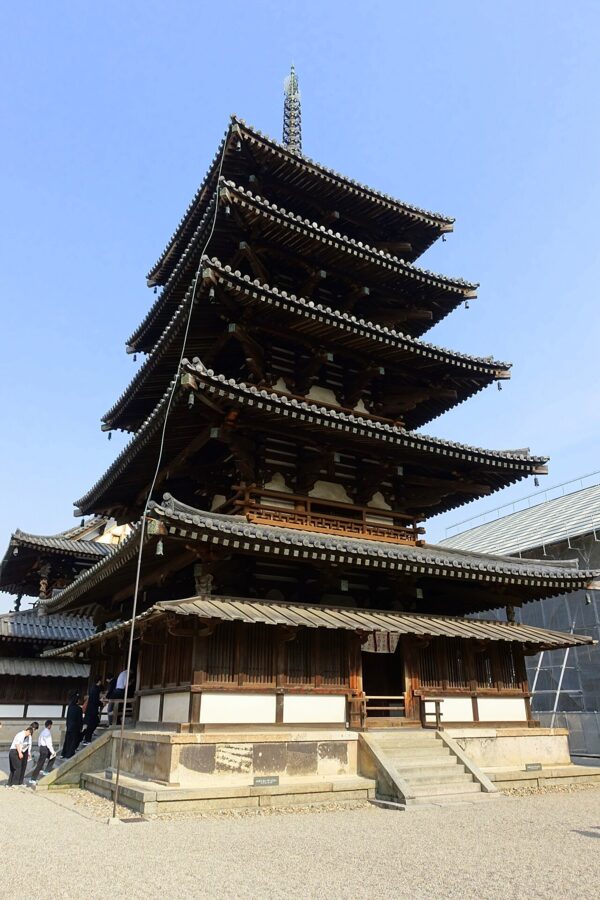
The master carpenter of that restoration was Nishioka Tsunekazu (1908–1995), whose family had served the temple for generations. He worked from oral teachings passed down among Horyuji’s carpenters, the best known of which runs roughly: build the tower by fitting the timbers, and fit the timbers by fitting each tree’s habits. He meant placing each piece of cypress by how it grew, its twist and lean, so the frame settles true.
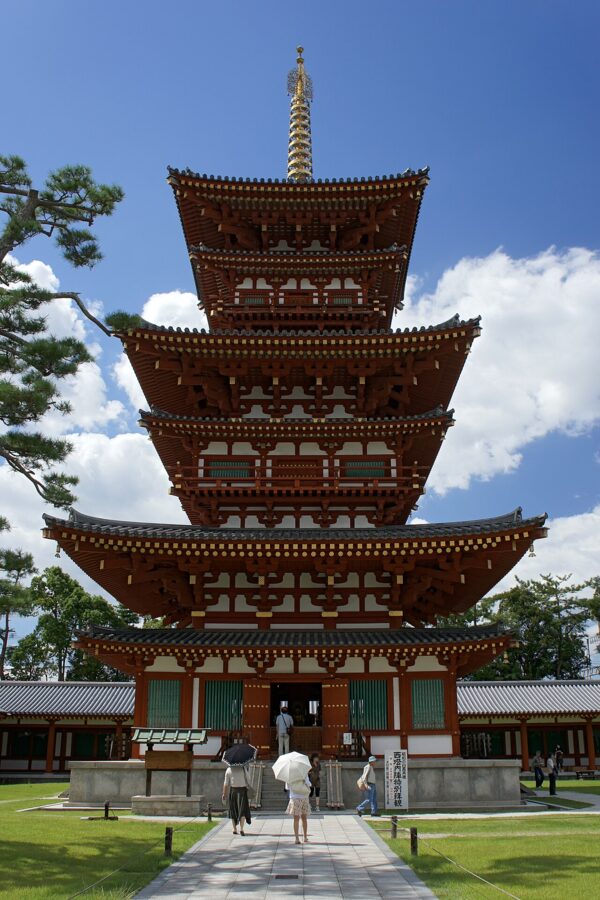
Nishioka went on to rebuild the Golden Hall and the West Pagoda of Yakushiji in Nara, the pagoda completed in 1981. His apprentice Ogawa Mitsuo founded the workshop Ikarugakosha, which trains temple carpenters the old way: live-in, with sharpening and sweeping long before any joint.

Ise and the twenty-year rebuild
At Ise Jingu the main shrines are rebuilt on a neighboring site every twenty years, the Shikinen Sengu. The last was in 2013; the 63rd is set for 2033. The cycle keeps the skills alive: a carpenter who starts young sees it two or three times and teaches it before retiring.
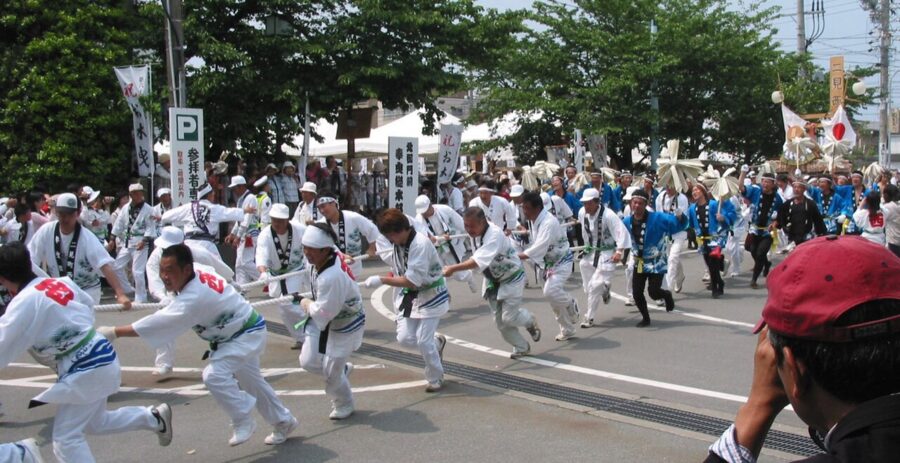
The preparations are already under way. The first okihiki processions, in which people of Ise haul the sacred cypress into the shrines on carts and sledges, began in spring 2026.

The UNESCO listing
In December 2020 UNESCO put Japan’s traditional skills for conserving wooden architecture on its Representative List of the Intangible Cultural Heritage of Humanity. The UNESCO entry for wooden architecture covered seventeen skills, among them building carpentry, cypress-bark roofing, plastering and lacquer, and was widened in 2025. It protects the system as much as the craft: the groups that train successors and grow the bark, clay and timber that repairs need.
Kumiko, sashimono and the Hida carpenters
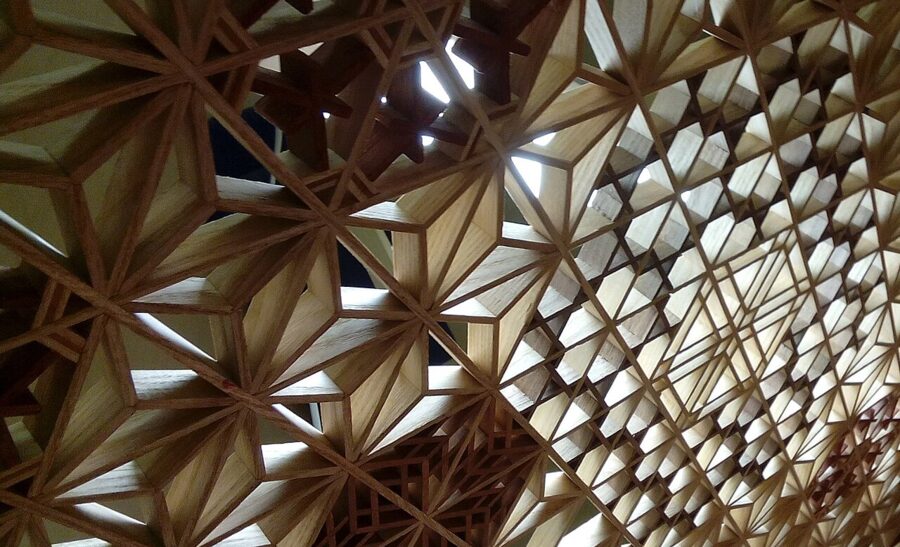
Joinery runs from temples down to furniture. Kumiko (組子) is lattice made from thin strips of wood, notched with half-laps so the strips cross and then filled with small pieces cut to angles and pressed in by friction. The patterns have names (asanoha, the hemp leaf, is the one most people know) and they fill the panels of shoji screens and the transoms, ranma, above doors.
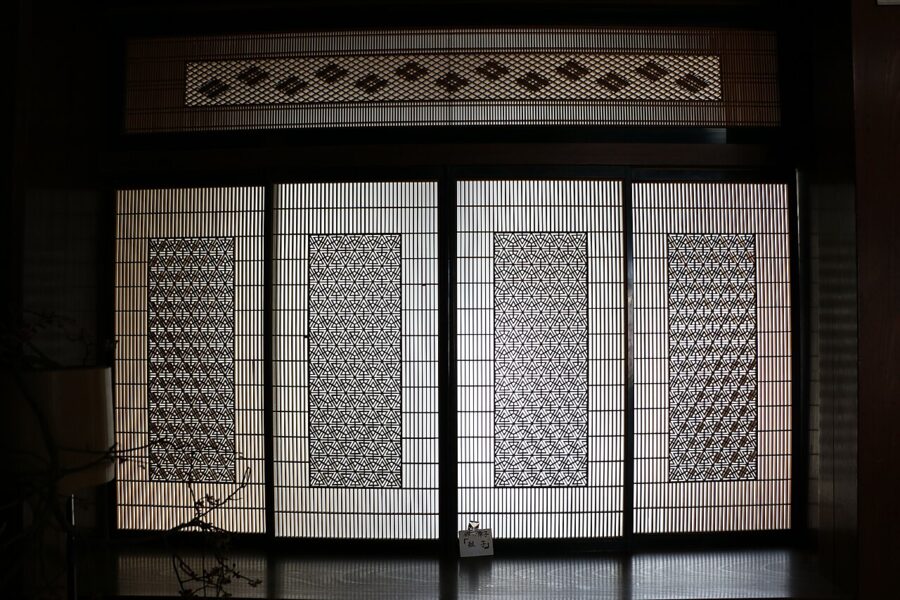

Kumiko belongs to the trade of tategu, the makers of doors and screens, and the screens are covered in washi. Two towns are known for it today: Kanuma in Tochigi, where kumiko is a prefectural craft, and Okawa in Fukuoka, a furniture town. A strip a fraction of a millimeter too thick will not go in.

Sashimono (指物) is furniture and cabinetry built with joints that are hidden inside the work, so the finished chest or table shows no fixings at all. Kyo-sashimono from Kyoto and Edo-sashimono from Tokyo are both nationally designated Japanese traditional crafts.
Hida and Takayama
The mountain province of Hida, around today’s Takayama, sent carpenters instead of taxes. Under the Taiho Code of 701 it supplied about a hundred workers a year to build in the capital, and the “Hida no takumi”, the craftsmen of Hida, became a byword for skill. By the early nineteenth century they were the heroes of a popular novel illustrated by Hokusai.


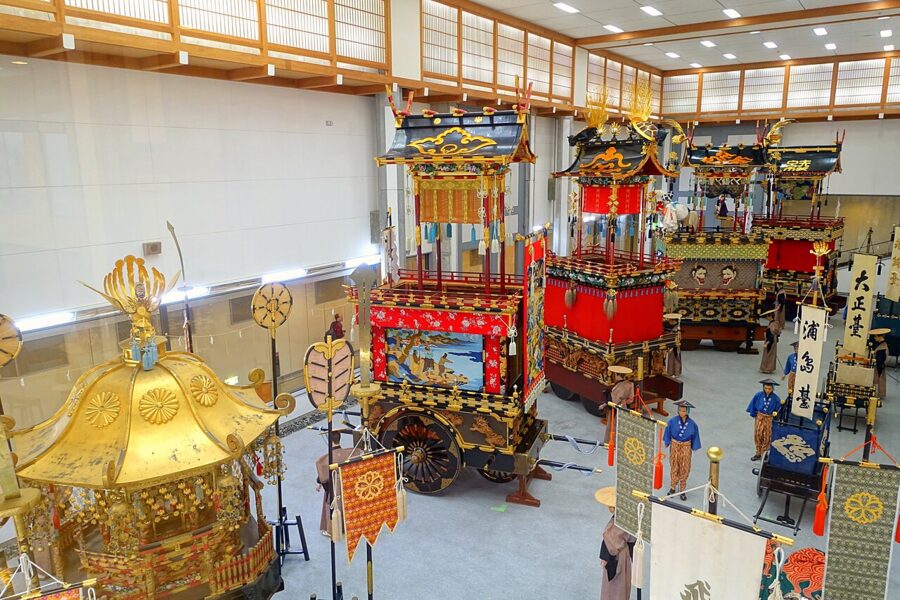
The showpieces of Hida woodwork are Takayama’s festival floats, still pulled through town each spring and autumn. The town also has a furniture industry that has been steam-bending beech into chairs since the 1920s. In Furukawa, about 15 minutes north by train, the Hida no Takumi Bunkakan was built by local carpenters without a single nail.
Where to see Japanese joinery
Takenaka Carpentry Tools Museum, Kobe
The Takenaka Carpentry Tools Museum describes itself as the only museum in Japan devoted to carpenter’s tools. The construction company Takenaka opened it in 1984 and moved it in 2014 to a low building and garden near Shin-Kobe Station.
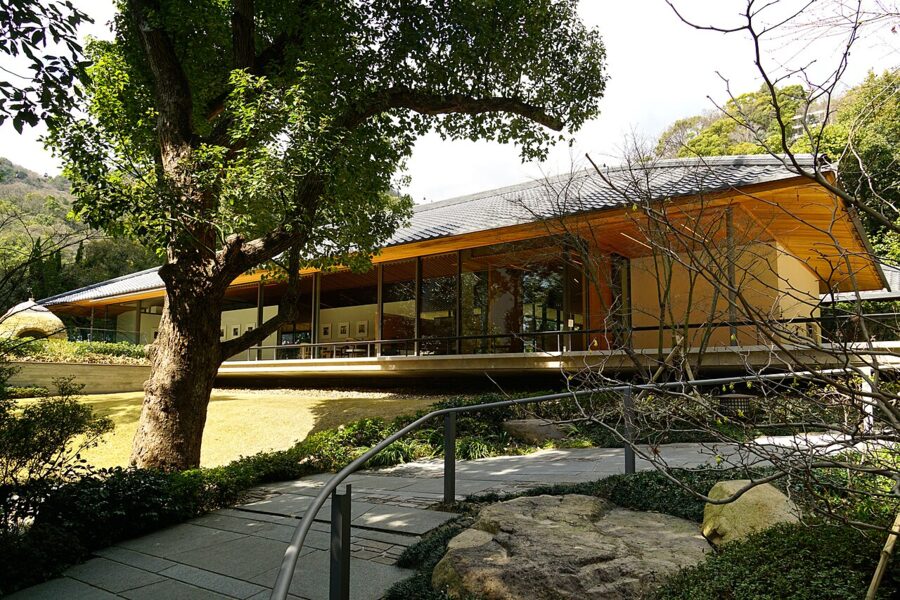

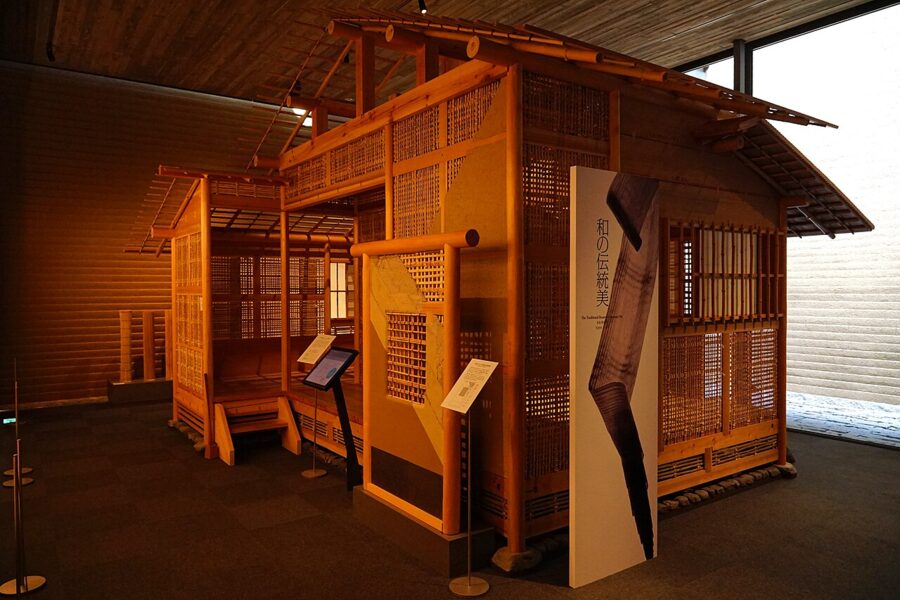
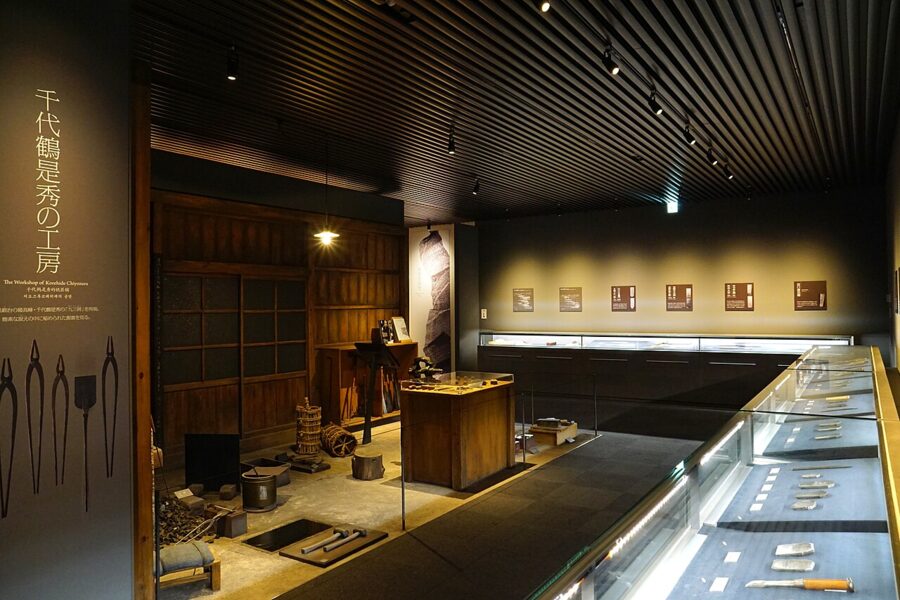
Inside are the full-size Toshodaiji bracket set, an unwalled tea-house frame, a recreated tool smith’s workshop and walls of saws, planes and chisels. If you see one place, make it this one.
| Takenaka Carpentry Tools Museum | As of November 2026 |
|---|---|
| Hours | 9:30–16:30, last entry 16:00 |
| Closed | Mondays (the next weekday if Monday is a holiday), year-end and New Year |
| Admission | ¥1,000 (about $6); university and high school students and over-65s ¥700 (about $4); junior high and under free |
| Address | 7-5-1 Kumochi-cho, Chuo-ku, Kobe |
| Access | About 3 minutes on foot from Shin-Kobe Station (shinkansen and subway) |


Temples in Nara and Kyoto
At Horyuji, admission is ¥2,000 (about $13) for adults as of November 2026, covering the western precinct with the pagoda and Golden Hall, the treasure house and the eastern precinct. It opens at 8:00 and closes at 17:00 from February 22 to November 3, and at 16:30 the rest of the year. It is about 20 minutes on foot from JR Horyuji Station, or a short bus ride.
Toshodaiji in Nara has the real bracket sets behind the Takenaka model, and Yakushiji is nearby for Nishioka’s West Pagoda. In Kyoto, go below the stage at Kiyomizu-dera, not just onto it.


Hida no Takumi Bunkakan, Furukawa
The Hida no Takumi Bunkakan is a small museum of Hida carpentry with sample joints you can handle and a corner where you assemble a lattice puzzle yourself. As of November 2026 it is open 9:00–17:00 (last entry 16:30), and 9:00–16:30 from December to March, closed Thursdays and over New Year. Admission is ¥300 (about $2) for adults and ¥100 (about $1) for children, and preschool children are not admitted. It is five minutes on foot from Hida-Furukawa Station.
Where to try it yourself
Nobody learns a kanawa tsugi in an afternoon. The choice is between short sessions that put a plane or a kumiko kit in your hands and long courses for people who already work wood.
| Where | What you do | Length | Price and booking (as of November 2026) |
|---|---|---|---|
| Takenaka museum, Kobe | Try carpenter’s tools and planing | Drop-in | Free with admission, no booking; kit sessions booked online |
| Fujiiro Studio, Asakusa, Tokyo | Assemble a kumiko coaster | About 45 minutes | Listed from $58 |
| Hida no Takumi Bunkakan, Furukawa | Assemble a lattice puzzle | As long as you like | Included in ¥300 admission |
| Suikoushya, Kyoto | One-month joinery course in English | Four weeks, Monday to Friday | All 2027 courses full; tools at least ¥70,000 (about $440) |
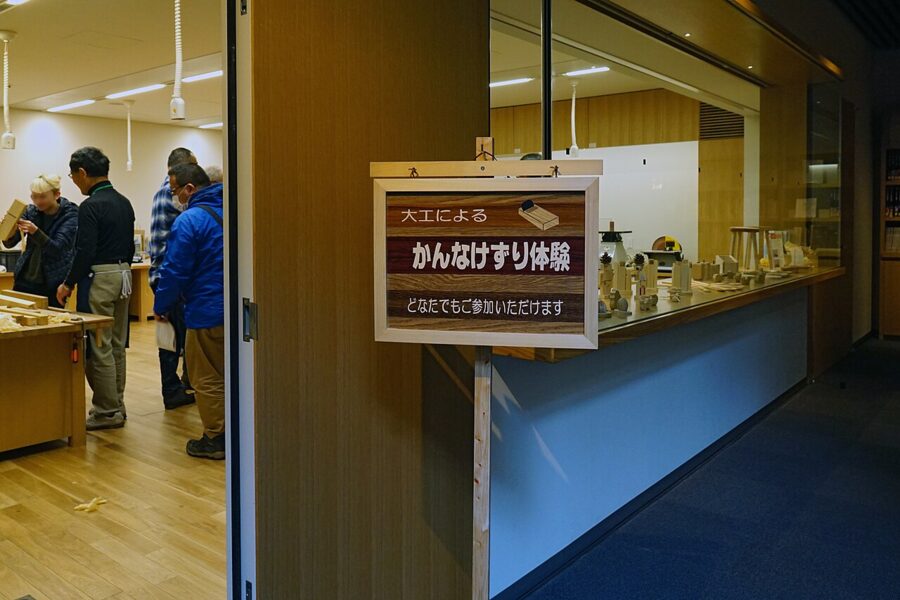

The Takenaka museum is the easiest start. Its July to December 2026 calendar lists free drop-in sessions in the woodworking room to try carpenter’s tools and planing, plus small woodworking sessions booked online, first come first served. Dates change monthly, so check before you travel.
In Tokyo, Fujiiro Studio in Asakusa runs short Edo kumiko workshops: you assemble a coaster from pieces of hinoki and cedar cut by kumiko makers, after a talk on the patterns. It was listed at about 45 minutes and from $58 in November 2026. In Tochigi, Kanuma’s Traditional Wooden Hometown Crafts Museum (木のふるさと伝統工芸館) also runs kumiko coaster sessions; I could not confirm its current price, so ask when you book.
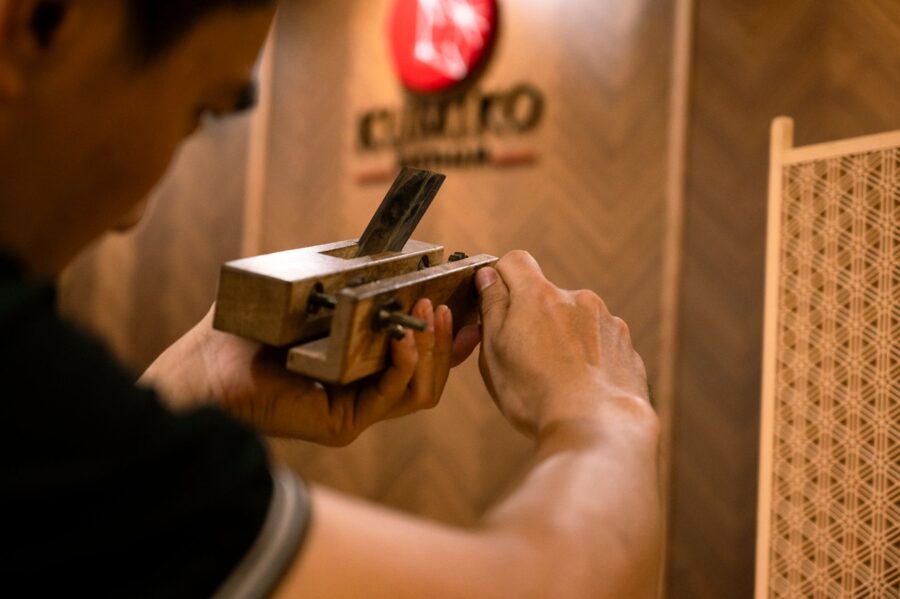
For real training, the Kyoto carpenter Takami Kawai runs one-month Japanese woodworking classes at his workshop Suikoushya, taught in English to at most five students, 9:00 to 17:00 on weekdays. Students sharpen and set up their own chisels and planes, then cut joints up to the okkake daisen tsugi and kanawa tsugi. Every 2027 course was already full in November 2026, and students need at least ¥70,000 in tools.
If you would rather make the iron than cut the wood, the Sanjo Blacksmith Dojo in Niigata lets you forge a wakugi nail of your own in a short walk-in session.
Buying Japanese woodworking tools
Miki in Hyogo, about an hour from Kobe, is the carpenter’s tool town: saws, chisels, planes and small knives, the trade behind most of the tools in the Takenaka museum. The Miki City Hardware Museum is free, open 10:00–17:00 with last entry at 16:30, closed Mondays, and five minutes on foot from Miki-Uenomaru Station on the Kobe Electric Railway. Beside it, the local preservation society demonstrates traditional forging of saws, chisels, planes, trowels and small knives on set days; the Miki Industrial Cooperative has the dates.

The town’s big sales day is the Miki Kanamono Matsuri, held in early November; the 38th ran on November 7 and 8, 2026, with makers selling direct. Miki also hosted the national kezuroukai in June 2026, and tool dealers sold plane blades and blocks at the venue.

In Niigata, Sanjo and Yoita in Nagaoka are the other chisel and plane centers, and Sanjo’s smiths make Japanese knives as well as carpenter’s tools. Any big home center in Japan stocks the replaceable-blade pull saws most working carpenters use.

What to buy first: a ryoba with a replaceable blade, two or three oire nomi in the widths you use most, and a kanna. Buy the plane from a shop that will set it up, and expect to re-true the sole as the oak adjusts to the air at home. Pack saws and chisels in checked luggage.
And try the plane on cypress before you leave the shop. If the shaving comes off in one long piece, the blade is set right, and you own the same tool they use at the kezuroukai.