
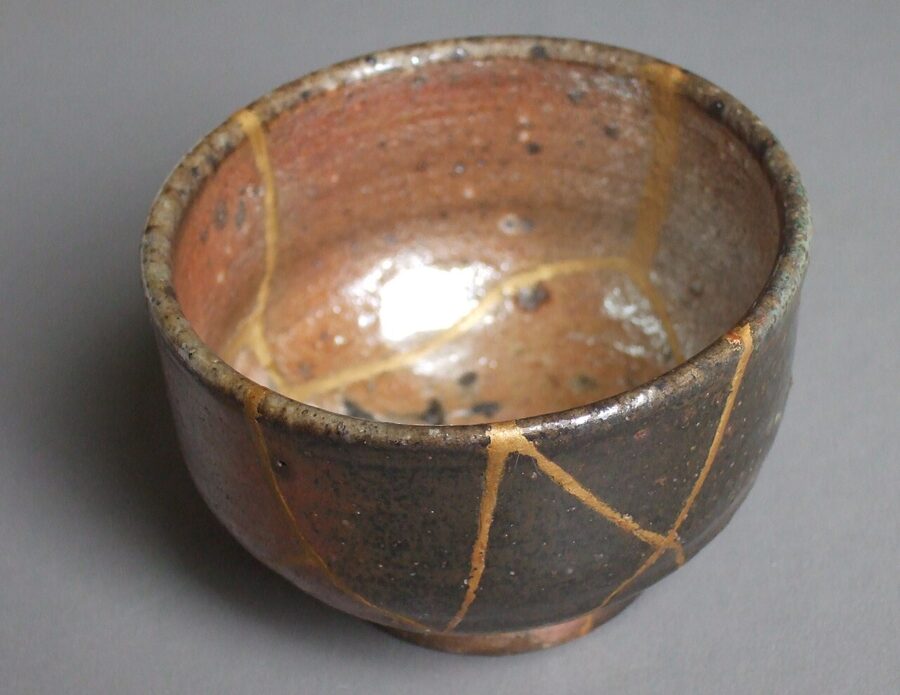
The gold goes on last, and it is the thinnest thing in the whole repair. A proper kintsugi job is five or six layers of tree sap, each left for days in a damp box to harden, and the metal you admire at the end is dusted onto the final coat like pollen. Mending a bowl this way takes a month at the very least, and two or three months is normal.
Kintsugi (金継ぎ), “gold joining,” is the Japanese way of mending broken ceramics with urushi (漆), the sap of the lacquer tree, and finishing the seam in gold or silver powder. Lacquer holds the pieces together, every time. The gold is decoration on top.
That is where the confusion starts. A kit sold online, a one-hour tourist class and a lacquer master’s repair can all be called kintsugi and look identical in a photo. They are made of different stuff, and only one of them is something I would serve food on without reading the label twice.

In this article
- Kintsugi, kintsukuroi and the other names
- The Bakohan bowl: a legend held together by staples
- Where gold lacquer repair really comes from
- Urushi: the tree, the sap and the rash
- How a proper repair is done, and why it takes weeks
- Real urushi, "new urushi" and epoxy kits
- Where to learn kintsugi in Japan
- Kits, tools and living with a mended piece
- Seeing it in Tokyo
Kintsugi, kintsukuroi and the other names
Kin is gold; tsugi comes from tsugu, to join or to carry on, the verb used for inheriting a family business. You will also see kintsukuroi (金繕い), “gold mending,” for the same craft, and Tokyo’s lacquer shops use both words on one page.
Gintsugi finishes the seam in silver, which darkens into a soft gray line that suits celadon better than gold does. A repair can also stop at black or red lacquer with no metal at all. Yobitsugi, “called-in joining,” fills a missing chunk with a shard from a different pot entirely.
Can you mend a crack that has not come apart? Yes. Thin raw urushi is worked into the hairline before it is coated and dusted, so a bowl does not have to be in pieces to get a gold line. Chips are filled and built up; clean breaks are glued and the seam finished.

The Bakohan bowl: a legend held together by staples
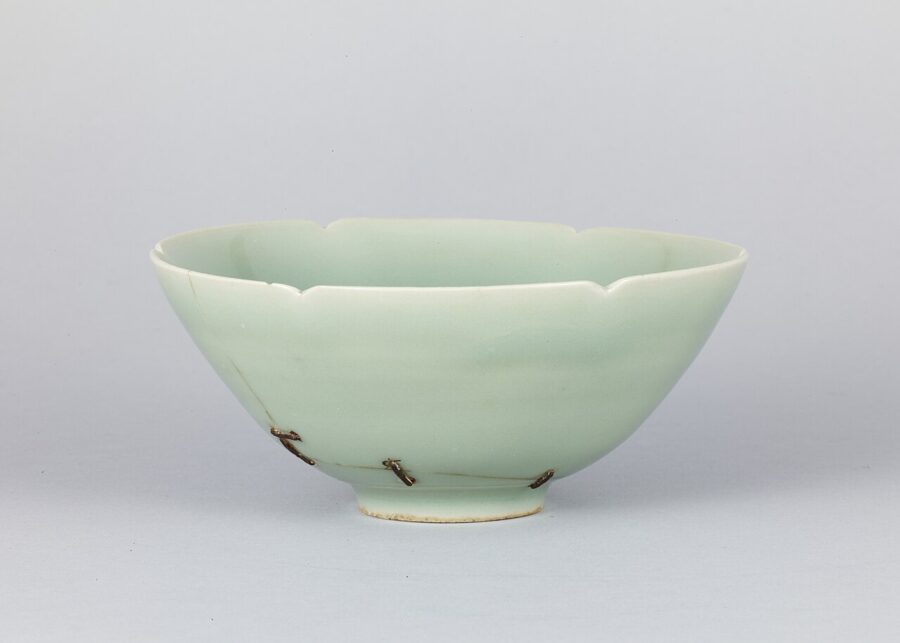
Every account of kintsugi’s origin reaches for the same object, and it has no gold on it. Bakohan (馬蝗絆) is a pale green celadon tea bowl about 15 cm (6 in) across, made at the Longquan kilns in southern China in the 13th century and now an Important Cultural Property in the Tokyo National Museum. Its crack is held shut with small metal staples called kasugai (鎹).
The museum gives the story as tradition, not record. The shogun Ashikaga Yoshimasa owned the bowl, it cracked, and he sent it to China asking for a replacement. Ming China could no longer make anything like it, so the bowl came back stapled. The staples looked like big locusts, and the bowl was named for them.

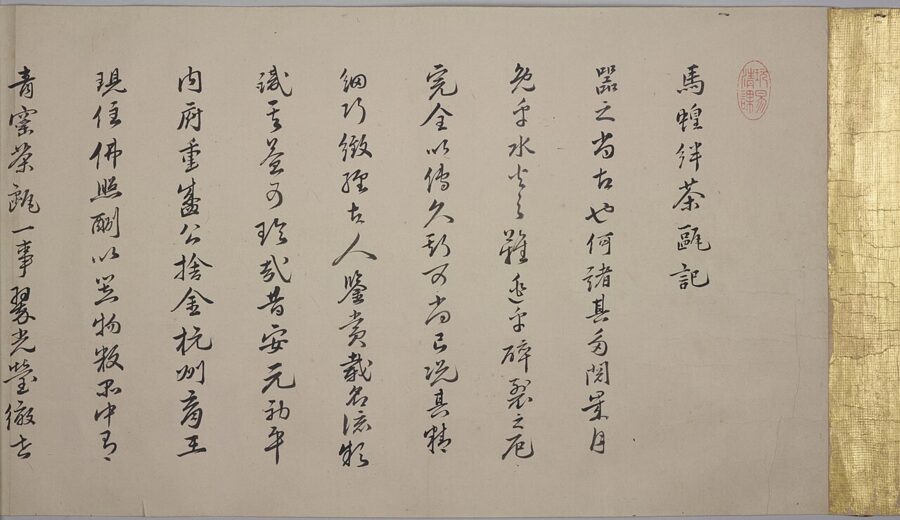
The written source is far later than the events. In 1727 the Kyoto scholar Ito Togai wrote the Bakohan chaoki (馬蝗絆茶甌記), an essay still kept with the bowl, which pushes its history back to a gift to the 12th-century warlord Taira no Shigemori. The museum’s researcher Imai Atsushi has argued that the Shigemori link is unlikely, since this thick-glazed type of Longquan celadon was perfected only in the middle Southern Song, after Shigemori’s time.
Japan’s national heritage database adds that after the Ashikaga shoguns, the bowl stayed for generations with the Suminokura, a Kyoto merchant family known for overseas trade, which lends the tradition some weight. It reached the museum as a gift from a member of the Mitsui family.

The popular version adds a last line: Japanese craftsmen, unhappy with the ugly staples, went looking for a better way and invented kintsugi. Nothing on the bowl or in the museum’s notes says so. I read Bakohan as evidence of how seriously tea people took a cracked bowl. They kept it, named it after its repair, and someone wrote it a biography.

Where gold lacquer repair really comes from
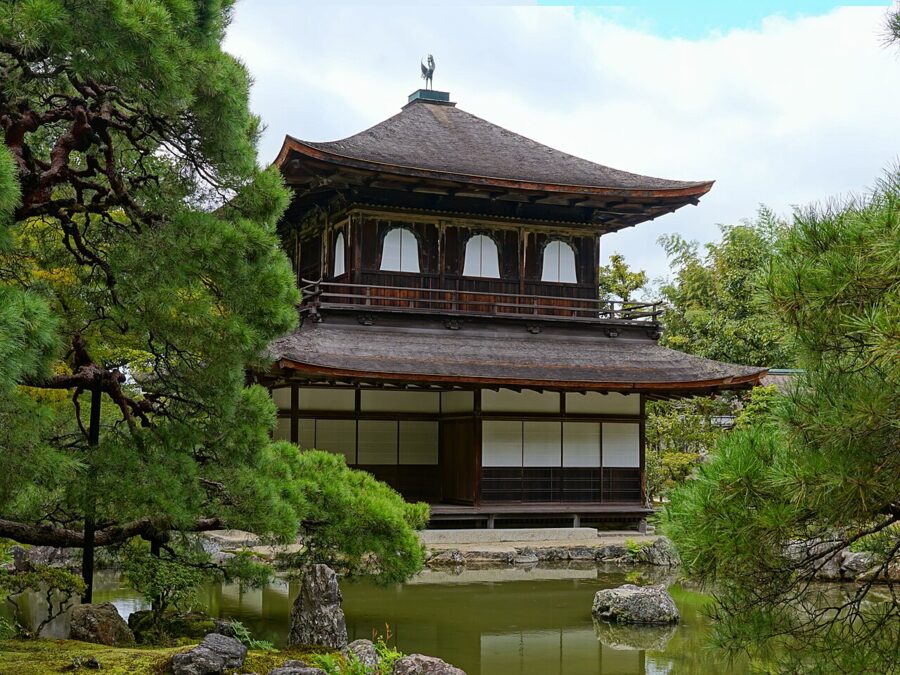
Urushi as an adhesive is ancient in Japan, and lacquer repairs may reach back to the Jomon period. Gold-finished seams are much younger. No document names the first one; Japanese accounts tie the technique’s rise to the tea ceremony, from the late Muromachi period into the Edo period, when tea bowls carried prices and pedigrees that made them worth mending properly.
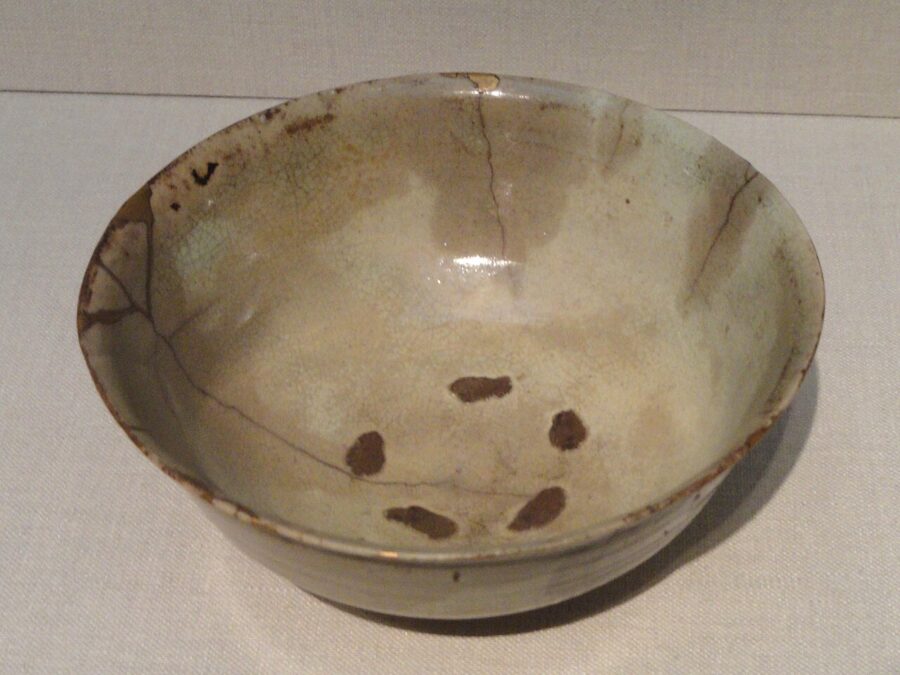
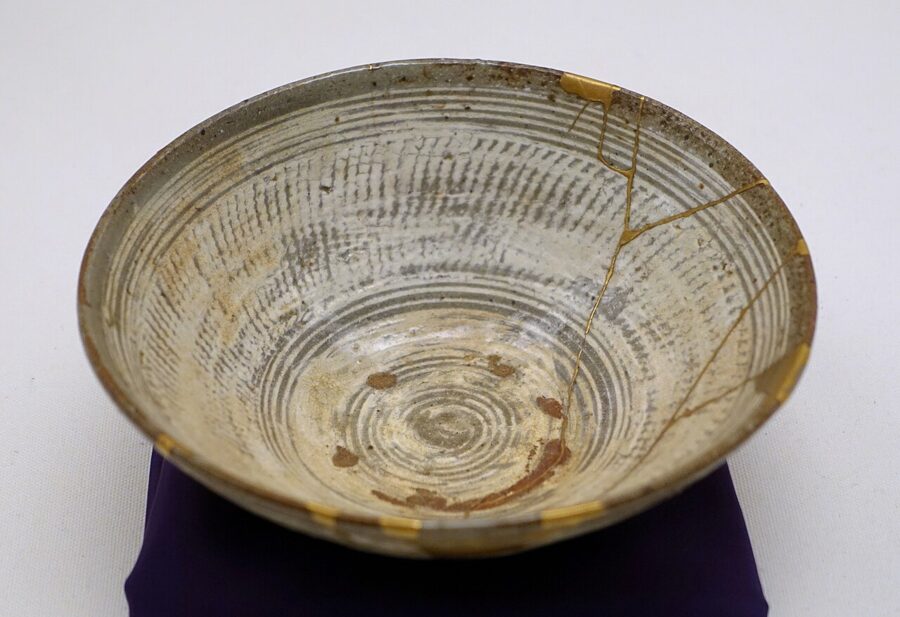
Many early kintsugi pieces in Western museums are Korean bowls, made in the Joseon period as everyday wares, shipped to Japan, prized by tea masters and repaired there in gold lacquer. The Freer Gallery in Washington and the Ethnological Museum in Berlin both show them. Look at where the gold sits: around the rim, where bowls chip, and down the walls, where they crack.
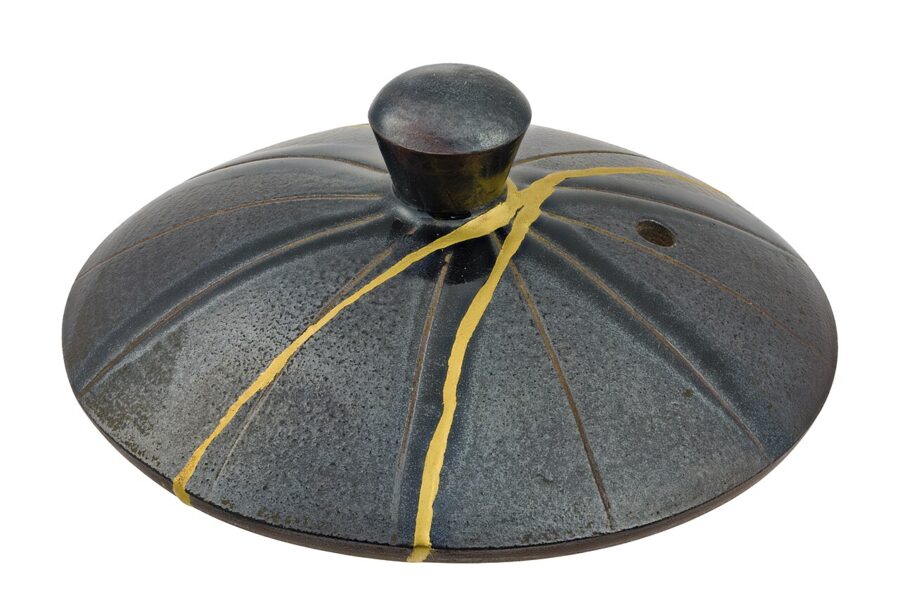
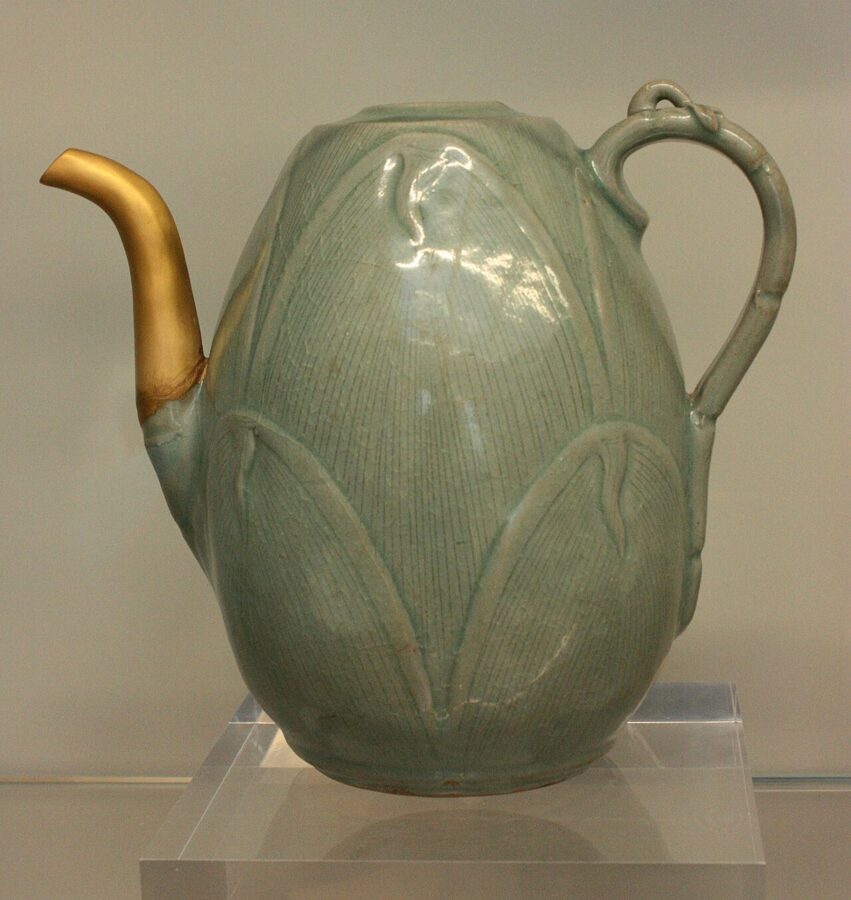
Some repairs went further than a seam. A Korean celadon wine pot of about 1100 to 1150, now in a British collection, has a spout of gold lacquer, a repair made in Japan. The owner wanted the pot back in use, and did not want anyone to pretend it had never broken.

The idea that kintsugi is a philosophy of healing, that cracks make a thing more beautiful, is largely a modern reading popularized in English-language books and talks. It sits comfortably with Japanese art and its taste for the worn and irregular. In Japan, though, the word still means a craft first: a price list, a set of materials, an evening class for people with a broken favorite cup.
Urushi: the tree, the sap and the rash
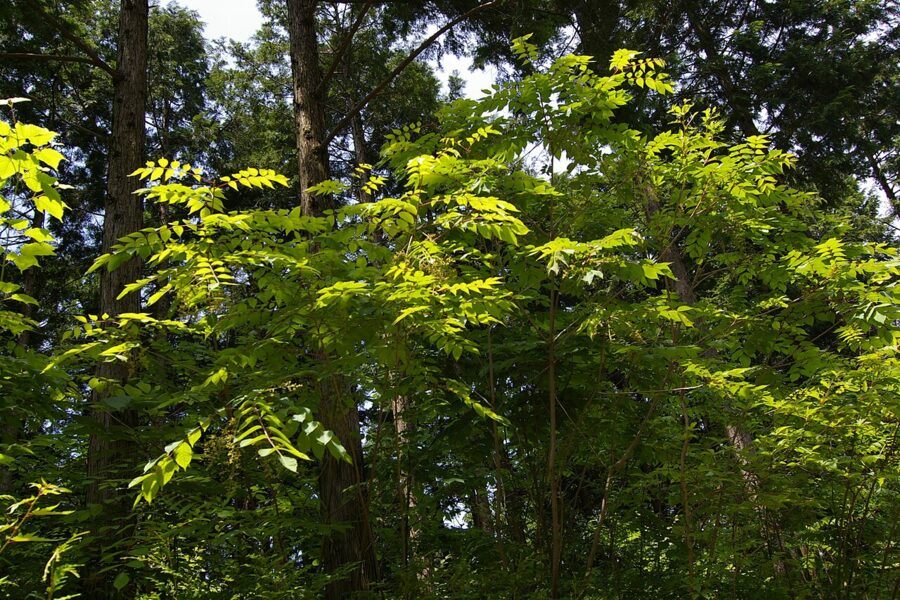
Urushi is the tapped sap of Toxicodendron vernicifluum, the lacquer tree, a relative of poison ivy. Tappers score the bark through the summer and collect the milky sap that beads in the cuts. Strained and left raw, it is called ki-urushi (生漆), the base of almost everything in a kintsugi repair and of a long list of Japanese traditional crafts besides.
Japan makes very little of its own. The Forestry Agency’s latest white paper puts 2024 consumption at 31.2 tonnes and domestic production at 1.8 tonnes, just 5.7%; nearly all the rest is imported, mainly from China. Most Japanese urushi is tapped in northern Iwate around Joboji, and Iwate’s Joboji-nuri and Hidehira-nuri lacquerware are Tohoku crafts that grew up beside that sap.
Since fiscal 2014 the Agency for Cultural Affairs has required Japanese urushi, in principle, for restoring National Treasure and Important Cultural Property buildings, and output has risen since 2015. It still falls short of the roughly 2.2 tonnes a year those restorations need. Most urushi sold in Japan, kit lacquer included, is imported, and that is not a defect.
The chemistry explains the weeks. Urushi does not dry by losing water the way paint does. An enzyme in the sap, laccase, turns its main component, urushiol, into a hard polymer, and that needs warmth and moisture: roughly 20 to 30°C (68 to 86°F) and 60 to 80% humidity. Above 40°C it stops curing, so the work rests in a damp cabinet called a muro rather than near a heater.
Urushiol also causes the rash. Wet urushi on bare skin can bring up a blistering, itching reaction a day or two later, so teachers hand out gloves and arm covers. The kit maker Tsugu Tsugu says to wipe any splash off with vegetable oil before it hardens and to see a doctor if a reaction appears. Fully cured urushi does not cause it, which is why a finished repair is safe to drink from.
How a proper repair is done, and why it takes weeks
This is the sequence Tokyo’s teaching studios and kit makers publish. Every step ends the same way: the piece goes into the damp box and you wait.
1. Clean the break
The edges are washed and dried, because oil, salt or old glue stops urushi curing. Some teachers file the sharp corners into a shallow groove for filler and leave the rough faces alone so they lock together.
2. Glue with mugi-urushi
Mugi-urushi (麦漆), raw urushi kneaded with wheat flour and a little water, is the actual glue. You spread it thinly, press the pieces together, tape across the seams without sealing them, and leave the smears alone, since wiping can shift the pieces. After about a week in the box the tape comes off and the excess is cut back.

3. Fill chips and gaps
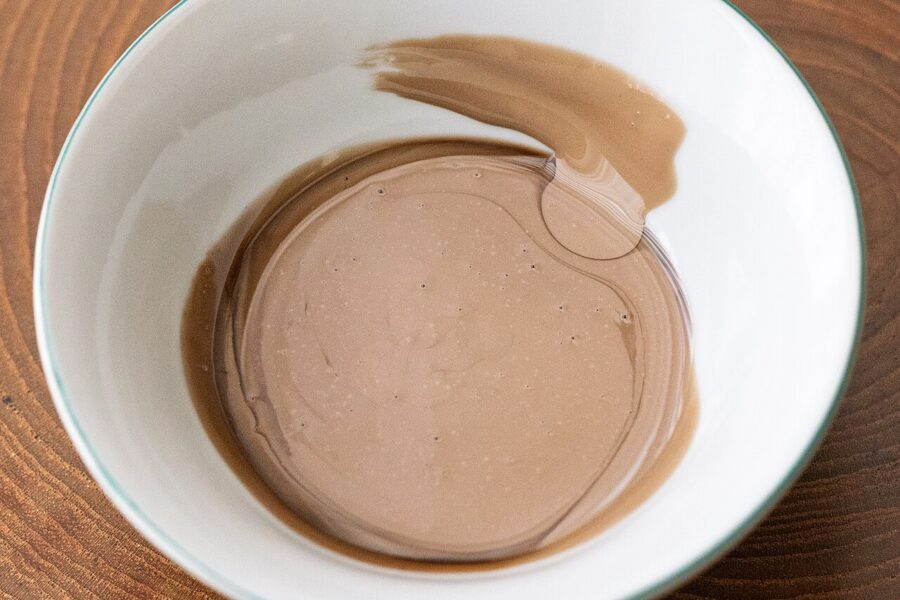
Deep chips get kokuso, mugi-urushi thickened with wood powder and fiber, built up in thin layers a night or more apart. Shallow dips and the seam itself get sabi-urushi (錆漆), raw urushi mixed with tonoko whetstone powder and water. Each layer is sanded flat once cured, and each cure is another few days.

4. Coat in black lacquer
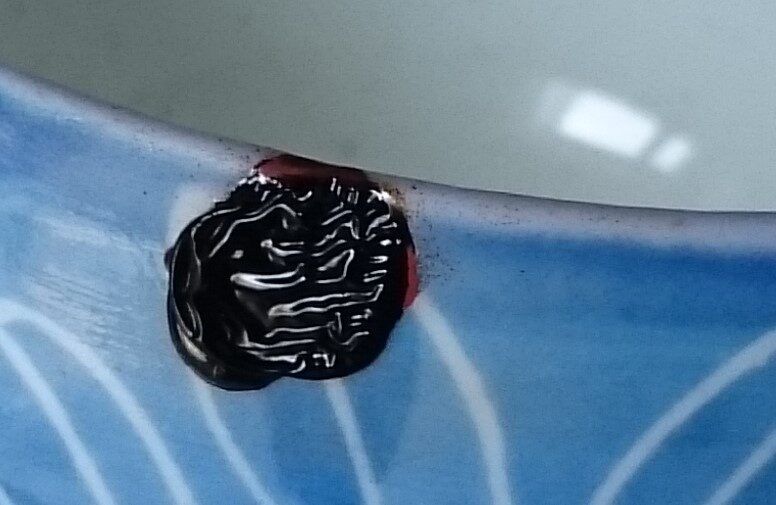
The seam is painted with refined black urushi, sanded with fine waterproof paper until it turns matte, and coated again to seal and level it. These coats add almost no thickness, so a dip needs more sabi-urushi, not more paint.
5. Lay the gold
The last coat is a hair-thin line of red bengara urushi, colored with iron oxide. While it is tacky, gold powder is dusted on with a ball of silk floss, mawata (真綿), and the piece rests about a week. Tsugu Tsugu uses 23-karat powder in its classes; Hariyo, the Tokyo lacquer shop below, sells tin powder from ¥600 (about $4) up to pure gold at the day’s price.
6. Clean up and wait again
Loose powder is wiped off with a damp tissue. Tsugu Tsugu says to wait at least a month before using the piece, because urushi keeps hardening long after it feels dry. With each layer taking a few days to a week, its estimate of two to three months for a full repair is not padding.
Real urushi, “new urushi” and epoxy kits
Most kits sold as kintsugi outside Japan, and many short workshops inside it, contain no urushi. They use two-part epoxy with brass or mica powder, sometimes with shin-urushi (新うるし), “new urushi,” a resin paint despite the name. They cure in hours, cause no rash, and can look right in a photograph.
| Real urushi | Shin-urushi or cashew lacquer | Epoxy and brass powder | |
|---|---|---|---|
| What holds it | Tree sap with flour or stone powder | Synthetic or cashew-oil paint, usually over a glue | Two-part resin |
| Cure time | Days per layer; one to three months in all | Hours to days | Minutes to a day |
| Rash risk | Yes, until fully cured | Low | Low (read the resin label) |
| Food use | Yes, about a month after finishing | Check the label; many are not rated for food | Most kits are sold as decorative; a few claim food safety |
On food I would be strict. Tsugu Tsugu states that its brass finish is not certified food safe and that its epoxy class makes accessories, not tableware. Hariyo will not use resin imitations of lacquer at all, so that a repaired dish stays safe to eat from. A few Japanese resin kits are now sold as food safe under the Food Sanitation Act; read exactly which parts the claim covers.
My rule: for a vase or a shelf piece, an epoxy kit is fine and done in a weekend. For a rice bowl, a teacup or anything that meets hot liquid and a mouth, use urushi or hand it to someone who does.
Where to learn kintsugi in Japan
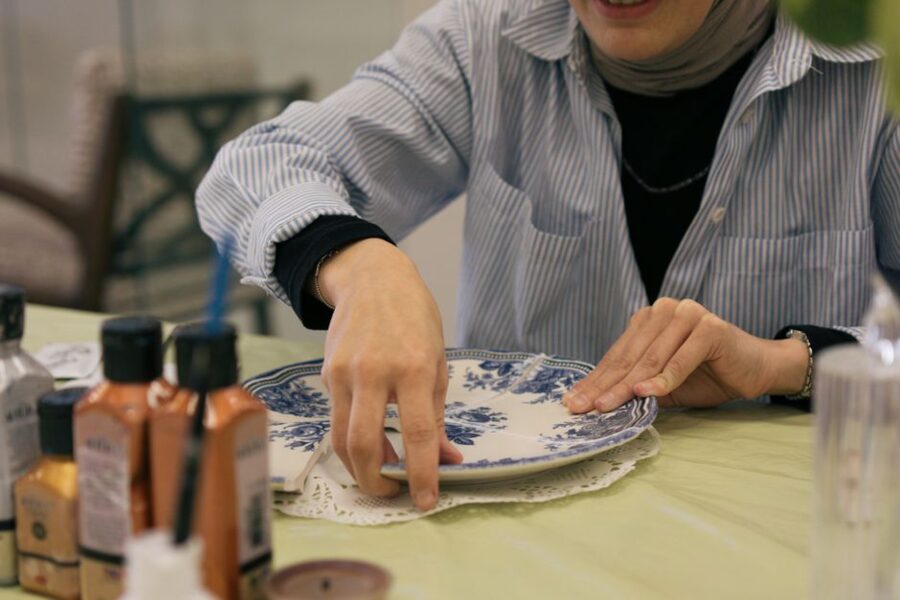
Urushi needs weeks to cure, so nobody can take a broken bowl to a two-hour workshop and leave with it mended. Short classes work on pieces the studio has taken partway, and you do a step or two and the gold. Mending your own piece start to finish takes weekly sessions and a stay of two months or more. Prices and schedules below are as of November 2026.
Tokyo
Hariyo kintsugi classroom, Taito. This is the serious option, run by Hariyo Shikko, a lacquer dealer in business since the Edo period that has taught lacquer for over 60 years and opened its dedicated kintsugi class in 2006. It uses natural urushi only. Two-hour classes run morning, afternoon or evening, with up to ten students per teacher, most of the teachers being Tokyo University of the Arts graduates.
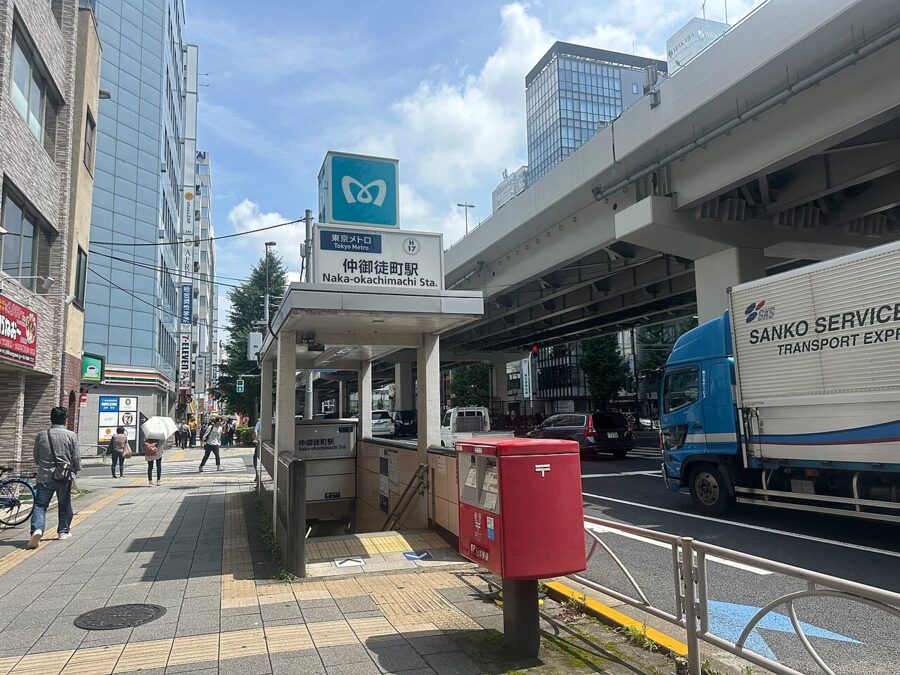
Joining costs ¥11,000 (about $69), then ¥7,260 (about $46) a month for one session, ¥12,320 (about $78) for two or ¥16,280 (about $103) for three. Basic tools run about ¥3,000 (about $19), and the drying cabinets and lacquer stock are free to use. Classes and site are in Japanese, the school closes on Mondays, and you can ask to watch a class first. It is at Kato Building 3F, 3-41-4 Taito, a minute from exit 1 of Naka-Okachimachi Station.

Tsugu Tsugu, Ebisu and Asakusa. Yuki Matano opened the Ebisu studio in February 2021 and Asakusa in May 2022, and it is the easiest start for non-Japanese speakers. The 90-minute Traditional Kintsugi Workshop costs ¥22,000 (about $139), uses real urushi and 23-karat gold on a prepared vessel, and takes ages 13 and up; your piece goes home in a drying box. The 60-minute kintsugi-style class at ¥6,600 (about $42) uses epoxy and brass and says so, which I respect.
Regular 90-minute classes on your own pieces cost a one-time ¥11,000 plus ¥4,950 to ¥6,600 (about $31 to $42) a class, or ¥9,900 (about $62) a class on the visitor plan, plus a required urushi kit at ¥9,800 to ¥22,000 (about $62 to $139). The studio puts a full repair at two to three months and about ten classes; English and French help depends on the day, so ask first.
Kyoto
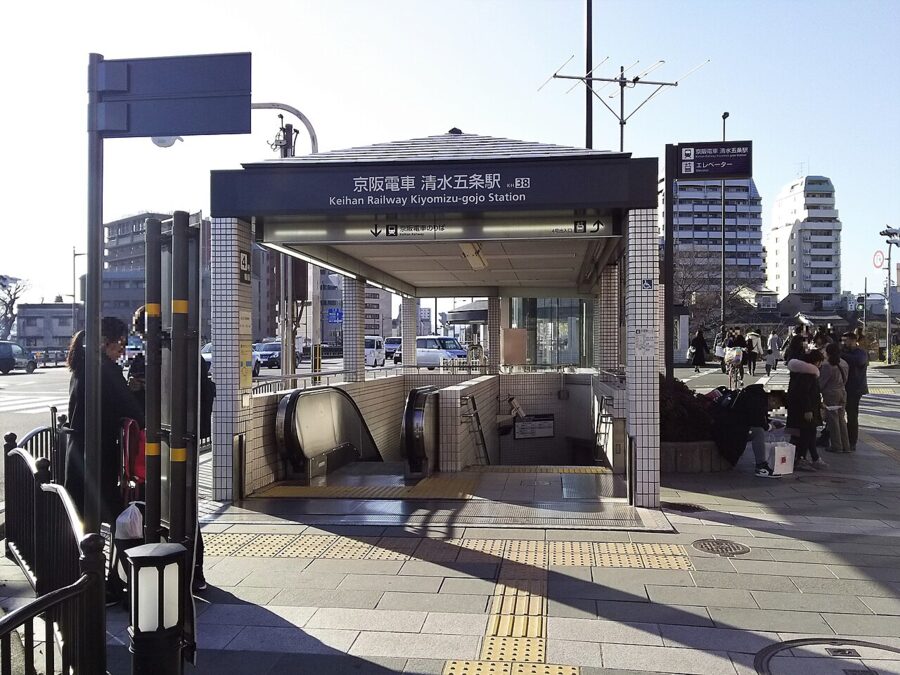
Tsugu Tsugu Kyoto, Higashiyama. The third studio opened on November 1, 2026 at 572-15 Komatsu-cho, Higashiyama-ku, about ten minutes on foot from Kiyomizu-Gojo Station on the Keihan Main Line. It runs the same ¥22,000 workshop for up to ten people, 10:00 to 18:00, closed Wednesdays, staffed by two senior repairers from Ebisu.

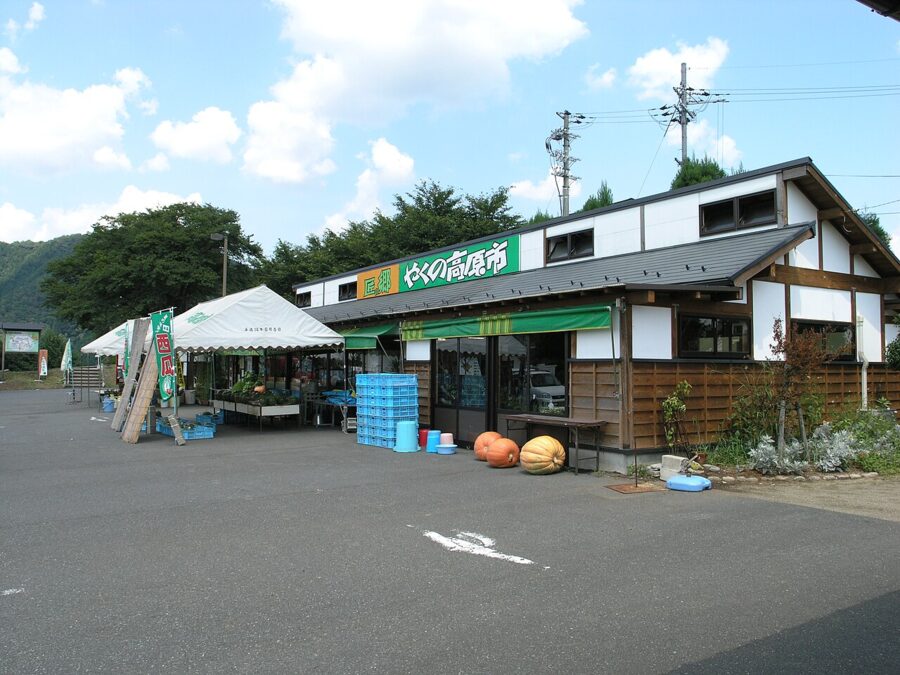
Yakuno Wood and Lacquer Hall, Fukuchiyama. For a lacquer town, go north to Yakuno in rural Kyoto Prefecture, where Tanba urushi is still tapped. The local NPO Tanba Urushi has grown its trees from about 400 in 2012 to about 1,800, and in 2024 the Agency for Cultural Affairs recognized it as a preservation body for Japanese urushi production, the first in western Japan.
The city-run hall (Yakuno Ki to Urushi no Yakata) holds kintsugi classes twice a month through March 2027, usually the second Saturday and last Tuesday, 13:00 to 16:00, at ¥3,850 (about $24) for up to eight people. Bring about five chipped or broken pieces of your own. Book by phone or email; the hall opens 10:00 to 17:00, closed Wednesdays, inside the Nosho no Sato Yakuno roadside station at 2199 Hirano, Yakuno-cho.

Kanazawa
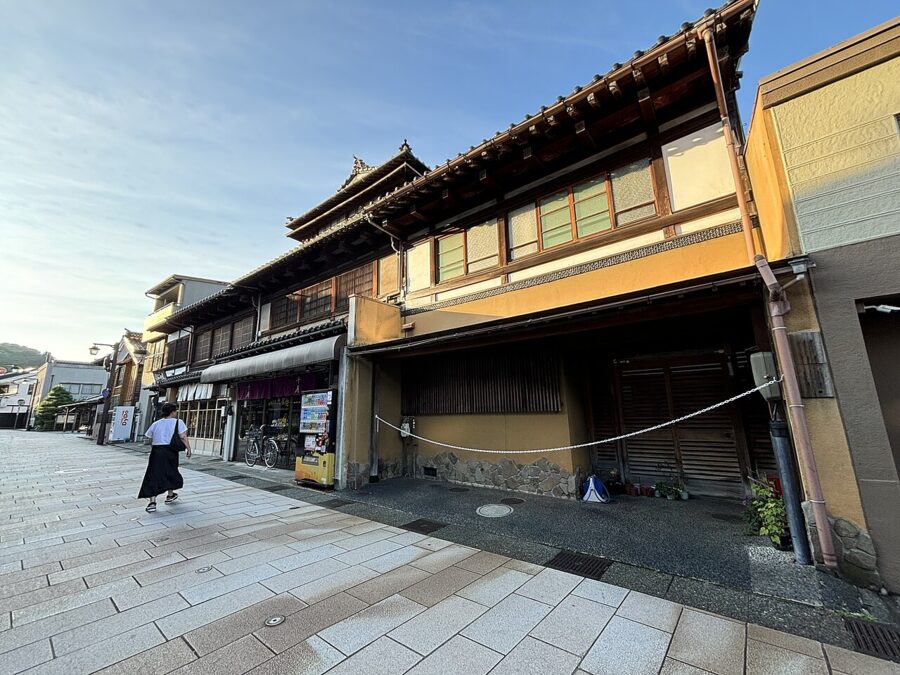
Kintsugian, Hyotan-machi. In Kanazawa, a gold-leaf and lacquer city, this small studio at 1-7 Hyotan-machi works only in natural materials. Its shared Traditional Kintsugi Experience runs Monday to Saturday, 10:00 to 12:15, for ¥12,000 (about $76), or ¥13,000 (about $82) from December 28 to January 4, in English for up to four people. You practice each stage on studio pieces, gild a sake glass with 22.7-karat gold, and take the glass home.
Your own pieces need the regular course: 90-minute sessions a week apart, at least five or six, ¥7,000 (about $44) shared or ¥10,000 (about $63) private, metal extra. Private experiences start at ¥36,000 (about $227) plus tax, also in Spanish or Japanese. Minimum age is 18, or 16 with a guardian, and the studio closes from January 15 through February and again in summer.

| Where | What you do | Length | Price (Nov 2026) |
|---|---|---|---|
| Hariyo, Taito, Tokyo | Monthly membership, own pieces | 2 hr sessions | ¥11,000 to join, then from ¥7,260 a month |
| Tsugu Tsugu, Ebisu, Asakusa or Kyoto | Workshop on a prepared piece | 90 min | ¥22,000 |
| Yakuno Wood and Lacquer Hall, Fukuchiyama | Class on your own pieces | 3 hr | ¥3,850 |
| Kintsugian, Kanazawa | Shared practice on studio pieces | 2 hr 15 min | ¥12,000 |
Kits, tools and living with a mended piece
To start at home, buy a real urushi kit from a Japanese lacquer business, unless the piece will never hold food. Tsugu Tsugu’s TSUGUKIT range is all urushi and mineral pigment and ships abroad; Hariyo sells lacquer, powders and tools in Taito. Add flour for the mugi-urushi, vegetable oil and ethanol for cleaning, gloves, and a lidded box with a wet towel inside as your muro.
Gold is where spending more shows. Brass looks right at first and tarnishes. Tin and silver are cheap and fine. Real gold powder costs what gold costs, though one seam needs very little.
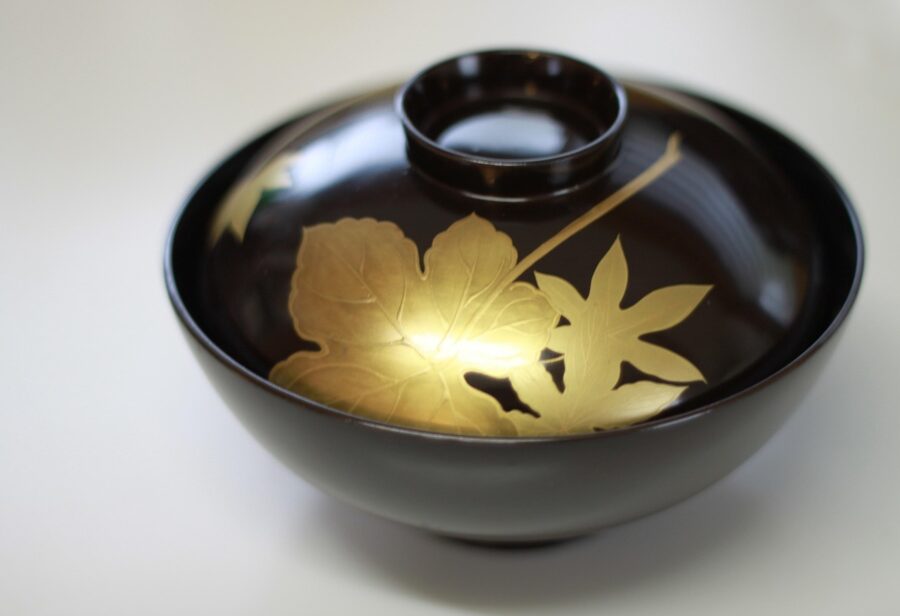
Look after a urushi repair like lacquerware. Tsugu Tsugu’s care list:
- Wash by hand, gently, without scrubbing the seam.
- No microwave, dishwasher, oven or open flame, and no long soaks.
- Stay under the lacquer’s heat limit of about 95°C (203°F), and avoid sudden swings such as boiling water into a cold cup.
- Store it out of direct sun, where other dishes will not rub the gold.
- Hold a mended cup by the body, not a repaired handle, which never regains full strength.
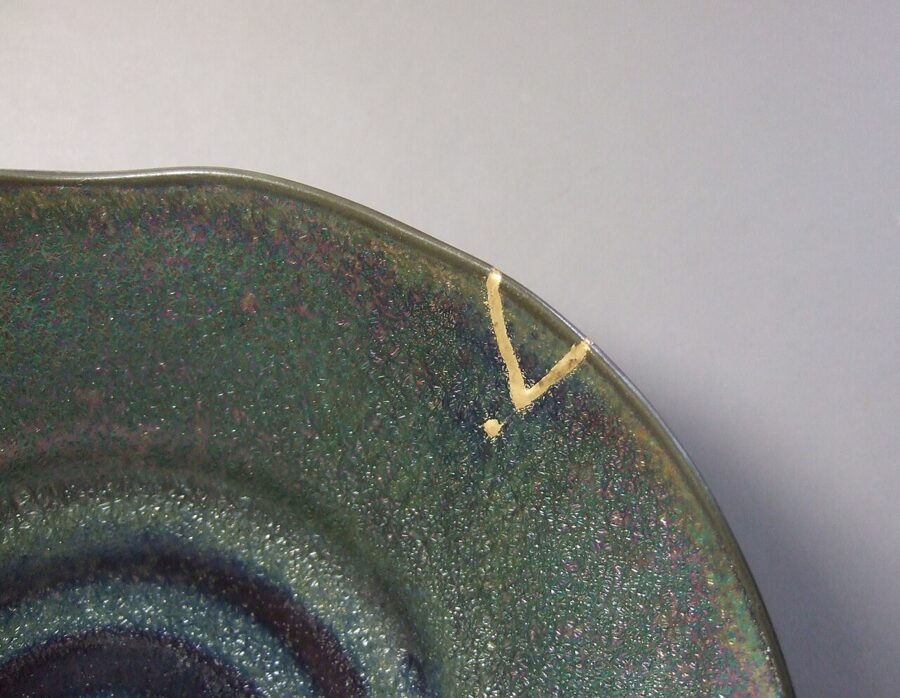
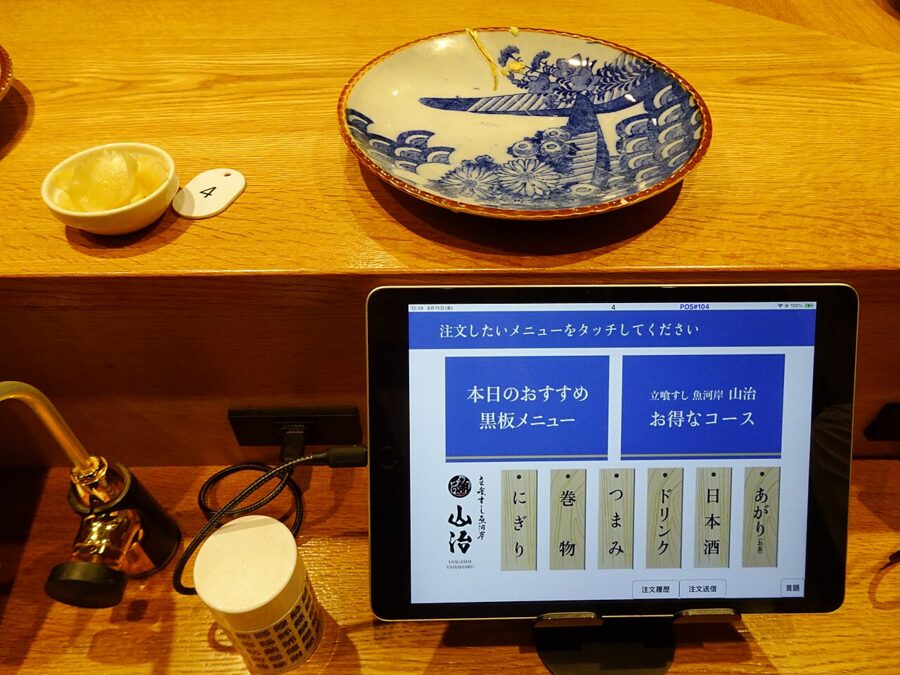
A clay pot used over a flame can be mended to serve from, but not to cook in. Otherwise a good repair goes back into use, which is the point. The platter below was photographed on a Tokyo sushi counter in 2025, under the fish like any other plate.

Seeing it in Tokyo
The Tokyo National Museum in Ueno Park owns Bakohan but does not always have it on display, so check its exhibition list first. As of November 2026 it opens 9:30 to 17:00, until 20:00 on Fridays and Saturdays, closes on Mondays (Tuesday after a Monday holiday) and charges adults ¥1,000 (about $6). Suitcases are not allowed inside.
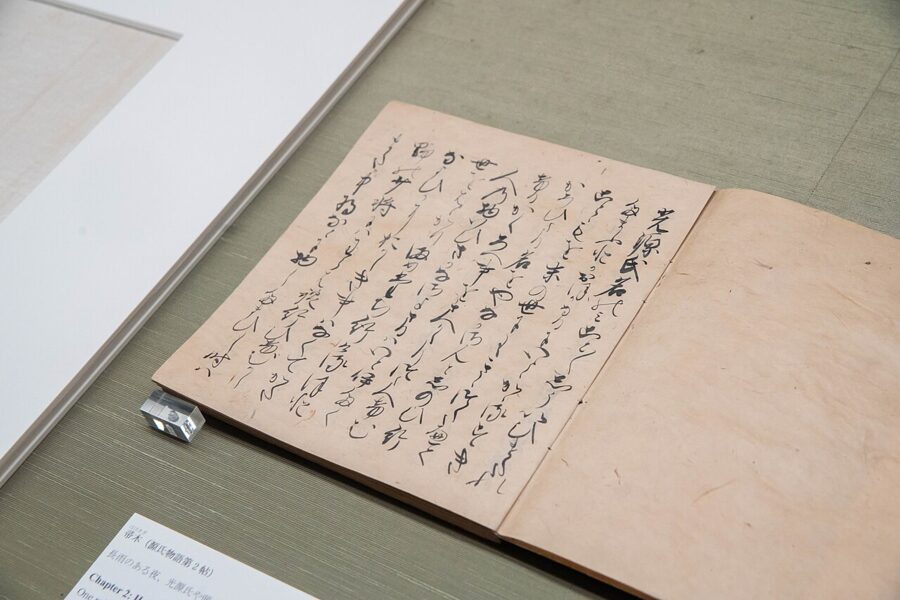

The museum and the Hariyo classroom are both in Taito ward, so you can see the staples in the morning and learn the lacquer way in the afternoon. Look at Bakohan’s crack from the side. Then look at a good kintsugi seam the same way: the gold sits flush with the glaze, not on top of it. That flatness is weeks of filling and sanding, and it is the first thing I check on a mended bowl.