
The first Hello Kitty product was a small coin purse, sold in Japan in 1975. In 2024 the company behind it passed a trillion yen (about $6.5 billion) in stock-market value, and in 2026 the woman who drew the cat for 46 years is handing the pencil to a successor who signs only as Aya.
Nothing about her was planned as a world brand. Sanrio was a gift-goods company that drew characters to sell stationery, and Kitty was one design among many in 1974. What carried her out of the stationery aisle was a face simple enough to print on anything and a company that treated every pencil case as a chance to sell a feeling.
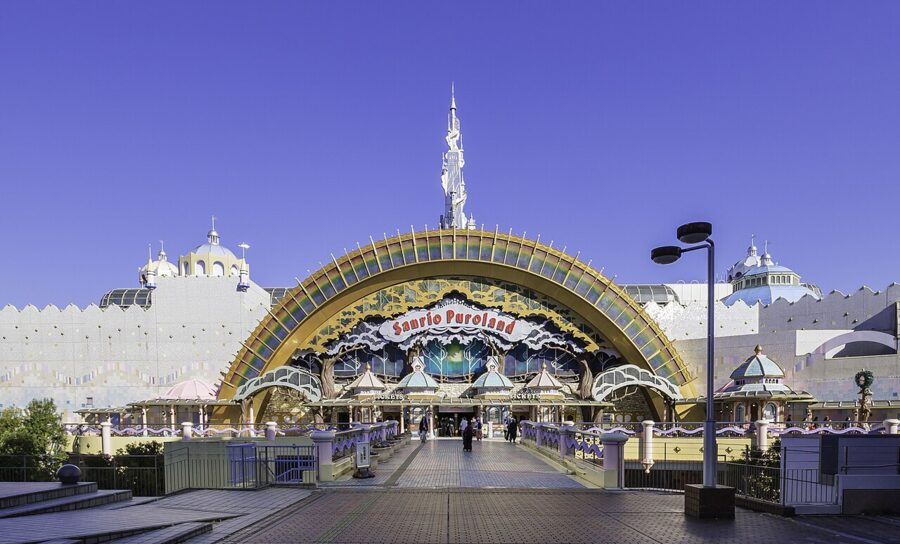
She has had four designers, one rule about her face that has never been broken, and a cast of several hundred characters around her. The places where Sanrio turned all of that into rooms you can walk through are a train ride from Shinjuku, or a flight to Kyushu.
In this article
A silk company that learned to sell gifts
Sanrio started in August 1960 as Yamanashi Silk Center Co., set up in Tokyo by Shintaro Tsuji, a former employee of the Yamanashi prefectural government. The company’s own history puts the aim plainly: to build what it called a “social communication business,” selling small things that people give each other. In 1962 it produced its first original design, a strawberry, and put it on gift goods.
The strawberry is worth stopping on, because it is the whole Sanrio method in one fruit. A plain motif, printed on cheap items, sold as a present rather than as a product. Sanrio’s later slogan, “Small Gift, Big Smile,” describes a business that has never really changed.
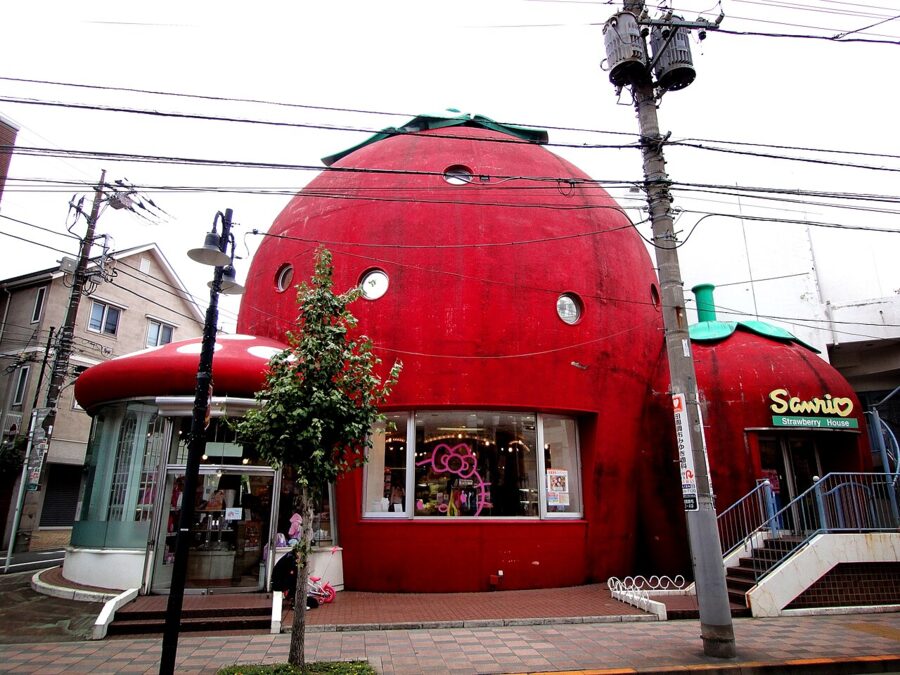

The 1970s built the machine. Sanrio opened its first own-brand shop, Gift Gate, in Shinjuku in 1971, took the name Sanrio in 1973, and merged in its greeting-card business the same year. In 1974 its designers produced two new character sets, Hello Kitty and Patty & Jimmy, and set up a film company in Los Angeles.
Then came the pieces that turned a character into a franchise. Licensing of Sanrio characters to other companies began in 1976, the year the first overseas Gift Gate opened in San Jose, California. Hong Kong followed in 1978. By the time Sanrio listed on the Tokyo Stock Exchange in 1982, Kitty was on pencil cases from California to Kowloon.

1974: a sketch, a coin purse and a name
Sanrio lists 1974 as Hello Kitty’s debut year and is careful about the wording: it is “the year the design was made.” The first product carrying her, the puchi pasu or petit purse, went on sale in 1975, the same year Sanrio launched its in-house newspaper Ichigo Shimbun (いちご新聞, “Strawberry News”) and created My Melody and the Little Twin Stars.
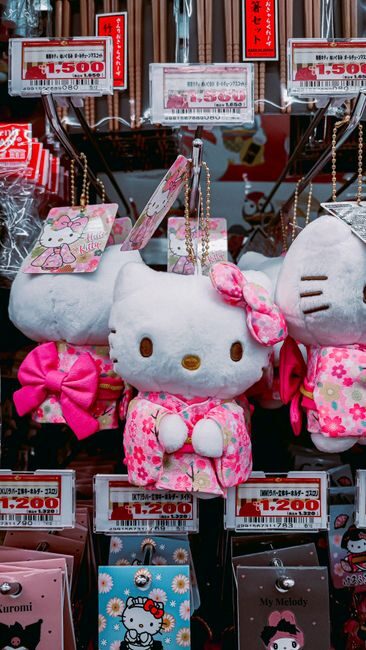
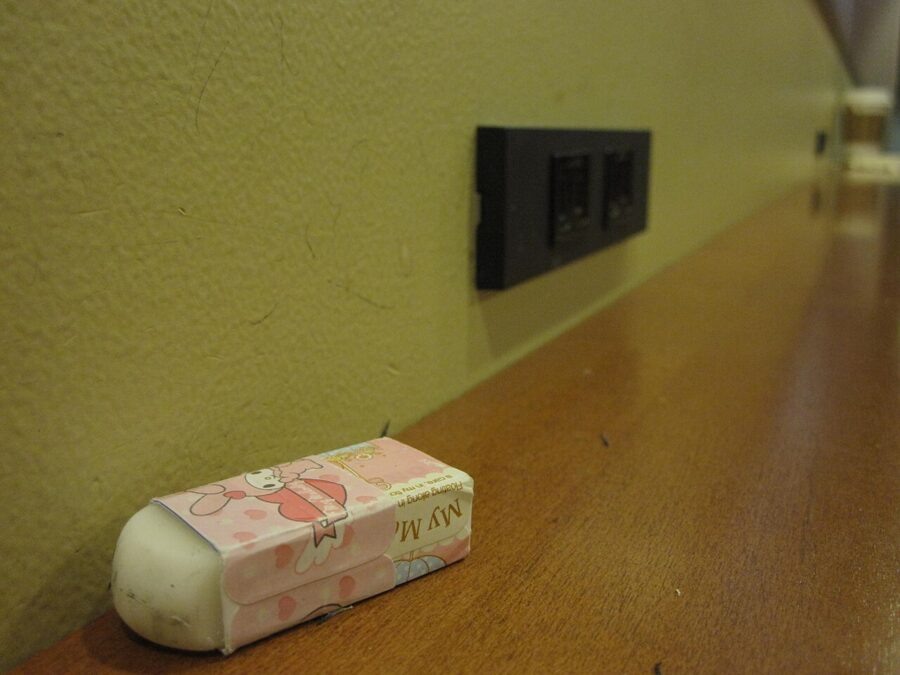
The designer was Yuko Shimizu, then 27. Her Kitty was a white cat drawn in thick, even outlines, seated side-on, with a red bow and nothing else on her face but two dot eyes, whiskers and a yellow nose. It is a drawing built for small objects: it reads on a coin purse, on a pencil, on an eraser the size of a thumbnail.
Sanrio gave her a biography to match the English-storybook look. Her full name is Kitty White, she was born in the suburbs of London, and she stands five apples tall and weighs three apples. Her birthday is November 1, she has a twin sister called Mimmy, she likes baking cookies and playing the piano, and her favorite food is her mother’s apple pie.
None of that is on the coin purse, and none of it needed to be. The profile is there for fans who want a story; the drawing works without one. That split between a thin, optional backstory and a strong graphic face is the single best decision in the character’s history, in my view.
Three designers in fifty years, and now a fourth
Shimizu left Sanrio soon after creating Kitty, and Setsuko Yonekubo took over the character in 1976. Yuko Yamaguchi became the lead designer in 1980 and held the job until 2026, longer than either of her predecessors by decades. She also designed Kitty’s boyfriend Dear Daniel and her pet Persian cat, Charmmy Kitty.
Yamaguchi changed how the character met her public. Sanrio credits her with inventing the designer signing session, where fans queue to meet the person who draws their favorite character, and with pushing collaborations with artists and designers in Japan and abroad. Under her, Kitty grew from a children’s stationery motif into a face adult women chose for themselves, from cosmetics with Clinique to a partnership with the Japan Sumo Association.

On February 10, 2026, Sanrio announced in the March issue of Ichigo Shimbun that the baton would pass “from the third generation to the fourth.” The successor is a designer who works under the pen name Aya and has drawn Kitty alongside Yamaguchi for years; the designer’s real name has not been published. Sanrio said the handover would happen during 2026 and that Yamaguchi stays on as an adviser.
The company gave a plain reason: designers of its major characters hand the role on after a set period. The paper (¥330, about $2, on sale on the 10th of each month at Sanrio shops) planned five issues looking back on her career, and Sanrio took fan letters for her until June 10, 2026.
No mouth, one bow
The missing mouth is the most discussed choice in Japanese character design. Yamaguchi has explained that Kitty has no fixed expression so that the person looking at her can project their own feelings onto her face. Sanrio’s English-language line has long been gentler: she speaks from her heart.
Look at it as a printer would and the decision makes practical sense too. A face with no mouth has no expression to go wrong when the image is shrunk to a centimeter, printed off-register, or stitched in thread. Happy on a birthday card, quiet on a get-well card, it is the same drawing.
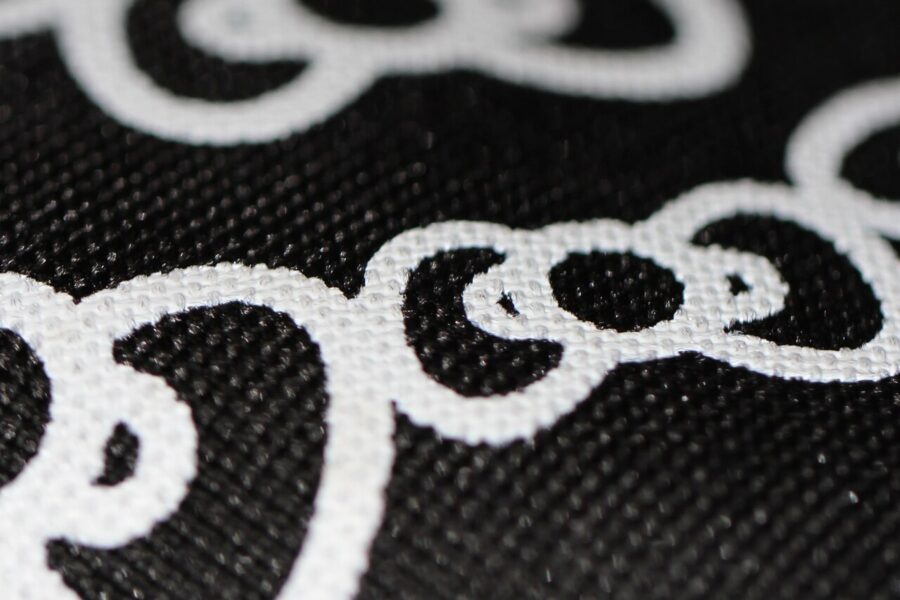

The bow does a different job. Sanrio’s profile of the family says Mimmy wears her ribbon on the right ear so that the twins can be told apart, which leaves Kitty’s on the left. That one asymmetric spot of red is the brand’s whole color identity, and it is why a red bow on a white oval reads as Kitty from across a train platform.
The rest is restraint. Head wider than the body, a yellow oval nose, three whiskers a side, outlines of one weight. You could draw her from memory in ten seconds, which is exactly what makes her a good licensing property and a poor subject for knockoffs that try to “improve” her.
“Not a cat”: what was actually said in 2014
In August 2014 the anthropologist Christine Yano, author of Pink Globalization: Hello Kitty’s Trek Across the Pacific, was preparing a 40th-anniversary exhibition at the Japanese American National Museum in Los Angeles. She told the Los Angeles Times that Sanrio had corrected her script “very firmly”: Hello Kitty was a little girl, not a cat. The story went around the world in a day.
Sanrio then clarified. A spokesman in Tokyo said it went too far to say she was not a cat: she is a personification of a cat, a fully anthropomorphic character with a cat as the design motif. In the United States, a Sanrio spokesman compared her to Mickey Mouse, a mouse who wears shorts and gloves, and said the company always refers to her as a little girl.
The Japanese company’s own description today calls her a character with a cat as its motif and “a bright, kind girl.” Both halves are true, and both were always there: a cat’s face on a child’s life. The fuss was mostly about English, where “cat” and “girl” sound like they have to be either-or.

The rest of the cast
Sanrio entered 90 characters in its 2026 popularity poll and says it has created more than 450. Most fans outside Japan know five or six of them, and they span half a century.
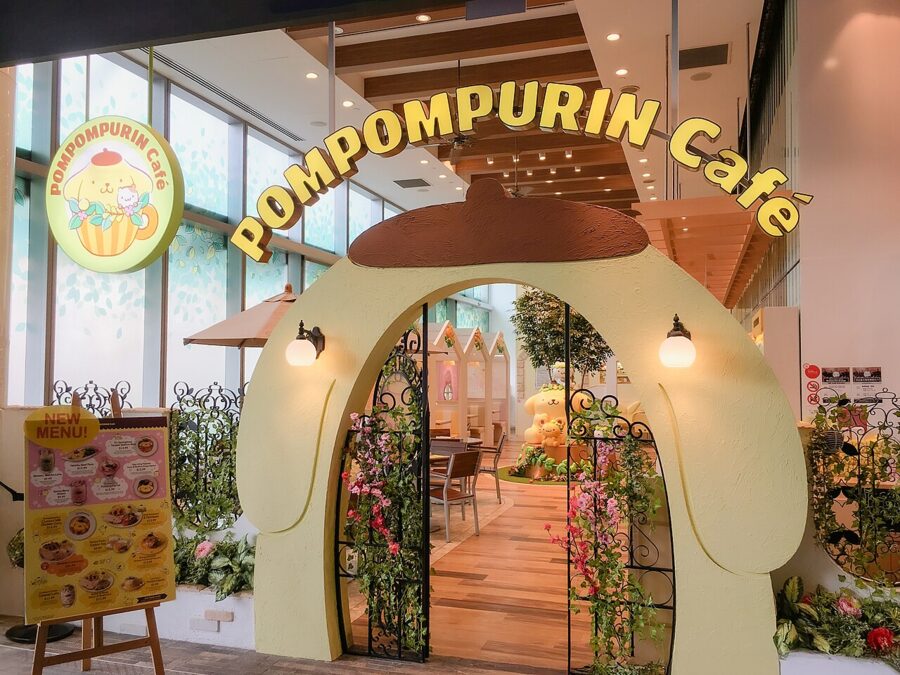
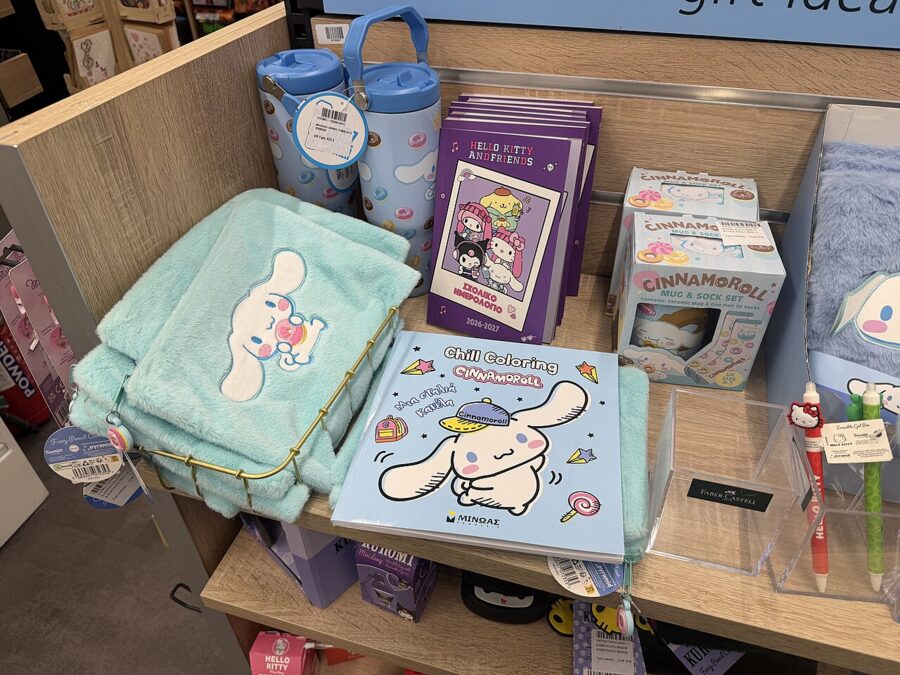
My Melody (1975) is a white rabbit in a pink hood, drawn the year after Kitty and celebrated with a 50th anniversary in 2025. Pochacco (1989) is a sporty white dog. Pompompurin (1996) is a golden retriever in a brown beret, named after the custard pudding he resembles. Cinnamoroll (2001) is a white puppy with long ears that let him fly, and his rise through the 2010s made him the face of a younger generation of Sanrio fans.

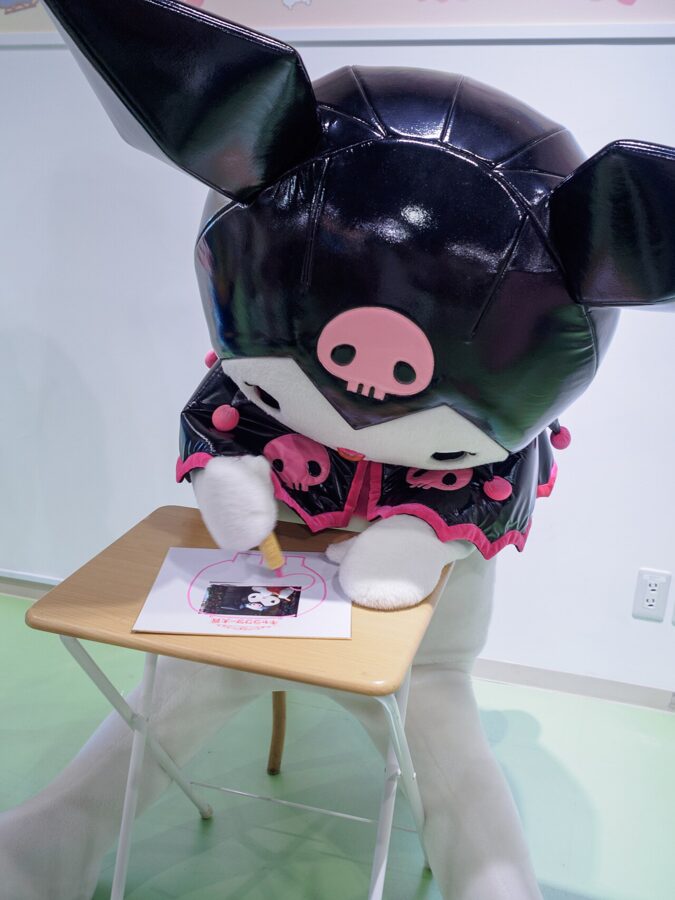
Kuromi arrived in 2005 as the mischievous rival in the anime Onegai My Melody: an imp in a black jester’s hood with a pink skull on the front. She is the proof that Sanrio’s formula can carry an edge. Her punk styling made her the character teenagers who had “grown out” of Kitty could still wear.


The annual character ranking
The Sanrio Character Ranking began in Ichigo Shimbun in 1986, and it is a real vote, not a marketing list: fans vote online and in shops over several weeks. The first two winners were Zashikibuta, a pig, and Marron Cream, a rabbit, neither of whom most foreign fans have heard of.
Voting for 2026 ran from April 9 to May 24, and the results came out on June 28 at a Sanrio festival in Yokohama. Total votes reached 70,647,379, a record. Pompompurin won for the second year running and the fifth time overall, in his 30th anniversary year, after Cinnamoroll had led the first count.
| 2026 rank | Character | Created |
|---|---|---|
| 1 | Pompompurin | 1996 |
| 2 | Cinnamoroll | 2001 |
| 3 | Pochacco | 1989 |
| 4 | Kuromi | 2005 |
| 5 | Hello Kitty | 1974 |
| 6 | Pekkle | 1989 |
| 7 | My Melody | 1975 |
Fifth place for the company’s most famous face looks like a slump, and it is not one. Kitty is the brand; the ranking is where Sanrio watches which of the others is ready to carry more of the load. Three dogs in the top three tells you where Japanese fans are this decade.
Collaborations, and what they say about Japanese design
Sanrio licenses its characters to thousands of other companies, and most of the results are forgettable. The interesting ones show how Japan uses a character: as a friendly face for an institution, a souvenir that ties a place to a memory, or a way to make public space a little less severe.
The clearest example is gotochi Kitty (ご当地キティ, “local Kitty”). Starting in 1998 with a lavender-themed Kitty sold in Hokkaido, a licensee began producing Kitty dressed as each region’s specialty, sold only in that region. The idea came out of a souvenir trade full of cheap pennants and copies; the licensee now counts about 3,000 designs.
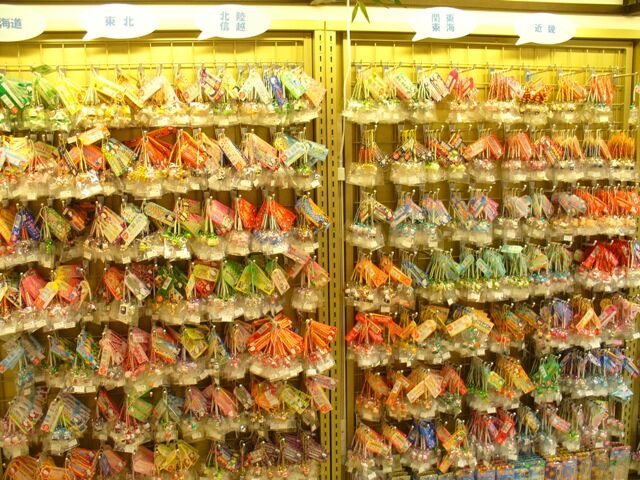

Gotochi Kitty is a mass-market cousin of the regional pride behind Japanese traditional crafts: the same instinct that makes a town famous for its lacquer or its paper makes it want its own Kitty. It also explains why Japanese towns and agencies adopt mascots so readily, from local governments to the etiquette mascots on Tokyo subway manner posters.
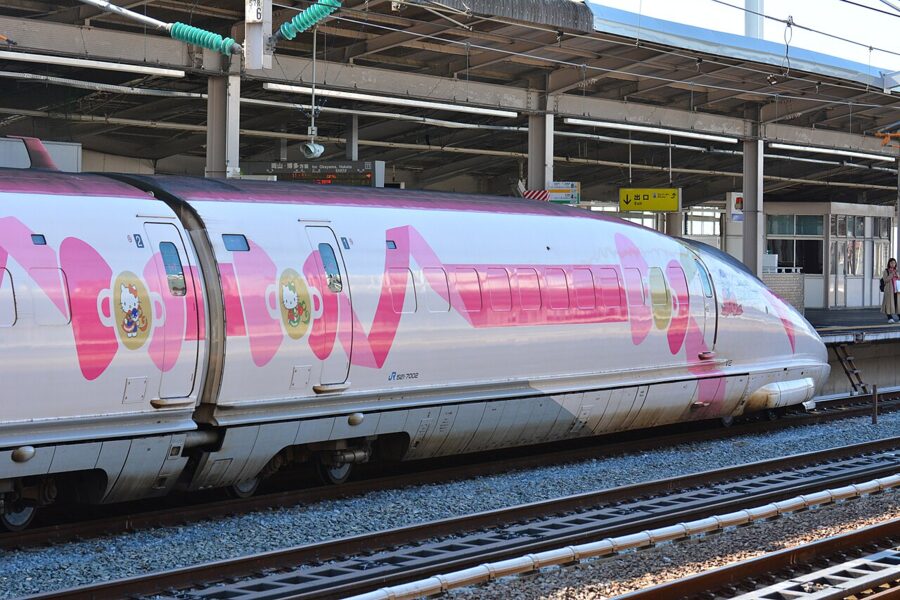
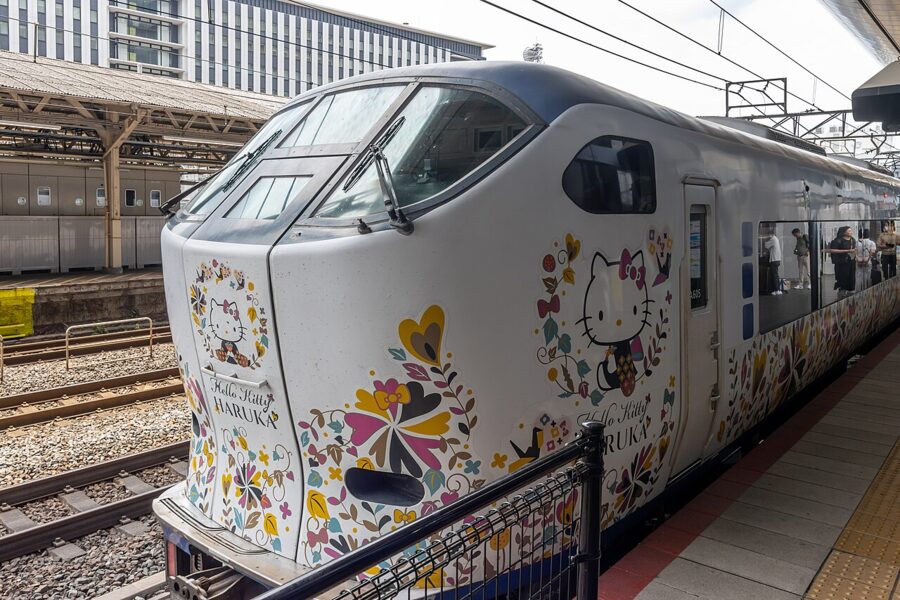
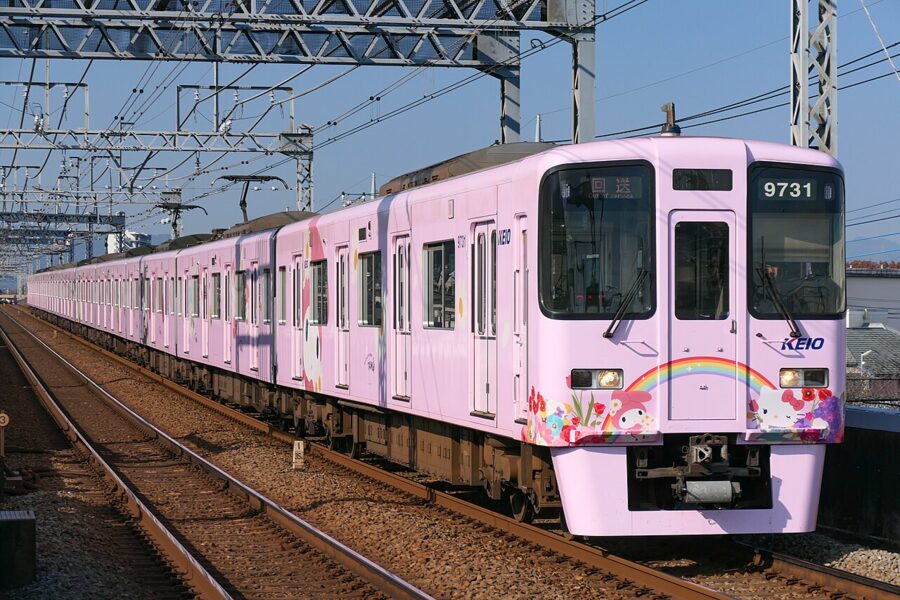
Railways took the idea furthest. JR West put a Hello Kitty Shinkansen into service in 2018, a 500-series bullet train painted pink and white, with a display car and a photo room on board. The Haruka airport express between Kyoto and Kansai Airport has run in Kitty livery too, and the Keio Line, which serves Puroland, has run trains wrapped in the whole Sanrio cast.


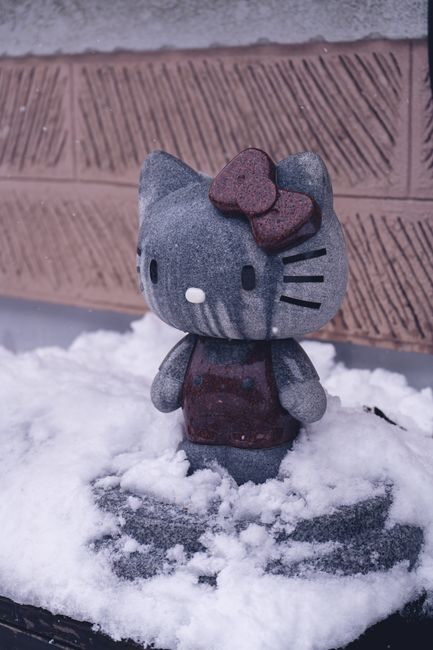
Official roles followed. Kitty was named a children’s ambassador for UNICEF in the United States in 1983 and by the Japan Committee for UNICEF in 1994, and Japan’s transport ministry made her a tourism goodwill ambassador to China and Hong Kong in 2008. A government using a mouthless cat as its envoy says something about how seriously Japan takes kawaii (可愛い, “cute”) as a public language.
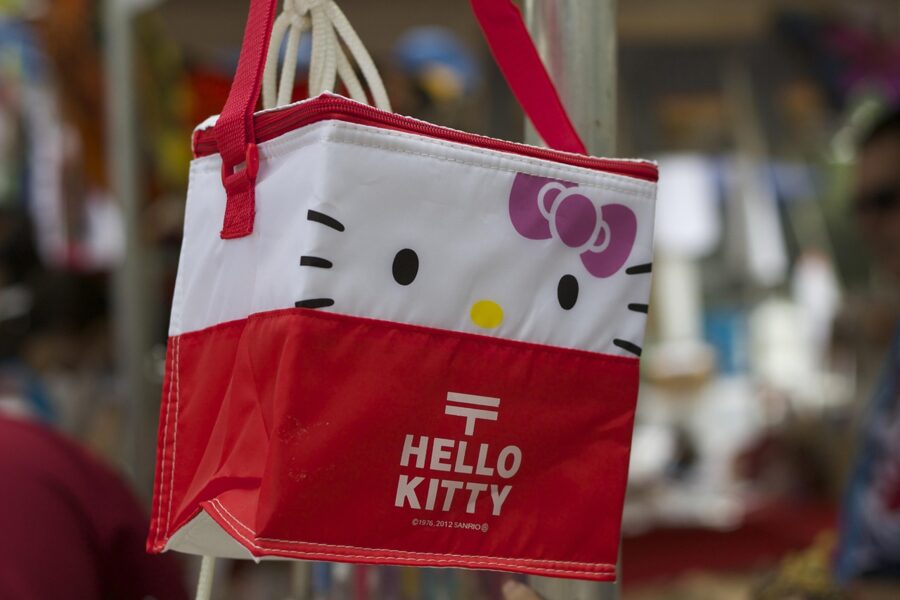
Fashion and art have borrowed her too. The fashion collaborations come and go every season, and few of them add anything the character did not already have. The more lasting influence runs the other way: the flat, bright, endlessly reproducible look of Sanrio goods belongs to the visual culture Takashi Murakami drew on when he named Superflat and carried it into galleries as a reading of postwar Japanese art.

Where to see it all in Japan
Hours and prices below are as of November 2026. Both parks change their hours by the day, so check the official calendar for the date you plan to go.
| Place | Where | Hours (Nov 2026) | Tickets |
|---|---|---|---|
| Sanrio Puroland | Tama, Tokyo; 5 min walk from Keio or Odakyu Tama Center | Vary by day; some weekday closures | Day passport, adult ¥3,900–¥6,900 (about $25–$45); child and senior ¥2,800–¥5,800 (about $18–$37) |
| Harmonyland | Hiji, Oita, Kyushu | Mostly 10:00–17:00; closed some midweek days | Day passport; see the official site |
| Sanrio NISHIGINZA | Nishiginza building 2F, Ginza 4-1 | 11:00–20:00 daily | Free entry |
| Sanrio Harajuku | Takeshita Street Square, first and second floors | 11:00–19:00 daily | Free entry |
Sanrio Puroland, Tama
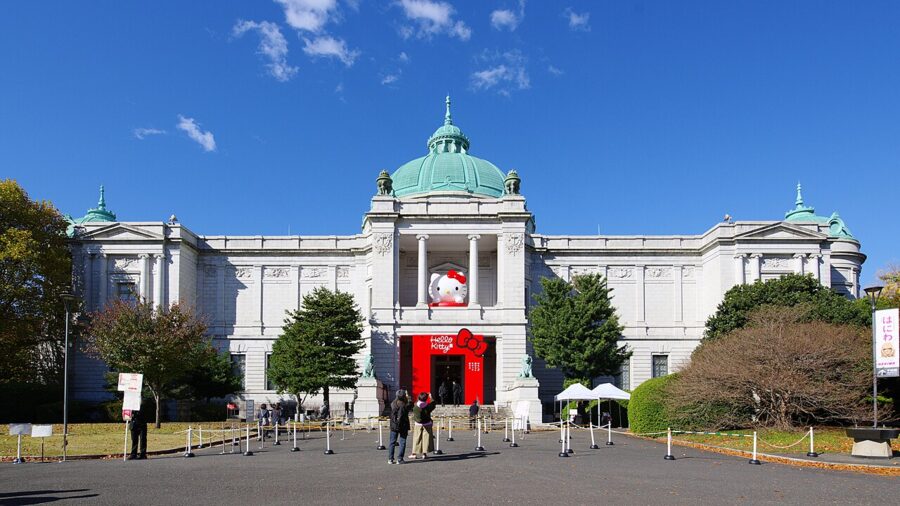
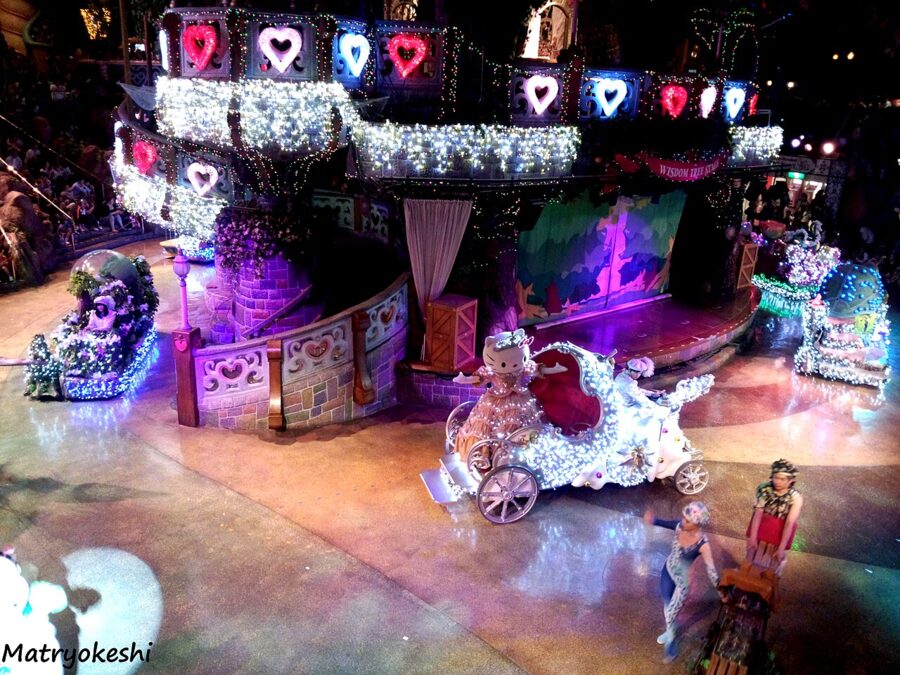
Puroland opened in 1990 as an indoor park, which makes it one of the few theme parks in Japan where rain changes nothing. Inside are character greeting spaces, boat rides, theaters and the parade hall, plus shows that change every season: in 2018 it added Kawaii Kabuki, a musical retelling of the Momotaro folk tale with Kitty’s troupe in kabuki styling.
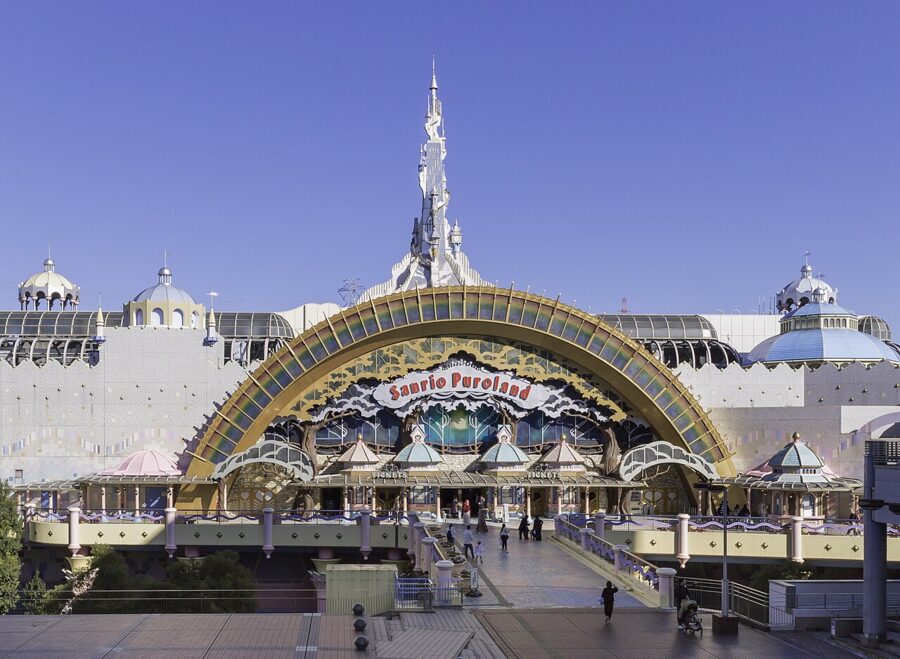

You need two things to get in: a passport ticket and a visit reservation. The passport can still be bought at the gate on the day, but the cheaper official e-passport and the reservation both need a free Sanrio+ membership. Prices follow a ten-step scale set by date since August 1, 2026: a day passport costs ¥3,900 to ¥6,900 for adults aged 18 to 64, and ¥2,800 to ¥5,800 for children aged 3 to 17 and seniors aged 65 and over; children 2 and under go free.
The afternoon passport, with entry from 14:00, starts at ¥2,800 for adults and tops out at ¥4,600 (about $30). I would take it on a weekday: the shows run into the evening, and the morning queue for character greetings is the worst part of the day. Lockers cost ¥300 to ¥1,000 (about $2 to $6).
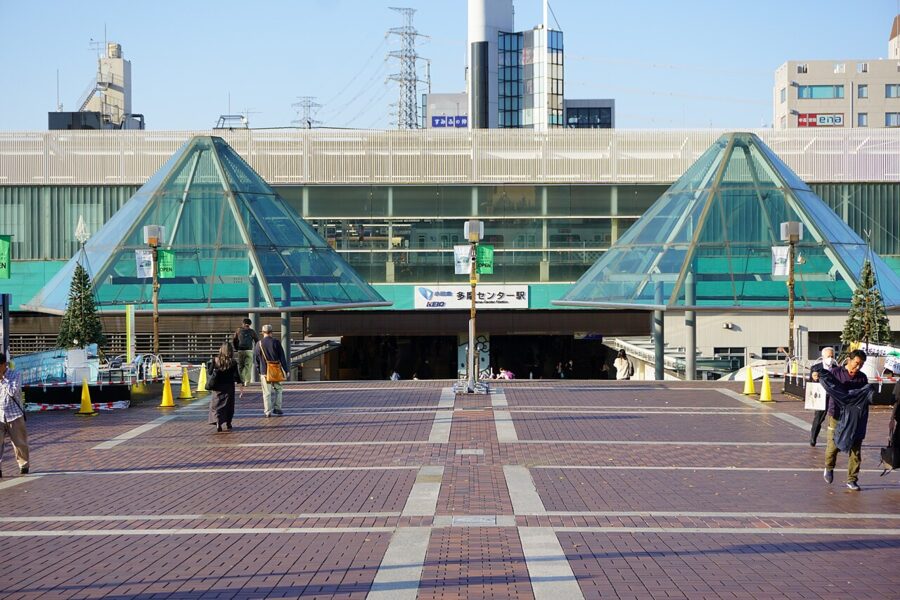
The Keio Line limited express from Shinjuku reaches Keio Tama Center in about 30 minutes, and the park is a straight walk of about five minutes from the station. Odakyu trains and the Tama Monorail stop at the same Tama Center complex.

Harmonyland, Oita
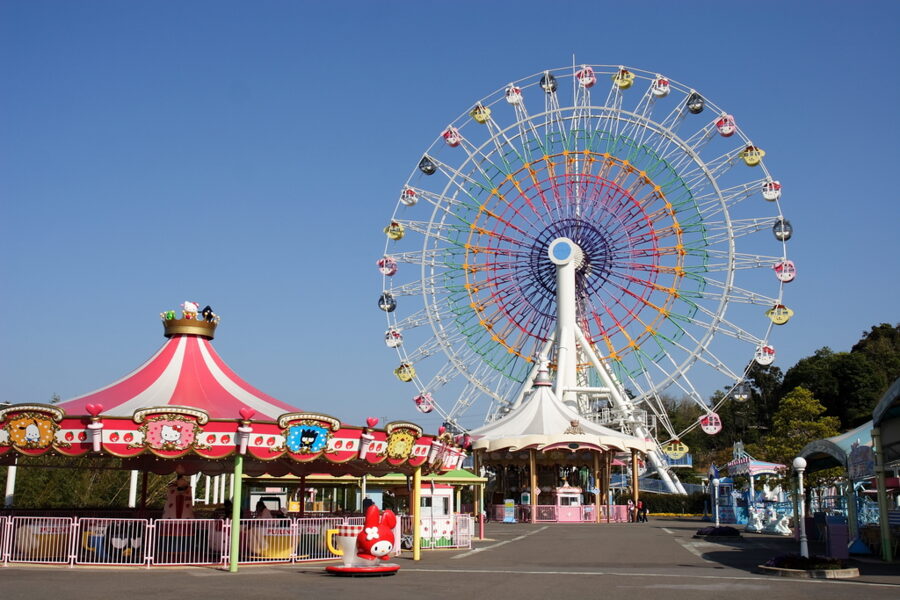
Harmonyland opened in 1991 in Hiji, a small town on Beppu Bay in Kyushu, and it is Puroland’s opposite: an outdoor park on a hillside, with rides, a carousel, Ferris wheels and parades in the open air. In November 2026 it opens at 10:00 and closes at 17:00 on most days, stays open later on some weekends, and closes on several midweek days.
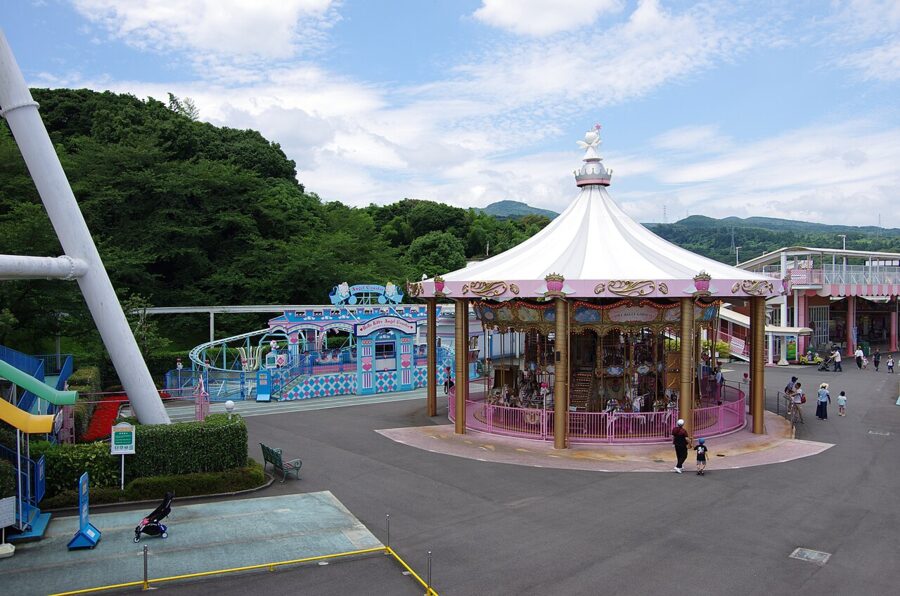

It is a short bus or taxi ride from JR Kitsuki or Yokoku stations on the Nippo Line, though most Japanese visitors drive. Sanrio announced a long-term plan in December 2025 to turn the park into a resort, under the working name “Park in the Sky”: a large roof over the grounds, new transport up the hill, renewed attractions and a hotel looking over the park and Beppu Bay. No opening dates have been given.

The big Sanrio stores in Tokyo
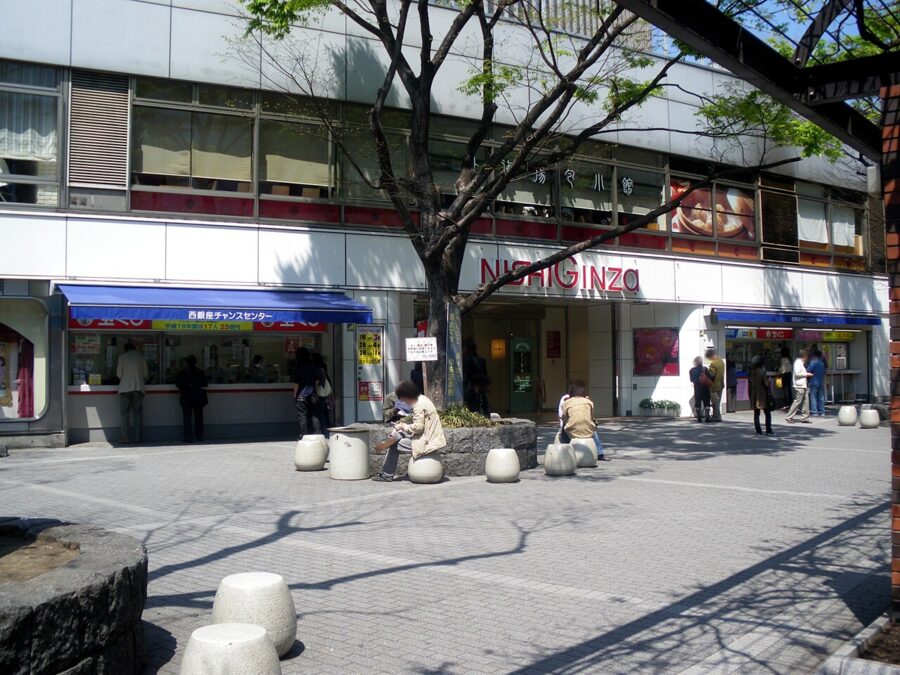
Sanrio calls its NISHIGINZA store the largest Sanrio flagship in the world, with the widest range anywhere. It fills the second floor of the Nishiginza building by Sukiyabashi crossing, a few minutes from JR Yurakucho and Ginza subway stations, and its ground floor is given over to Japanese-style designs and store exclusives. It opens 11:00 to 20:00 every day and sells tickets for both Puroland and Harmonyland, which saves a queue at the gate.

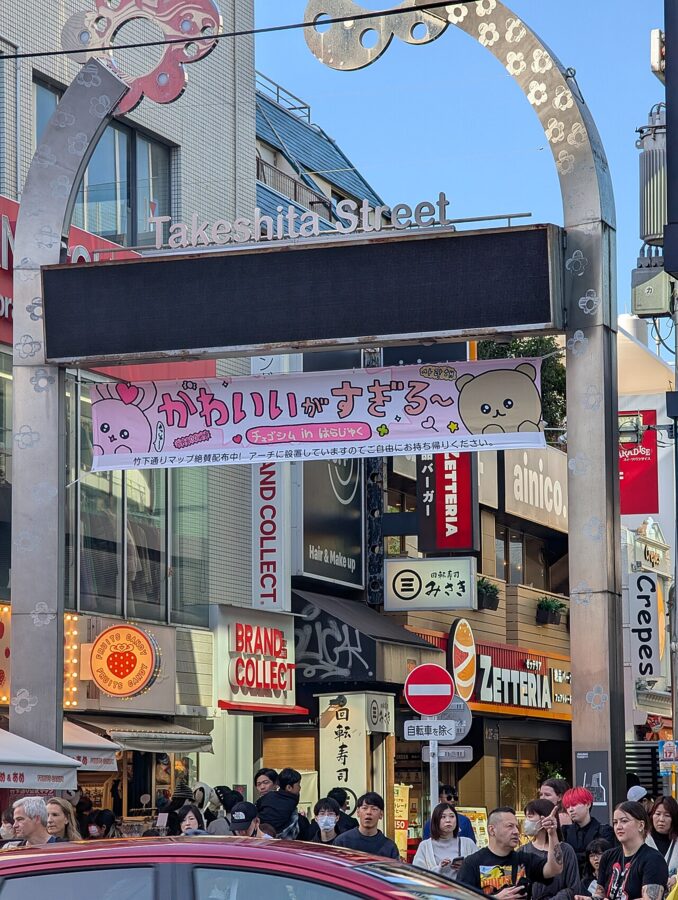
In Harajuku, Sanrio’s two-floor shop sits in Takeshita Street Square, 11:00 to 19:00. Sanrio Ikebukuro, two floors near the station, opens 11:30 to 20:00, and at 10:00 on new-release days. In Shibuya, the shop in MAGNET by SHIBUYA109 reopened on October 9, 2026 as Sanrio SHIBUYA MAGNET, open 10:00 to 21:00, with themed ranges that change through the year.
If you only have one stop, make it Ginza. Puroland is the show, but the flagship is where you see the full range of the design: every character, every scale, from key charms to the store-only pieces. Find the shelf of plain white Kitty goods with nothing but the red bow, and you are looking at the 1974 drawing doing exactly what it was made to do.