
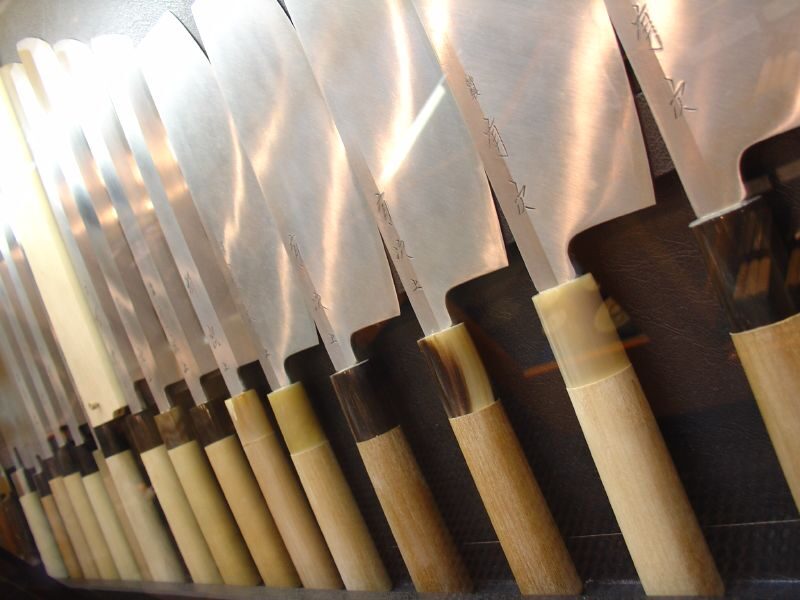
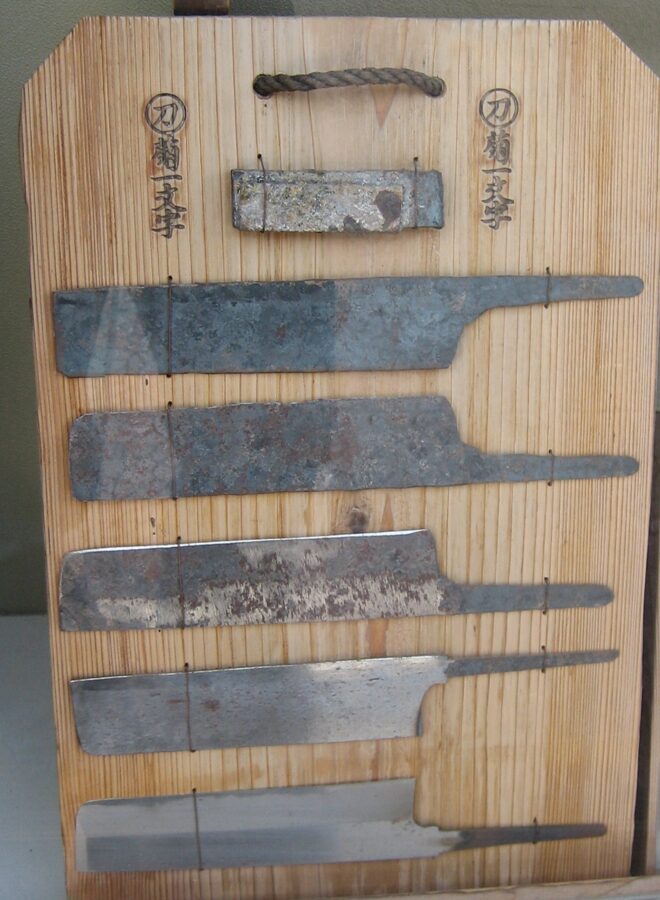
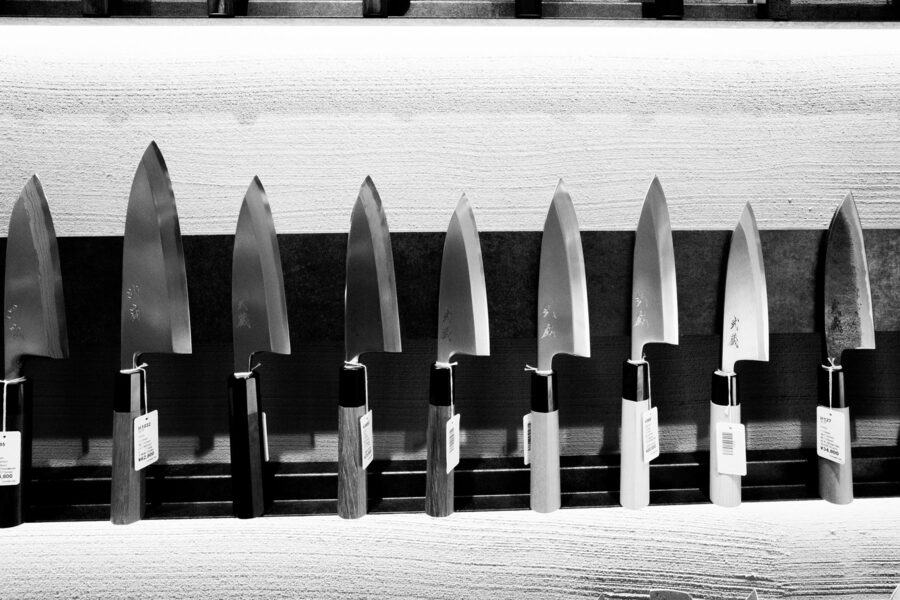
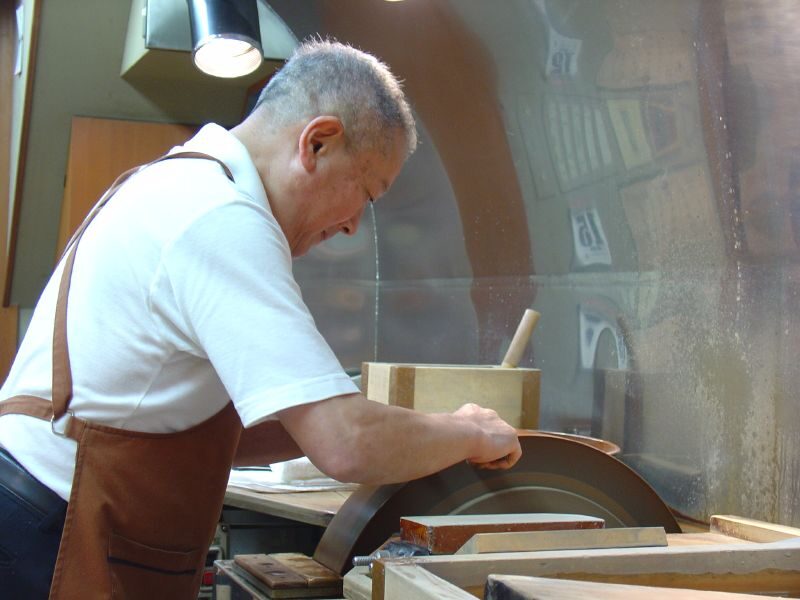
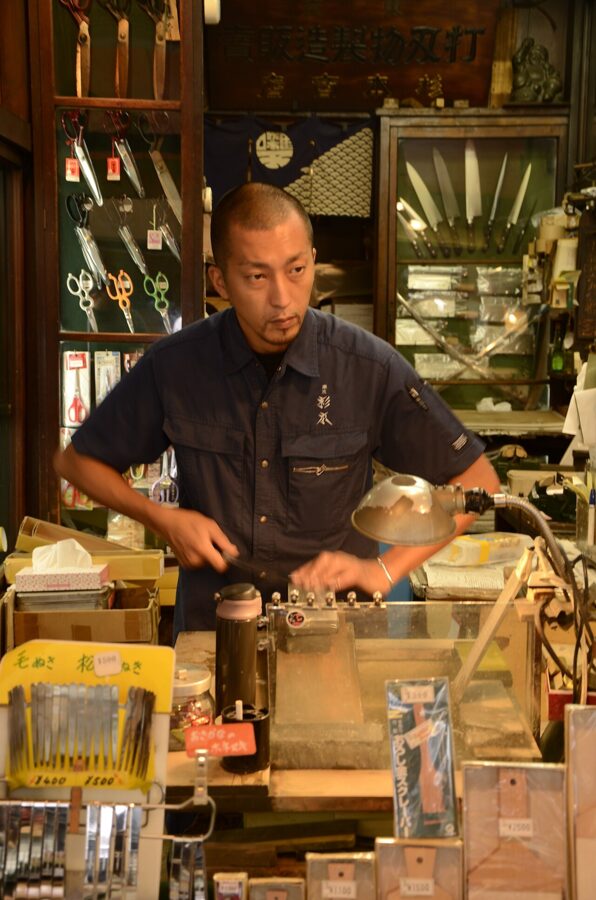
A Sakai deba passes through three pairs of hands before it reaches a shop counter. A smith heats soft iron and hard steel, hammers them into one blade and forges the shape; a sharpener takes it through more than ten stages on a run of stones; a third craftsman fits the handle so it sits dead straight. Sakai reckons the forging alone takes ten to fifteen years to learn. That split of labor, and the steel it works on, is most of what separates a Japanese kitchen knife from the one in your drawer.
The rest is shape. Japanese cooks reach for blades cut for single jobs: a long willow-leaf knife slices sashimi in one pull, a stubby deba splits a fish head, and the home knives of the last century borrow from both. A buyer in Japan then has three more things to sort out: which steel, which town, and how to carry a blade longer than 6 centimeters through a country that forbids exactly that without a good reason.


In this article
The shapes, and what each one is for
Japanese knives fall into two families. Wabocho (和包丁) are the traditional shapes, most of them single-bevel, with a light wooden handle. Yobocho (洋包丁) are the Western-derived shapes, double-bevel, often with a riveted handle. Home kitchens now run mostly on the second family; restaurant kitchens keep a roll of the first.
| Shape | Common length | Bevel | What it does |
|---|---|---|---|
| Gyuto (牛刀) | 210–240mm (8.3–9.4 in) | Double | All-round chef’s knife: meat, fish, vegetables |
| Santoku (三徳) | 165–180mm (6.5–7 in) | Double | All-round home knife, flatter and shorter |
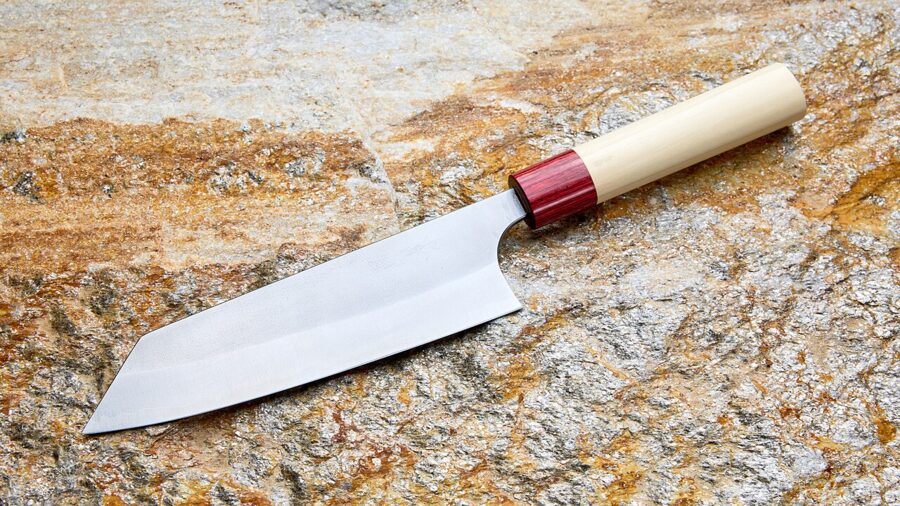
| Bunka (文化) | 165–180mm | Double | Home knife with an angled tip for fine work |
| Nakiri (菜切) | 165mm (6.5 in) | Double | Vegetables, push-cutting on a flat edge |
| Petty (ペティ) | 120–150mm (4.7–6 in) | Double | Small jobs in the hand and on the board |
| Sujihiki (筋引) | 240–270mm (9.4–10.6 in) | Double | Long slicing of meat and fish |
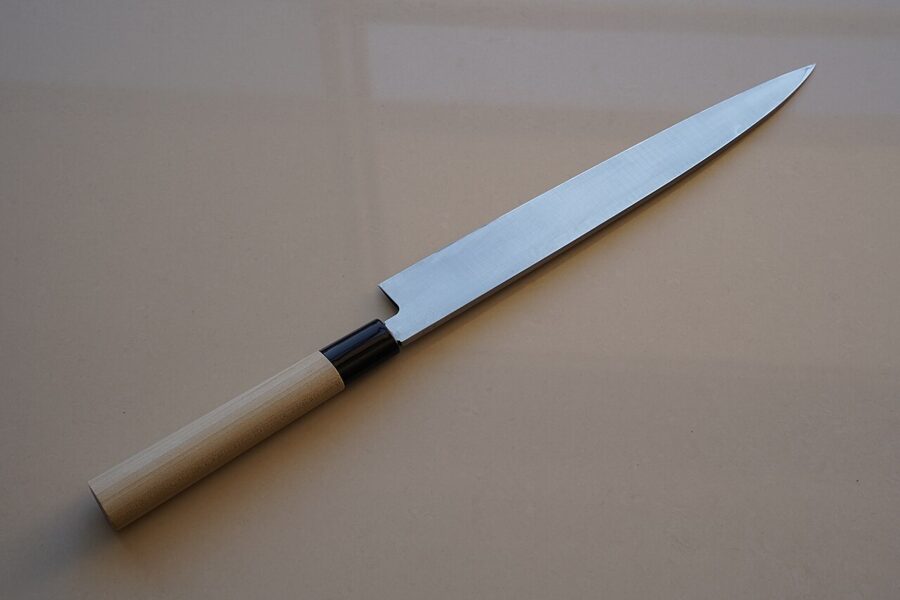
| Yanagiba (柳刃) | 240–300mm (9.4–11.8 in) | Single | Sashimi, cut in one drawing stroke |
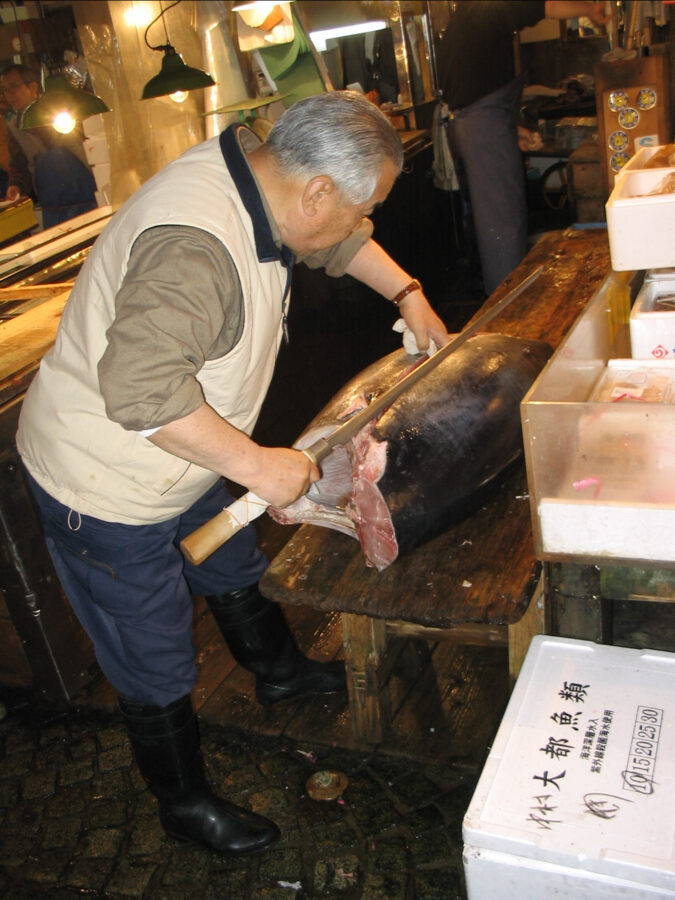
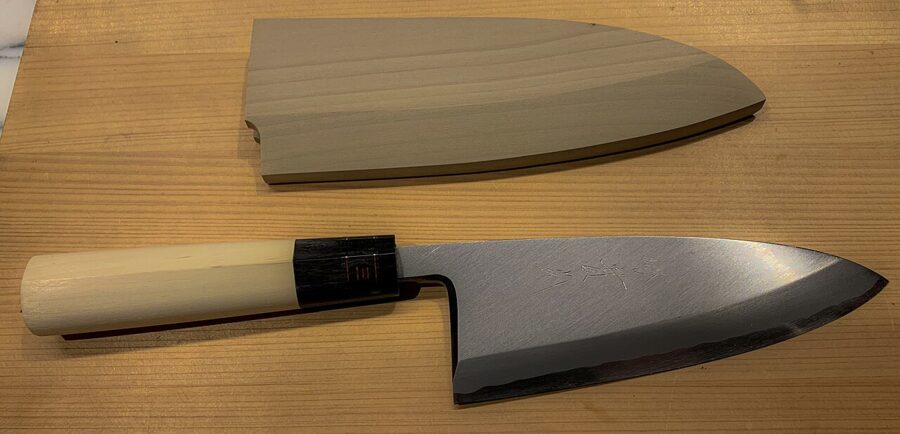
| Deba (出刃) | 150–180mm (6–7 in) | Single | Breaking down whole fish |
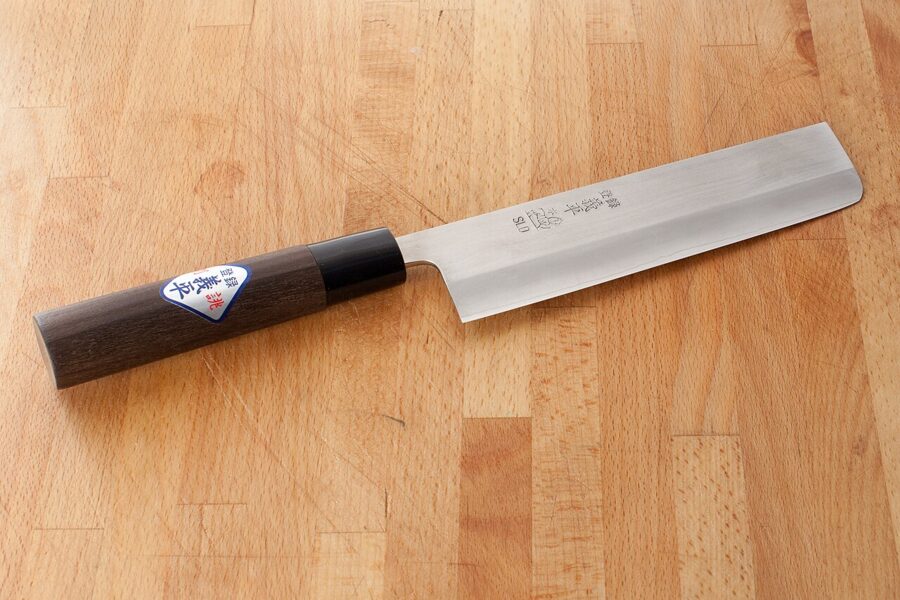
| Usuba (薄刃) | 180–210mm (7–8.3 in) | Single | Fine vegetable work, peeling into sheets |
Gyuto
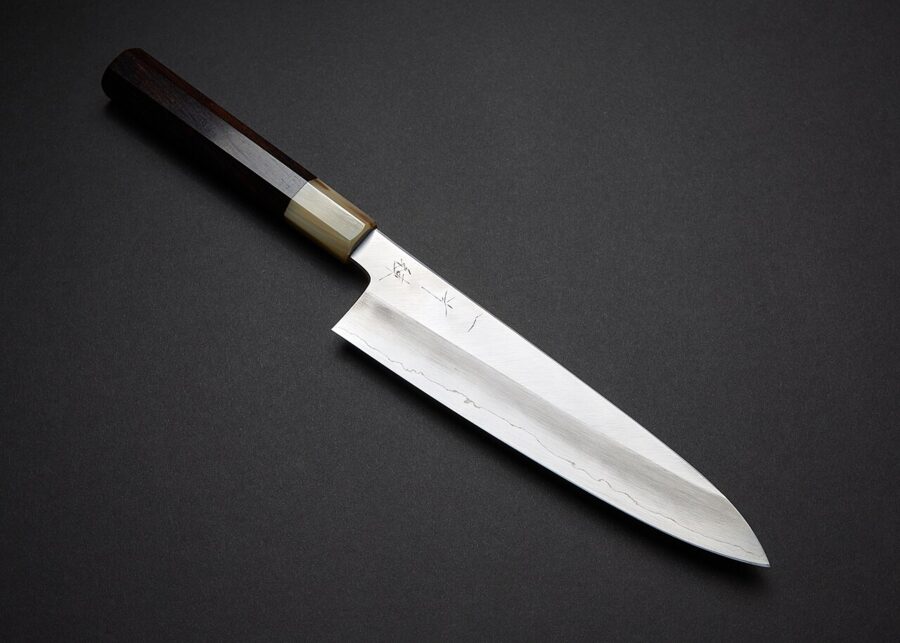
The name means “cow sword”: this is the Japanese take on the French chef’s knife that arrived with beef in the Meiji era. Next to a German chef’s knife it is thinner behind the edge, harder and flatter along the belly, so it slices and push-cuts rather than rocks. A 240mm gyuto is a restaurant length; 210mm suits a home board.
If you are buying one Japanese knife, this is the one I would buy: a 210mm gyuto in stainless or stainless-clad steel, double-bevel, before anything single-bevel.

Santoku and bunka
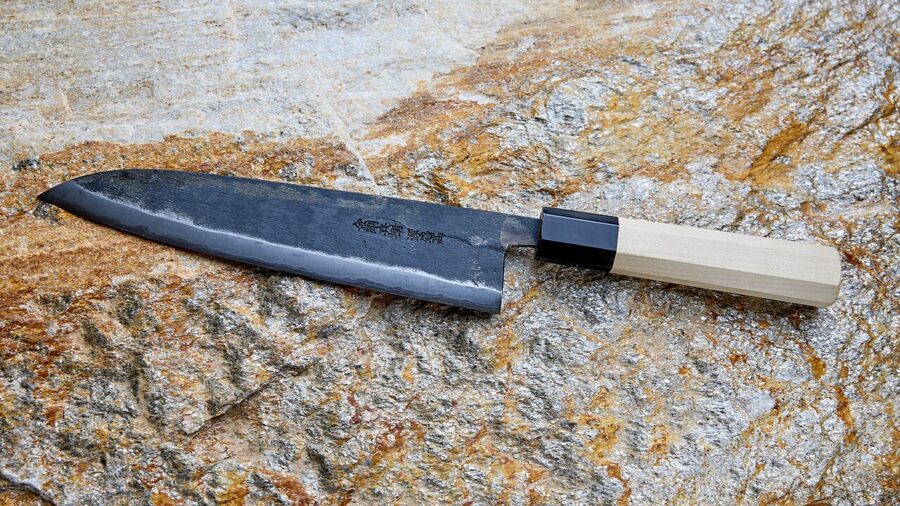
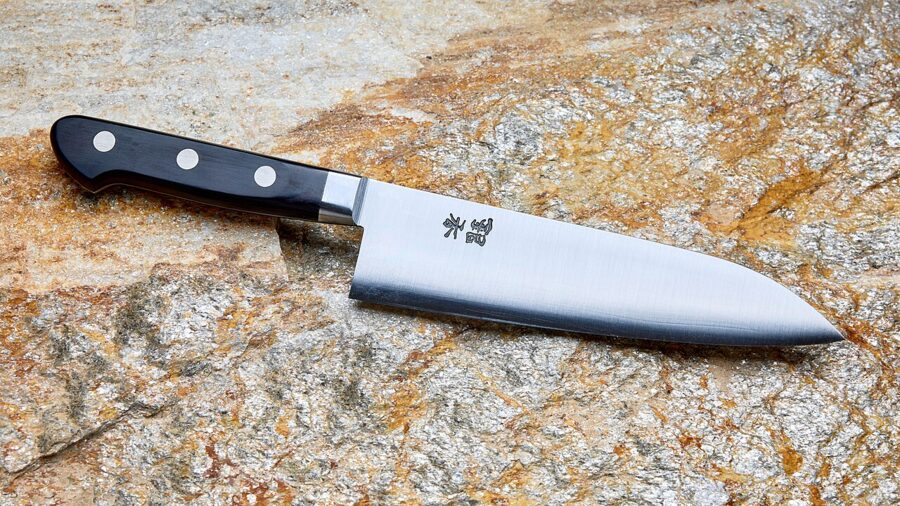
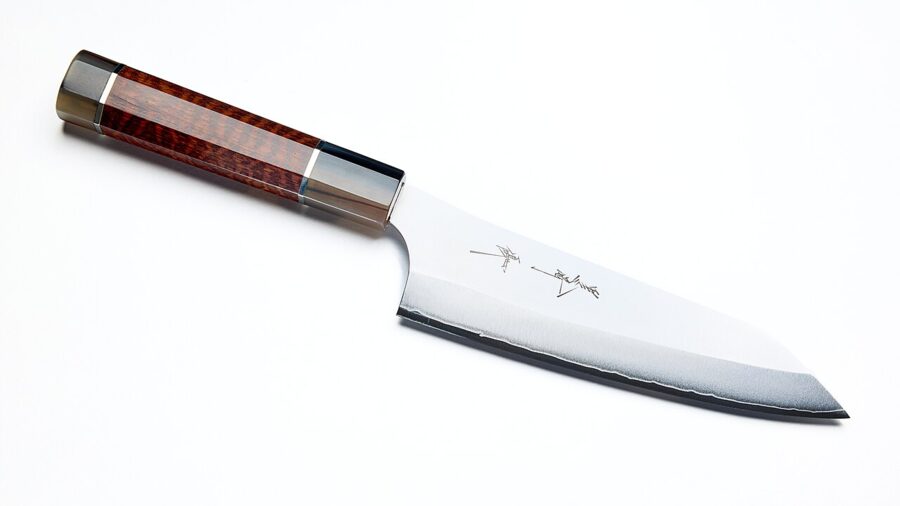
The santoku (三徳, “three virtues”) takes its name from the three jobs it covers, meat, fish and vegetables, and became the Japanese household knife in the twentieth century: one blade where a family once kept a nakiri and a deba. Its tip drops to meet a flat edge, which makes it a push-cutter for a small board. Sixteen to eighteen centimeters is the usual household size.
The bunka (文化, “culture”) is the santoku’s sharper-nosed sibling, with a clipped, angled tip that some makers call a kiritsuke tip. In use the two are close enough that I would pick by the steel and the maker, not by the name on the box.


Nakiri
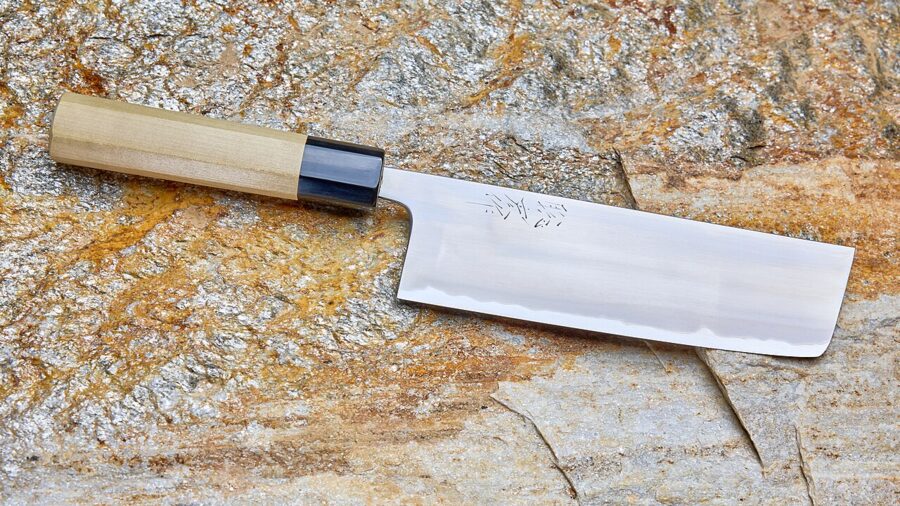
The nakiri is a rectangular double-bevel vegetable knife with an edge that is nearly straight, so the whole length meets the board at once. You push it forward and down through an onion or a cabbage and the slices come away cleanly separated, with no rocking. It is the home cook’s version of the professional’s single-bevel usuba.

Petty and sujihiki
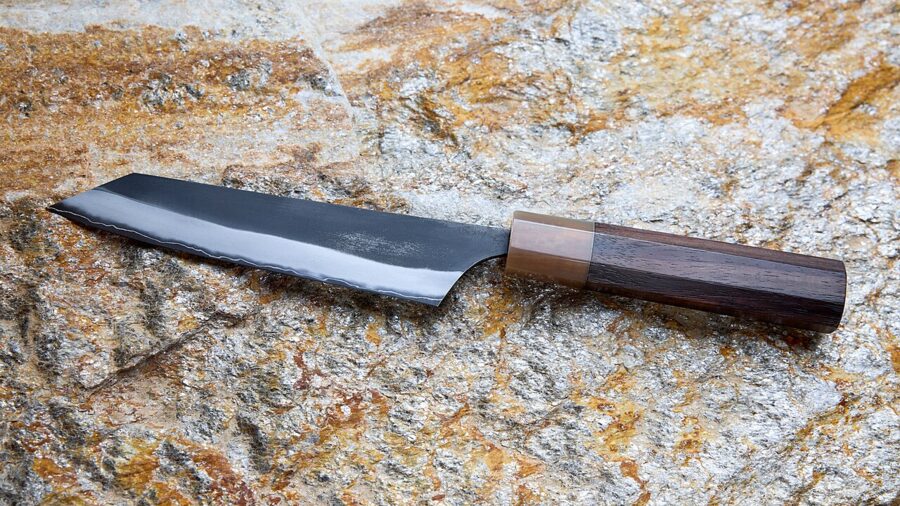
The petty borrows the French petit: a small knife of 120 to 150mm for trimming, peeling in the hand and cutting garnishes. The sujihiki (“muscle puller”) is the long double-bevel slicer of the Western kitchen, narrow so it drags less, for carving roasts and slicing fish.


Yanagiba, deba and usuba
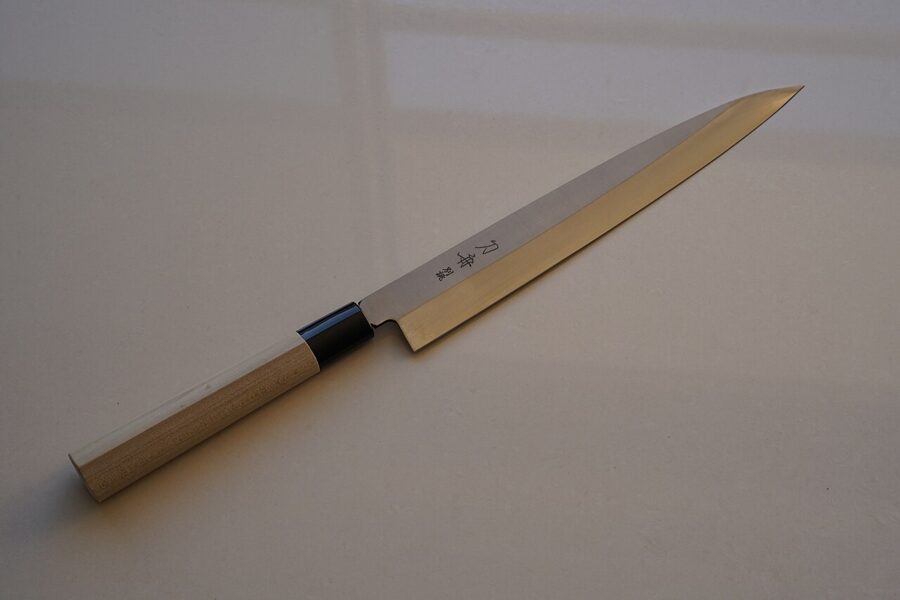
These three are the single-bevel tools of washoku, and each does one thing. The yanagiba (柳刃, “willow blade”) slices raw fish in one long pull, heel to tip, so the cut face is not sawn or crushed and keeps its gloss.
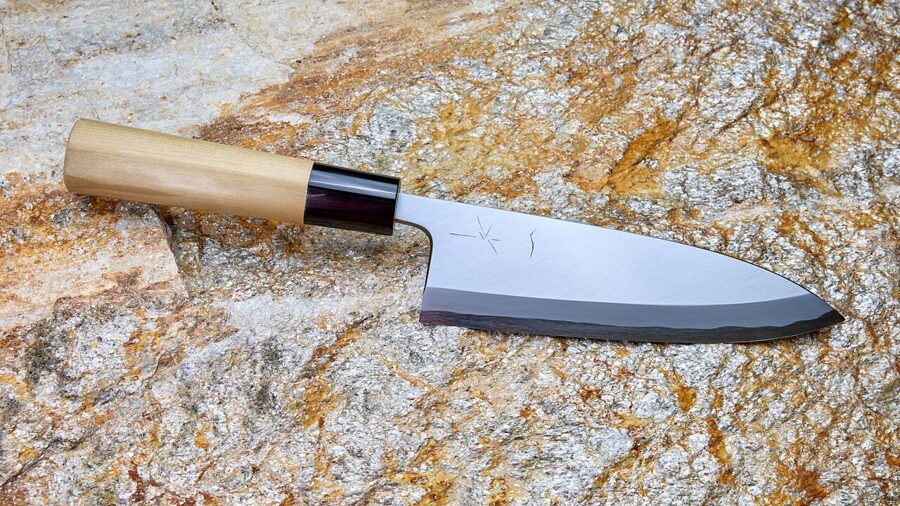
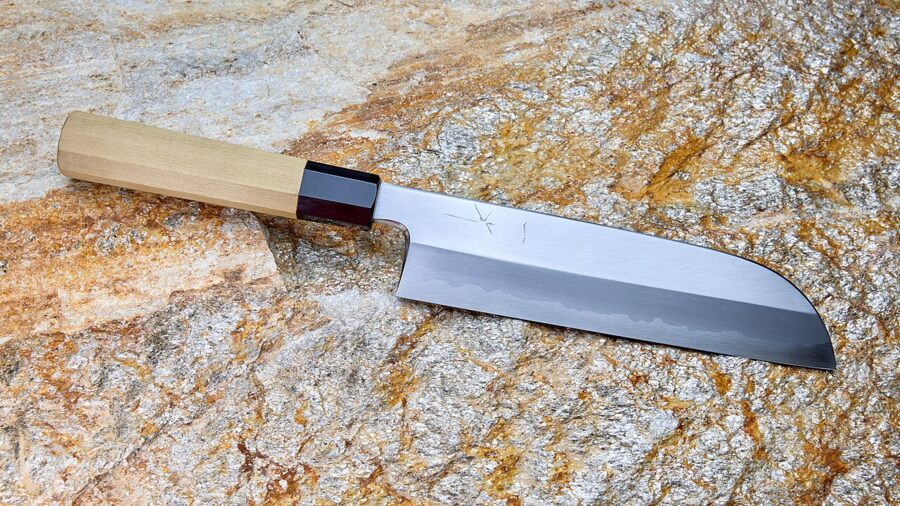
The deba is short, heavy and thick at the spine, made to take off a fish head and run along the backbone; it is not a cleaver for beef or pork bones. The usuba (薄刃, “thin blade”) has a dead-flat edge for vegetables, and a cook uses it for katsuramuki, turning a section of daikon against the blade into one long, translucent sheet. Kanto usuba have a square tip; Kansai ones, called kamagata, curve down to a point.





Single bevel and double bevel
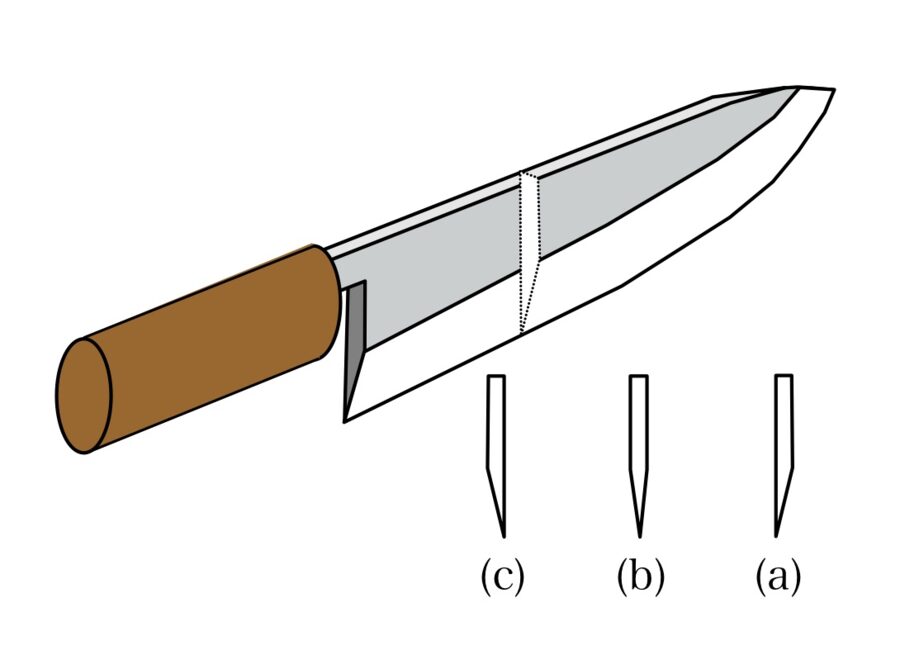
A double-bevel knife is ground on both faces to meet at the edge, like a narrow V. A single-bevel knife is ground on one face only: the front carries a wide bevel called the kireha, and the back, the ura, is almost flat with a shallow hollow ground into it. The edge angle can be very acute, which is why a yanagiba leaves a clean, shiny face on raw fish.
The catch is that a single-bevel blade steers. Pushed straight down, it drifts away from the bevel side: good for thin slices off a fillet, maddening for chopping carrots. Standard single-bevel knives are ground for the right hand; a left-handed cook needs a mirror-image blade, usually ordered specially. For a home kitchen I would start double-bevel and add a single-bevel knife only when there is a whole fish to deal with.

Hardness, thinness and the handle
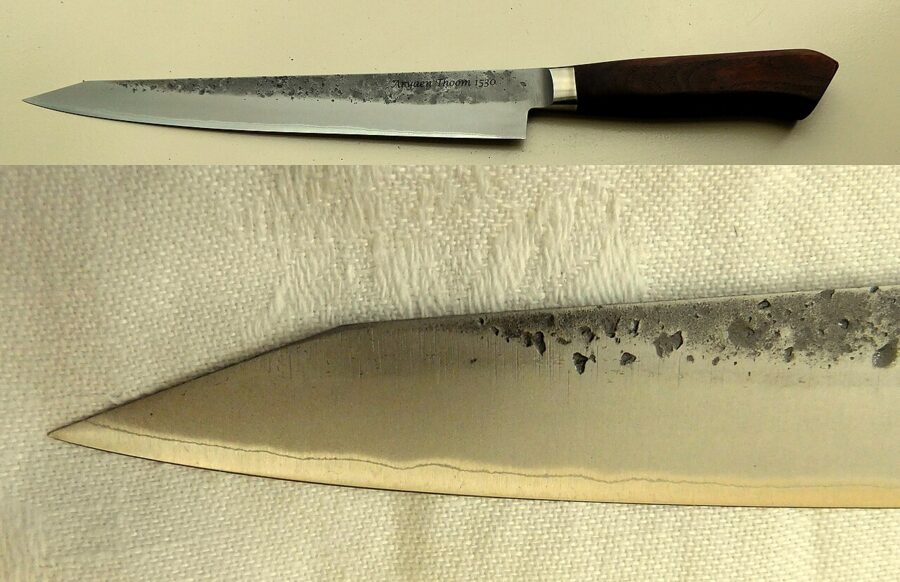
Knife steel hardness is measured on the Rockwell C scale (HRC). Takefu Special Steel quotes HRC 60 or more for VG-10 and 62 or more for its SG2 powder steel, and that Tadafusa sujihiki above is rated 63; a typical German chef’s knife sits in the mid-50s. Harder steel holds an edge longer and can be ground thinner, which is where the Japanese “sharpness” comes from. The price is brittleness: a hard edge chips where a soft one would bend, and a soft one can be pushed back straight with a honing steel while a hard one cannot.
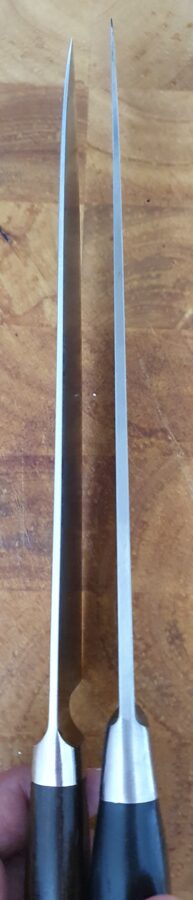

The handle is the other split. A wa handle is light, usually ho wood with a ferrule of buffalo horn or a resin, in an octagonal shape that suits either hand or a D shape made for the right. The tang is driven in rather than riveted, so the knife balances forward and the handle can be replaced.
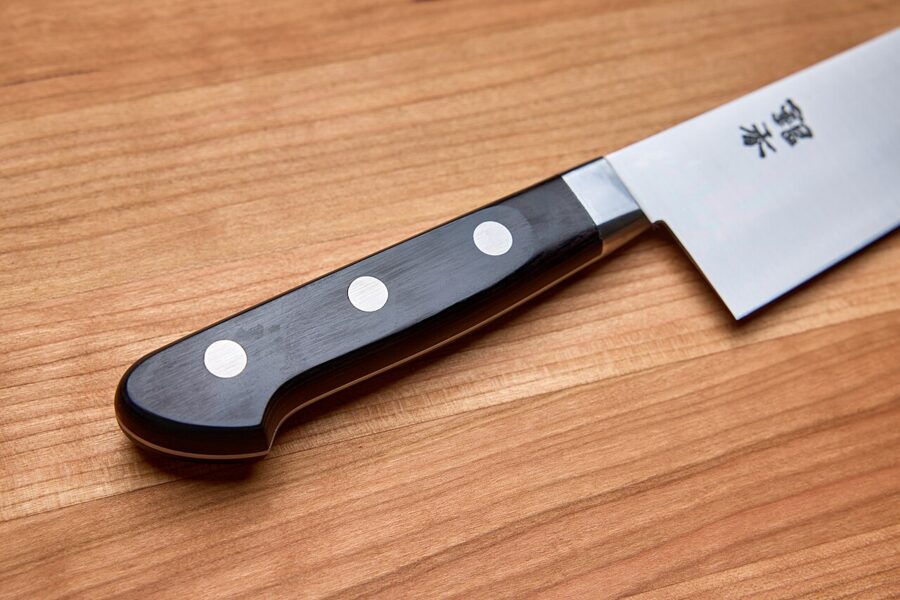
A Western (yo) handle is riveted through a full tang and heavier at the heel. For a gyuto I prefer the wa handle; in a busy family kitchen, a riveted one shrugs off the dishwater better.

The steels
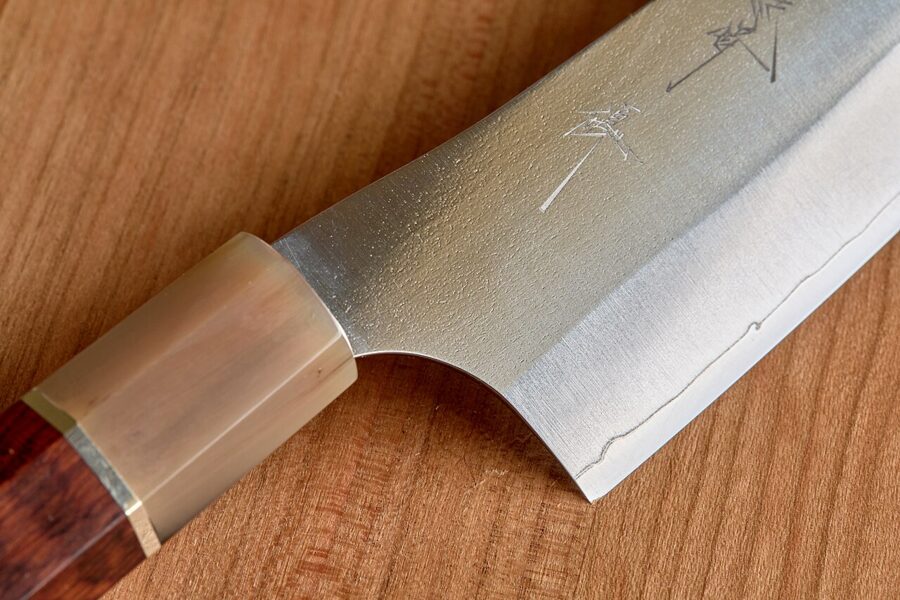
Most good Japanese knives are laminated. A core of hard steel, the hagane, is forge-welded between softer iron or stainless, the jigane, so the edge is hard and the body is tougher and easier to grind. Three layers is called san-mai; a hard core inserted into a split body is warikomi. A honyaki knife is the opposite: one piece of hard steel, hardened like a sword, slow to make and easy to crack in a careless quench, which is why it costs far more.

White paper and blue paper
Japan’s classic carbon knife steels come from Yasugi in Shimane, made by Proterial, the company that used to be Hitachi Metals. The trade names go back to the color of the paper the bars were wrapped in.
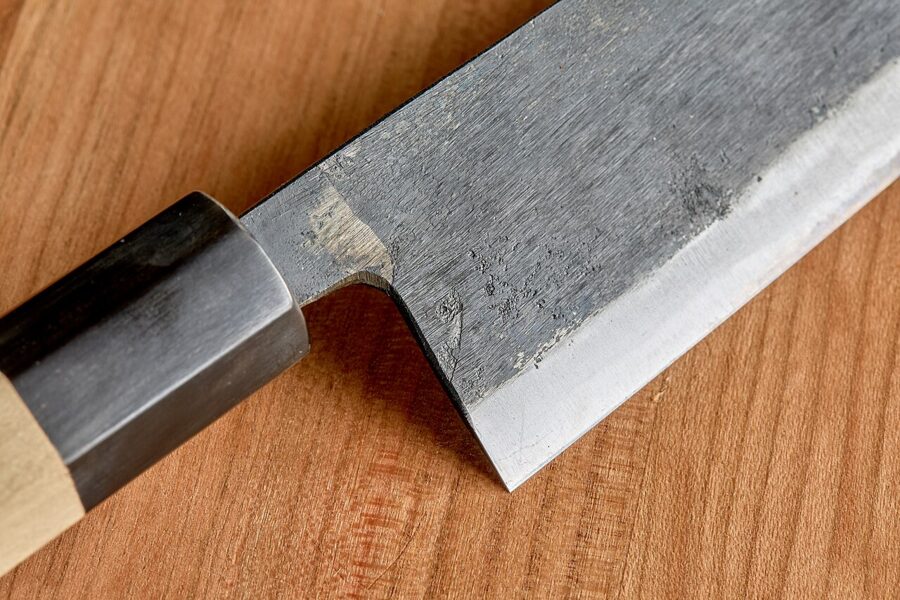
Shirogami (白紙, white paper) is plain high-carbon steel: Proterial lists White No. 1 at about 1.3 percent carbon and little else. Aogami (青紙, blue paper) adds chromium and tungsten; Blue No. 2 is listed at about 1.1 percent carbon, 0.3 percent chromium and 1.3 percent tungsten.
In use, white steel takes the keenest edge with the least effort on a stone and loses it a little sooner. Blue steel holds on longer and is slightly more work to sharpen, and Aogami Super pushes further in the same direction. Both rust: wipe them dry, expect a gray-blue patina, and treat the patina as protection rather than damage.
Proterial started selling a new grade in December 2025, Aigami (藍紙, indigo paper), which it describes as neither carbon nor stainless steel, built for a professional’s edge with resistance to rust. Aigami No. 2 is in mass production at the Yasugi works. It is too new to judge at the stone.


Stainless: VG-10, SG2 and ginsan
VG-10 is a Takefu Special Steel grade from Echizen, a company founded in 1954. Its published composition is 1 percent carbon, 15 percent chromium, 1 percent molybdenum, 0.25 percent vanadium and 1.55 percent cobalt, hardened to HRC 60 or more. It is the default steel of many mid-priced knives, and the maker warns that some online sellers claim VG-10 falsely.
SG2, Takefu’s Super Gold 2, is a powder-metallurgy stainless that the company calls a “powder stainless high-speed steel”, hardened to HRC 62 or more; sellers often list it as SG2/R2. It holds an edge a long time and takes patience on coarse stones. Ginsan (銀三, Silver No. 3) is Proterial’s stainless for traditional knives, and its appeal is that it sharpens much like carbon steel without the rust.
| Steel | Maker | Rusts? | On the stone | Best for |
|---|---|---|---|---|
| Shirogami (White) No. 1, 2 | Proterial, Yasugi | Yes | Quick, very keen | Cooks who sharpen often |
| Aogami (Blue) No. 1, 2, Super | Proterial, Yasugi | Yes, a little slower | Slower, holds longer | Professional carbon knives |
| Ginsan (Silver No. 3) | Proterial, Yasugi | Resists | Close to carbon steel | Wa knives with less upkeep |
| VG-10 | Takefu Special Steel, Echizen | Resists | Moderate | An easy first knife |
| SG2 (Super Gold 2) | Takefu Special Steel, Echizen | Resists | Slow, holds very long | Long edge life, little rust |


What a good one costs
Shop prices say more than averages, so here are some. Tsukiji Aritsugu, in Tokyo, lists a stainless kiritsuke-style santoku at ¥16,000 before tax (about $100), and a Kansai usuba or a kiritsuke in its rust-resistant steel at ¥22,000 to ¥25,000 (about $140 to $160), as of November 2026. A hand-forged gyuto from a named smith in blue or white steel costs more; Damascus cladding and exotic handle woods raise the price without changing the edge.
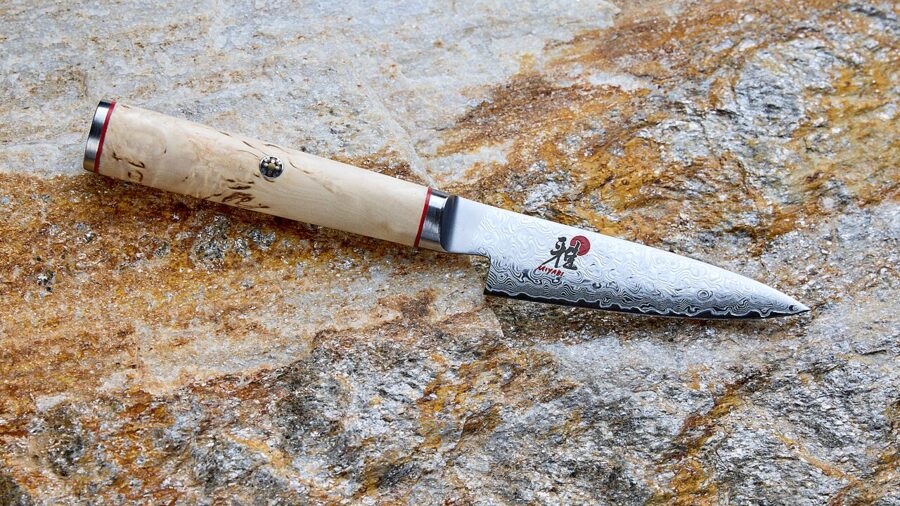
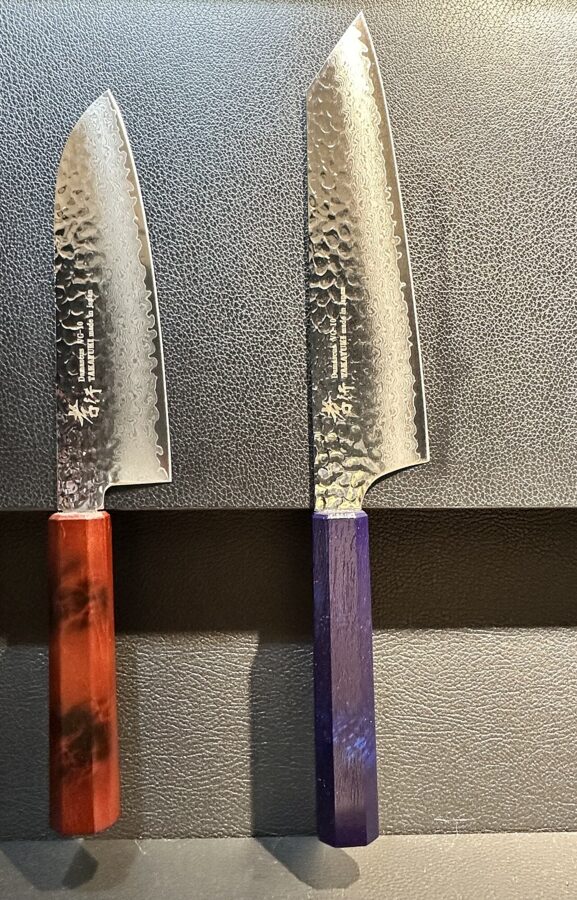
There is no single best brand. The names English-speaking shoppers know best come from the knife towns below: Shun from Kai and Miyabi from Zwilling, both made in Seki; Global, from Yoshikin in Tsubame, the brand Anthony Bourdain recommended in Kitchen Confidential; and the many labels finished in Sakai, such as Sakai Takayuki from Aoki Hamono. I would rather buy from a maker who names the steel and the smith than from a brand that names neither.

Care, and what chips a knife
Wash by hand, dry straight away, and never use a dishwasher. Cut on wood or soft synthetic boards; glass, stone and ceramic boards blunt or chip a hard edge in a few strokes. Keep it out of bones (a deba on fish is the exception), frozen food and hard squash rinds, and never twist the blade to pop a cut open.
Do not sweep chopped food across the board with the edge; turn the knife over and use the spine. Store it on a magnetic strip, in a block or in a wooden saya sheath, never loose in a drawer. A carbon blade put away for a while gets a thin coat of camellia oil, which Japanese knife shops sell for just that purpose.
Skip the honing steel. A steel rod realigns a soft German edge; on a hard Japanese one it chips the edge it was meant to straighten. I would also keep these knives away from pull-through sharpeners, which grind a coarse, uneven edge.
Sharpening on whetstones
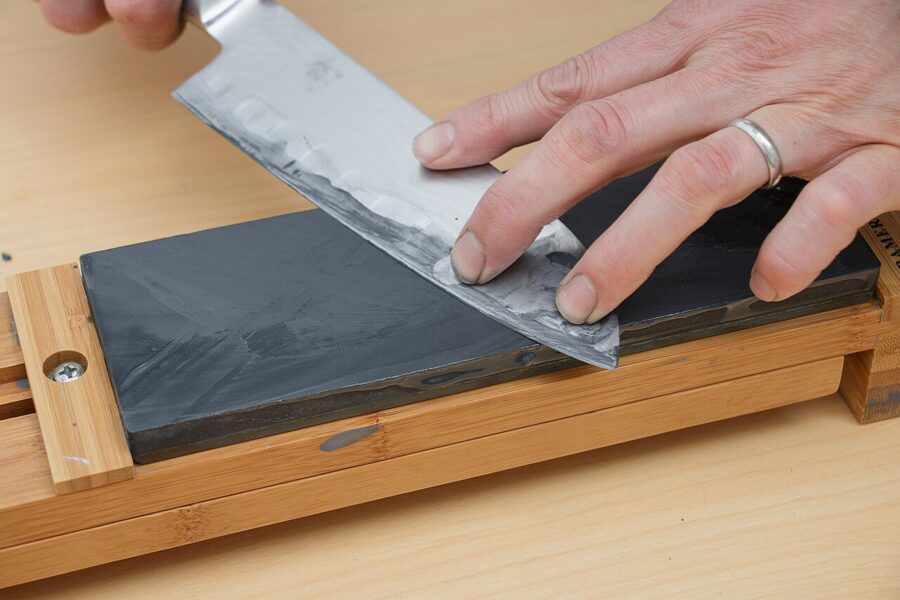
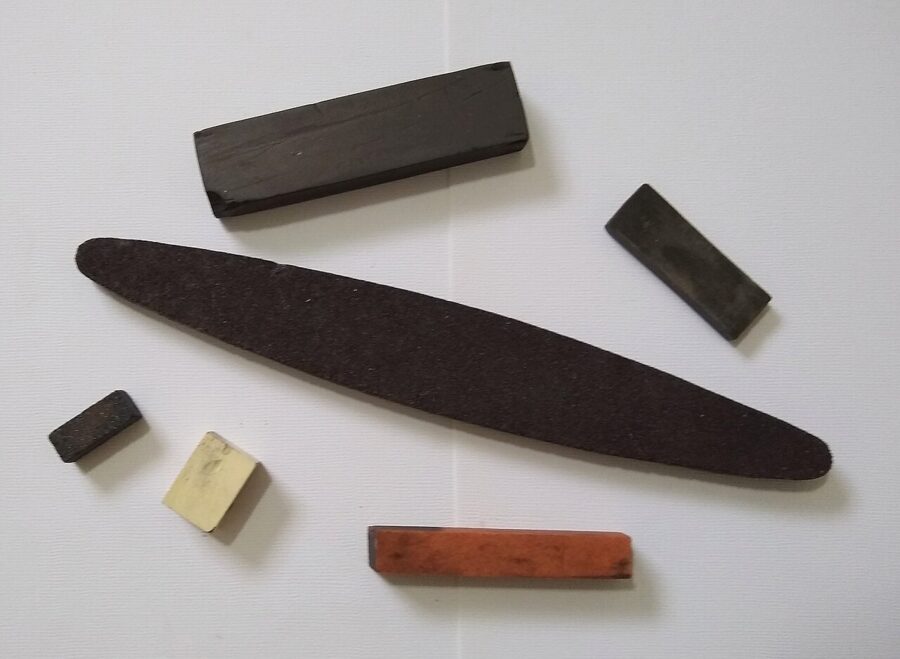
Japanese knives are sharpened on flat water stones. A medium stone of around #1000 grit does most of the work; a finishing stone from #3000 to #6000 polishes the edge; a coarse stone of a few hundred grit is for repairing chips or reshaping. Some stones need soaking first; others only a splash.
For a double-bevel knife, hold the blade at a low, steady angle, about 15 degrees on each side, and stroke it along the stone section by section until a fine burr (kaeri) forms along the whole edge on the far side. Then switch sides, repeat, move to the finer stone, and take the burr off with a few light alternating strokes. A steady angle matters more than the number.
A single-bevel knife is simpler in one way: lay the kireha flat on the stone and the bevel sets the angle for you. Sharpen that side until the burr forms, then take it off with a few flat strokes on the ura, never tilting the back. Flatten your stones every few sessions with a flattening plate, because a dished stone gives you a rounded edge.


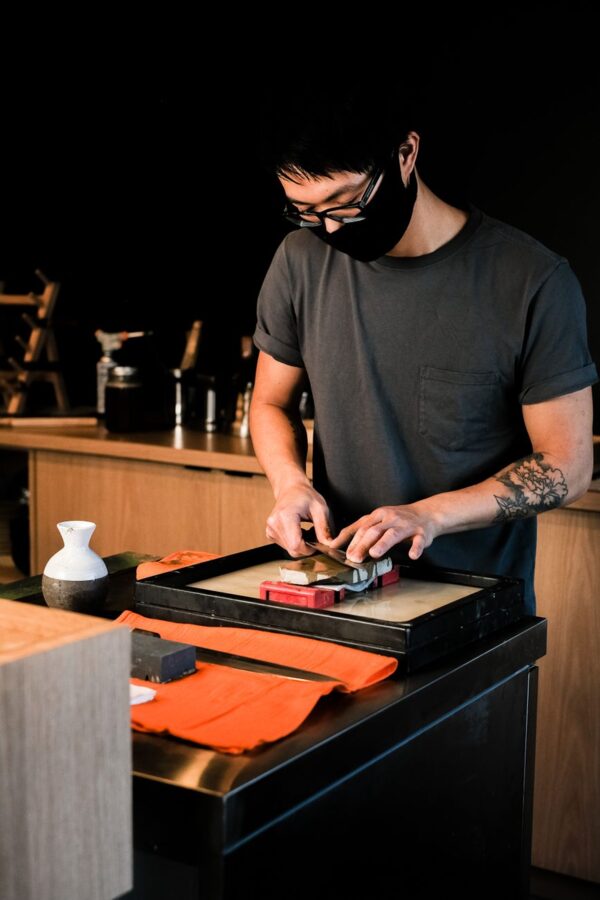
If you would rather not sharpen, the shops will: Kamata Hakensha on Kappabashi sharpens for a fee and runs classes, and Takefu Knife Village repairs and sharpens Echizen knives.


The knife towns
Ask in Japan for the great knife towns and two names come back every time, Sakai and Seki; third place goes to Echizen or Tsubame-Sanjo, depending on the speaker. Tosa and Miki complete the list most knife people would recognize.
Sakai, Osaka
Sakai’s knives began with tobacco. In the sixteenth century, when tobacco reached Japan from Portugal, Sakai smiths made the knives that cut the leaf, and the Edo shogunate later let them stamp their blades with the seal Sakai kiwame (堺極) as a mark of quality. From there the city moved into single-bevel kitchen knives, and many professional chefs still choose a Sakai blade. Sakai uchihamono was designated one of Japan’s national traditional crafts on 5 March 1982.
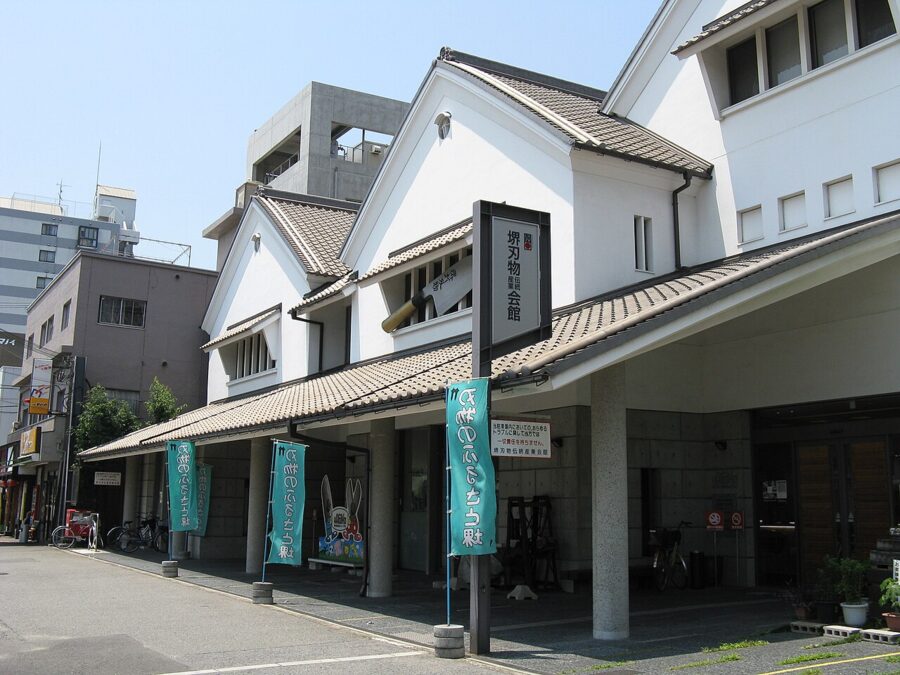
The work is divided as it was centuries ago, between forging, sharpening and handle-fitting workshops, and a brand often assembles the result. The place to see it is Sakai Densho-kan in Sakai-ku, where the second floor holds CUT, the Sakai knife museum, free, and the ground floor sells knives alongside the city’s other crafts: chusen-dyed cloth, incense and kombu. It opens 10:00 to 17:00 and closes on the third Tuesday of each month (the next day if that Tuesday is a holiday) and over the New Year, as of November 2026.

Seki, Gifu
Seki has made blades since the Kamakura period, seven centuries by Gifu Prefecture’s count and eight by others, first as a sword town whose smiths included Magoroku Kanemoto. When swords lost their market, the town moved into pocket and kitchen knives and became the home of large factories: Kai’s Shun line and Zwilling’s Miyabi are both made there. Its cutlery festival, the Hamono Matsuri, is held in October.
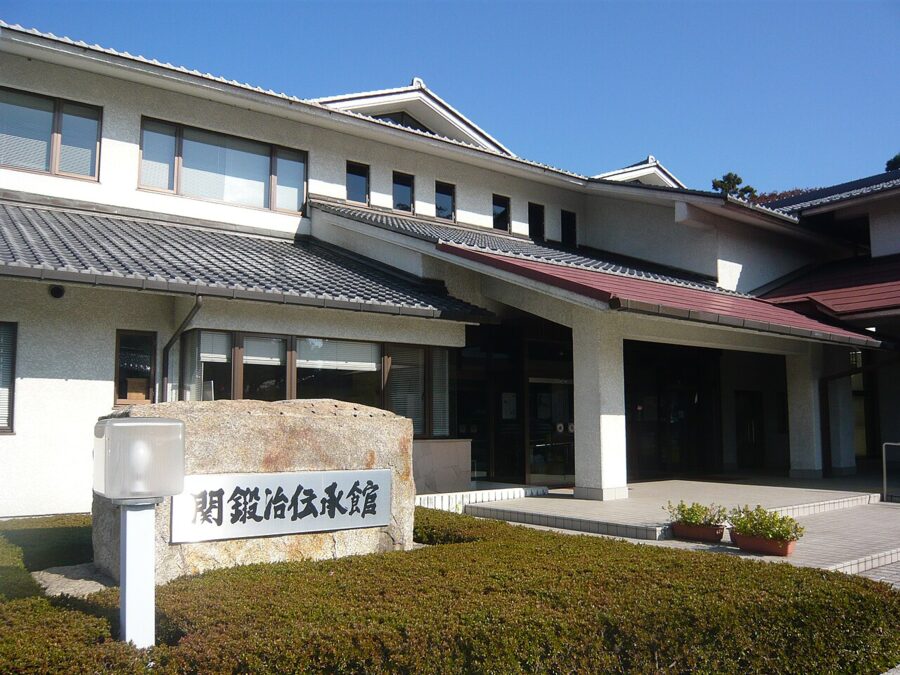
The Seki Swordsmith Museum (Seki Kaji Denshokan) is closed for renovation from 7 September 2026 to 31 March 2027. Its forging hall stays in use: swordsmiths give public demonstrations of traditional forging on the first Sunday of each month from February to September and in November and December, on 2 January and during the October festival. Before the closure, adult admission was ¥300 (about $2).

Echizen and Takefu Knife Village, Fukui
Echizen’s story begins about 700 years ago, when a Kyoto swordsmith, Chiyozuru Kuniyasu, came looking for water fit for forging blades and made sickles for the farmers around him. Lacquer tappers traveling the country for Echizen’s lacquerware carried those sickles with them and brought back orders. By one count, in 1874 Echizen made 970,000 of Japan’s 3.53 million sickles. In 1979 Echizen uchihamono became the first cutlery in Japan to be designated a national traditional craft.
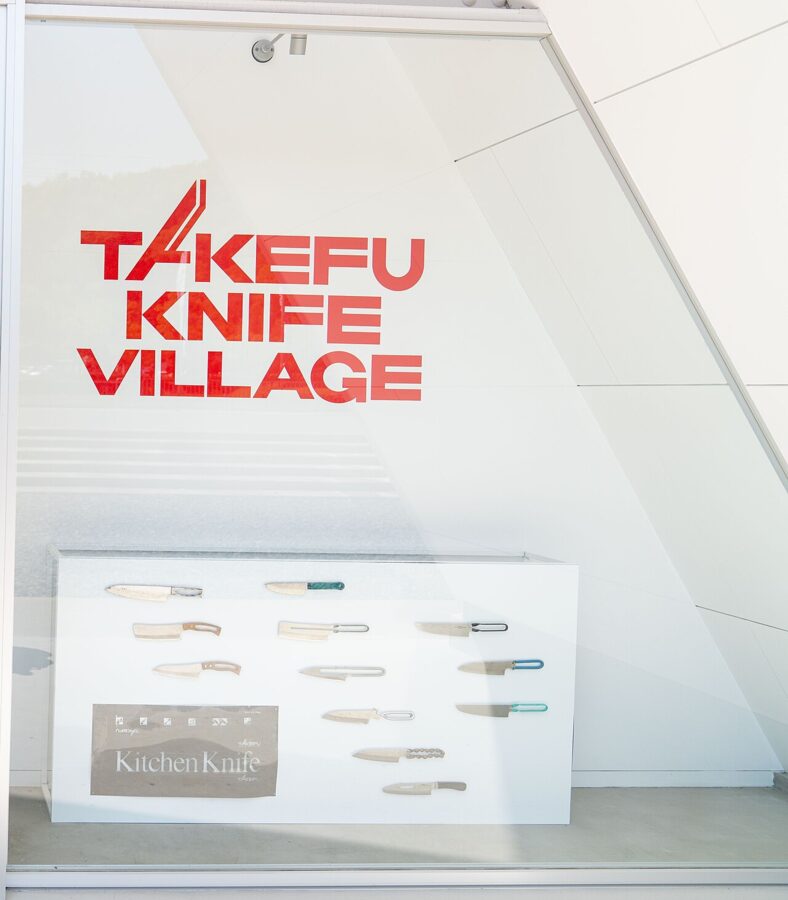
Farm machinery and cheap stamped knives nearly finished the trade, and ten young smiths answered by founding Takefu Knife Village. Today the cooperative has 14 member companies, nine of which forge in a shared workshop that you can watch from a sloping walkway, free; go on a weekday, when the smiths are working. It opens 9:00 to 17:00 with irregular closing days, runs a reservation-only knife-making class for individuals (group classes are suspended), and sells its members’ knives in the shop, as of November 2026.
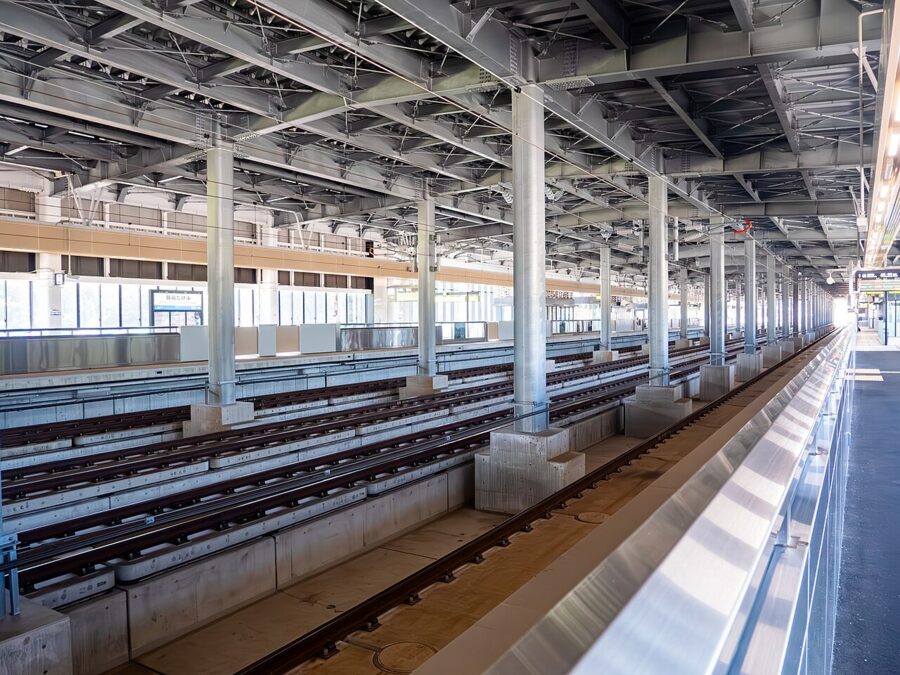
Takefu Knife Village is about 10 minutes by taxi from Echizen-Takefu Station on the Hokuriku Shinkansen, or 20 minutes from Takefu Station on the Hapi-Line Fukui. The same city is home to Takefu Special Steel, which makes VG-10 and SG2, so many stainless Japanese knives start in Echizen even when they are finished somewhere else.


Tsubame-Sanjo, Niigata
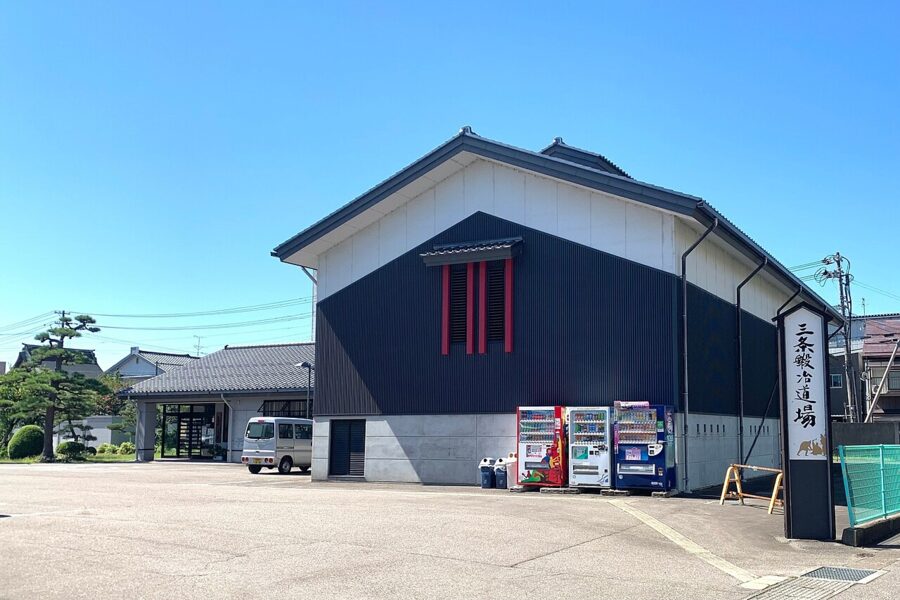
Sanjo is a blacksmith town and Tsubame a metalworking town, and between them they make knives, tools and tableware. Tadafusa and Masashi Yamamoto, whose knives appear above, work in Sanjo, and Yoshikin makes Global knives in Tsubame. Each October the two cities open their factories to the public for the Tsubame-Sanjo Factory Festival (Koba no Saiten); the 2026 edition ran from 1 to 4 October, with workshops open from 9:00 to 17:00 and some visits by reservation.

Tosa, Kochi
Tosa uchihamono, centered on Tosayamada in Kami City, is a national traditional craft known for jiyu tanzo, free forging: the smith shapes each blade by eye, without dies or templates, so the same forge can make a kitchen knife, a hatchet or a custom order. To keep that skill going, a forging school for new smiths opened in November 2019 on the grounds of the Tosa Hamono Ryutsu Center cooperative.
Miki, Hyogo
Miki belongs on the list with a caution. Its designated craft, Banshu Miki uchihamono, covers five carpenter’s tools: saws, chisels, planes, trowels and kogatana utility knives, designated in 1996. Go to Miki for a plane or a chisel; for a gyuto, the other towns are the better trip.

Where to buy in Japan
Kappabashi, Tokyo
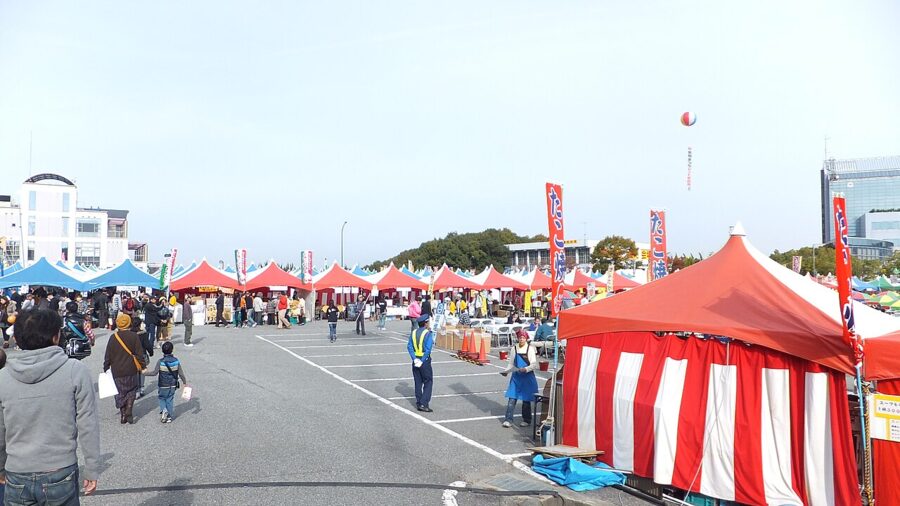
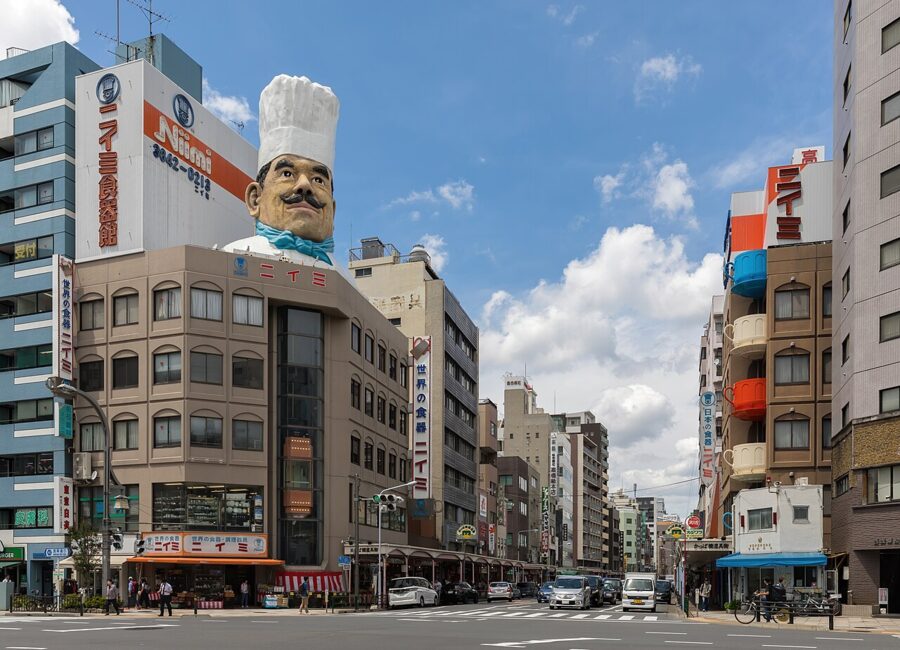
Kappabashi Dougu Street, the restaurant-supply street between Ueno and Asakusa, is five minutes’ walk from Tawaramachi Station on the Ginza Line. The street’s own festival, the Kappabashi Dougu Matsuri, is held in October; the 41st edition ended on 13 October 2026.
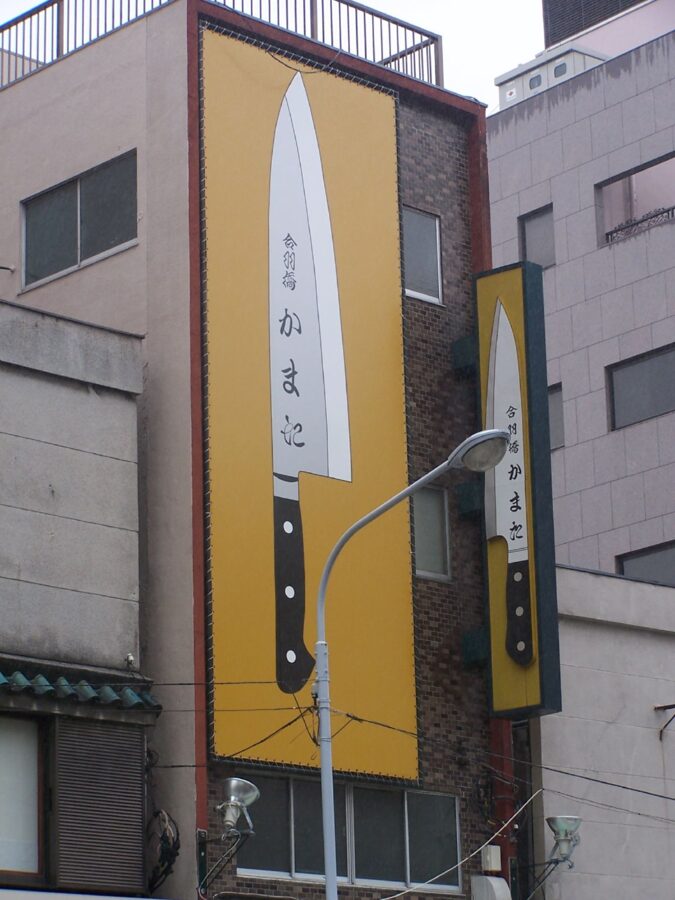
Kama-asa began in 1908 selling cooking pots and now sells knives from a building of their own beside its main shop at 2-24-1 Matsugaya. It opens 11:00 to 17:30 every day except over the New Year, closing at 16:30 on the last day of each month, ships abroad, and engraves names free on knives ordered from its online shop, as of November 2026. Kamata Hakensha, founded in Asakusa in 1923 by a family of sharpeners now in its fourth generation, stocks more than 800 knives at 2-12-6 Matsugaya. It hand-carves your name on a knife free while you wait, sharpens for a fee and opens 10:00 to 18:00 with irregular closing days, as of November 2026.


Tsukiji and Toyosu, Tokyo
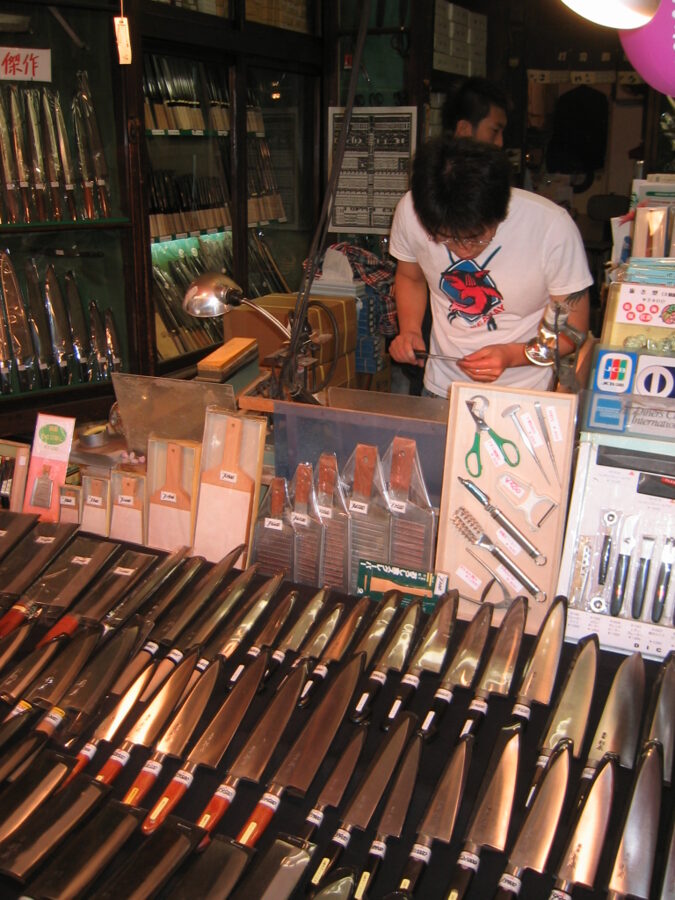
Tsukiji Aritsugu began in Nihonbashi in 1918 and moved to Tsukiji in 1923; it now trades in the Tsukiji Outer Market and at Toyosu Market and traces its line to the same swordsmith, Fujiwara Aritsugu, as the Kyoto shop. It also sells camellia oil and rust erasers.

Kyoto
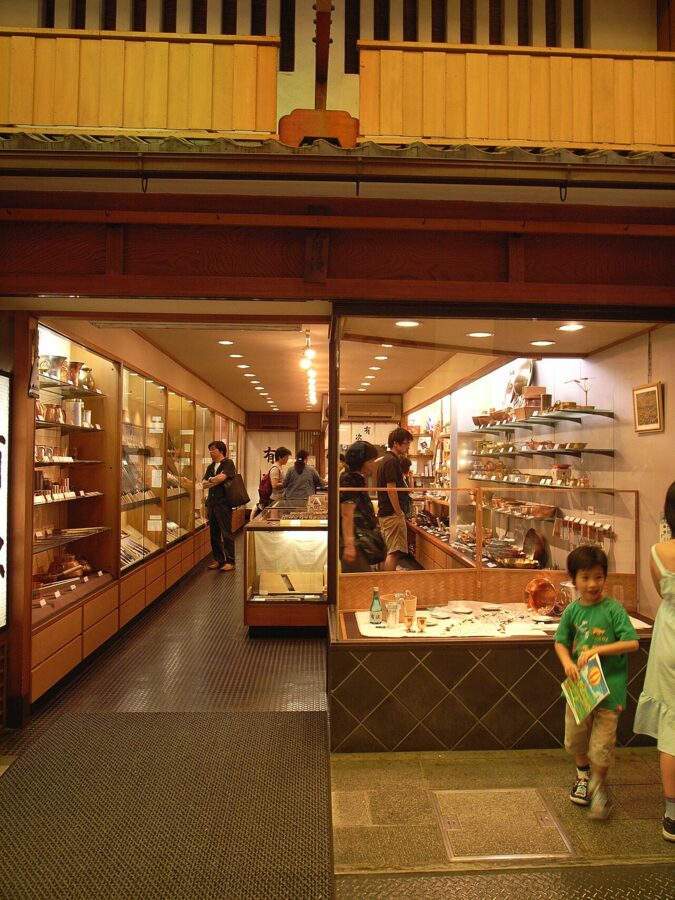
Aritsugu in Nishiki Market dates itself to 1560 and a swordsmith named Fujiwara Aritsugu, and it sells knives and cooking tools to Kyoto’s restaurant kitchens and to home cooks alike. It opens 10:00 to 17:00, takes its last customers at 16:30 and closes on Wednesdays, as of November 2026.

Engraving and the new tax-free rules
Many shops engrave a name on the blade (na-ire, 名入れ), usually in katakana or kanji, and some do it free; ask before you pay.
Tax-free shopping changed on 1 November 2026. You now pay the full price including 10 percent consumption tax, then confirm at departure, within 90 days of purchase, that you are taking the goods out of Japan, at a customs kiosk or through Visit Japan Web; the shop refunds the tax after that. The minimum is ¥5,000 before tax at one shop on one day (about $30). A red result at the kiosk means customs wants to see the goods, so I would do the check before handing the bag with the knife to the airline.
Taking a knife home
Japan’s Firearms and Swords Possession Control Law forbids carrying a blade longer than 6 centimeters without a work-related or other legitimate reason, and it covers kitchen knives. Prefectural police list taking home a knife you have just bought as a legitimate reason; carrying one for self-defense never is. “Carrying” means having it on you ready to use, so keep the knife boxed and wrapped as the shop packed it, in a bag, and take it back to your hotel. Smaller blades are not a loophole, since hiding one without a reason can still fall under the Minor Offenses Act.
Knives cannot go in airline cabin baggage. They can go in checked baggage, and the US Transportation Security Administration asks that sharp objects there be sheathed or securely wrapped to protect the people who handle and inspect the bags. Put the knife in its saya or a blade guard, tape cardboard around it, and pack it in the middle of the suitcase among clothes. If you would rather not fly with it at all, Kama-asa ships abroad.
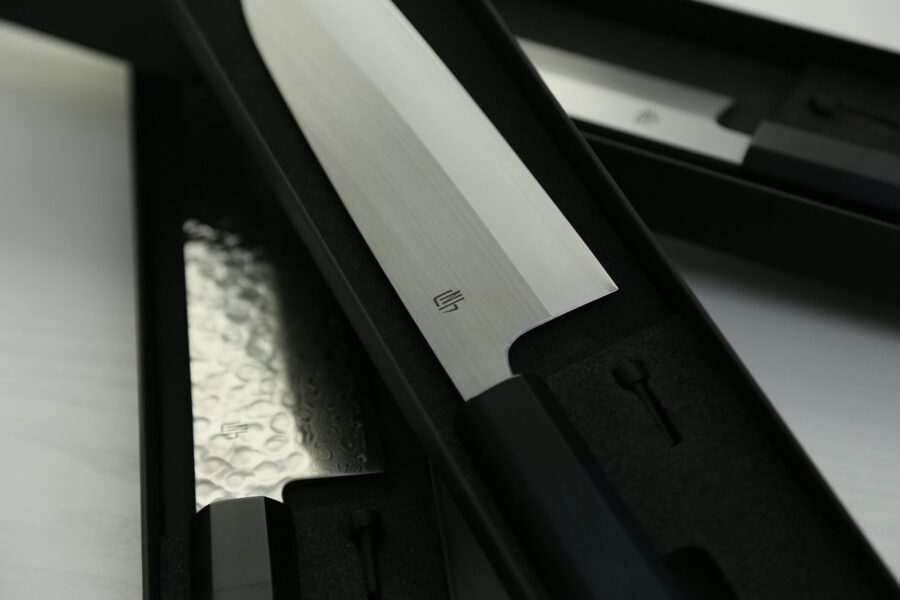
Before you pay, turn the knife over. If the back is flat with a shallow hollow, it was ground for one hand and one job; if the bevel shows on both sides, it will forgive a home cook. Either way, ask who forged it and in what steel, and let the shop wrap it.