
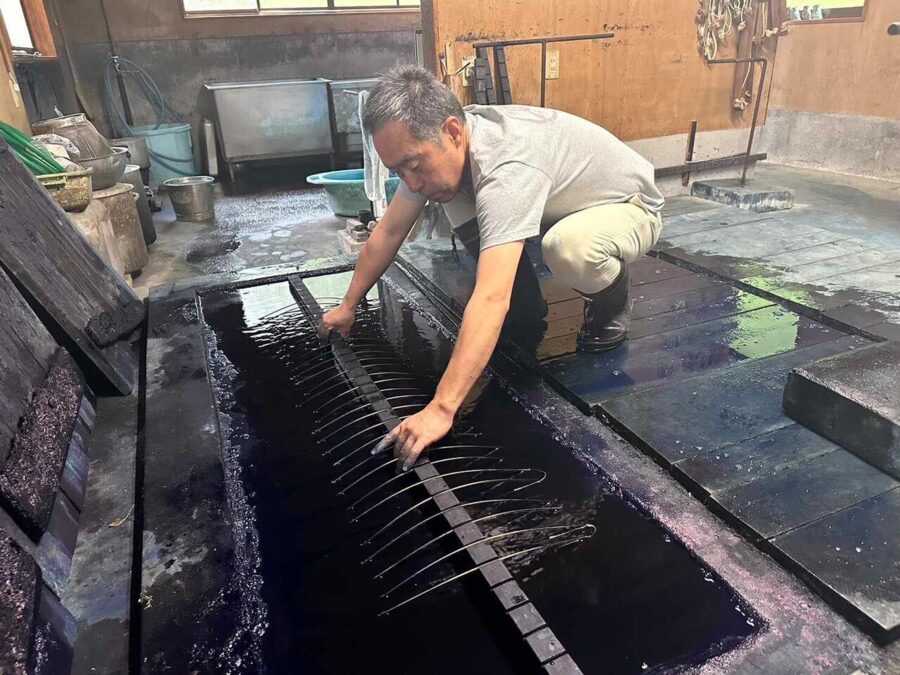
Cloth comes out of a natural indigo vat a murky yellow-green, and it turns blue in your hands while you hold it open to the air. That minute of color change is the part every class sells. The part nobody sees takes more than a year: a field in Tokushima, a hundred days of composting leaves on an earthen floor, and a vat fed like a sourdough starter before it will dye anything.
Aizome (藍染め) means indigo dyeing, and in Japan it usually means dyeing with tade-ai (蓼藍), Persicaria tinctoria, a knotweed rather than the tropical shrub that gave the rest of the world its indigo. Its leaves are composted into a dye called sukumo, and much of that sukumo comes from the Yoshino River plain in Tokushima Prefecture on Shikoku, sold as Awa-ai after the old name of the province.
The same blue runs through a ¥1,000 (about $6) handkerchief dyed at a museum bench in Tokushima, a ¥41,800 (about $265) work shirt from a Kamiita dyer who grows its own leaf, and a pair of Japanese denim jeans. What separates them is the route to the blue: which plant, which vat, how many dips, and whose hands did the dipping.

In this article
The word, the plant and Japan blue
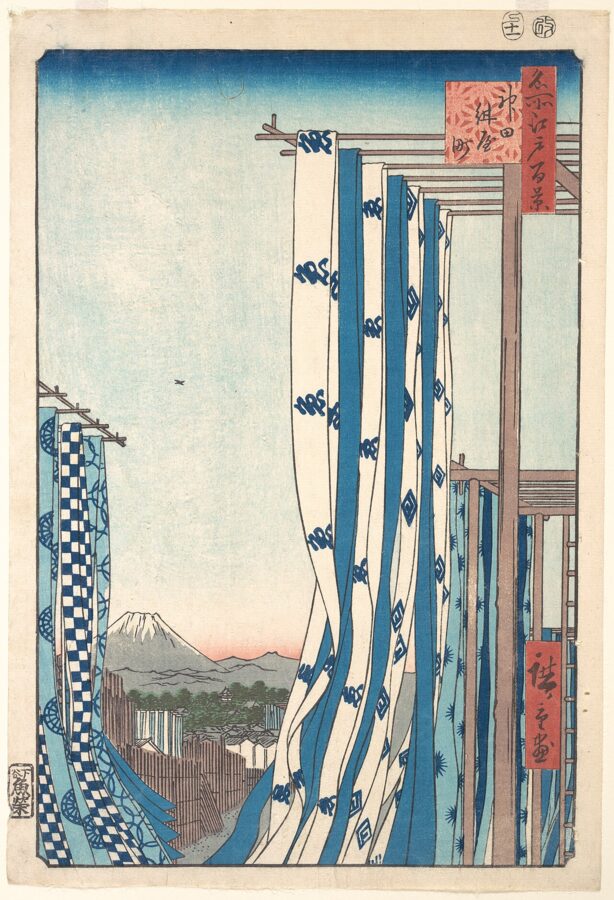
Ai is the plant and the color; zome is dyeing. Indigo reached Japan from the continent well over a thousand years ago, and for centuries a deep blue was a color of court and temple. It became everyone’s color in the Edo period, when cotton spread, and indigo was one of the few dyes that took to it well and stood up to work and washing.
By the Meiji era so much of the country wore indigo that foreigners noticed. The phrase “Japan blue” is usually credited to Robert William Atkinson, a British chemist who taught in Tokyo in the 1870s, and it has stuck. When Tokyo picked its 2020 Olympic and Paralympic emblem in 2016, it chose Asao Tokolo’s checkered design in indigo blue, selected from 14,599 entries, an Edo pattern called ichimatsu in the Edo color.
Where is aizome made today? Dyers work all over Japan, but much of the sukumo they use comes from a small number of makers in Tokushima.
Tade-ai and sukumo: Tokushima’s Awa-ai
A season in the field
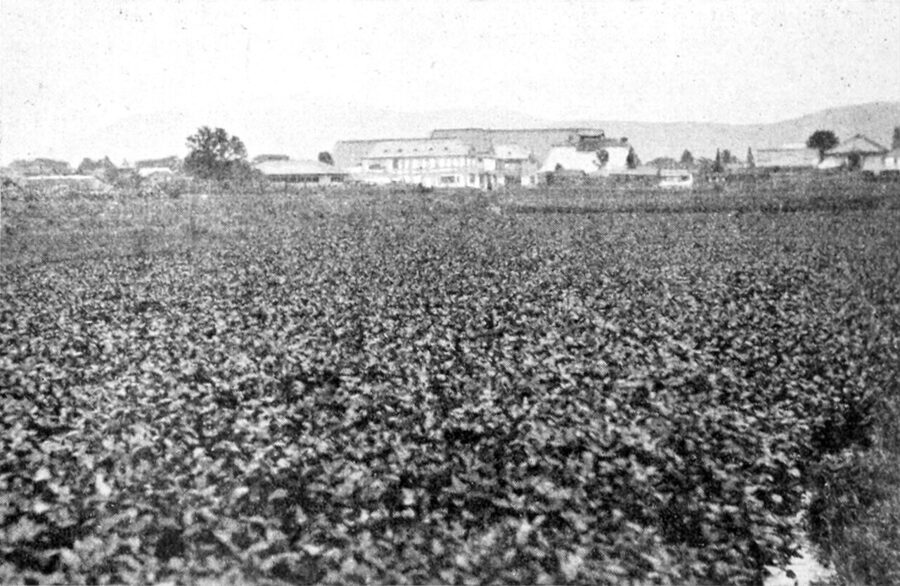
Tade-ai is an annual. In Tokushima the seed goes in around March, and the first cut comes between June and the end of the rainy season, with a second and third cut later in summer. The crop is chopped and dried the same day it is cut, then winnowed with big fans so the leaf, where the color is, separates from the stem. Watanabe’s, a grower and dyer in Kamiita, calls this sorting step aigonashi.
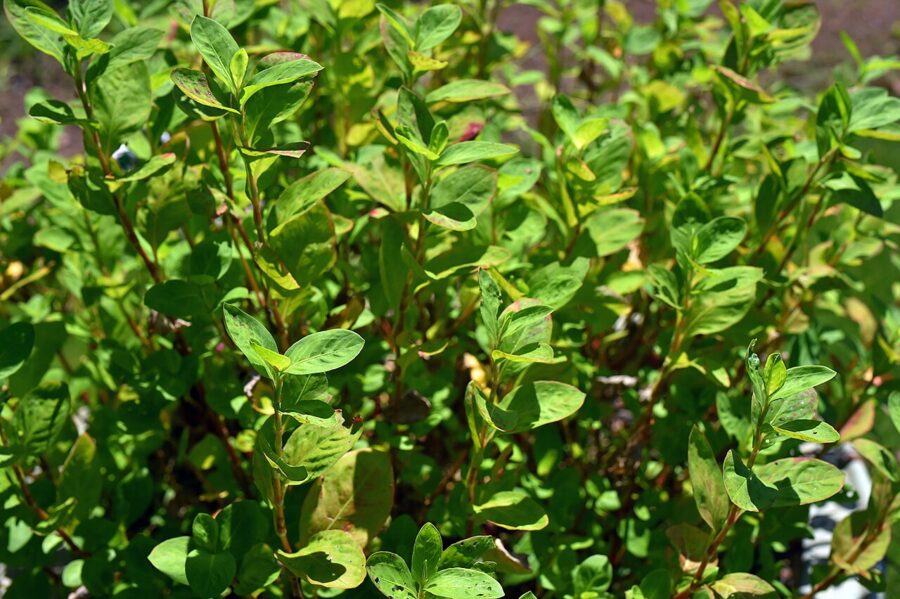

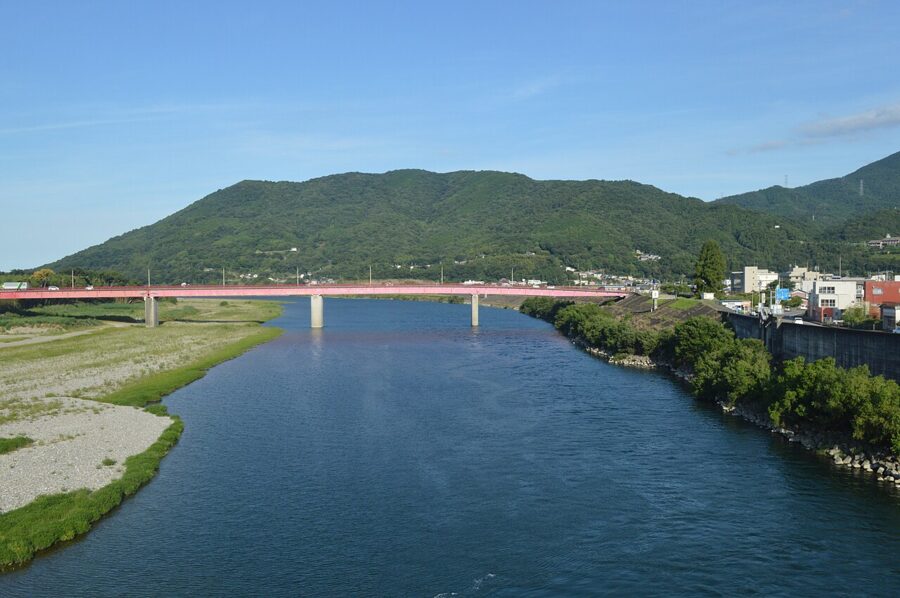
The plain along the lower Yoshino River suited the crop because the river flooded. Each flood laid fresh silt on the fields, which made them good for indigo and risky for rice, and the Hachisuka lords who ran the Tokushima domain backed the indigo trade.

A hundred days in the nedoko
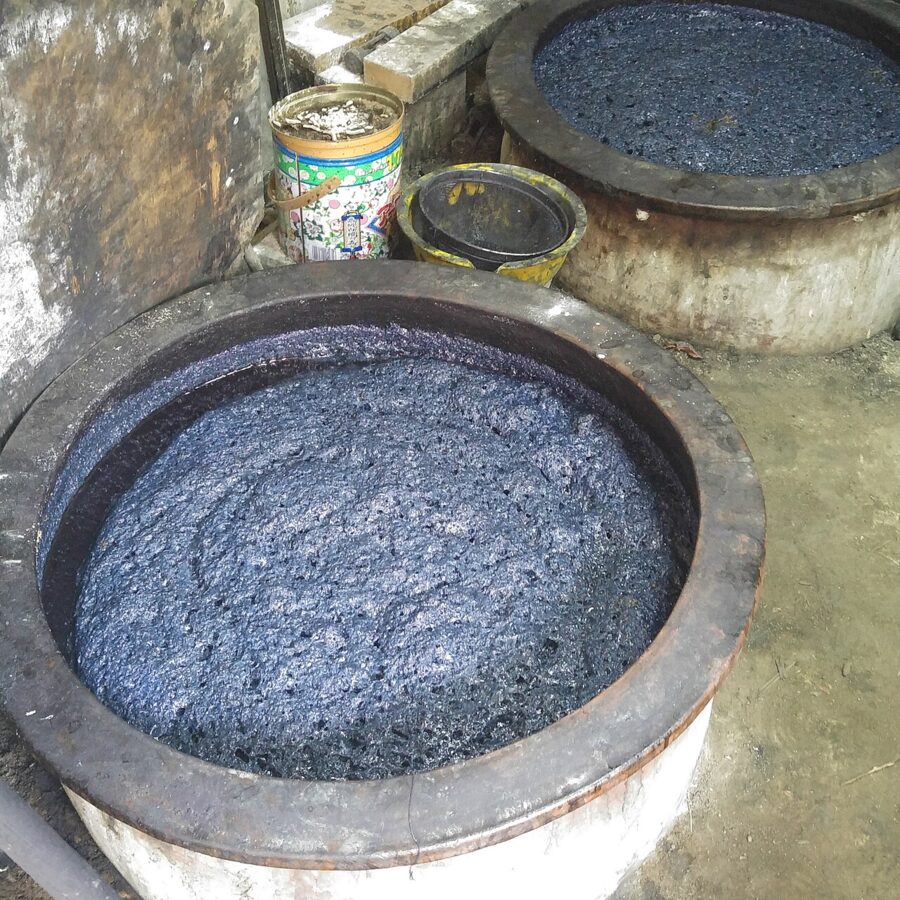
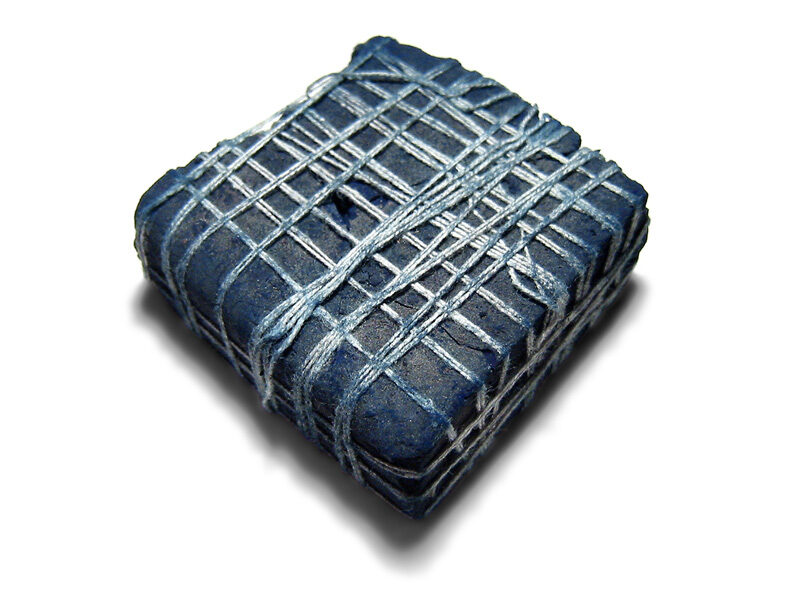
Making sukumo (蒅) starts around September, when the dried leaves are piled on the clay floor of a nedoko, a long fermenting room, and soaked with water. This first day is called nesekomi. Every week or so the maker waters the heap, breaks it apart and stacks it again so it ferments evenly, and Watanabe’s says the center of the pile reaches about 70°C (158°F) at its peak, with steam and a choking smell filling the room.
After about a hundred days and a dozen or more turnings, the leaves have become a dark, crumbly compost that keeps the dye concentrated through the year. It goes out in straw sacks between late December and February. The makers are called aishi, and the work is protected as a selected conservation technique: Awa-ai production was recognized in 1978, with a preservation society based in Kamiita.
The numbers explain why sukumo is expensive. Tokushima’s indigo fields peaked at about 15,000 hectares in 1903, fell to 2 hectares by 1966, and have only climbed back to just under 20 hectares, according to a Kyoto workshop that dyes only with Awa sukumo. That workshop names the two makers it buys from: Arai Seiaisho and Sato Awa-ai Seizosho, each run by an aishi recognized as a contemporary master craftsman.

The indigo merchants’ towns
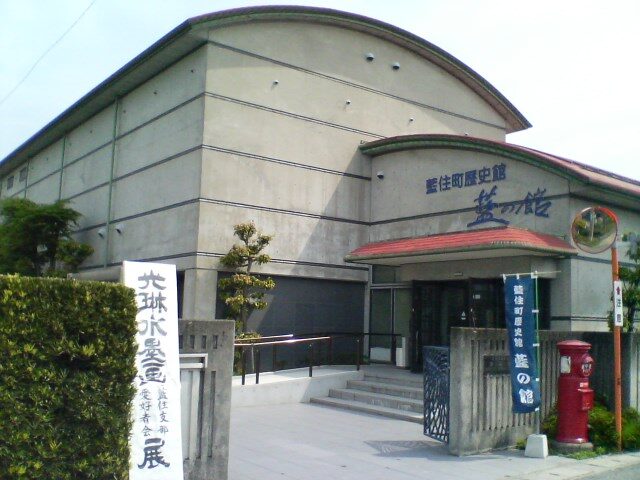
Indigo made Tokushima rich, and you can still see where the money went. The Okumura residence at Ai no Yakata in Aizumi has 13 buildings around a courtyard, including the nedoko where leaves fermented. Its main house dates from 1808, and the whole estate was designated a Tokushima Prefecture tangible cultural property in 1987.
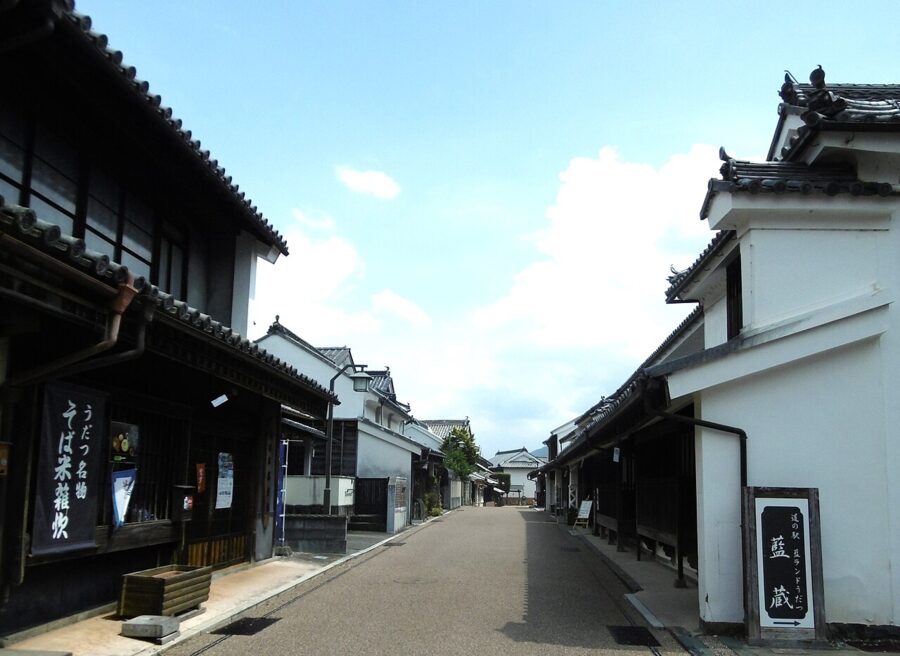
Upriver in Mima, Wakimachi’s merchants shipped indigo down the Yoshino and built thick plaster houses with udatsu, raised firewalls at the ends of the roof that cost a fortune and showed it. In 2019 nine Tokushima towns along the river were listed together as the Japan Heritage story “Ai no Furusato Awa”, the home of indigo.
The living vat
Building a vat
Indigo does not dissolve in water, so it cannot simply be boiled into a dye bath. The traditional answer is tennen aku hakko-date (天然灰汁発酵建て), natural lye fermentation. Bacteria in an alkaline vat convert the indigo into a soluble form that soaks into cloth, and air turns it back into blue indigo locked in the fiber.
That Kyoto workshop, in Ohara, lists its ingredients as sukumo, lye made by pouring boiling water over wood ash, shell lime, wheat bran and sake, and nothing else. Sukumo goes into the jar with half a jar of lye, then bran to feed the bacteria and lime to hold the alkalinity, and sake to get the fermentation going. When the surface changes color the dyer tops the jar up with lye, and the vat is ready once the coppery ai no hana blooms, usually in seven to ten days. Watanabe’s lists sukumo, wood-ash lye, shell lime and bran for its vats, and says they take about two weeks to come up to strength.
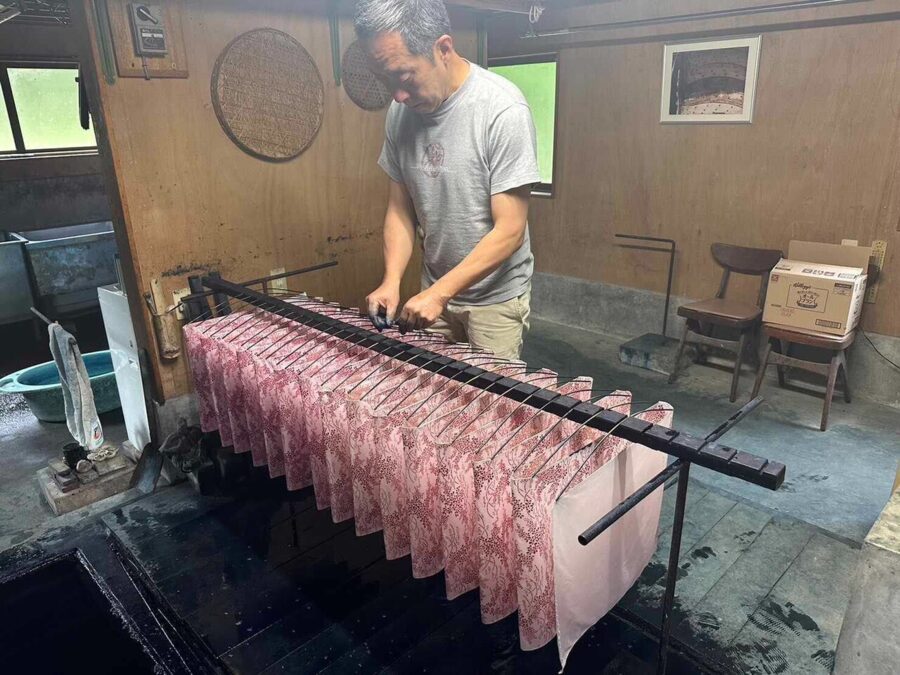

After that the vat has to be kept alive. Dyers feed it bran, adjust it with lime and lye, stir it and rest it, and a vat that is overworked or left cold goes dull and stops dyeing.
Dip, wring, air, repeat
Each dip adds only a little color. The cloth goes in slowly, is worked under the surface, then comes out to be wrung and opened to the air, turning from green to blue. A pale blue takes a few dips; a near-black navy takes many, over several sessions, so the color builds layer on layer.
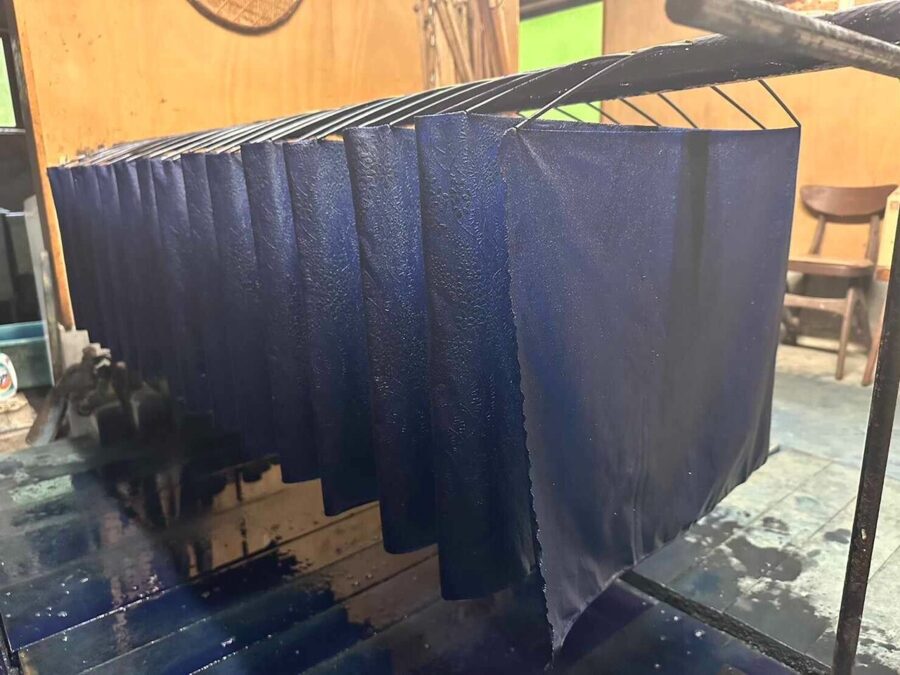

Which vat is your class using?
I would ask this before booking. Many classes use Indian indigo, Ryukyu indigo from Okinawa or synthetic indigo reduced with chemicals, because those vats start fast and forgive beginners. The blue can be fine, but it is not Tokushima’s, and the price should reflect that. Workshops that use sukumo in a fermented lye vat say so, usually with the words hon-aizome or aku hakko-date.

From kamenozoki to kachi-iro
Because the color builds dip by dip, Japanese dyers named the stages, and the names are still used in shops. The poetic phrase is ai shijuhasshoku, the forty-eight colors of indigo, though nobody agrees on a fixed list. These are the ones you will meet most often, from palest to darkest.
| Name | Kanji | Meaning | Shade |
|---|---|---|---|
| Kamenozoki | 瓶覗 | “A peek into the jar” | Barely blue, a single quick dip |
| Mizuasagi | 水浅葱 | Water-pale green onion | Pale greenish blue |
| Asagi | 浅葱 | Pale green onion | Clear light blue |
| Hanada | 縹 | Old court name for blue | Mid blue |
| Ai | 藍 | Indigo | Deep blue |
| Kon | 紺 | Navy | Dark navy |
| Kachi-iro | 褐色 | Read as “victory color” | Almost black |
Kachi-iro was a favorite of samurai because kachi sounds like the word for winning, and Shikoku’s tourism board describes Tokushima dyeing as running from kamenozoki all the way to kachi-iro.

Patterns: binding, clamping and paste
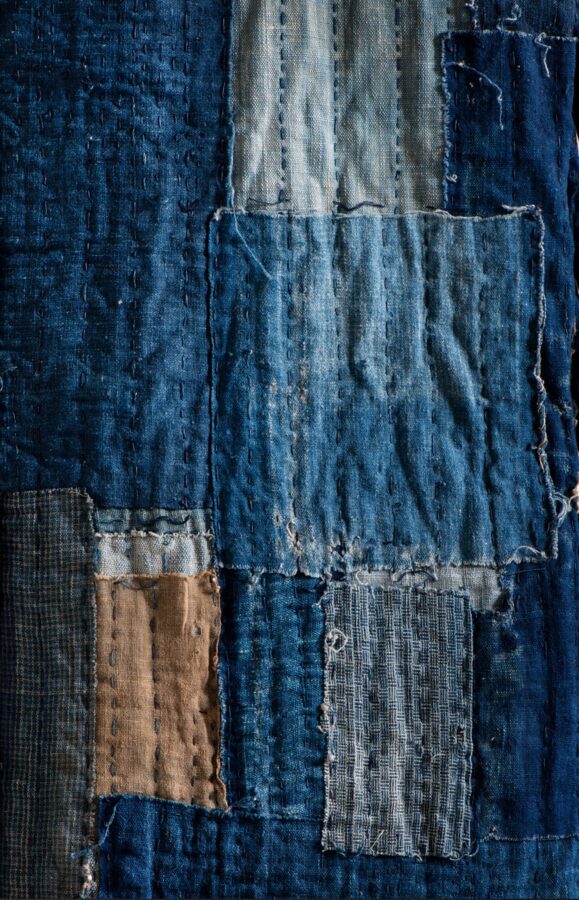
Indigo patterns come from keeping the dye off parts of the cloth: tie it, clamp it or cover it with paste.
Shibori
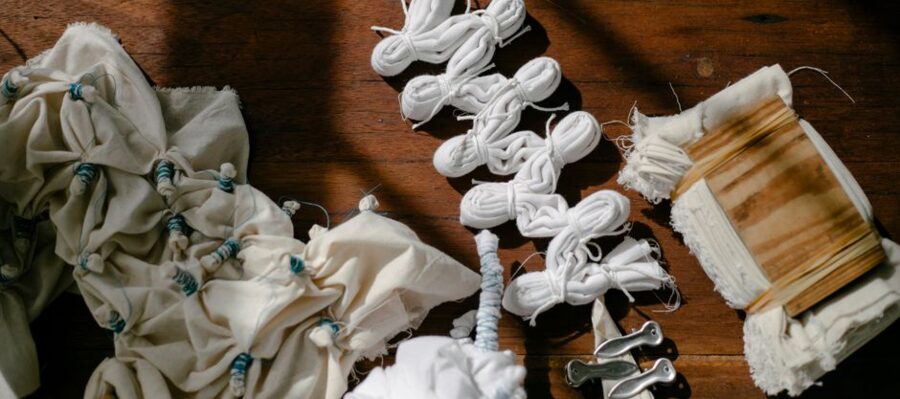
Shibori (絞り) means squeezing. The cloth is bound with thread, stitched and drawn tight, or pleated, and the bound places stay pale. Kanoko, “fawn spots,” is the finest: tiny points of cloth each pinched up and wound with thread, so a finished piece is covered in white rings with a blue dot at the center. Kyoto’s kanoko shibori for silk kimono and the cotton shibori of Arimatsu and Narumi, on the old Tokaido road outside Nagoya, are both designated traditional crafts of Japan.
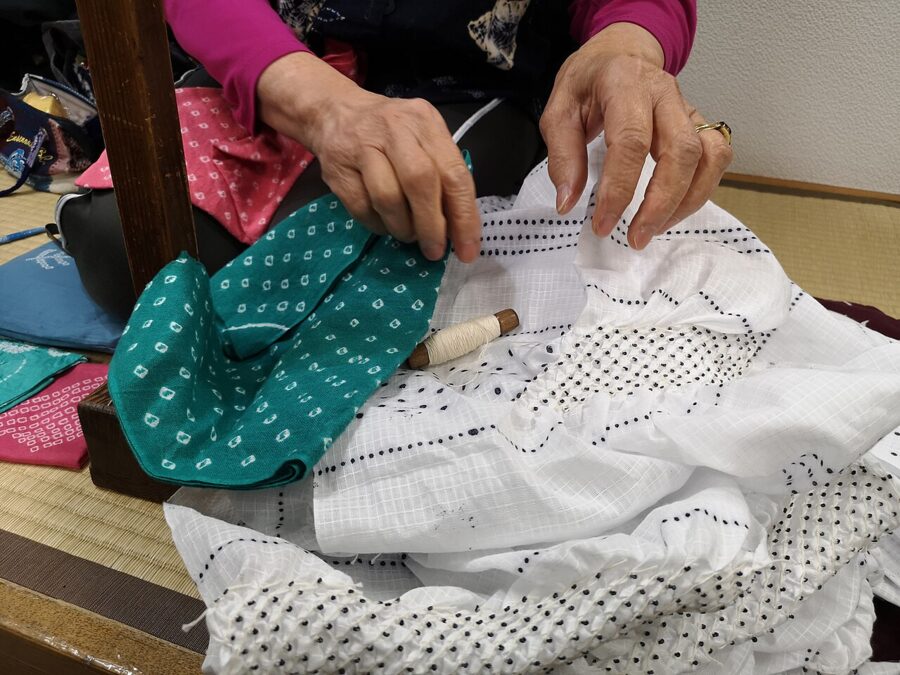

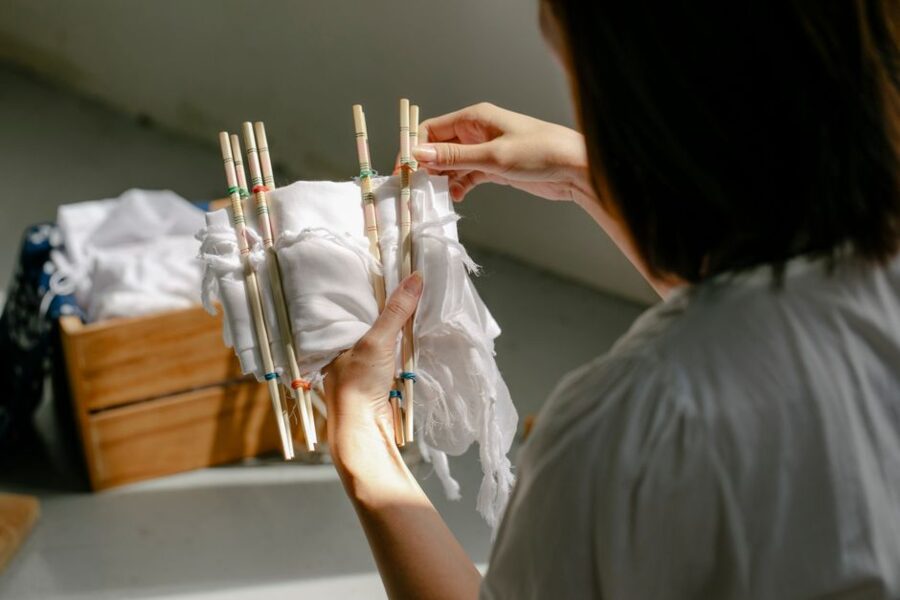
Arashi, “storm,” is the one most classes can teach in an afternoon. The cloth is wrapped diagonally around a pole, bound with thread and pushed down into tight folds before it goes into the vat, and it comes out with fine slanting lines like rain driven by wind. Arimatsu is where it was developed, and the Arimatsu-Narumi Shibori Kaikan, the cooperative’s museum on the old street, opens 9:30 to 17:00 (as of November 2026).

Itajime
Itajime (板締め) folds cloth into a stack, accordion style, then clamps it between shaped boards. The dye soaks the edges and creeps into the folds, and the clamped areas stay white, giving repeating squares, triangles and grids.
Katazome and tsutsugaki
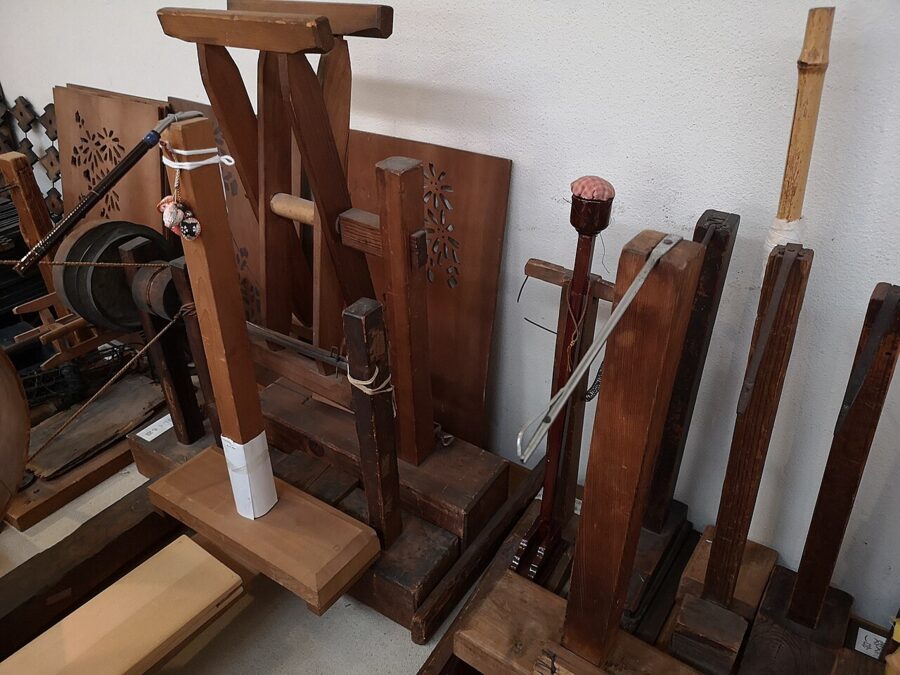
Katazome (型染め) puts the resist on with a stencil. The stencils, katagami, are cut from layers of washi stuck together and waterproofed with persimmon tannin, and the best still come from Suzuka in Mie, sold as Ise katagami. The dyer lays the stencil on cloth stretched along a long board and spreads rice paste through it with a spatula. Where the paste dries, indigo cannot reach.
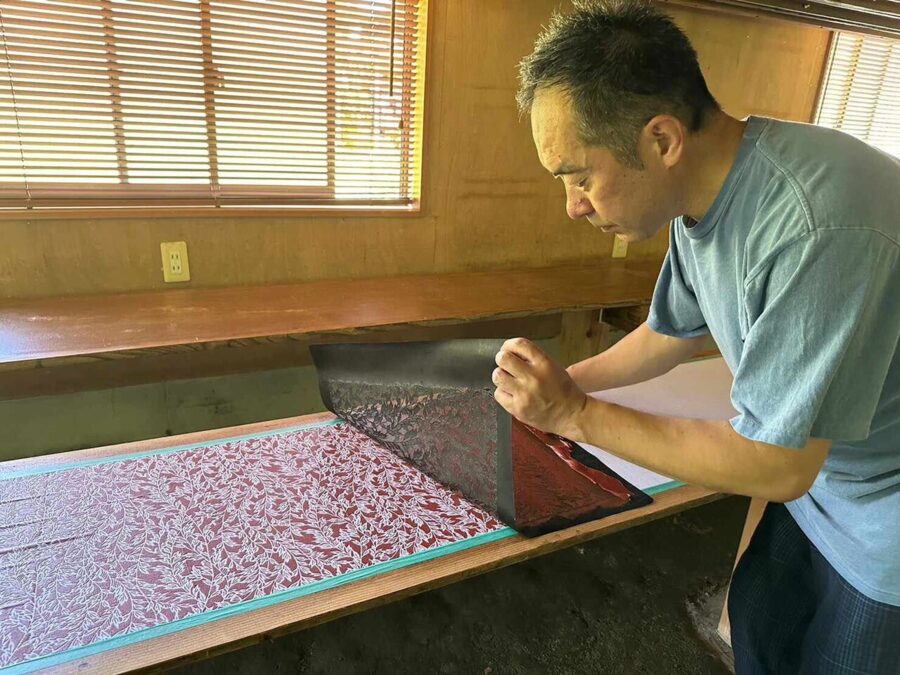

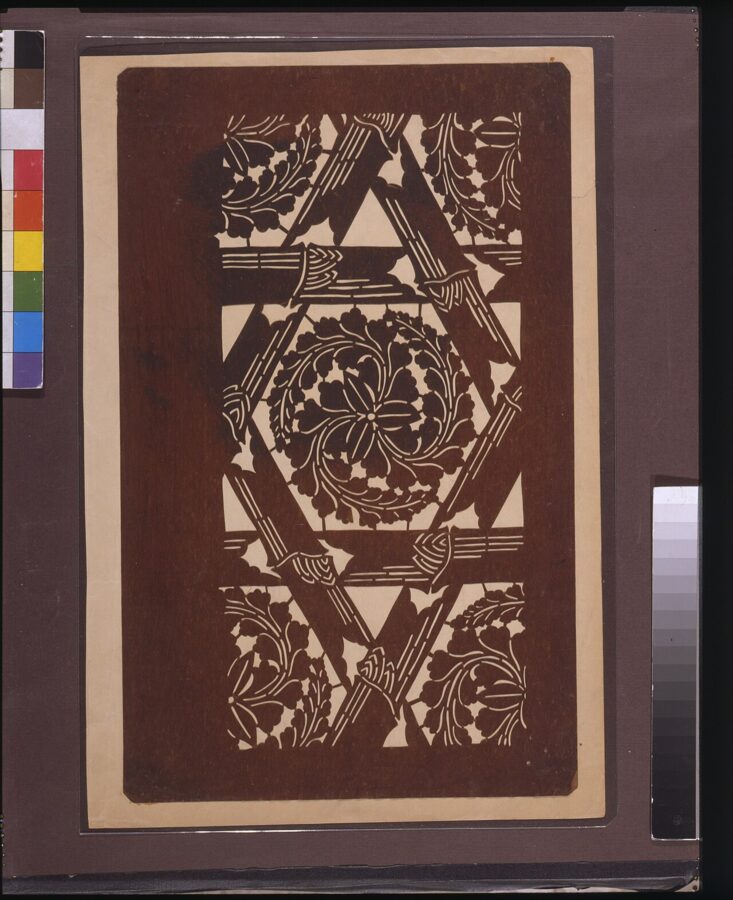
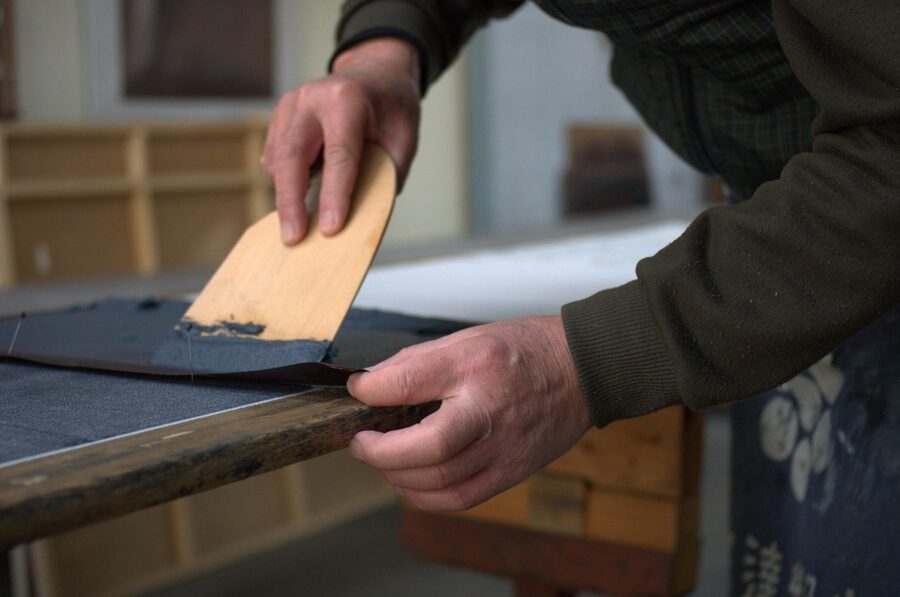
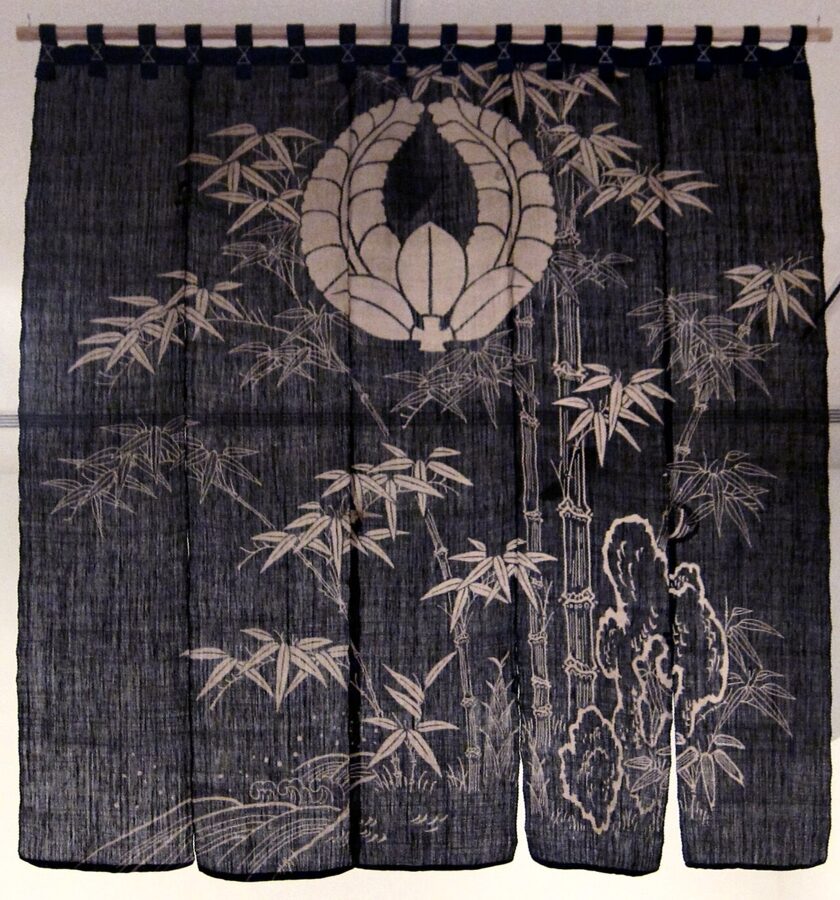
Tsutsugaki skips the stencil. The dyer squeezes paste freehand from a cone, like icing a cake, to draw big designs on shop curtains, festival banners and wedding futon covers, then dips the whole piece.
Indigo and denim
Awa-ai collapsed for chemical reasons. German chemists worked out how to make indigo in the lab, BASF put synthetic indigo on sale in 1897, and cheap imported indigo undercut Tokushima within a few years of the 1903 peak. The molecule is the same; only the route to it differs.
Denim kept indigo in Japan’s mills. Kaihara, founded in 1893 as a maker of hand-woven indigo Bingo kasuri in what is now Fukuyama, Hiroshima, built its own rope-dyeing machine in 1970 and became the first company to supply rope-dyed denim in Japan. In rope dyeing, bundles of cotton yarn are twisted into ropes and run through vat after vat with air in between, which is the dip and air of a hand dyer, done by machine.
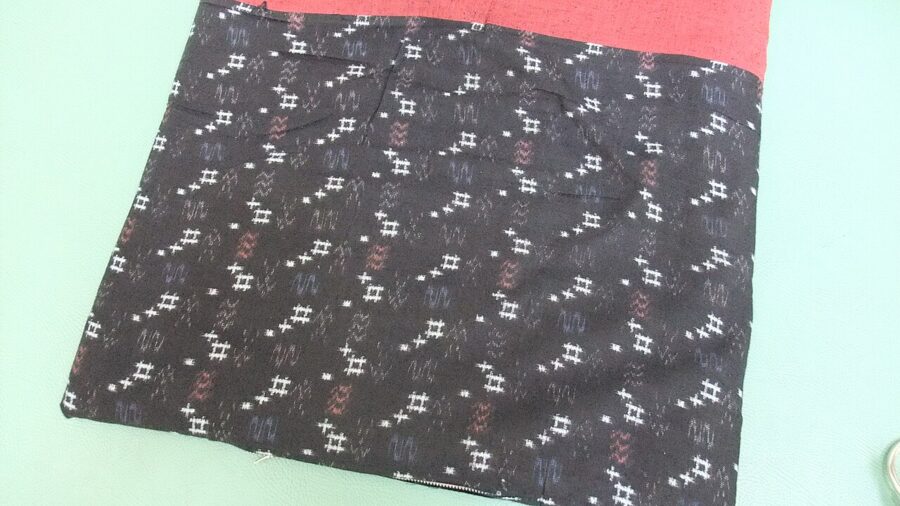
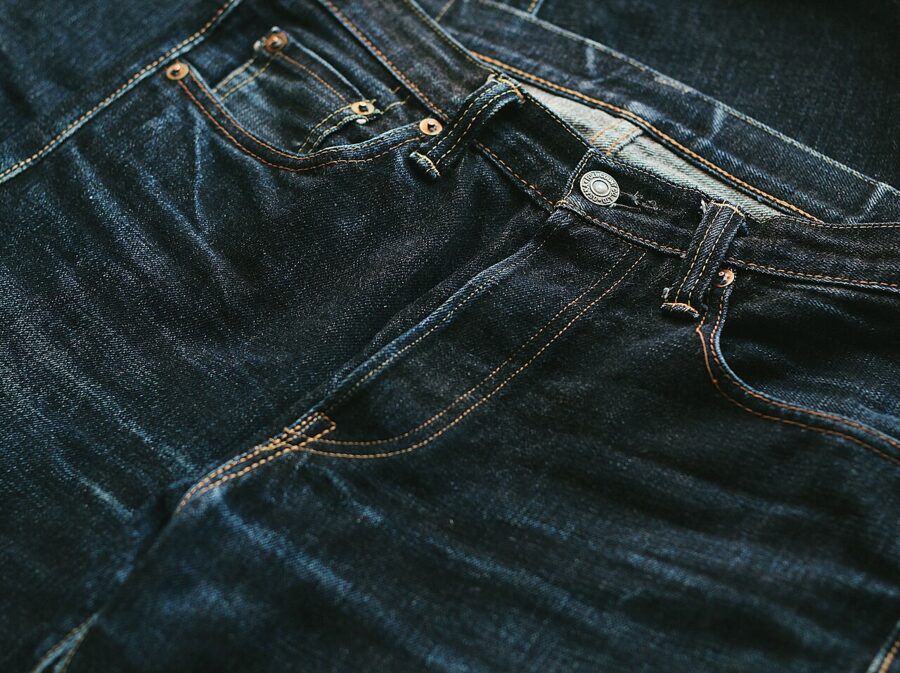

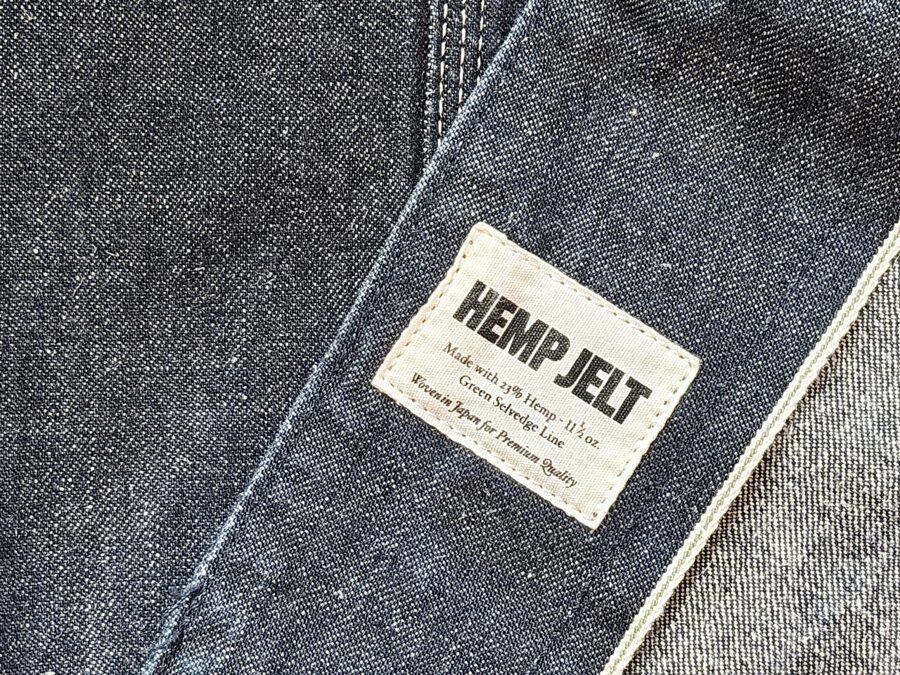
Indigo clings to the outside of the yarn, so the core stays white, and that is why good jeans fade into lines and patches instead of graying all over. Nearly all denim is now dyed with synthetic indigo, including most Japanese denim, and the brands that use natural indigo say so loudly and charge for it. The jeans of Kojima and the mills of Ibara have their own story; hand-dyed indigo and rope-dyed denim run on the same chemistry.
Where to dye your own
Prices are each workshop’s own, as of November 2026. Book ahead everywhere except Ai no Yakata, and wear clothes you do not mind marking.
Tokushima
Ai no Yakata, Aizumi. The town’s indigo museum is the cheapest and easiest of these vats to drop into. Its dye bench uses a lye fermentation vat, and you buy a blank on the spot: a handkerchief from ¥1,000, a hand towel or tenugui from ¥1,500 (about $9), a gauze stole from ¥3,000 (about $19) or a large silk stole from ¥3,500 (about $22), and the dyeing takes about 30 minutes. No booking is needed unless you come as a group of ten or more or bring your own cloth, which needs a call by the day before; just arrive between 9:00 and the last entry at 15:30.
The museum opens 9:00 to 17:00, closed on Tuesdays (open if Tuesday is a holiday) and December 29 to January 3, and admission is ¥300 (about $2) for adults (as of November 2026). The Okumura main house is closed for repairs from October 16, 2026, with no reopening date yet; the rest stays open. Tokushima Bus from JR Tokushima Station stops at Okuno, ten minutes’ walk away. Aiyashiki Okumura across the road sells indigo goods.
Watanabe’s, Kamiita. To see the whole chain, come here: Watanabe’s grows indigo, makes sukumo and dyes, and in 2021 it coached the indigo scenes in NHK’s drama about Shibusawa Eiichi, whose family traded indigo. A workshop visit combines a tour and talk with dyeing, from ¥6,600 (about $42) in Japanese, and runs about 90 minutes. Overseas guests should allow about two hours; the English tour fee is listed as ¥6,600 a person on top of the dyeing, though the same page’s own example works it out at ¥5,500 (about $35), so confirm when you book.
Dyeing a tenugui adds ¥3,300 (about $21), or bring your own cotton, linen, silk or wool and pay ¥3,300 per 100 grams. Apply through the site’s form; they reply within three working days, and you pay on the day.
BUAISOU, Kamiita. The other well-known farm-to-vat outfit in Kamiita grows indigo, makes its own sukumo and dyes it all in-house. It has a store and gallery in Tokushima and posts its 2026 workshop dates on its site; I could not find a current price, so check there.
Tokyo
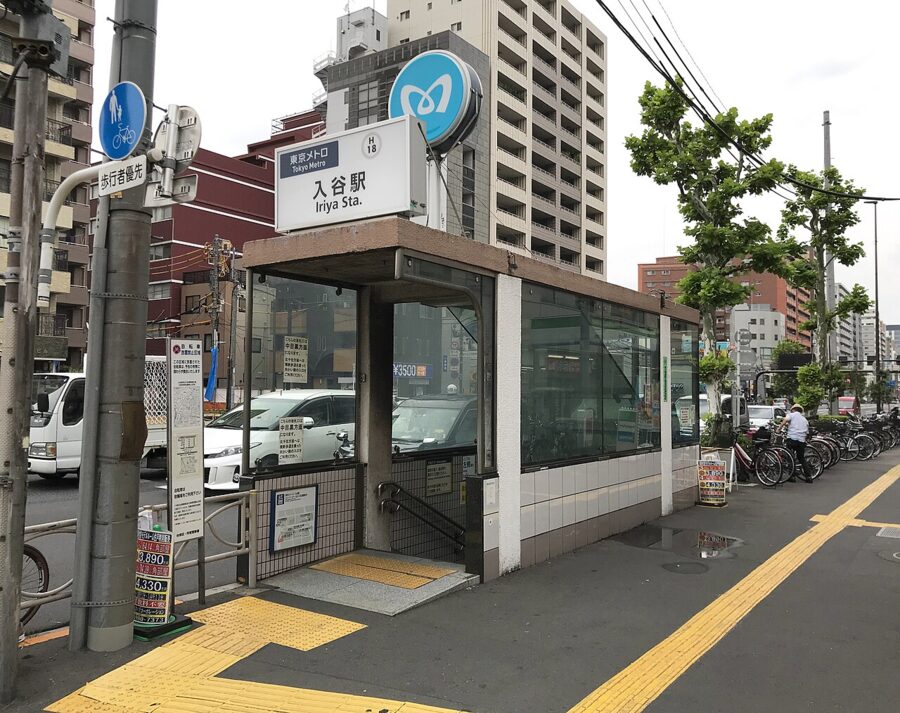
Wanariya, Asakusa. The easy option in English: Wanariya in Senzoku, about ten minutes’ walk from Iriya Station (exit 1) on the Hibiya Line or from Asakusa Station (exit A2) on the Tsukuba Express, always has English-speaking staff. A shibori handkerchief costs ¥2,500 (about $16) and takes about an hour, a tenugui ¥3,800 (about $24), a T-shirt ¥8,000 (about $51) and 90 minutes, and a stole from ¥9,980 (about $63). Paying online in advance takes ¥100 to ¥300 (up to about $2) off, and you take the piece home the same day.
Wanariya does not say on its site what is in its four vats, so ask if a fermented sukumo vat is the point. For an hour in Asakusa with children, it is hard to beat.

Kyoto
Kobo Ai no Yakata, Ohara. This small workshop in Ohara, the valley north of Kyoto known for Sanzen-in temple, dyes only with Awa sukumo in a natural lye fermentation vat. It takes one group a day of one to five people, morning (10:00 to 12:00) or afternoon (13:00 to 15:00), and a session lasts about two hours. A tenugui costs from ¥5,000 (about $32), a stole or T-shirt from ¥10,000 (about $63), and a handkerchief ¥3,000 (about $19) for children of elementary school age and under (as of November 2026).
The workshop’s booking page asks that you come with a Japanese speaker, or book through Wabunka, the agency it uses for overseas guests. Its calendar for late November and December 2026 shows mornings as “ask” and afternoons as unavailable, so plan for a morning.

Kyoto Hozu Ai Kobo, Kameoka. Hozu Ai Kobo revived Kyoto’s own indigo, grown near To-ji until the 1920s, from seed a Tokushima aishi had kept and passed on in 2015. Its 90-minute classes use Ryukyu indigo, though: a tenugui costs ¥3,300 (about $21) and solo bookings start at ¥6,600.
Okayama
I could not confirm a bookable indigo class in Bizen or Kojima. The denim towns have indigo shops and corners, listed with their hours in the denim guide.
| Workshop | Where | Vat | Length | From | Booking |
|---|---|---|---|---|---|
| Ai no Yakata | Aizumi, Tokushima | Lye fermentation | About 30 min | ¥1,000 | Walk in, 9:00 to 15:30 |
| Watanabe’s | Kamiita, Tokushima | Own sukumo, fermented | 90 to 120 min | ¥6,600 | Online form |
| Wanariya | Asakusa, Tokyo | Not stated | 60 to 90 min | ¥2,500 | Online or phone |
| Kobo Ai no Yakata | Ohara, Kyoto | Awa sukumo, lye fermentation | About 2 hours | ¥5,000 | Phone, form or Wabunka |
| Hozu Ai Kobo | Kameoka, Kyoto | Ryukyu indigo | About 90 min | ¥3,300 | Phone or form |
Looking after indigo
Indigo sits on the surface of the fiber, so new pieces rub off. Expect blue on pale bags and hands for the first few weeks.
Wash a new piece on its own for the first few washes, by hand in cool or lukewarm water with a neutral detergent, and never use bleach. Aizenkobo, a Kyoto indigo dyer, tells customers to wash its pieces with dishwashing liquid. Rinse well and dry it in the shade.
For a piece you dyed yourself, Watanabe’s gives a longer routine to fix the color before first use. Soak it for 30 minutes in water at about 40°C (104°F), rinse three times, soak for 20 minutes in water with 5 percent vinegar, rinse three times again and dry it. Then repeat the warm soak and rinse twice more.
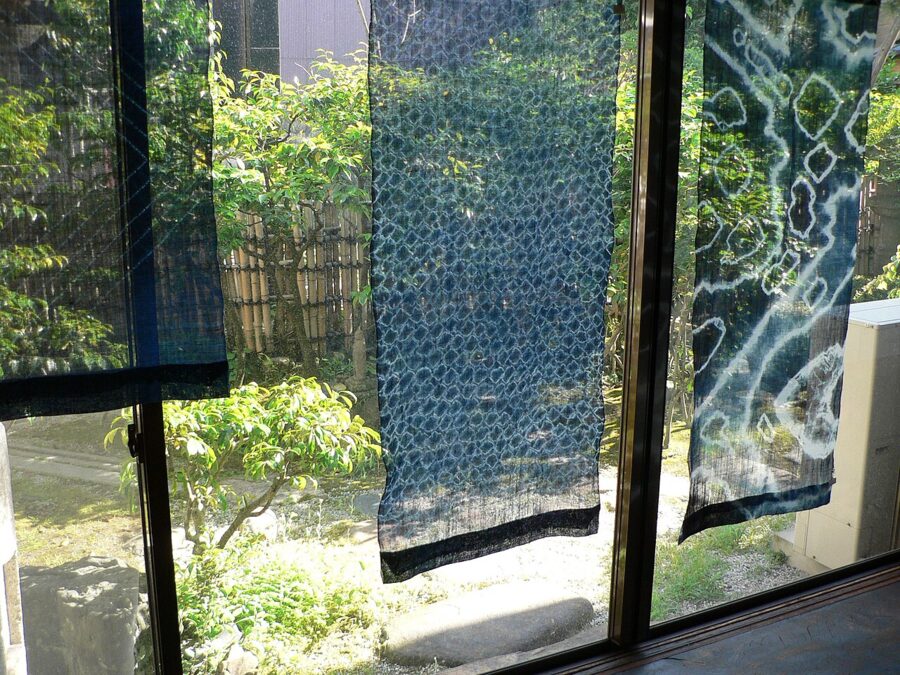

Indigo is often sold as insect-repelling, antibacterial and kind to skin, and Edo farmers are said to have worn it into the fields against insects and snakes. I would buy it for the color and the way it ages, and treat the rest as folklore. The color does change: natural indigo softens with washing, and the deep pieces keep the faint red cast in the blue that Watanabe’s and other sukumo dyers point to as the sign of the real thing.
If you only do one thing, ask what is in the vat before you dip. If the answer is sukumo, lye, bran, lime and a splash of sake, the blue on your handkerchief started in a Tokushima field more than a year before you put your hands in the jar.