
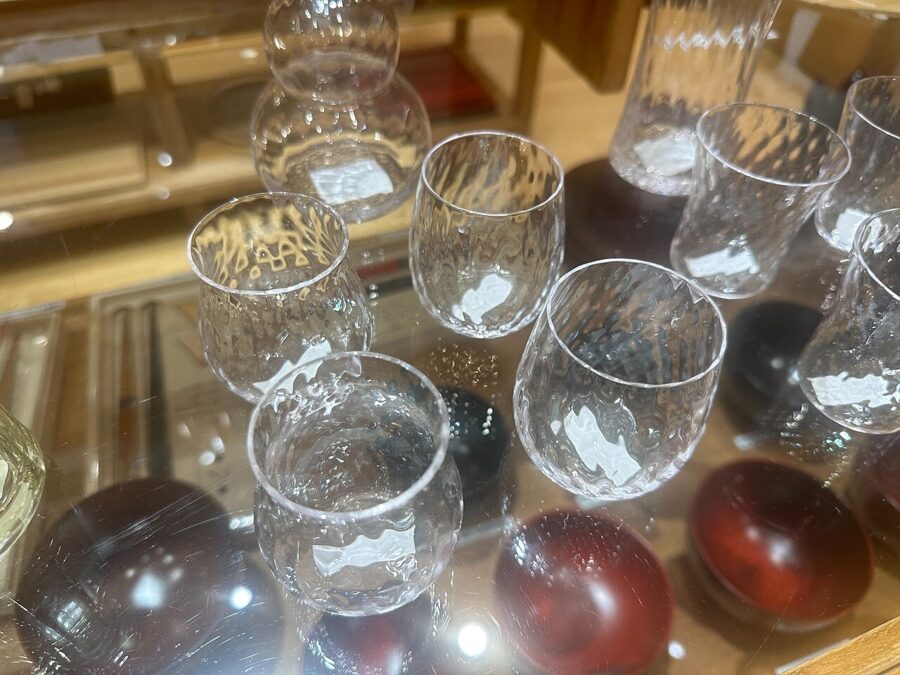
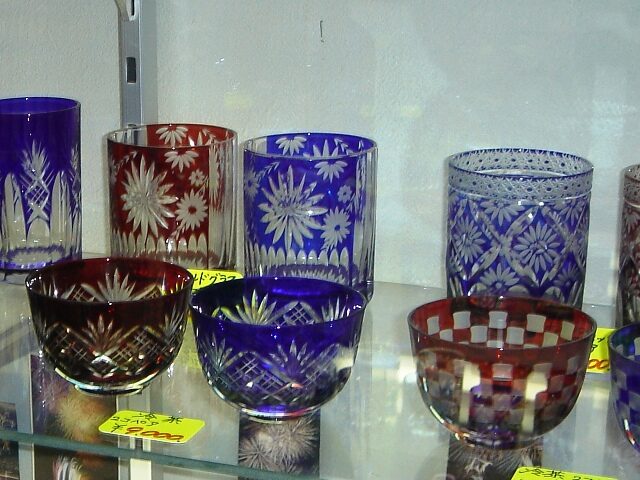
An Edo kiriko glass begins as two glasses melted into one: a thin skin of cobalt or copper-red glass with a thick clear body blown inside it. A cutter then grinds through that skin on a wet diamond wheel, working from a few guide lines instead of a drawing, until baskets, stars and rows of fish roe show up clear against the color.
Tokyo has cut glass this way since 1834, and the trade still lives where it settled in the Meiji era, in the low-rise wards of Sumida and Koto east of the Sumida River. The name is a registered trademark of the Edo Kiriko Cooperative: a glass may be sold as Edo kiriko only if a member made it, by hand, mainly on rotating wheels, inside a production area centered on Koto. It has been on the national list of Japanese traditional crafts since 2002.
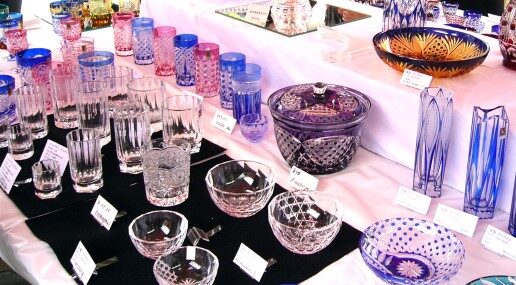

Its southern cousin, Satsuma kiriko from Kagoshima, uses a much thicker colored layer that fades where the wheel cuts into it. Both are worth knowing before you shop, because the cooperative itself warns about imitations sold under the name that were never made in Japan. You can also cut one yourself in eastern Tokyo, in 75 minutes to two hours, for ¥3,630 to ¥7,700 (about $23 to $49) as of November 2026.
In this article
A bidoro shop in Odenmacho
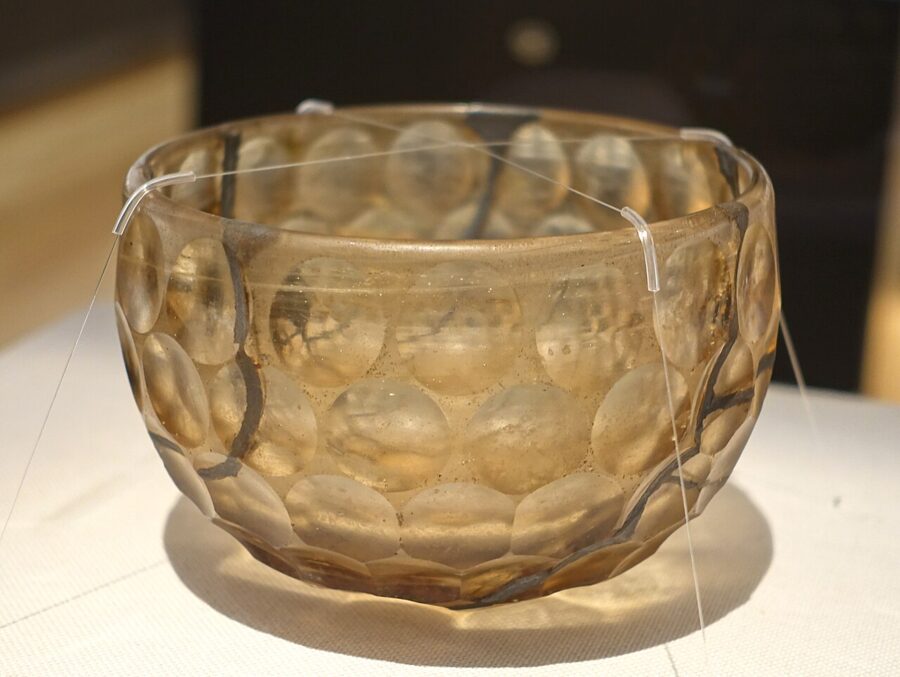
Glass reached Japan long before anyone cut it there. The faceted bowl in the Tokyo National Museum was made in Sasanian Persia in the 500s and is attributed to the tomb of Emperor Ankan near Osaka. It is cut glass, and it is an import.
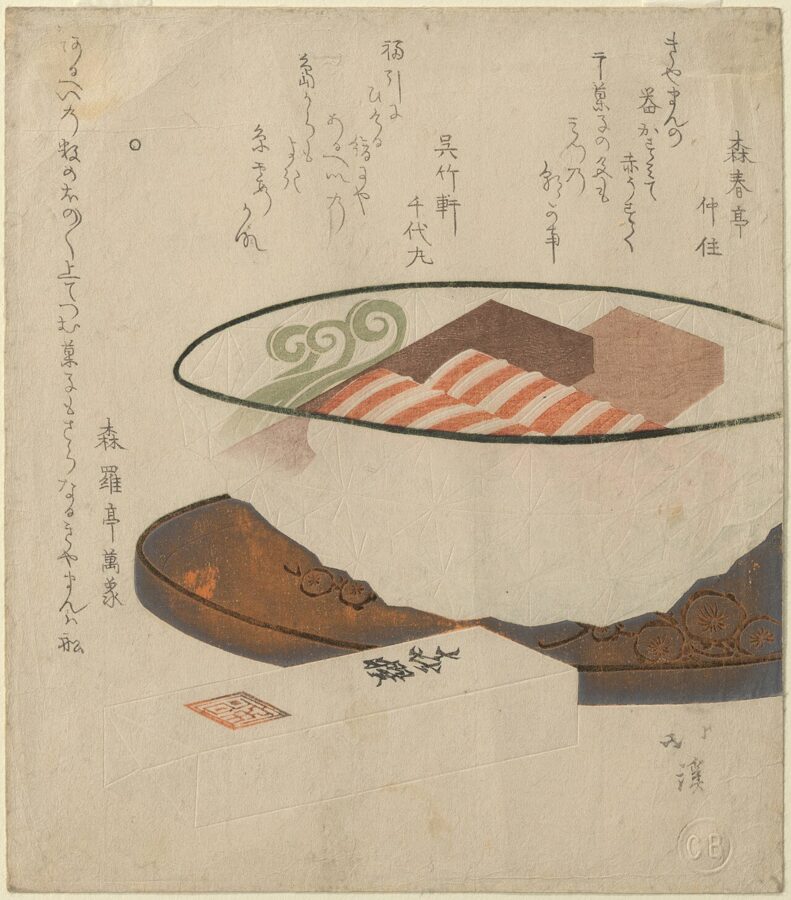
By the early 1800s, cut glass was something Edo households showed off. Totoya Hokkei’s 1821 print of wagashi piled in a glass bowl shows the bowl’s wall covered in a cut star pattern. Thirteen years later, the craft got its local founder.
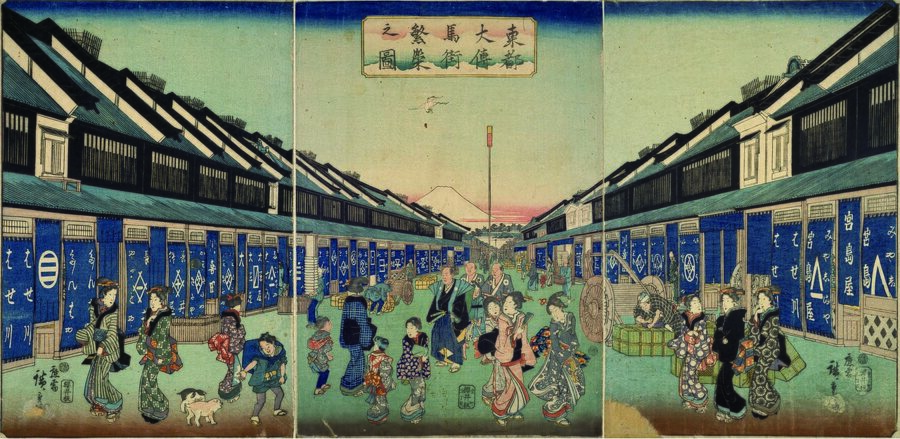
The Edo Kiriko Cooperative’s history dates Edo kiriko to 1834, when Kagaya Kyubei, who ran a bidoro (ビードロ, glassware) shop in Odenmacho, carved a pattern into the surface of glass with kongosha (金剛砂), an abrasive sand usually translated as emery. The account of Hanashyo, a Koto workshop, adds that he learned glasswork from Izumiya Kahei in Osaka, and that Edo kiriko was among the gifts when Commodore Perry arrived in 1853.
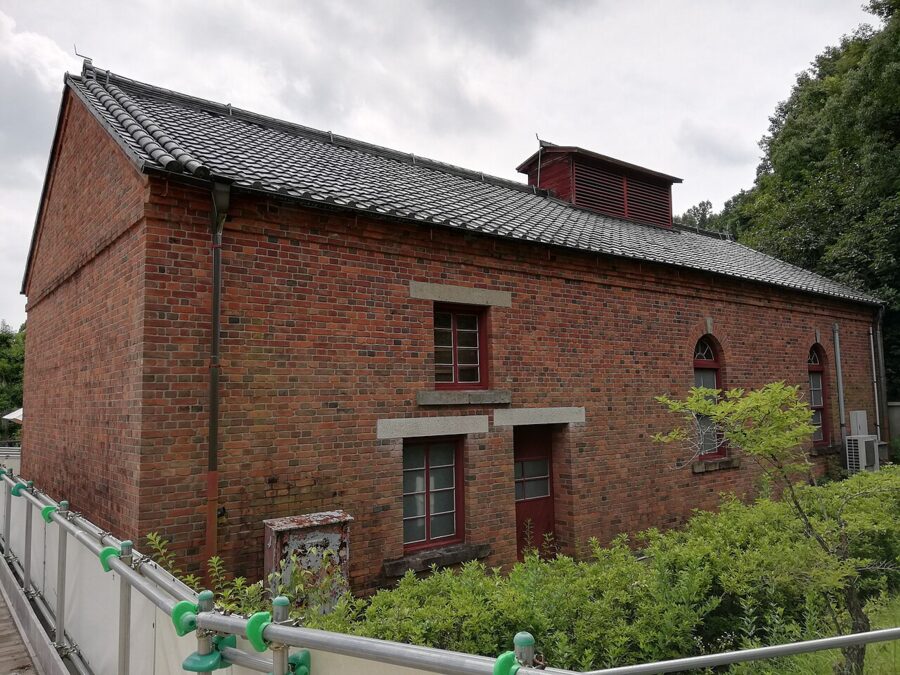
The modern craft took shape in the Meiji era. In 1873 a Western-style glassworks opened in Shinagawa, and in 1881 it brought in a British cut-glass instructor, Emmanuel Hauptmann, who trained a dozen or so Japanese workers. The cooperative dates today’s techniques from then.
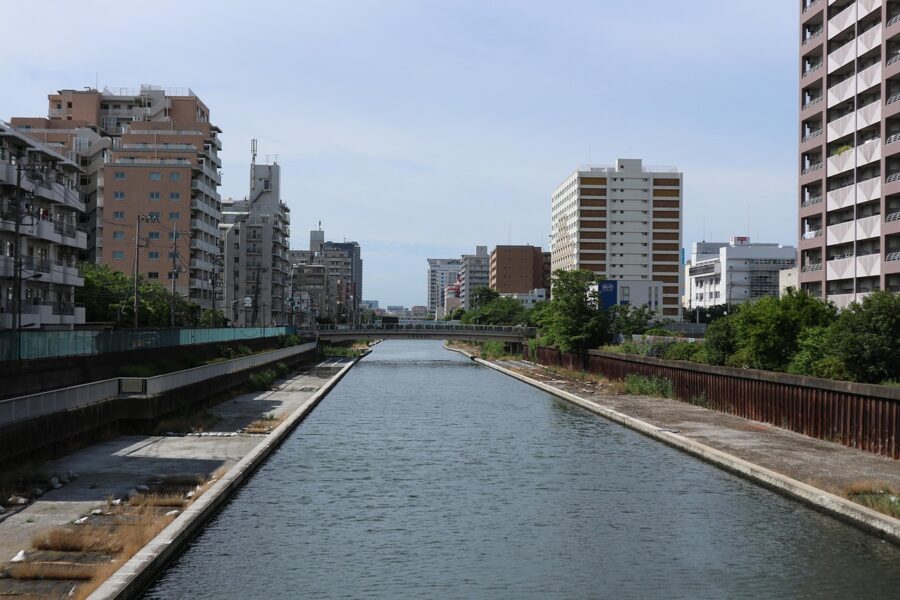
From the Meiji era on, glassworks and cutters gathered around the canals of what are now Sumida and Koto, where barges could do the hauling. From the Taisho era into the early Showa years, craft glass in Japan more or less meant cut glass, and crystal polishing methods lifted the quality in the trade’s first golden age.
After the war, factories mass-produced glass while hand cutting carried on in small shops. Tokyo designated Edo kiriko a traditional craft industry in 1985, and the Minister of Economy, Trade and Industry added it to the national list in 2002. In its 2025 count the cooperative put the number of cutters at just under 100, about a fifth of them women, with men and women evenly split among cutters in their twenties.
Satsuma kiriko: twenty years, then a century of silence
Kagoshima’s glass started with medicine bottles. In 1846 the Satsuma lord Shimadzu Narioki brought a glassmaker, Yotsumoto Kamejiro, from Edo and set up a furnace near the domain’s pharmaceutical works. From 1851 Shimadzu Nariakira turned it into a luxury trade aimed partly at foreign buyers, and his chemists produced red, blue, purple and green glass; the red was Japan’s first.
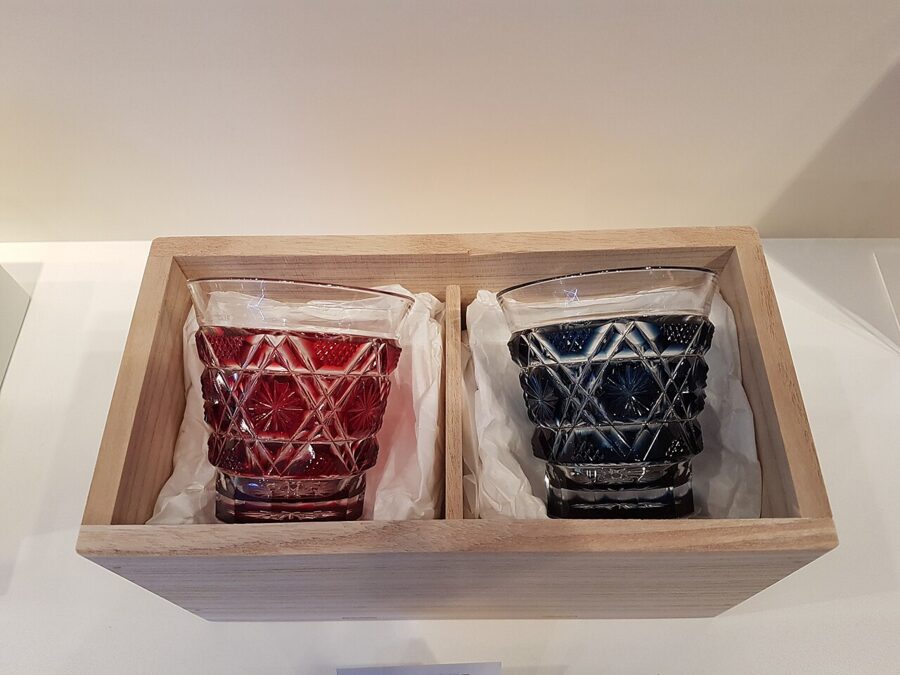

By 1855 there was a glassworks at Iso, in what became the Shuseikan industrial complex, with more than a hundred workers at its peak. Then Nariakira died in 1858, the works were cut back, and the British bombardment of Kagoshima in 1863 burned the factory. Shimadzu’s history puts the end of production around the Satsuma Rebellion of 1877; depending on the source, the original Satsuma kiriko lasted twenty to thirty years.
About a century later, a 1982 Kagoshima department-store exhibition of a glass historian’s reproductions started talk of a revival. In April 1985 the Shimadzu family firm set up Satsuma Glass Kogei (now part of Shimadzu Limited), and the factory began production in March 1986. The government’s account of the revival describes colors and cutting angles worked out from a few surviving pieces and old photographs.
Red took years more to get stable. Gold-red followed in 1988 and yellow in 1989, colors known only from old documents, then a two-color line, nishikie (二色衣), in 2001.
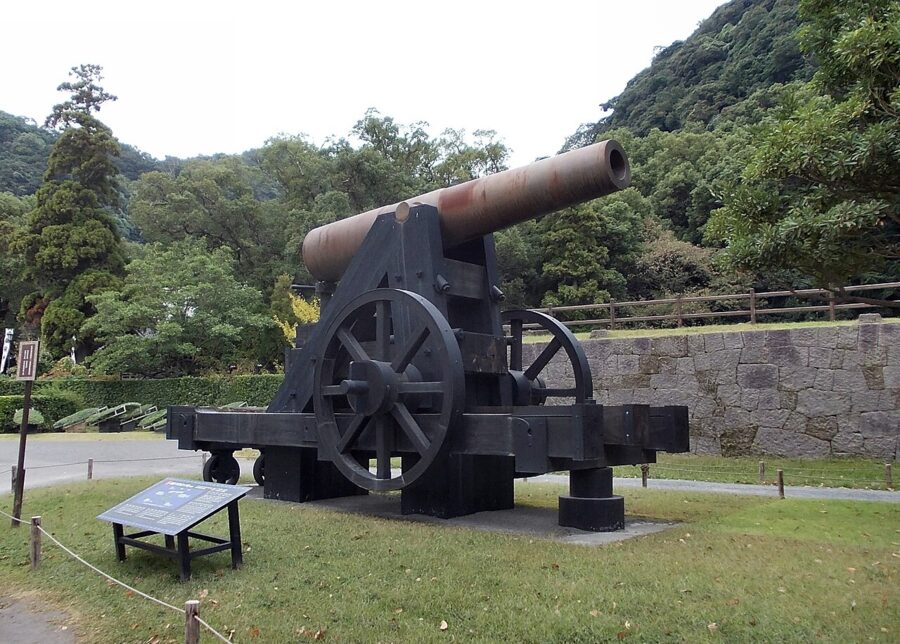

The difference you can see is bokashi (ぼかし), the gradient. Satsuma kiriko lays a thick colored layer over clear glass and cuts into it at an angle, so the depth of each cut decides how pale the color gets. Edo kiriko uses a thin layer and cuts through it, which gives a sharp edge between color and clear. Satsuma is also made of lead crystal, so it is heavier in the hand; Edo workshops use soda glass or crystal, depending on the maker and the piece.
Edo kiriko came first, by twelve to seventeen years. Satsuma kiriko is a Kagoshima Prefecture traditional craft, designated on March 31, 1989, and not on the national list, which Shimadzu’s FAQ puts down partly to the long break in production. Only a hundred-odd original pieces survive, most in museums such as the Shoko Shuseikan in Iso. For new work, Iso Kogeikan, Shimadzu’s gallery shop at 9688-24 Yoshino-cho, opens 9:00 to 17:00 daily as of November 2026, next to the factory, which you can look around.
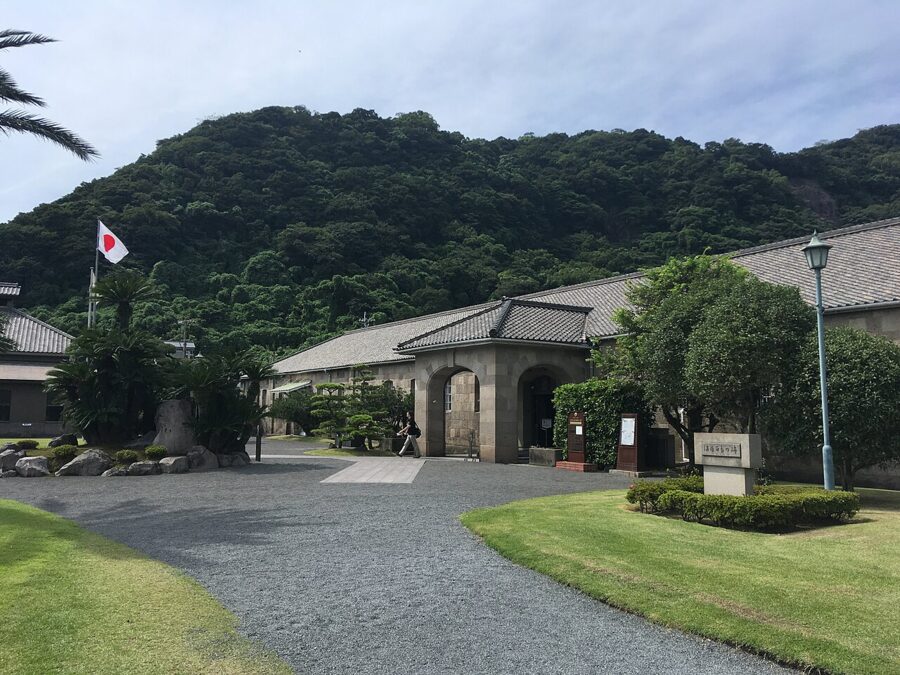

How a pattern is cut
The blank is iro-kise (色被せ), color-cased glass. At Sumida Edo Kiriko-kan the blower makes a thin colored bubble, blows clear glass inside it so the two fuse, then cuts off the top. The color comes from metal in the melt: cobalt for the deep blue called ruri, copper for dark red, and gold for the brighter red.
Nobody draws the pattern. In waridashi (割り出し), the cutter marks a grid of guide lines, once in ink and now usually with a marker. Then comes arazuri (粗摺り), the rough cut, on a wet diamond wheel; before diamond wheels, it was an iron disc fed with emery and water.
The second pass, sanbangake (三番掛け), refines those lines with finer, smoother cuts. Ishikake (石掛け) follows on a whetstone wheel, smoothing each cut so no coarse marks remain. At this point the cuts are matte, like frosted glass.
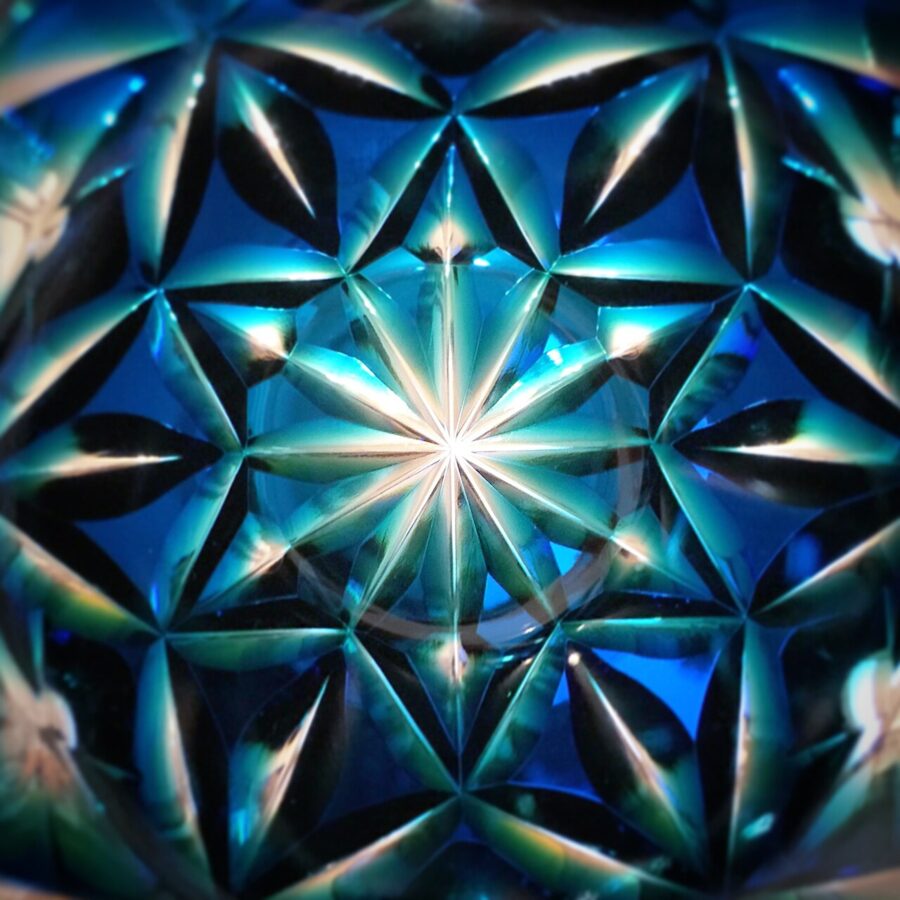

Polishing, migaki (磨き), brings the shine back. Each cut goes against a turning wheel of paulownia or willow wood, or a resin pad, loaded with polishing powder and water. Some workshops dip the glass in acid instead; Sumida Edo Kiriko-kan says it polishes every piece by hand. A last buff on a felt or cotton wheel with cerium oxide, bafugake (バフ掛け), finishes it.
That is why a glass costs what it does: four or five wheel stages, each by one person holding the glass, and a slip at any stage cannot be undone. In my view the price of a well-cut soda-glass tumbler is fair for the hours in it; the jump to crystal buys weight and sparkle more than extra skill.
The patterns and their names
Kiriko patterns borrow from kimono textiles and everyday Edo things: baskets, fences, fish roe, flowers. The cooperative lists fourteen typical patterns, and the Sumida Edo Kiriko-kan explains what each one stands for. These are the ones you will see most:
| Pattern | What it shows | Meaning |
|---|---|---|
| Kagome (籠目), six- or eight-sided | The open weave of a bamboo basket | Used to ward off evil |
| Nanako (魚子) | Fine crossing cuts like a mass of fish roe | Named for the look |
| Asanoha (麻の葉) | Six-pointed hemp leaves | Hemp grows fast, so it was put on babies’ kimono for healthy growth |
| Yarai (矢来) | A bamboo fence, or rain falling like arrows | Named for the look |
| Kiku-tsunagi (菊繋ぎ) | A chain of small chrysanthemums | Long life |
| Sokogiku (底菊) | A chrysanthemum cut into the base | Sets off the pattern on the sides |
| Shippo (七宝) | Overlapping circles | Harmony |
| Kumo-no-su (蜘蛛の巣) | A spider’s web | Catching good fortune |
| Ichimatsu (市松) | A checkerboard | After the kabuki actor Sanogawa Ichimatsu, who favored it |
Most glasses combine two or three, a band of yarai over nanako, say, with a chrysanthemum on the base. Workshops also invent their own. Hanashyo’s kometsunagi (米つなぎ), a chain of rice-grain cuts created by its second-generation cutter Ryuichi Kumakura, was chosen for gifts at the 2008 G8 summit at Lake Toya. Satsuma kiriko uses the old patterns plus modern ones, such as a flowing flame.
I look at nanako first on any glass I pick up. It is dozens of hairline cuts crossing at the same depth and angle, and when the spacing is even, the whole surface glitters at once.
Workshops and shops in Sumida and Koto
The places that welcome visitors cluster around Kinshicho and Kameido on the Sobu Line, with one more south on the Toei Shinjuku Line.
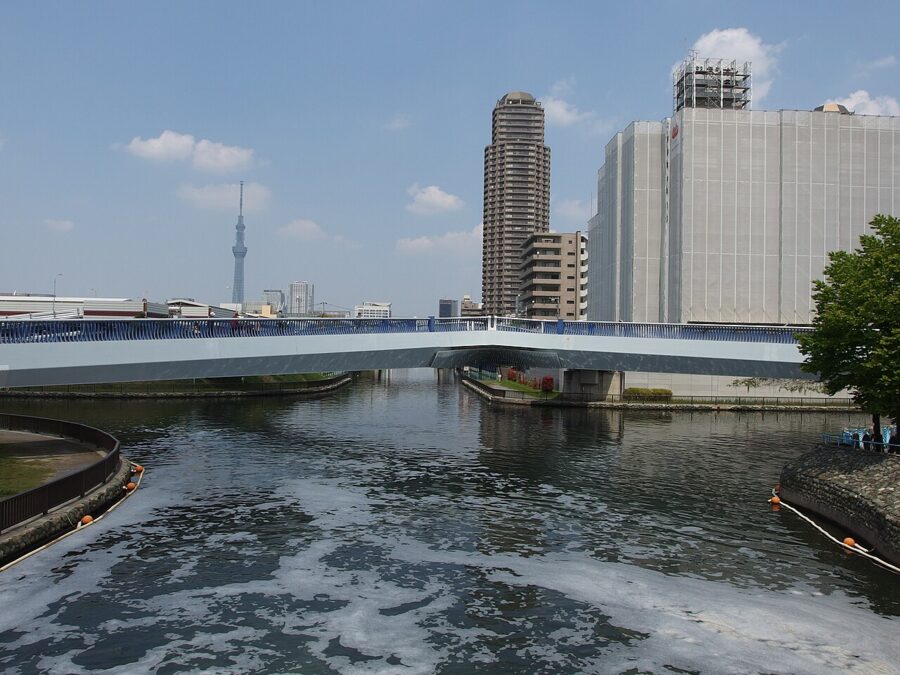

Sumida Edo Kiriko-kan, Kinshicho
A workshop and shop at 2-10-9 Taihei, Sumida, six minutes’ walk from Kinshicho Station toward Tokyo Skytree. It split off in 2004 from Hirota Glass, a Sumida glassmaker over a century old, and its lead cutter is Kozo Kawai, a certified Tokyo and Sumida meister. You can watch the cutters through a window.
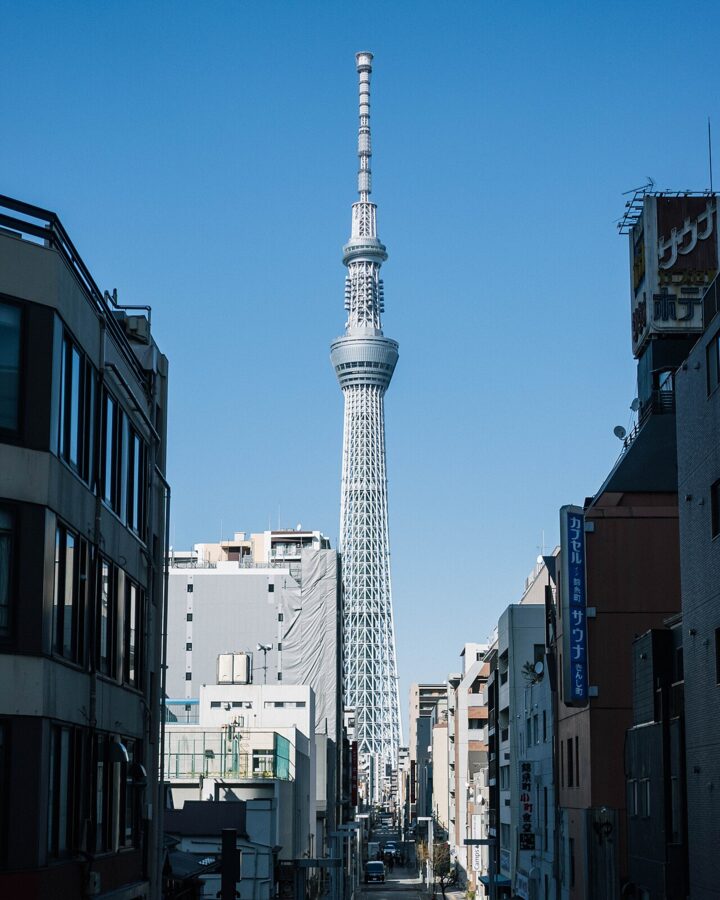

It opens 10:00 to 17:00, closed Sundays, Mondays and over New Year, as of November 2026, and posts its opening days two months ahead. A 290 ml shochu glass cut with a yarai variant costs ¥11,000 (about $70), and a 340 ml old-fashioned glass in nanako or asanoha ¥19,800 to ¥22,000 (about $125 to $139).
Edo Kiriko Cooperative showroom, Nishi-Ojima
The cooperative’s shop at 2-40-5 Ojima, Koto, holds about 400 pieces, from catalog glasses to work by certified traditional craftspeople. It is three minutes from exit A2 of Nishi-Ojima Station, open Tuesday to Sunday, 10:00 to 18:00, as of November 2026 (on a Monday holiday it opens and closes Tuesday instead).
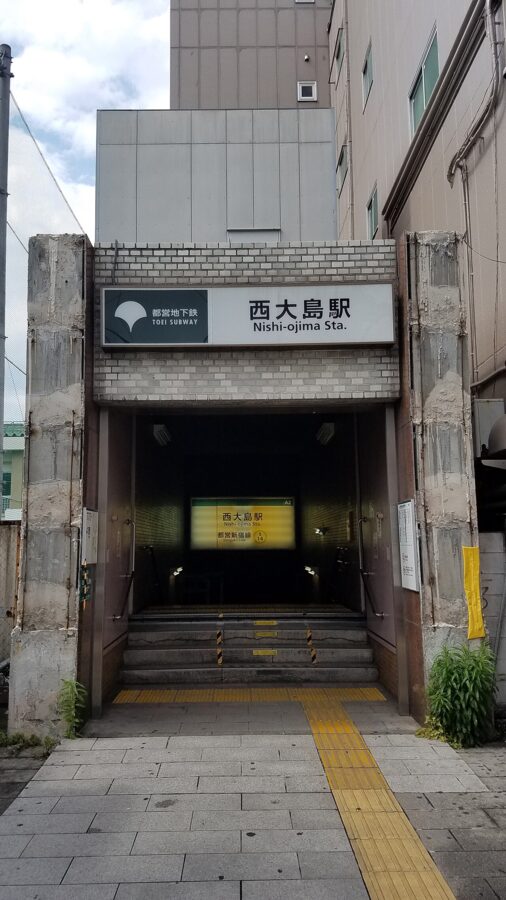

Its online shop shows the range: a soda-glass mini glass or tumbler costs ¥19,800, a crystal sake cup ¥20,900 to ¥33,000 (about $132 to $209), and a crystal old-fashioned glass ¥40,700 to ¥50,600 (about $258 to $320), tax included, as of November 2026. Its biggest public event is the new-work exhibition every April, with cutting sessions.
Hanashyo, Kameido and Nihonbashi
Mokichi Kumakura opened a cutting workshop in Kameido in 1946, and the business turns 80 this year. The Kameido main store is at 3-49-21 Kameido, Koto, with the workshop on the first floor and the shop on the third. The Nihonbashi store, at 6-2 Odenmacho, sits on Kagaya Kyubei’s old street and calls itself the only Edo kiriko shop in Nihonbashi.
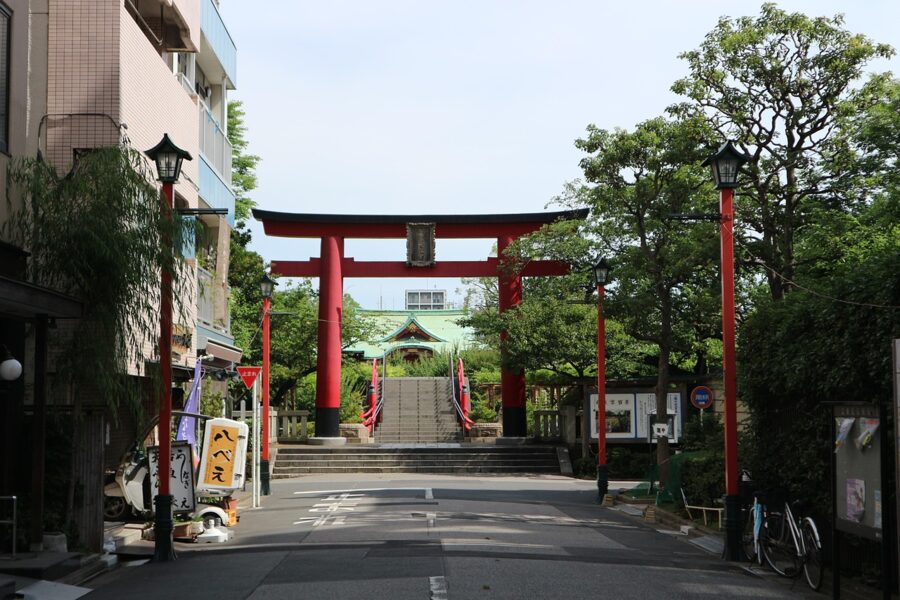
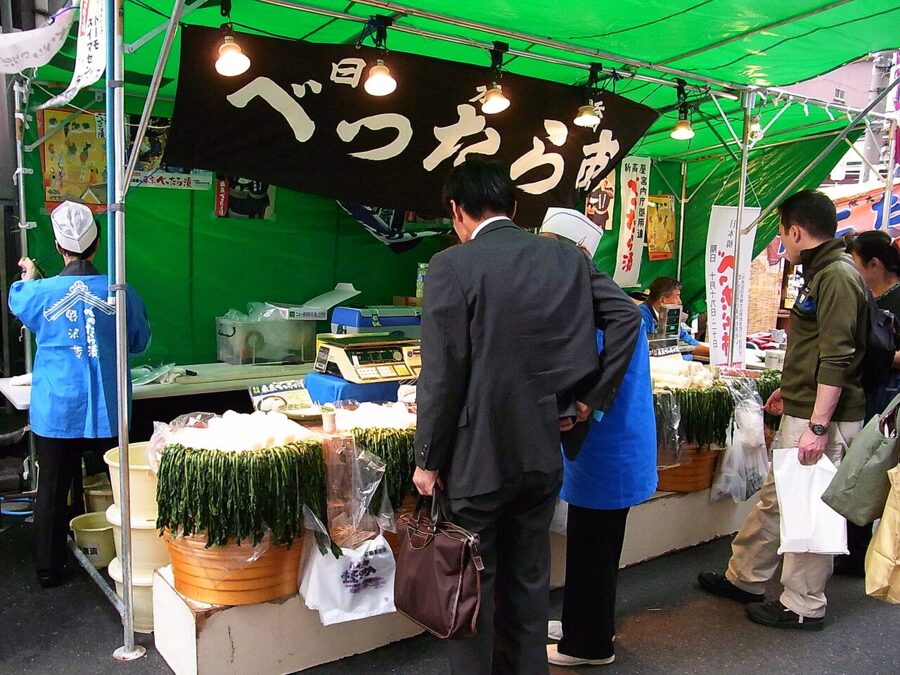
Both stores post their opening days month by month and sometimes close at short notice, so check the week you go. If you are in Nihonbashi in October, the Bettara-ichi pickle market fills the streets around the store.

Cut your own: classes in eastern Tokyo
The three classes below share a shape: pick a glass, mark your pattern, usually practice on a spare, then cut the real one on a small wet diamond wheel. Bring reading glasses and a hair tie if you need them, and wear clothes that can take a splash.
| Class | Length | Price (as of November 2026) | Language | Booking |
|---|---|---|---|---|
| Sumida Edo Kiriko-kan, Kinshicho | 90 minutes | ¥5,500 incl. tax, glass included | Japanese booking page | Online, Tuesday to Saturday, 10:30, 13:00, 15:00 |
| HANASHYO’S (Hanashyo), Kameido | 75 minutes | ¥5,500, plus ¥500 to ¥1,500 for some glasses | Japanese booking form | Form or phone, Tuesday, Thursday, Saturday, 13:00 |
| Sokichi, Asakusa | 90 minutes, 2 hours, or 2 hours with a history talk | ¥3,630, ¥4,730 or ¥7,700; colored glass ¥1,100 to ¥4,510 extra | English and Chinese on request in advance | Online, daily |
Sumida Edo Kiriko-kan
The Kiriko-kan’s class costs ¥5,000 plus tax (¥5,500, about $35) for adults and anyone from junior high school up, materials included. It runs Tuesday to Saturday, and on Mondays when the shop is open, at 10:30, 13:00 and 15:00, with seats for four per slot. After a machine briefing you choose a color-cased glass (the choice changes daily), cut a practice glass, then the real one, and take it home.
Children in grades four to six cut a lidded box instead, in 60 minutes for ¥2,500 plus tax (¥2,750, about $17), booked by phone, not on Saturdays. You pay at the end, by cash, Visa, Mastercard or PayPay.
HANASHYO’S, Kameido
Hanashyo runs its school at 3-1-9 Kameido, and its 75-minute class is taught by workshop staff. It costs ¥5,500 (about $35), with ¥500 to ¥1,500 (about $3 to $9) more for some glasses, and runs at 13:00 on Tuesdays, Thursdays and Saturdays for up to six people, cash only, ages ten and up. That is five minutes choosing from eight or so glasses, ten to fifteen drawing the pattern, and 45 to 55 cutting, and you leave with the glass.
Cancel by phone before 10:00 the day before. The one-hour class at the Nihonbashi store is suspended as of November 2026. For more than a taster, the introductory course is five two-hour lessons for ¥20,000 (about $127) plus ¥4,600 (about $29) for six practice blanks, ending with one finished sake cup.
Sokichi, Asakusa
Sokichi is in Asakusa, at 2-1-14 Kaminarimon, Taito, thirty seconds from exit 4 of Asakusa Station on the Ginza Line. It is the easiest to fit into a sightseeing day and the only one of the three offering English, if you ask ahead. The 90-minute course costs ¥3,630 for adults and ¥2,860 (about $18) for under-18s, with one of six clear glasses included and colored glass ¥1,100 to ¥4,510 (about $7 to $29) extra.
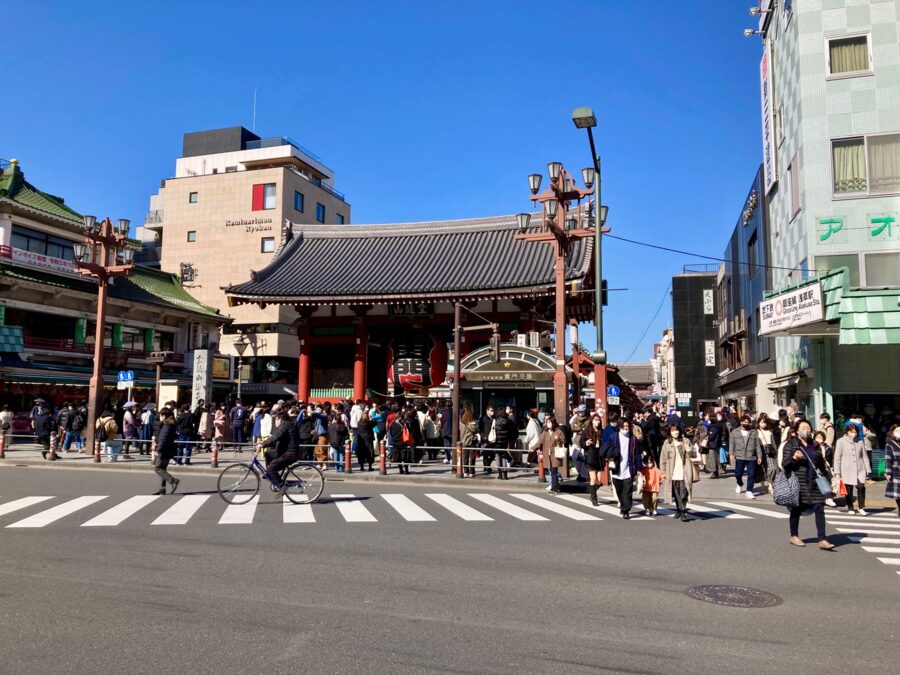
Weekday starts are 10:15, 13:00 and 15:00; weekends and holidays add 8:30 and 17:00, and the 17:00 slot costs ¥550 more. The two-hour course is ¥4,730 (about $30); the ¥7,700 course adds a thirty-minute history talk before ninety minutes at the wheel, starting 9:45 or 12:30. Ages nine to 85, cash only, and the English site takes bookings.
If the glass matters more than your schedule, I would book the Kiriko-kan or Hanashyo, where the people beside you cut glass for a living. For English and a choice of times, Sokichi is the practical pick. Either way, the cooperative is clear that a class piece cannot be sold as Edo kiriko.
Buying: the name, the sticker, the price
The cooperative warns about glass sold under the trademarked name that was not made in Japan, and about fake shopping sites. A national-list piece can also carry the dento shoshi (伝統証紙), a certification sticker for pieces that passed the cooperative’s inspection. For a first purchase, buy from a workshop or the cooperative’s shop.
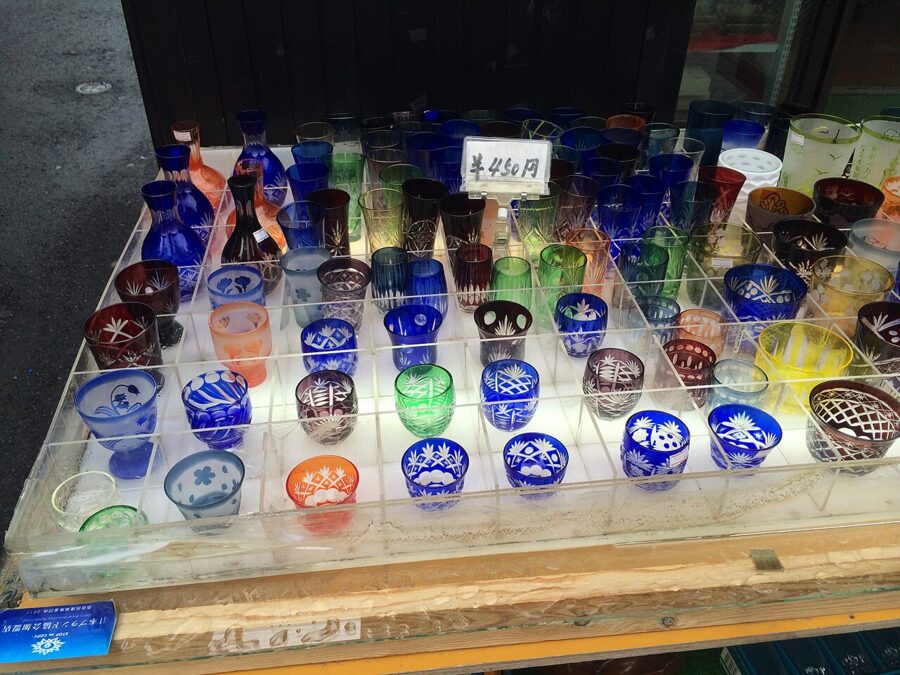

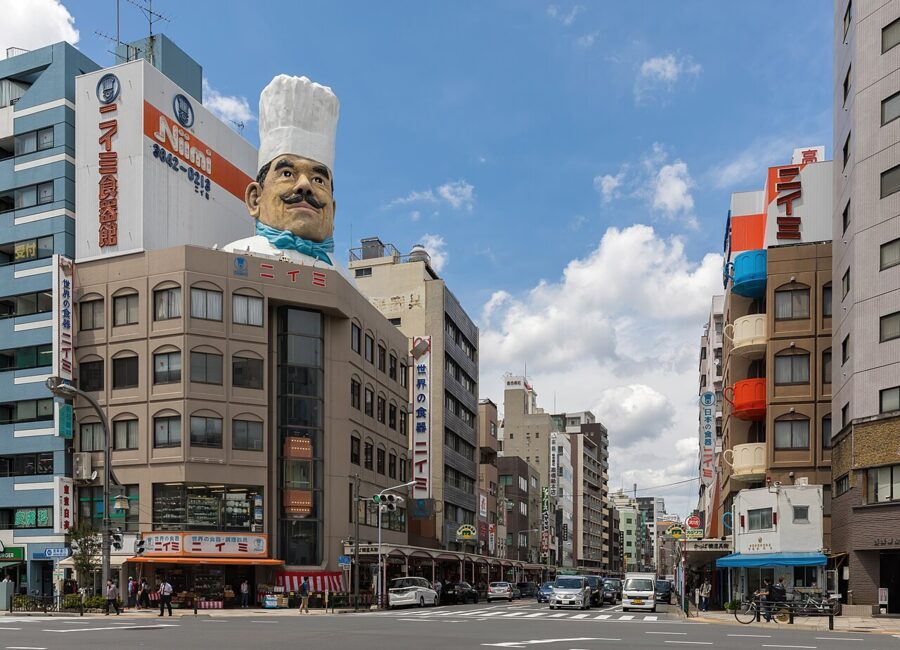
Kappabashi-dori, the restaurant supply street west of Asakusa, is worth the walk for its knife shops, the retail end of Japanese knife making. Its glasses labeled kiriko-style (切子風) are not sold as Edo kiriko, and their prices say so.

Other regions have their own cut glass, such as Osaka’s Temma kiriko: a different tradition, not Edo kiriko under another name.
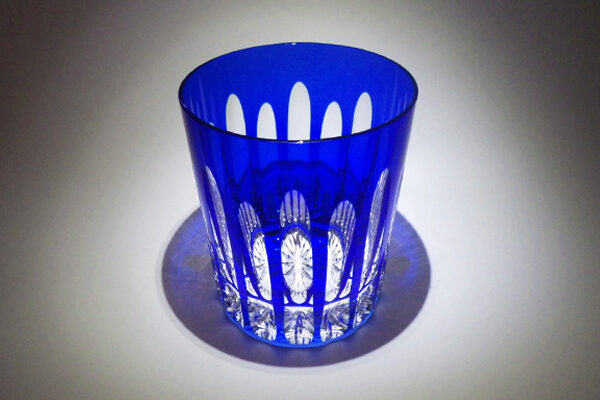

The workshop shelves above set the floor for the real thing: about ¥11,000 for a simple shochu glass, ¥19,800 to ¥22,000 for an old-fashioned glass, and ¥40,000 and up in crystal. If you are buying one glass to use, I would take a soda-glass tumbler in a single old pattern over a crystal piece cut more busily. Edo kiriko is at its best when the pattern is simple enough that every cut shows.
Looking after kiriko
The cooperative’s care advice is short. Wash by hand, and clean the cut faces with something softer than glass, such as a scrubbing brush or a toothbrush. No microwave, dishwasher, dish dryer, oven or open flame, and no sudden temperature changes, so never pour hot water into a glass straight from the freezer.
Before you pay, hold the glass up to a window. If the color stops at a hard edge, it was cut through a thin skin, the Edo way; if it fades like dusk, the layer was thick, and the glass belongs to Kagoshima.