
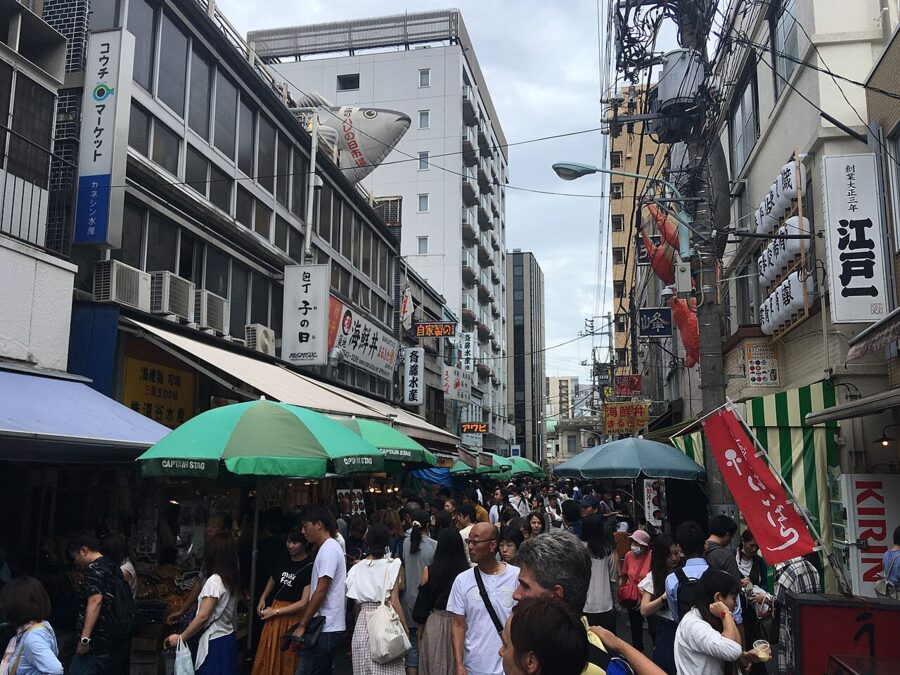
For ¥17,600 (about $111), a cooking school in Tsukiji will walk you through Tokyo’s old fish market and have a ball of vinegared rice in your palm before noon. For ¥968,000 (about $6,100), the Tokyo Sushi Academy will keep you for two months and finish you with six practical tests, from filleting a horse mackerel to peeling a daikon into one continuous paper-thin sheet. Between those two prices sits nearly everything a visitor can do with sushi in Japan.

A class teaches your hands the shapes. The trade teaches the rice, the fish and the timing, and in Japan that used to mean ten years behind somebody else’s counter. I would book the class that lets you make the rice yourself over the one that hands you a bowl of it ready-seasoned; the rice is the part a sushi chef spends longest on, and the part you can repeat at home.

In this article
What a sushi chef learns
There is an old saying in the trade, meshitaki sannen, nigiri hachinen: three years cooking rice, eight years making nigiri. Nobody holds an apprentice to that calendar any more, but the order still holds. Rice comes before fish, and fish comes before the counter.
Shari: the rice and the vinegar
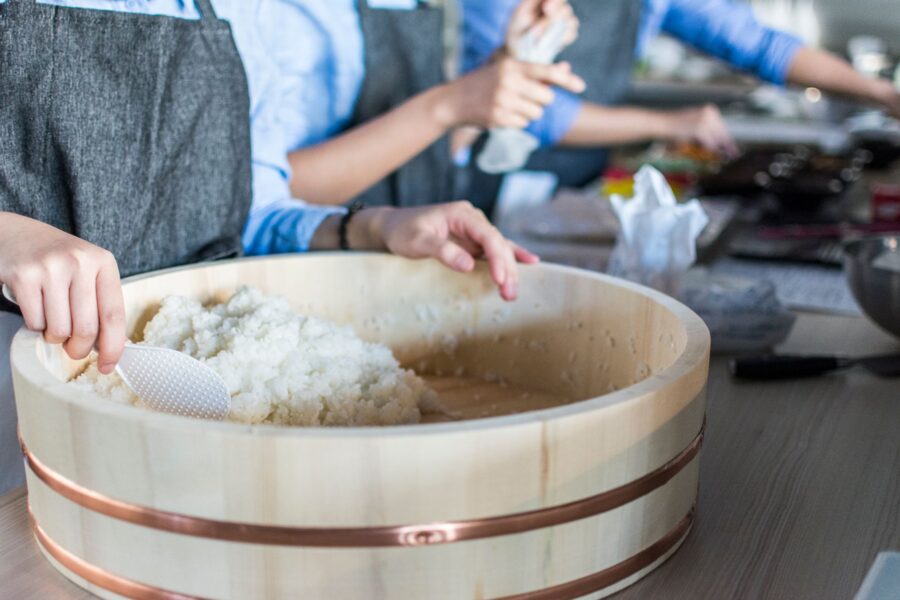
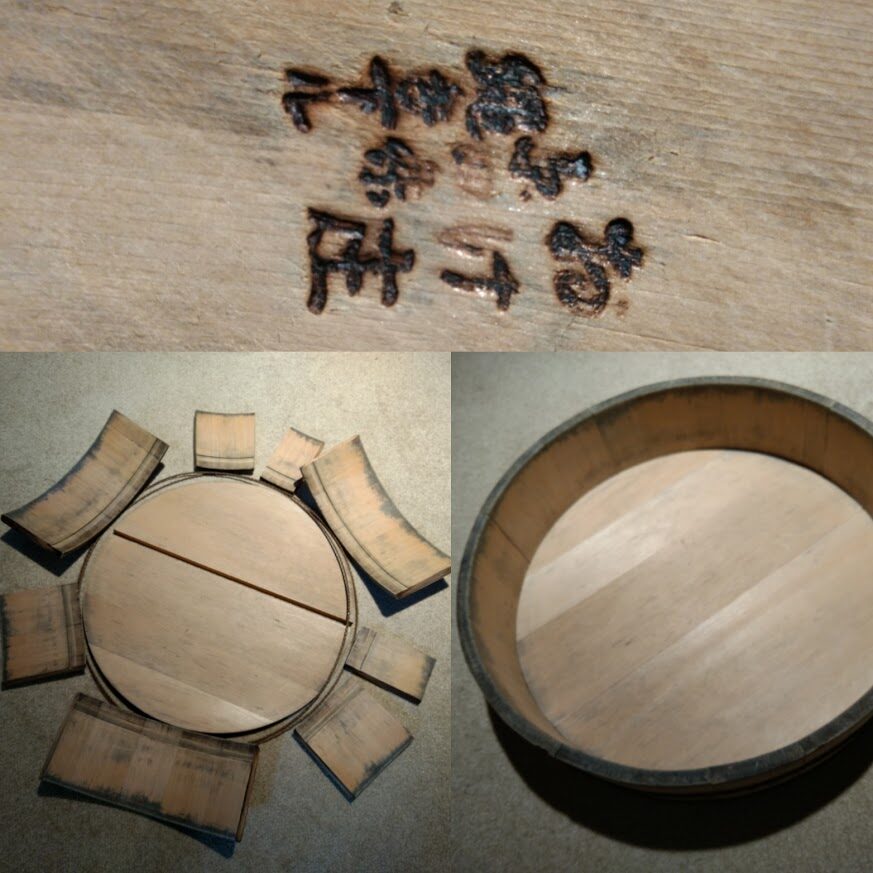
Shari (シャリ), the counter word for sushi rice, is cooked a little firmer than table rice. While it is still hot it goes into a hangiri, a wide, shallow tub of cypress bound with copper hoops, and is dressed with awasezu, a mix of vinegar, salt and usually sugar. The cook slices through the rice with the paddle instead of stirring it, then fans it to drive off steam so the vinegar seasons the grain instead of making it soggy.
Good shari is served near body temperature, never fridge-cold, which is most of why a supermarket pack and a counter piece taste like different foods. The ratio of vinegar, salt and sugar is each shop’s own.
The vinegar is where old Tokyo shops differ from the rest. Edo-style counters once seasoned their rice with akazu, a red vinegar brewed from sake lees, with salt and no sugar. Tinted rice fell out of favor after the “yellow rice” food scare of the early 1950s, white vinegar and sugar took over, and the brown-tinged shari you meet at some high-end counters today is a revival.

The hands: nigiri, maki and temaki
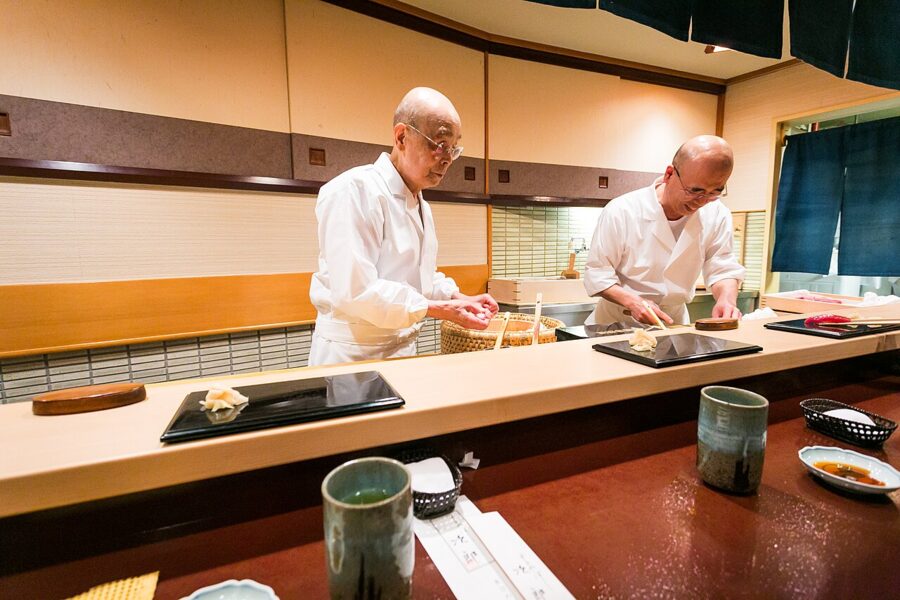
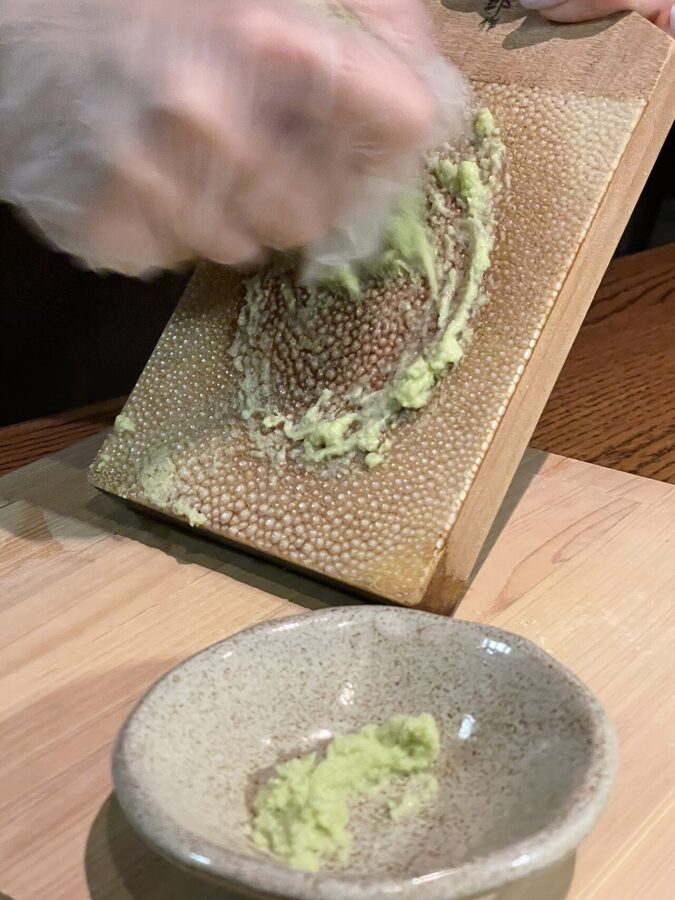
Nigiri is a few seconds of work repeated for years. The chef wets both palms with tezu, vinegared water, picks up a measured pinch of rice in the right hand while the left holds the slice of fish, dabs wasabi on the underside of the fish and sets the rice on it. Two or three light presses with two fingers, a turn, another press, and the piece is done: firm enough to lift with chopsticks, loose enough to come apart in the mouth.
Beginners squeeze the rice into a dense brick because a tight piece feels safer. A good class spends its first minutes on how little pressure the rice needs.
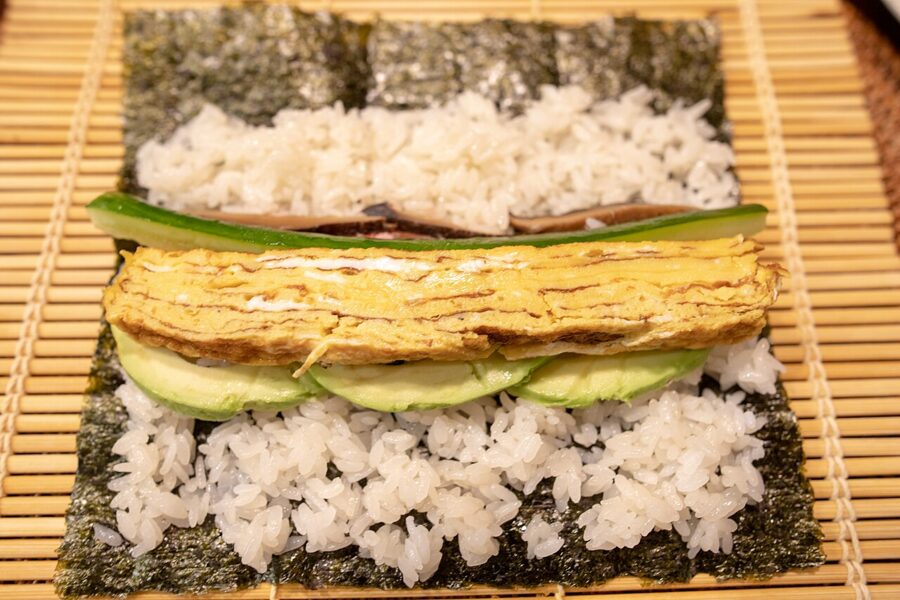
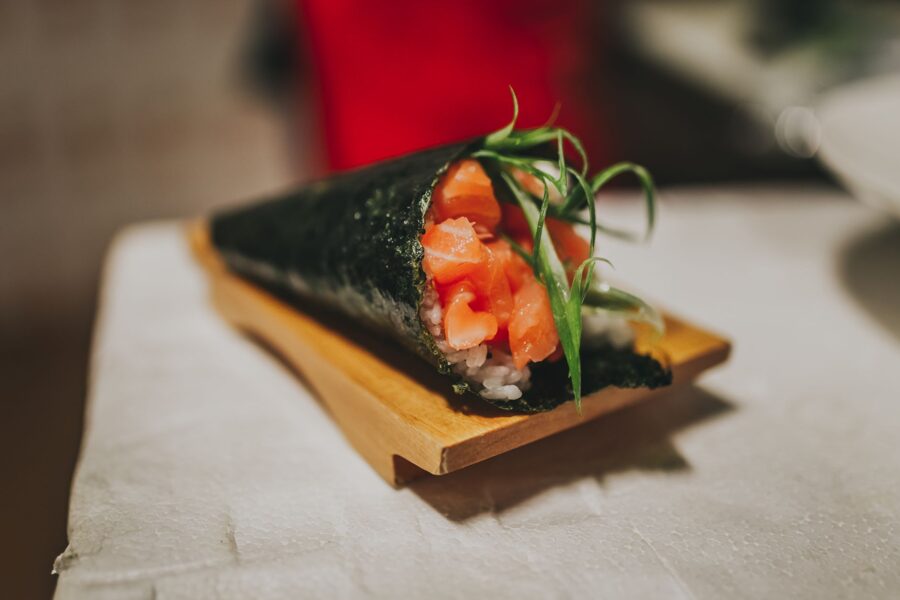
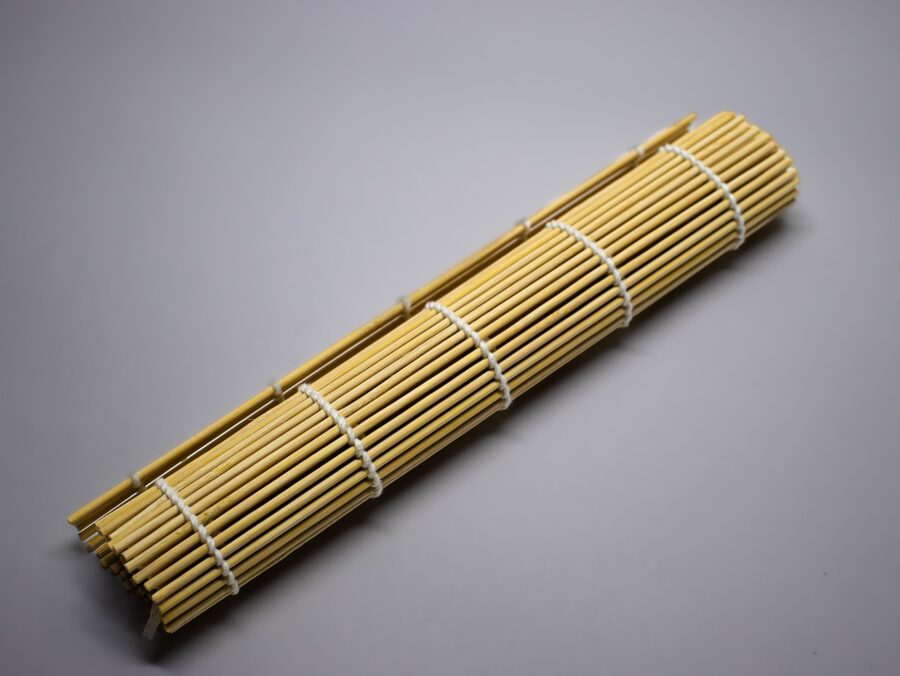
Maki uses a bamboo mat, the makisu. Nori goes shiny side down, a thin, even layer of rice goes on with a strip left bare at the far edge, the filling goes in a line, and the mat rolls it into a cylinder that is squeezed square or round. Temaki, the hand roll, needs no mat: a half sheet of nori is wrapped into a cone around rice and filling and eaten at once, before the seaweed softens.

The fish: cutting, curing and resting
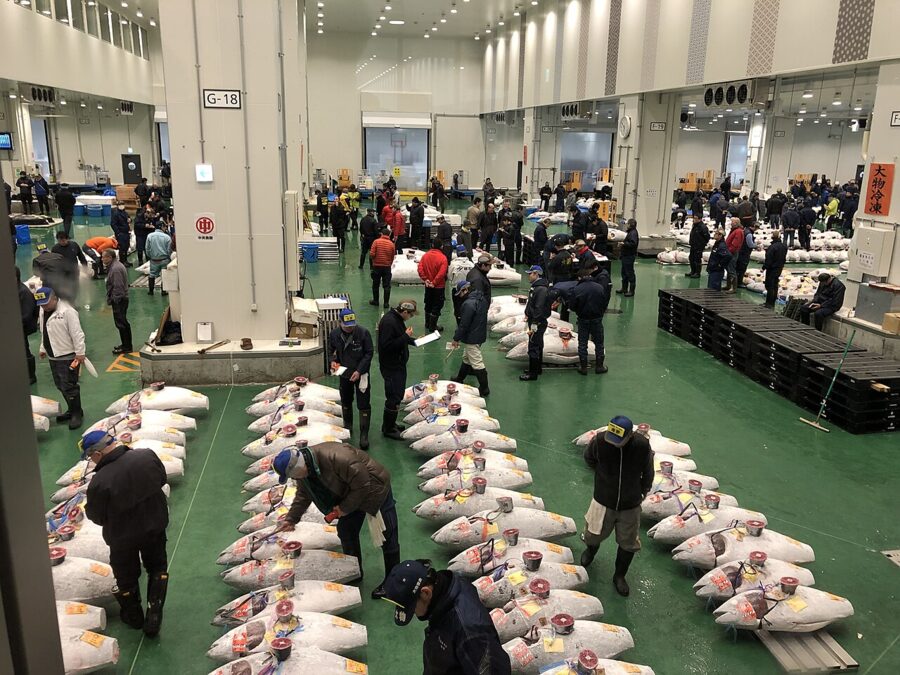
The fish is where the years go. A trainee learns to fillet a horse mackerel, then sea bream, flounder and yellowtail; to break a block of tuna into saku, the rectangular bars that are sliced for nigiri; and to cut with a yanagiba, the long single-bevel slicer, in one drawn stroke rather than a saw. One school’s two-month syllabus starts with horse mackerel and ends with a whole salmon and a whole yellowtail.
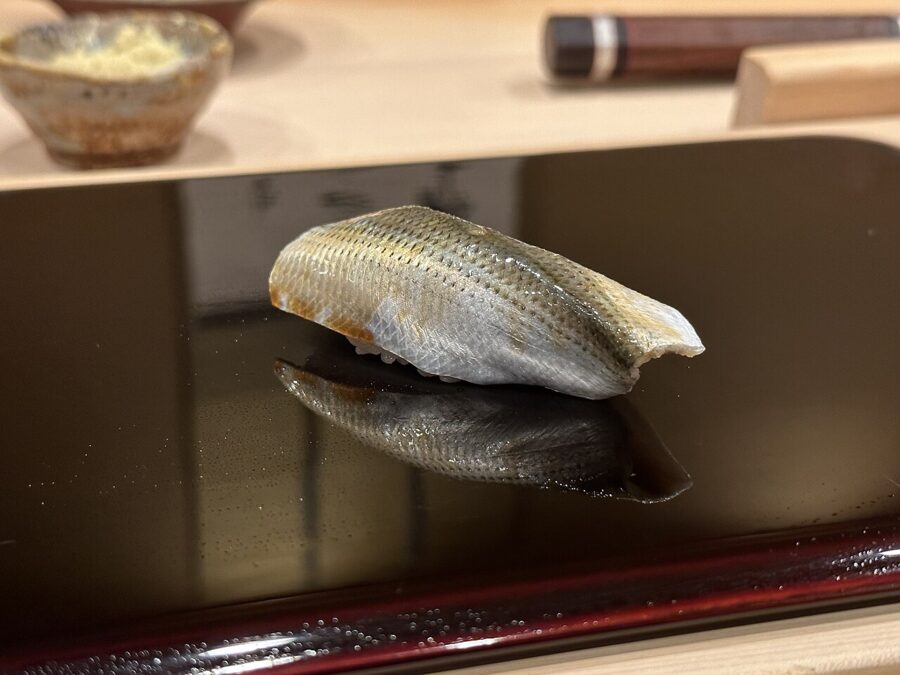
Edomae sushi, the Tokyo style, was built on preparing fish before refrigeration, and much of that survives. Kohada, gizzard shad, is salted and cured in vinegar. Tuna can be marinated in soy sauce as zuke, conger eel is simmered and glazed, and white fish is pressed between sheets of kelp as kobujime. Many counters also rest fish for days so the flavor deepens; straight off the boat is not always the goal.


Ten years at a counter, or two months at school
The old route was to join a shop, wash dishes and deliver orders, cook the rice, prep the fish, and only stand at the counter after years. The shortcut is a school. The Tokyo Sushi Academy opened in 2002 as Japan’s first school for sushi chefs and says more than 6,000 graduates now work in over 60 countries.
Its intensive course runs five hours a day, five days a week, for 40 days, about 200 hours in all. Students take six practical tests: horse mackerel, a plated nigiri set, a mid-sized fish, katsuramuki (peeling a daikon into one long sheet), a nigiri test and a thin-roll test. Tuition is ¥968,000 including ingredients and the white coat, as of November 2026, and the Japanese course expects fluent Japanese. English speakers have a separate five-week International Sushi Chef Course.
Of 177 recent students, the school says 35 percent planned to work abroad, a quarter wanted to open a business and 14 percent came for a hobby. About one in four was a woman, in a trade where men still run most counters.
The kinds of sushi
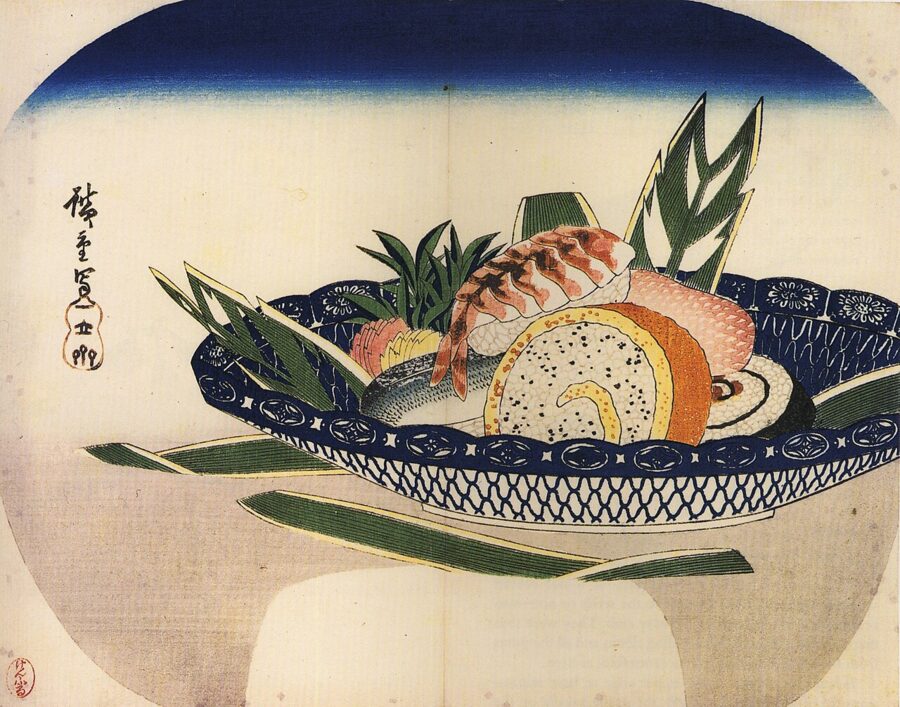
Sushi began as narezushi, fish packed in salted rice and left to ferment for months, with the rice thrown away. By the Edo period cooks were souring rice with vinegar and serving it the same day. In the 1820s Edo street stalls began selling hand-pressed nigiri, credited by tradition to a Ryogoku cook named Hanaya Yohei, and those first pieces were far bigger than today’s.
Nigiri and gunkan
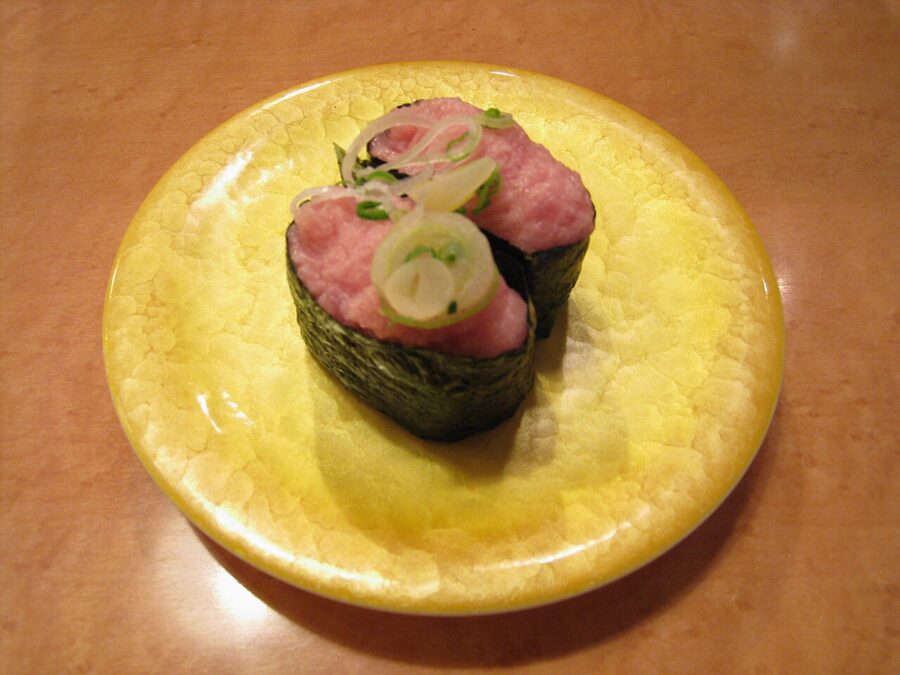
Nigiri is the Tokyo form, called Edomae (“in front of Edo”) after the bay that supplied its fish. Gunkan-maki, the “battleship roll”, wraps a band of nori around a rice base to hold soft toppings such as salmon roe, sea urchin or negitoro, minced fatty tuna with scallion.
Tamagoyaki, the sweet layered omelet, is the piece many Japanese diners order first to judge a shop. Tsukiji’s omelet shops began by supplying sushi bars, and the outer market still sells it by the slice.
Maki, futomaki and temaki
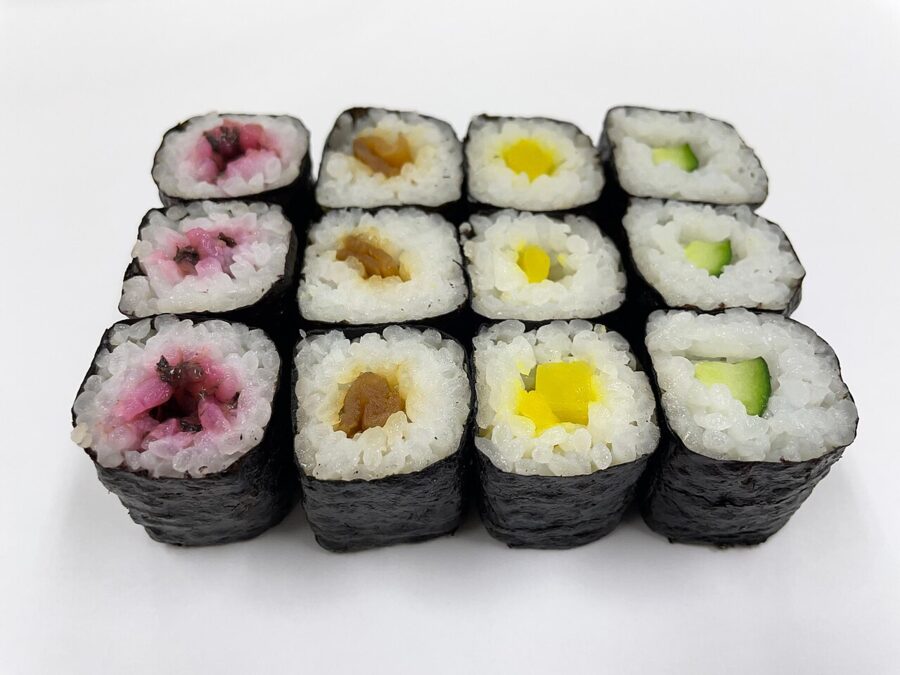
Hosomaki are thin rolls with one filling: cucumber for kappa-maki, tuna for tekka-maki, and simmered dried gourd for kanpyo-maki, the old Tokyo classic. Futomaki are fat rolls with several fillings, more at home in the Kansai region around Osaka. The inside-out roll with rice on the outside, the California roll among them, came back to Japan from America, and classes for visitors often teach it because guests expect it.

Chirashi and inari
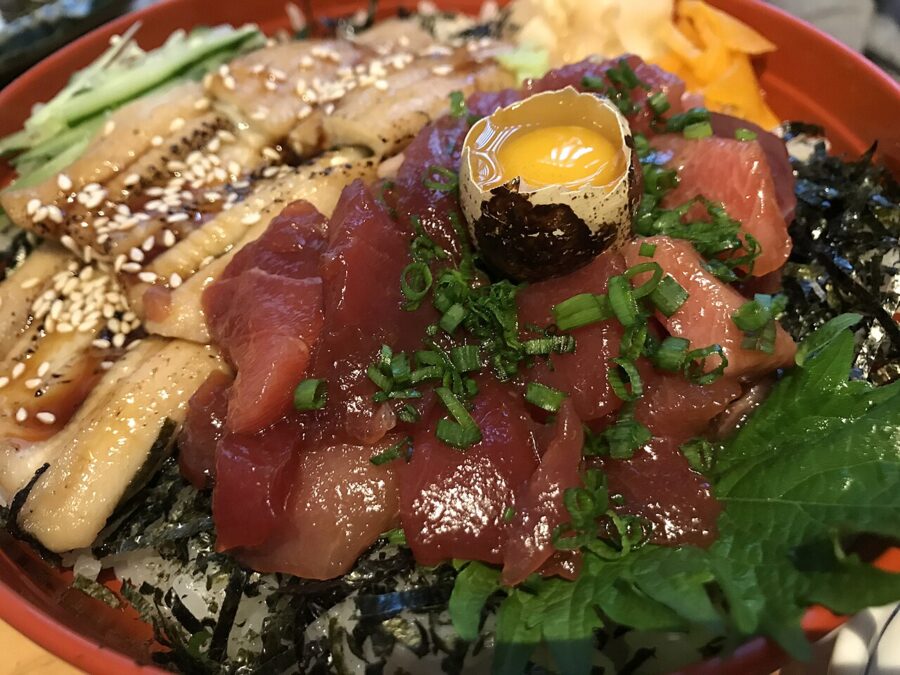
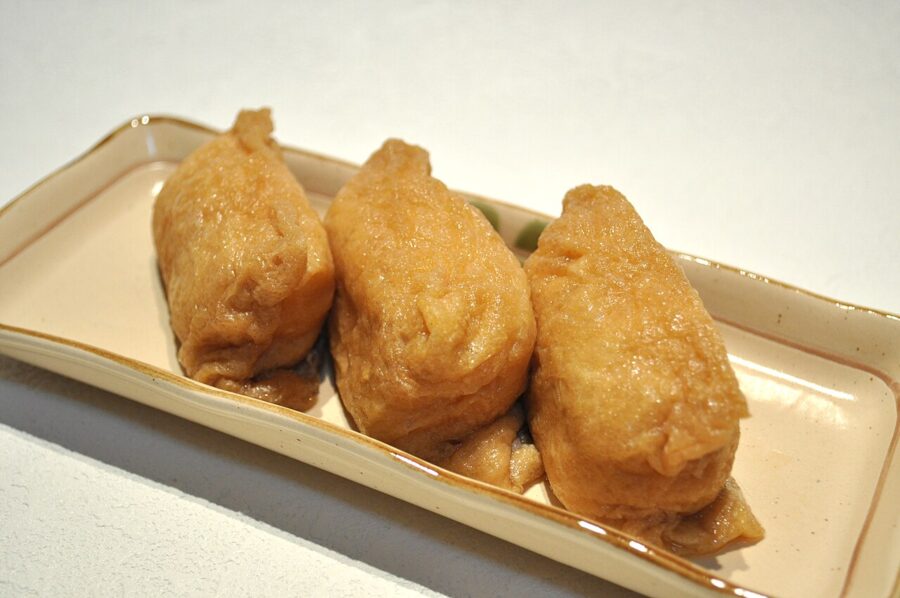
In Tokyo, chirashi means sliced fish laid over a bowl of sushi rice. In the Kansai it more often means barazushi, with the ingredients mixed into the rice. Inari-zushi packs sushi rice into pouches of fried tofu simmered sweet, and it turns up in family classes because it needs no raw fish at all.


Oshizushi: the pressed sushi of Osaka and Kyoto
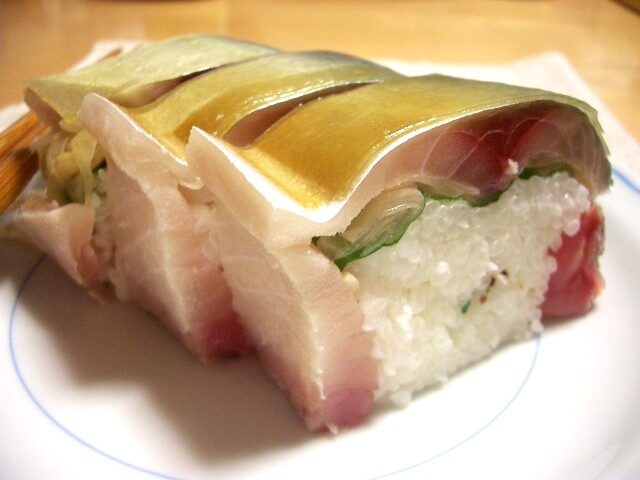
Osaka’s own sushi is pressed, not hand-formed. Hakozushi layers rice and toppings in a wooden box and presses them into a block that is sliced into squares. Yoshino Sushi in Awajimachi has made it since 1841 and still prepares every topping in its own kitchen, from Seto Inland Sea sea bream to grilled conger eel. The shop is open weekdays 9:30am to 3pm and closed weekends and holidays, as of November 2026, and it reopened its second-floor lunch room on November 16, 2026.
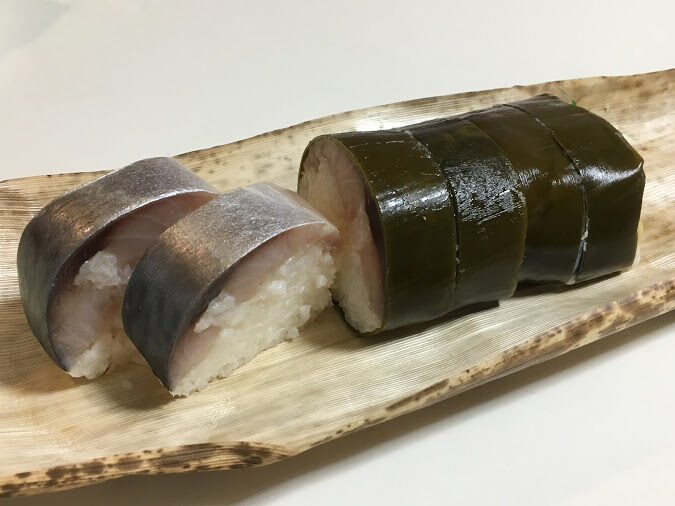
Battera is mackerel pressed onto rice under a thin sheet of kelp; the name comes from the Portuguese bateira, a small boat, which the original shape resembled. Kyoto’s version is saba-zushi, a whole side of salted, vinegared mackerel pressed onto a log of rice and wrapped in kelp. Izuu in Gion has sold its saba sugata-zushi since 1781; the main shop is open 11am to 10pm (9pm on Sundays and holidays) and closed Tuesdays, as of November 2026.

Regional sushi worth a detour
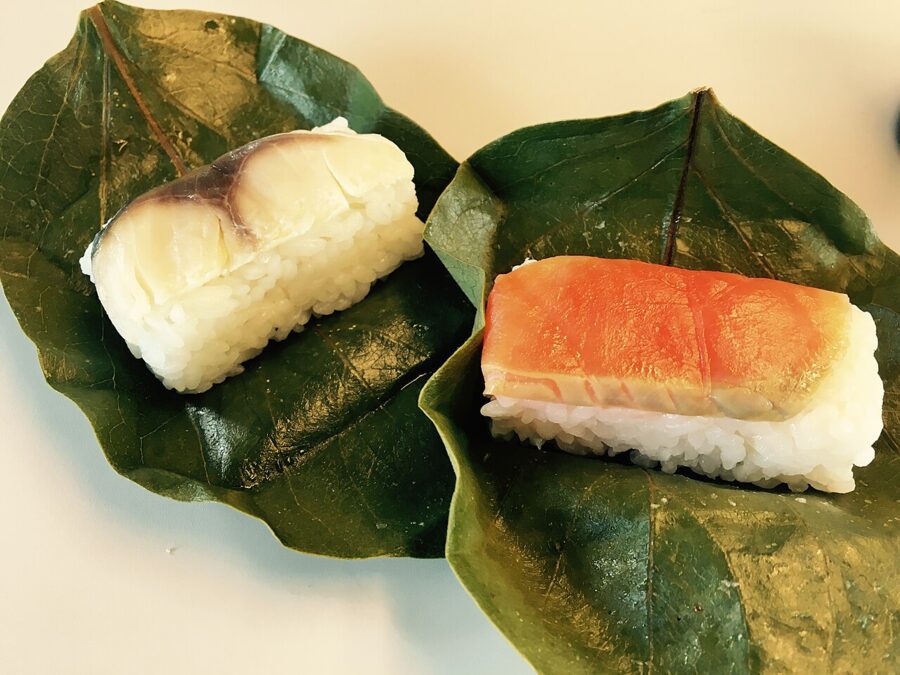
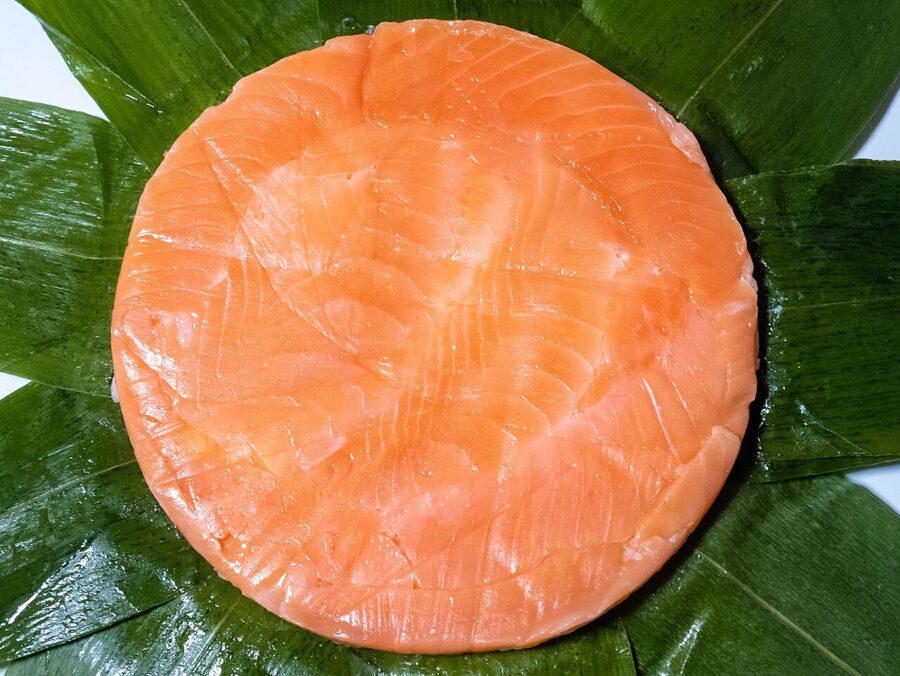
Pressed and wrapped sushi keeps for days, so inland regions built their traditions on it. Nara wraps salted mackerel or salmon on rice in persimmon leaves as kakinoha-zushi. Toyama presses trout onto rice in a round box lined with bamboo leaves for masu no sushi. Shiga still makes funazushi, crucian carp fermented in rice for a year or more, the closest living relative of the original narezushi.


Sushi-making classes in Tokyo
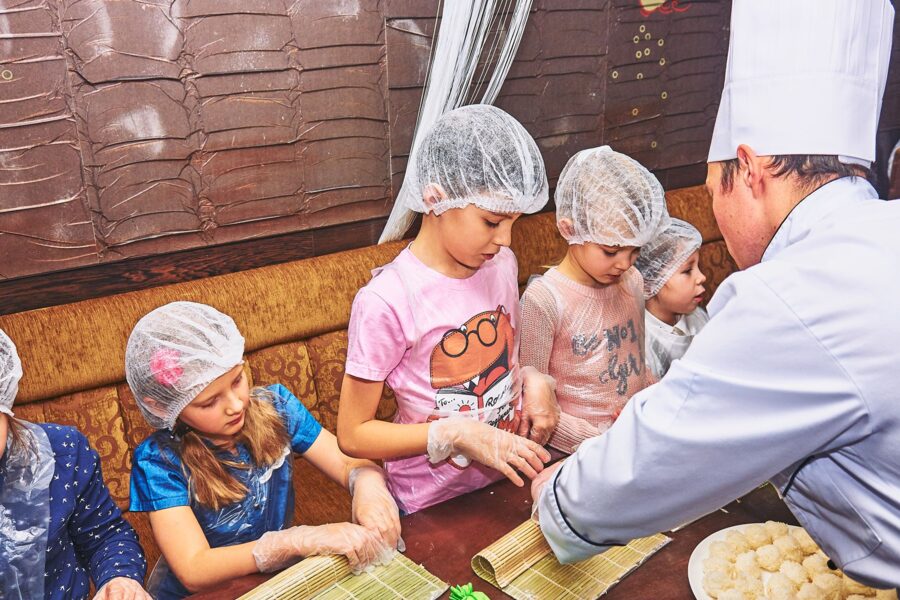
Most classes for visitors run 90 minutes to three hours, are taught in English, start with a rice demonstration and end with you eating what you made as lunch or dinner. Few let you fillet a whole fish; the fish usually comes pre-cut. Raw fish can be swapped for vegetables or cooked toppings if you ask when booking, and most schools take children, though the age limits differ.
Market tour plus class in Tsukiji
Tsukiji Cooking has run an English-language studio inside the Tsukiji Outer Market since 2013. The market tour and class runs 10am to 1pm for ¥17,600, and the class alone runs 11am to 1pm for ¥15,400 (about $97), both per person as of November 2026. You make nigiri, maki and temari (ball-shaped) sushi, plus teriyaki fish and miso soup, in classes of up to 20 that solo travelers can join.
A private class costs ¥154,000 (about $970) for one to ten people, or ¥176,000 (about $1,110) with the tour, plus ¥22,000 (about $140) on Friday evenings, weekends and holidays. Its private classes can also cover wagashi, the seasonal sweets served with tea. Of the Tokyo options I like this one most, because the fish comes from shops you have just walked past.
The Tsukiji Outer Market itself never moved; only the wholesale inner market went to Toyosu. It is a working market, with professional buyers early and shoppers after, and in December the shops ask visitors to skip sightseeing and group tours while Tokyo does its New Year shopping. Plan a December class with that in mind.
Hands-on studios in Asakusa and beyond
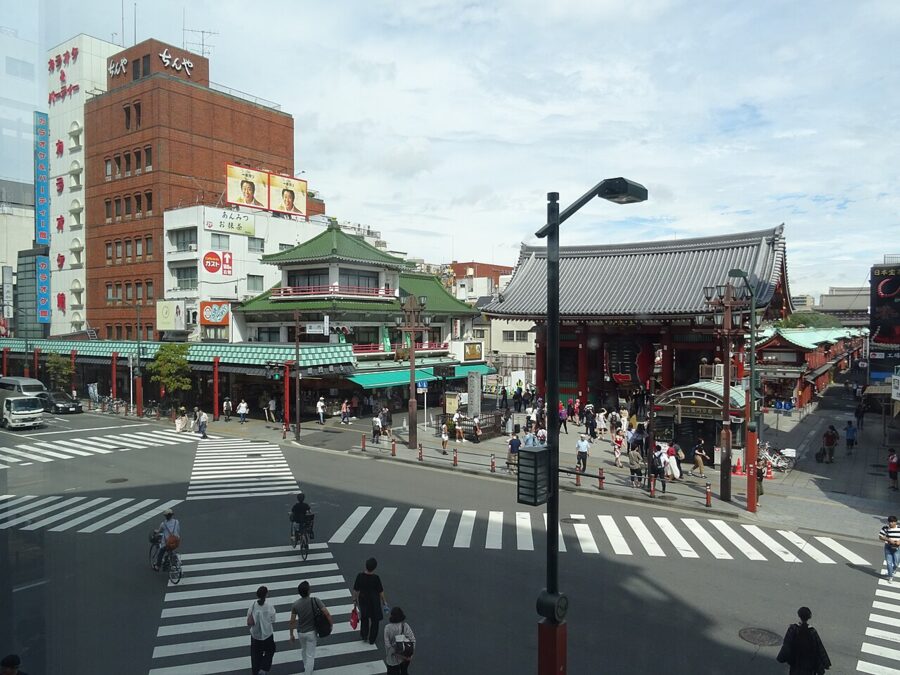
Sushi Making Tokyo runs 90-minute classes in English at 10am, noon, 2pm and 4pm daily on the sixth to eighth floors of a building on Kaminarimon 2-chome, three minutes from Asakusa Station exit 2. It costs ¥13,000 (about $82) per person as of November 2026; children four and over pay the adult price and children three and under join free with a paying adult. You make nigiri and maki, the room holds up to 90, and it is the easiest class to fit around a morning at Senso-ji.

Tokyo Sushi-Making Tour, founded in 2013, keeps its tourist classes to eight people. They run weekdays only, 10:30am to 1pm, for ¥9,500 (about $60) per person aged 12 and over and ¥5,000 (about $32) for children aged 8 to 11, as of November 2026. You make four kinds: California rolls, decorative rolls, nigiri and gunkan, with a quiz on sushi history and manners along the way.
There is no filleting, market tour or hotel pickup, but halal, kosher and gluten-free menus are possible with notice. The school is moving classrooms and runs no small classes from November 21 to December 6, 2026, then closes from December 25 to January 7; the meeting point comes with your booking.
At a working sushi counter
Matsunozushi, an Edomae shop in Omori-kaigan founded in 1910, lets small groups make nigiri at its century-old counter under the fourth-generation chef, who explains each step in English. It takes bookings by email only and publishes no price, so ask for one when you write; the shop is closed Wednesdays, Sundays and holidays.
If you would rather watch than make, Sushi University seats you at a real counter with an interpreter who relays your questions to the chef while you eat. Its two-hour courses start at ¥19,000 (about $120) at a neighborhood shop and climb to ¥29,000 (about $183), ¥39,000 (about $246) and ¥79,000 (about $498) as the restaurants get grander; a vegetarian and vegan course costs ¥16,000 (about $101), as of November 2026.
The professional’s taster
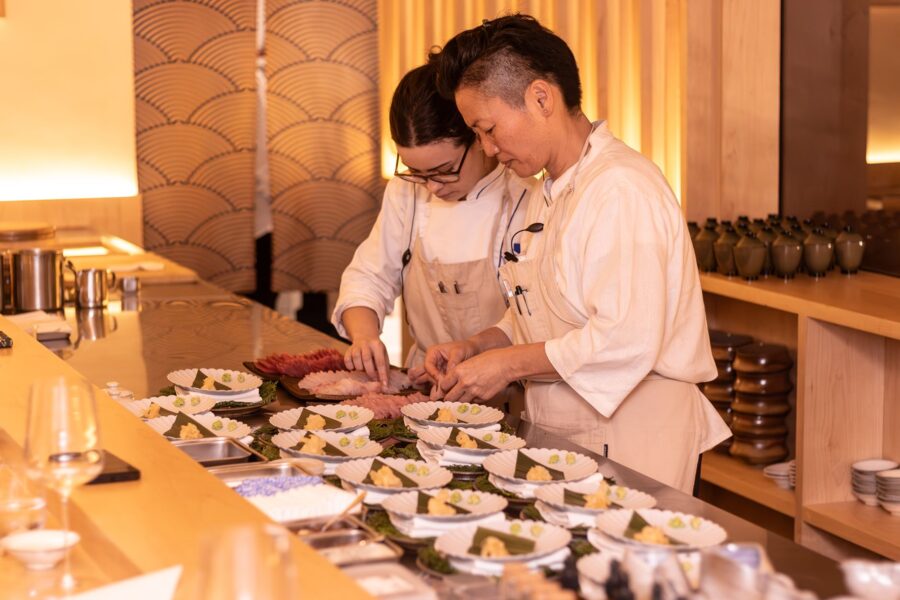
The cheapest way to feel the real training is the Tokyo Sushi Academy’s open school, a three-hour trial class for prospective students that costs ¥2,000 (about $13) as of November 2026. You watch a demonstration of breaking down a fish, cut your own toppings, form rice balls and nigiri, then eat your pieces next to four or five made by the instructor. It is taught in Japanese for people thinking of enrolling, with sessions listed for December 5, 6 and 26, 2026.
| Class | Where | Length | Price per person | What you make |
|---|---|---|---|---|
| Tsukiji Cooking, tour and class | Tsukiji, Tokyo | 3 hours | ¥17,600 | Nigiri, maki, temari, teriyaki fish, miso soup |
| Sushi Making Tokyo | Asakusa, Tokyo | 1.5 hours | ¥13,000 | Nigiri, maki |
| Tokyo Sushi-Making Tour | Tokyo (meeting point on booking) | 2.5 hours | ¥9,500 (¥5,000 ages 8–11) | California roll, decorative roll, nigiri, gunkan |
| Tokyo Sushi Academy open school | Tokyo | 3 hours | ¥2,000 | Your own cut toppings and nigiri (Japanese only) |
| Sushi Making Osaka | Shinsaibashi, Osaka | 1.5 hours | ¥13,000 | Nigiri, maki |
| Cooking Sun, Bento Class | Shimogyo, Kyoto | 3 hours | ¥9,500–10,500 | Sushi roll, tempura, rolled omelet, miso soup |
Osaka and Kyoto
Osaka: Shinsaibashi and Kuromon
Food Activity Japan, the company behind the Asakusa studio, opened Sushi Making Osaka in February 2025, on the third floor of a building in Higashi-Shinsaibashi, five minutes’ walk from Shinsaibashi Station on the Midosuji Line. The 90-minute class is the same format and the same ¥13,000 as Tokyo, with five sessions a day from 10am to 6pm and room for 20, as of November 2026. Cancellation costs 30 percent from 14 days out and the full fee the day before.
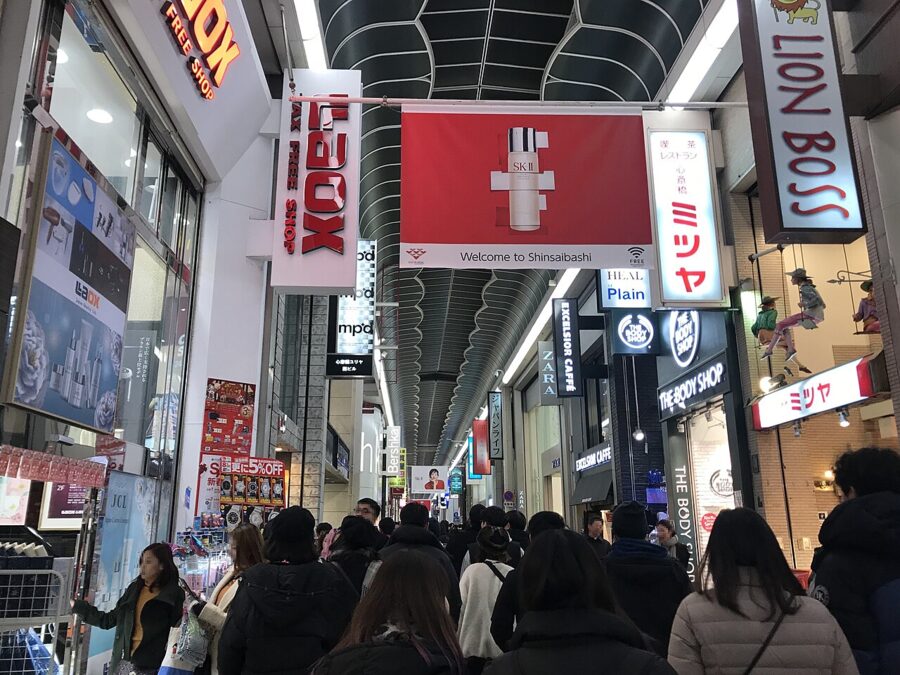

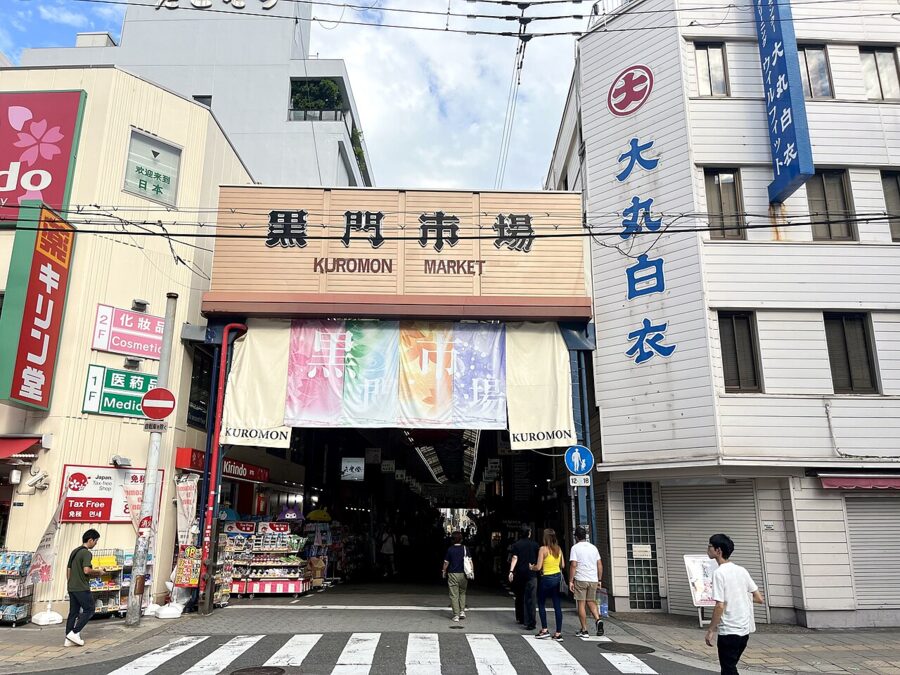
Kuromon Market, a roughly 580-meter arcade of about 150 shops near Nippombashi Station, began in the early 19th century as fish sellers trading in front of the black gate of a temple that has since moved away. It now caters mainly to visitors, and its prices are set accordingly. The market has no sushi school of its own, but guides combine a walk through it with a lesson nearby, such as this Kuromon and Dotonbori walk with a sushi-making session; check the current price and length on the listing.
Kyoto: a roll in a bento, and mackerel to eat
Kyoto has fewer dedicated sushi classes than Tokyo or Osaka; its own sushi is pressed mackerel, not nigiri. The most dependable option is Cooking Sun‘s Bento Class, held daily from 9:30am to 12:30pm in a studio ten minutes’ walk from Shijo and Karasuma stations. You make a sushi roll alongside tempura, rolled omelet, teriyaki chicken, sesame salad and miso soup, then eat it as lunch.
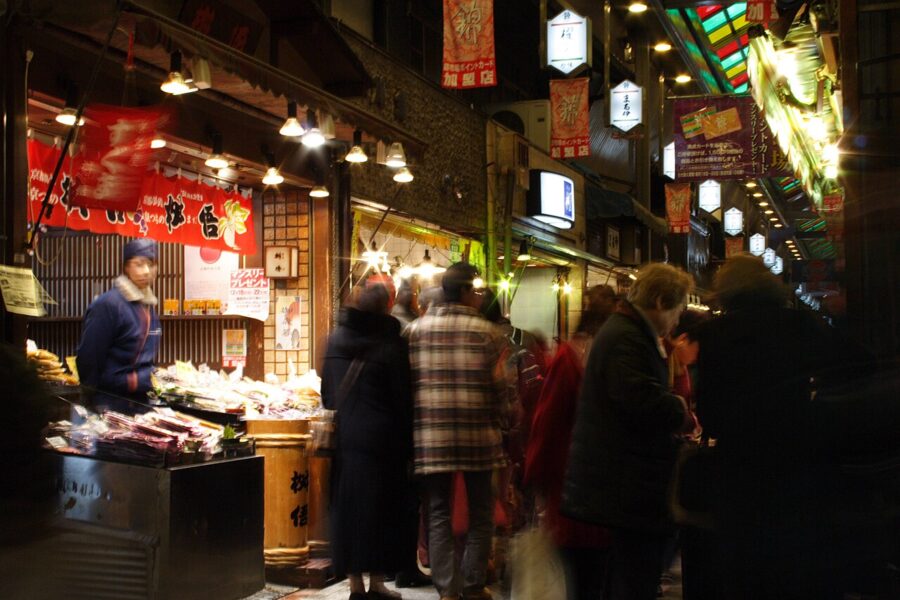
Cooking Sun lists one rate table for its Kyoto classes, and the price drops as the group grows: ¥10,500 (about $66) for one adult, ¥10,000 (about $63) each for two or three, ¥9,500 each for four to eight, and ¥6,000 (about $38) for children aged 6 to 12, as of November 2026. Pair it with Nishiki Market, the covered food street north of Shijo-dori, and a bar of saba-zushi from Izuu to carry home.

Knives and tools to take home
A home sushi kit is short: a hangiri or any wide wooden bowl, a rice paddle, a fan, a makisu, and one good slicing knife. The knife is the only piece worth real money. A yanagiba of 240 to 270 millimeters is long enough to draw a slice in one stroke, and a single-bevel blade needs a whetstone and some practice; the Japanese knives guide covers the shapes and steels, and Japanese knife making covers how Sakai and Seki forge them.
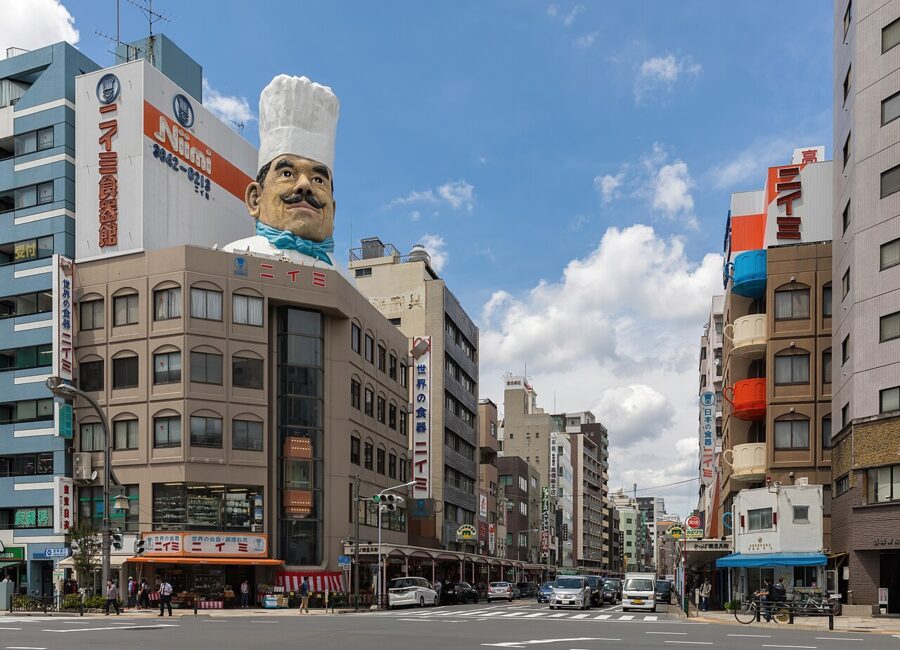

Kappabashi, the restaurant-supply street between Ueno and Asakusa, has every item on that list, along with restaurant tableware from plain stock to pieces made in Japan’s traditional crafts towns. Go on a weekday: the street’s association says about seven in ten shops close on Sundays and holidays. Kama-asa, a kitchenware shop founded in 1908, opens its Kappabashi store from 11am to 5:30pm every day except over New Year, closing at 4:30pm on the last day of each month, as of November 2026. The Kappabashi shopkeepers’ association keeps a list of which shops open on Sundays.
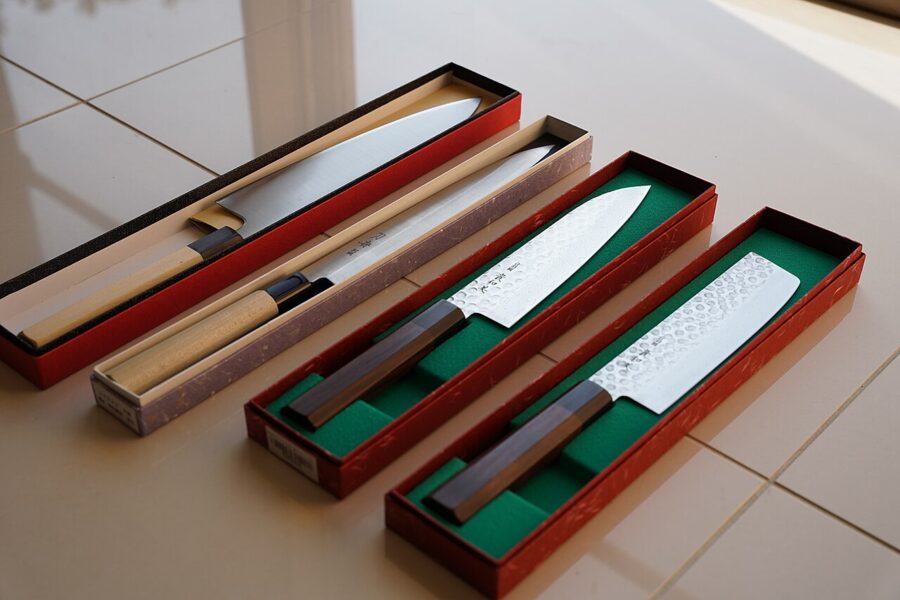

The Tsukiji Outer Market has its own knife shops, which will sharpen a blade you buy, and its nori shops sell separate grades for sushi and for rice balls. Skip the hangiri; a good cypress one is bulky, and a wooden salad bowl does the job at home.

Counter manners you learn in class
Most classes end with a short lesson on eating, and it carries over to any counter in Japan. You may eat nigiri with your fingers or chopsticks. Turn the piece and dip the fish side, lightly, never the rice, which soaks up soy and falls apart. Wasabi is already under the fish at a good counter, so leave it out of the soy dish.
Eat each piece as soon as it is set down, while the rice is at the temperature the chef intended. The pickled ginger, gari, is for clearing your palate between pieces, not a side dish. At an omakase counter the chef chooses the order; okonomi means ordering piece by piece.
Sushi University’s counter rules work anywhere: no questions while the chef is cutting, no strong perfume, ask before taking photos, and never photograph other guests. Counter slang such as agari for tea belongs to the staff; ask for ocha.
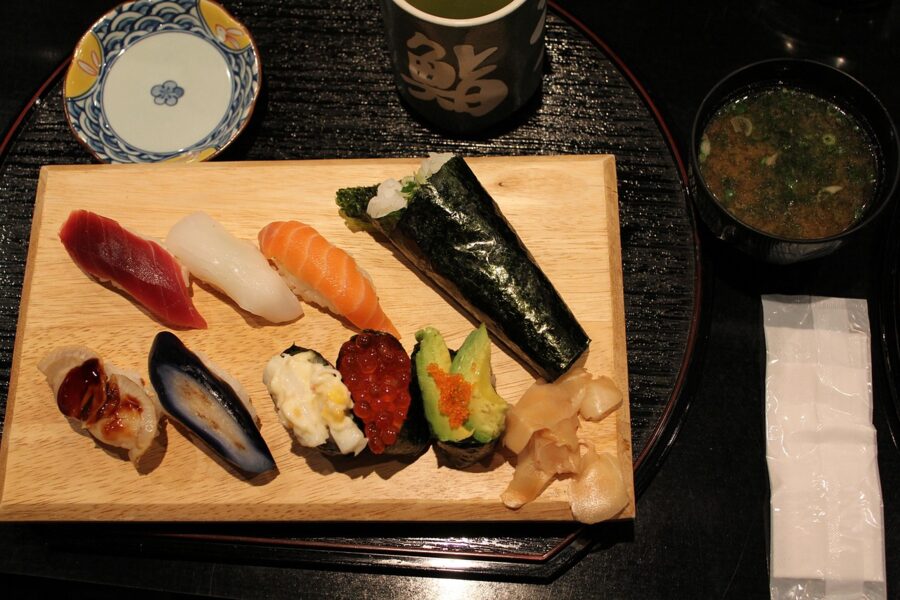
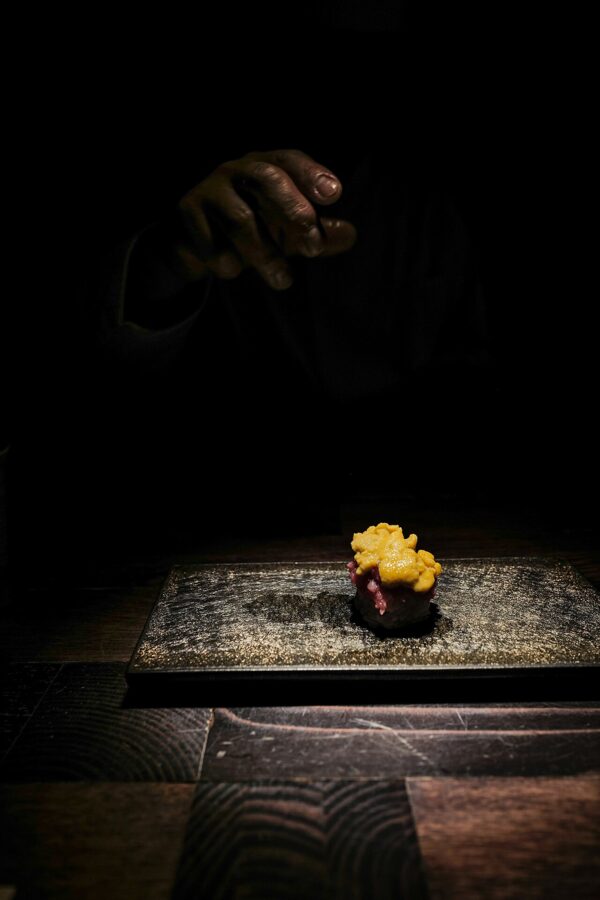

Next time a piece of nigiri lands in front of you, pick it up and look at the underside before you eat it. If the rice holds its shape but you can see air between the grains, somebody spent years learning how little to press.