
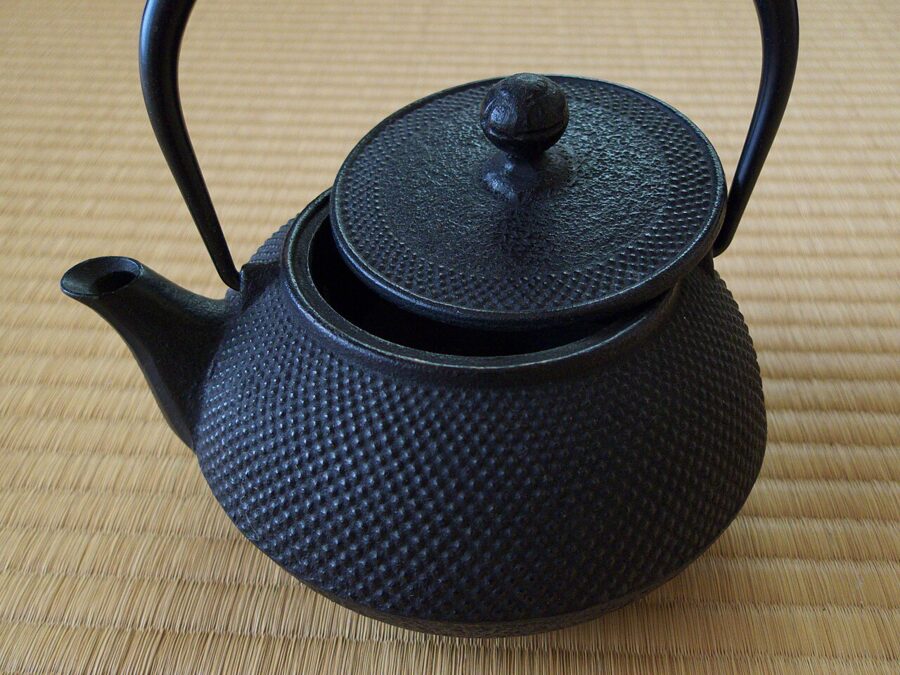
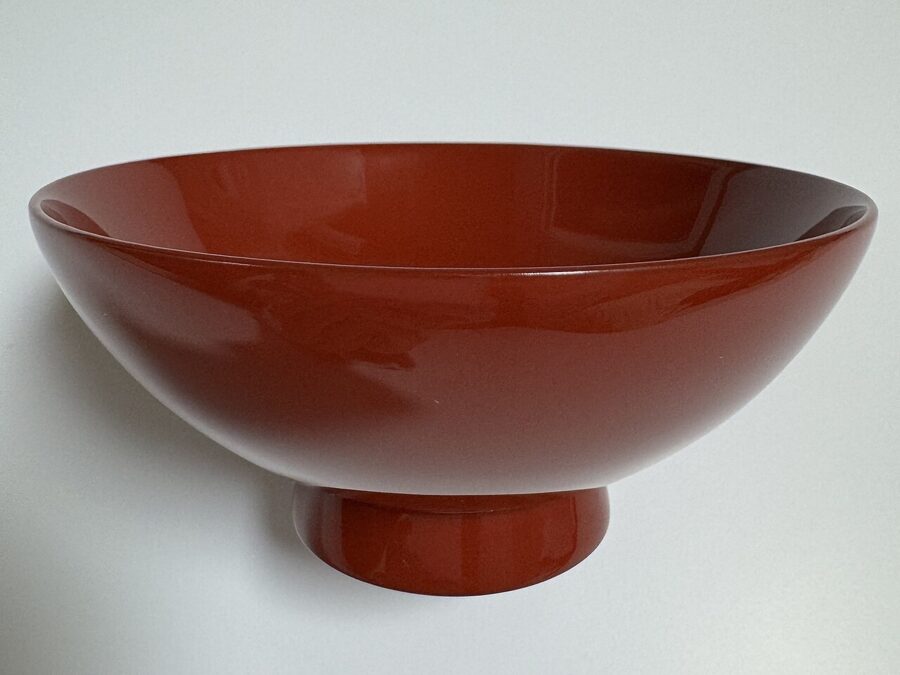
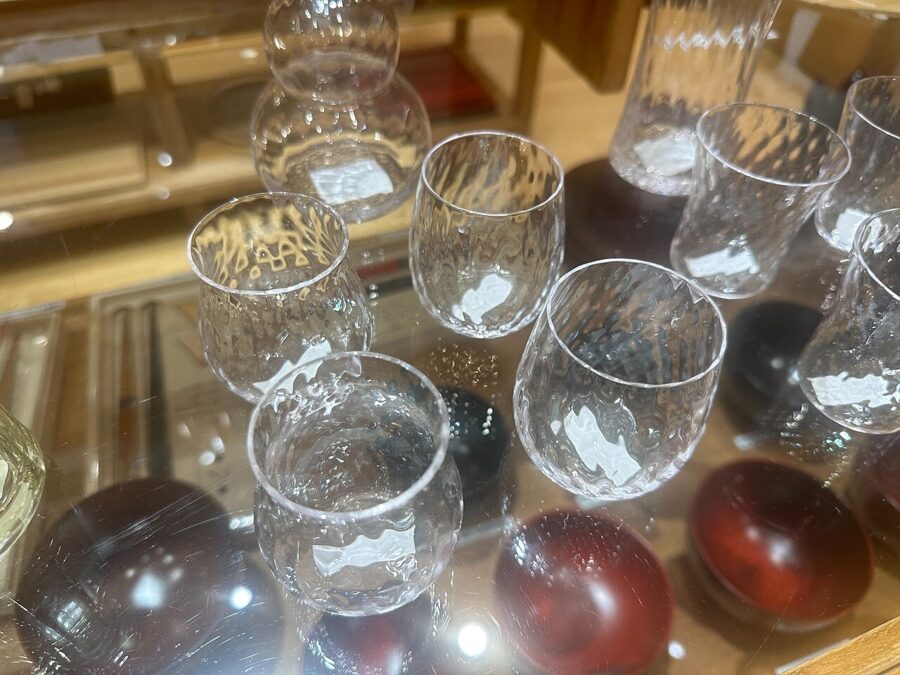
A Nambu kettle from Morioka, a red rice bowl from Wajima and a cut-glass tumbler from eastern Tokyo have more in common than a price tag. All three sit on a list of 244 objects that Japan’s Ministry of Economy, Trade and Industry says are still made mostly by hand, from the old materials, by enough people in the town where the craft grew up. The list is the closest thing Japan has to a map of where its things come from.
I treat it as a starting point, not a guarantee. Below are the main craft families, the towns that make them, what to look at when you pick a piece up, where to watch the work or buy it at the source, and what it costs as of November 2026.


In this article
- What the "traditional craft" label means
- Ceramics: porcelain towns and wood-fired kilns
- Lacquer: Wajima, Aizu and what urushi does
- Textiles and dyeing
- Metal: iron, copper and tin
- Wood and bamboo
- Paper: Mino, Echizen and the 2014 UNESCO listing
- Glass: Edo kiriko and Satsuma kiriko
- Where to see and buy
- Buying well: what makes a piece genuine, and what it costs
What the “traditional craft” label means
The label comes from a 1974 law, the Act on the Promotion of Traditional Craft Industries, known in Japan as the Densan Law. Under it the Minister of Economy, Trade and Industry designates dento-teki kogeihin (伝統的工芸品), “traditional crafts”, and a craft has to pass five tests:
- It is mainly used in everyday life.
- The main part of the making is done by hand.
- It is made with traditional techniques.
- Its main materials are the ones traditionally used.
- A fair number of people make it, or work in making it, in a defined area.
The ministry reads “traditional” as a technique with roughly a century behind it. Everyday use matters too, so the list is made of useful things: seals, fans, kettles, rice bowls. That is what makes it a good shopping list.
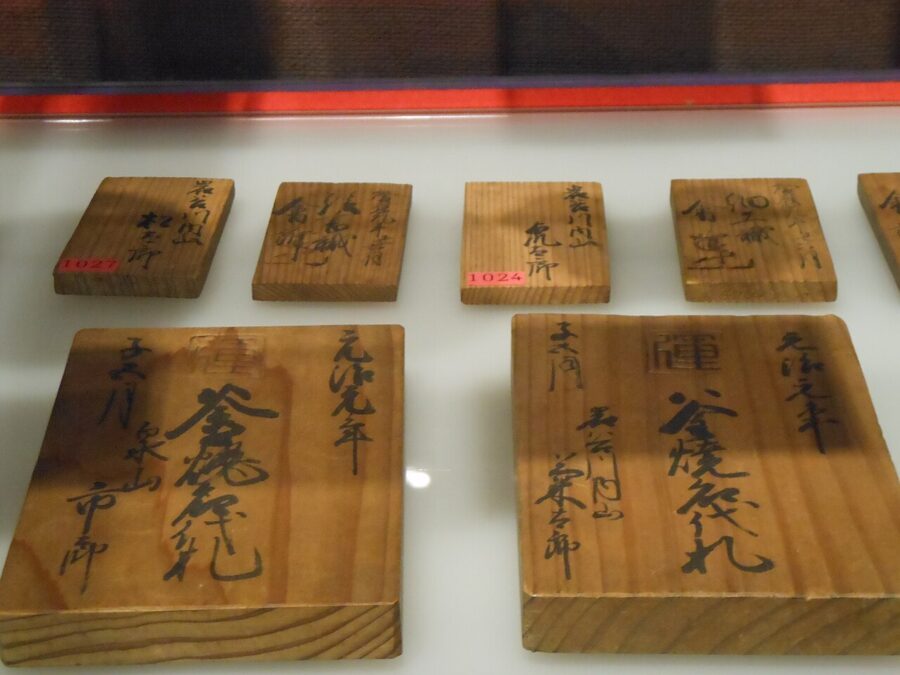
The count moves slowly. In October 2024 the ministry added Sado mumyoi-yaki, a red stoneware made with iron-rich clay from Sado Island’s old gold-mine shafts, and Izumi glass from Osaka, lampworked from soft glass over kerosene flames. In October 2025 it added Tokyo hand-carved seals, made by 103 people at 95 businesses, a trade that traces back to seal cutters who moved from Kyoto to Edo in 1624. That brought the total to 244; Tokyo holds the most, with Kyoto, Niigata and Okinawa next.

What designation does, and what it does not
A designated craft gets the legal right to call itself a “traditional craft”, and its cooperative can apply for government money to train successors and find buyers. Pieces that pass the cooperative’s inspection can carry the dento shoshi (伝統証紙), a small certification sticker. Separately, makers with at least twelve years of hands-on work can sit an exam to become a certified dento kogeishi, a traditional craftsperson.
The label does not rank quality, and it does not cover everything worth owning. Prefectures keep their own lists: Satsuma kiriko glass is a Kagoshima designation, and Nagano added two crafts of its own in September 2026. Nor does it draw the line between craft and Japanese art; Living National Treasure titles, held by several makers below, come from a different law.
The people behind the list are getting fewer. The ministry counted about 48,000 people working in designated craft industries in fiscal 2022, a fraction of the workforce at its peak around 1980. That is the background to almost every price below.
Ceramics: porcelain towns and wood-fired kilns
Japanese ceramics split into two families. Jiki is porcelain, made from crushed stone and fired until it turns glassy and white; tap it and it rings. Toki is pottery and stoneware, made from clay, heavier and duller to the tap. Arita and Kutani are the great porcelain names; Bizen, Mashiko and Hagi are stoneware, and each looks the way it does because of its local clay.
Arita (Saga): where Japanese porcelain began
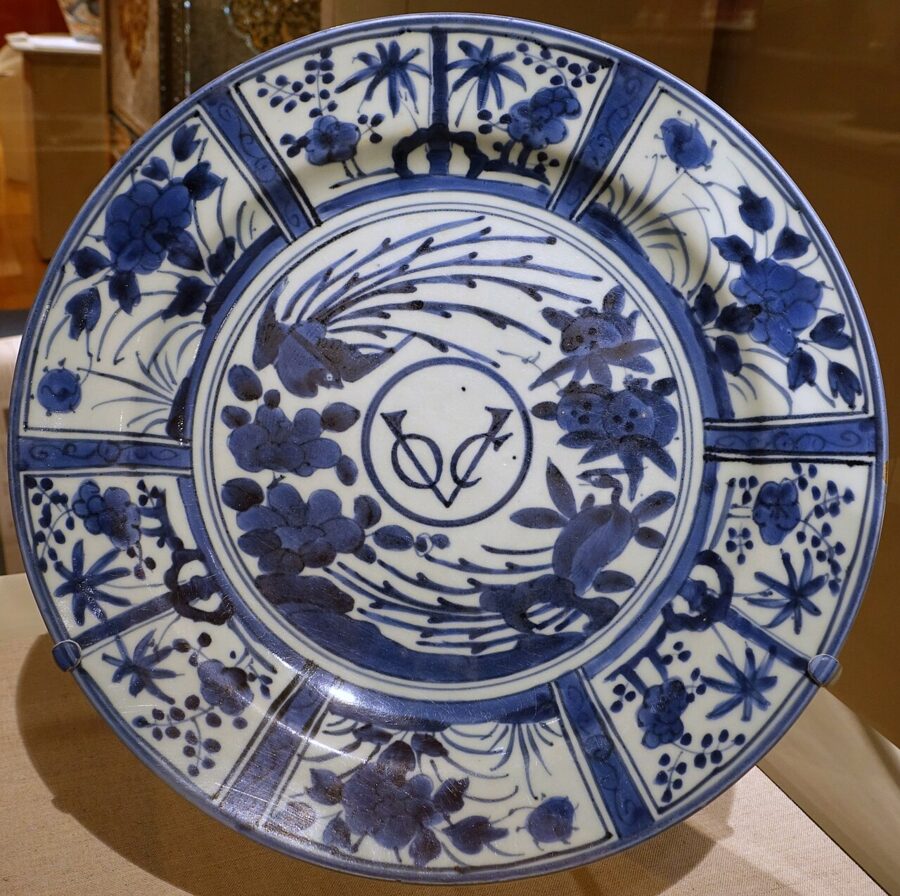
Porcelain in Japan starts in Arita around 1616, when porcelain stone was found at Izumiyama on the edge of town. The find is credited to the Korean potter Yi Sam-pyeong, known in Japan as Ri Sampei, one of many potters brought from Korea after the invasions of the 1590s. Arita’s wares left the district through the port of Imari, which is why old Arita is often sold as Imari, and Dutch traders carried them on to Europe.
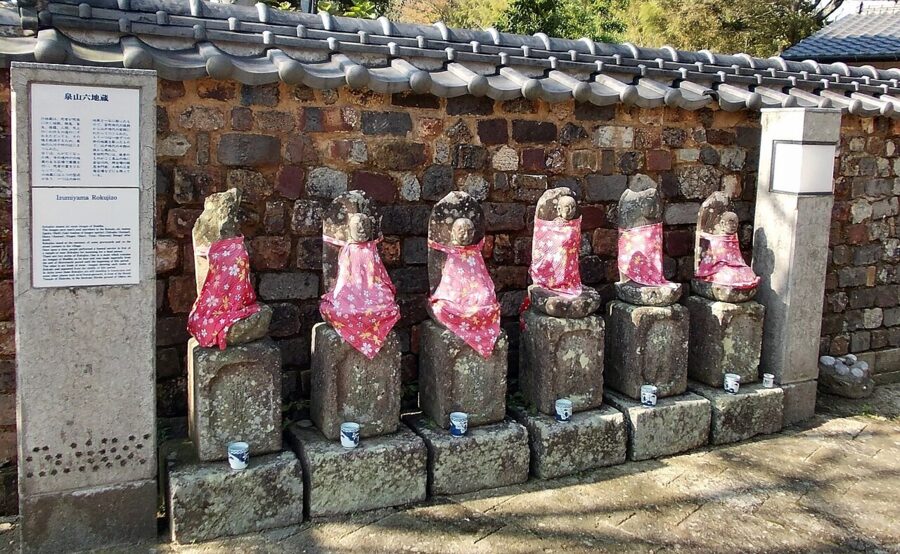

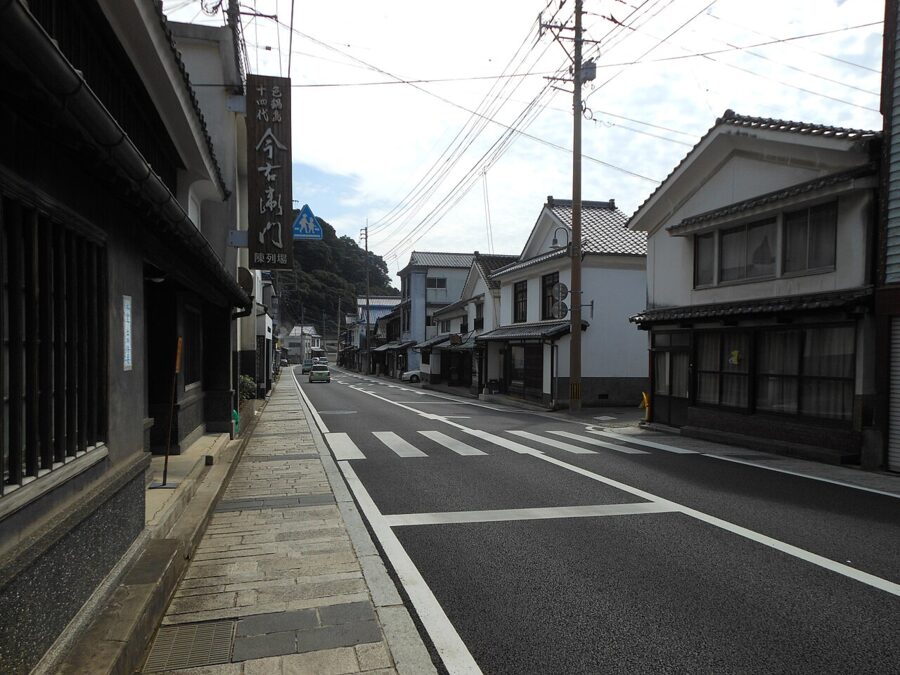

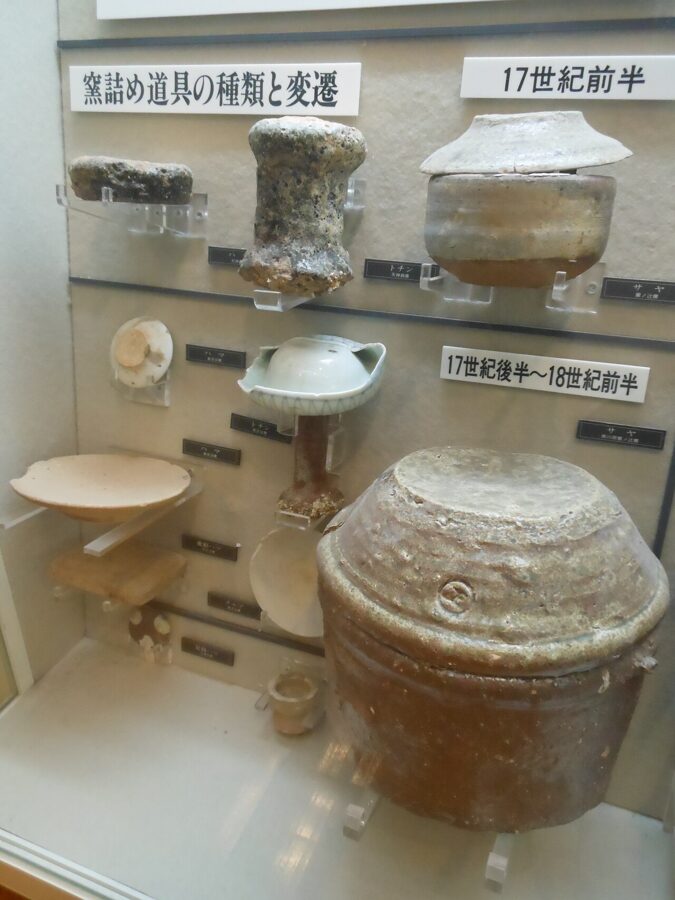
Arita ware was designated in 1977 under the name Imari-Arita ware. Today it ranges from kilns with centuries-old names to small workshops making plain white tableware. I look at the foot ring first: on good Arita it is cleanly trimmed, and the unglazed body is fine and white with no grey speckle.

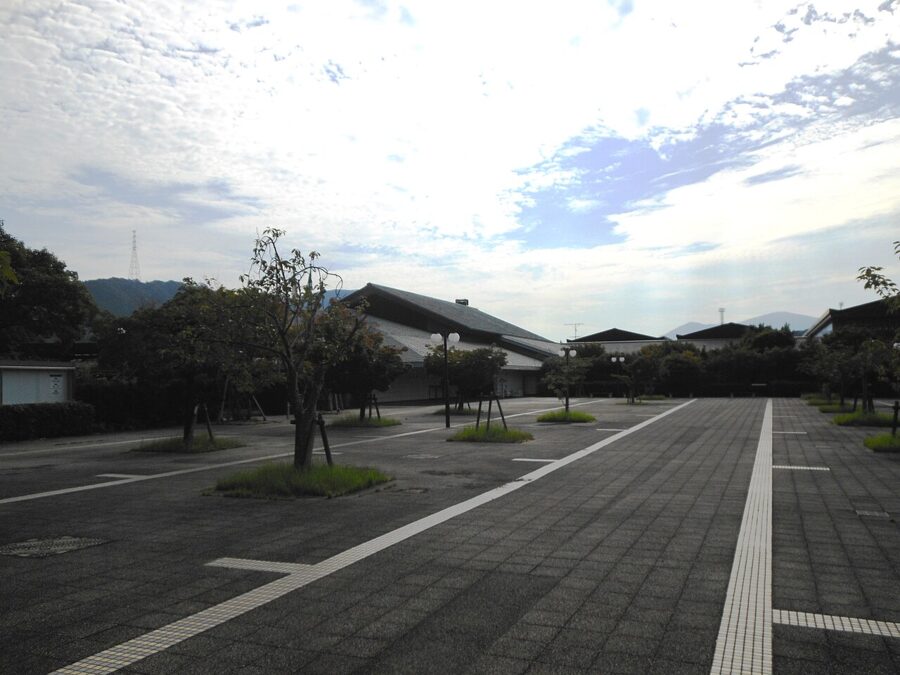

The town’s big event is the Arita Pottery Fair, held from April 29 to May 5 along the main street; 2026 was the 122nd. Expect crowds and bargains, in that order.
Kutani (Ishikawa): five colors on porcelain
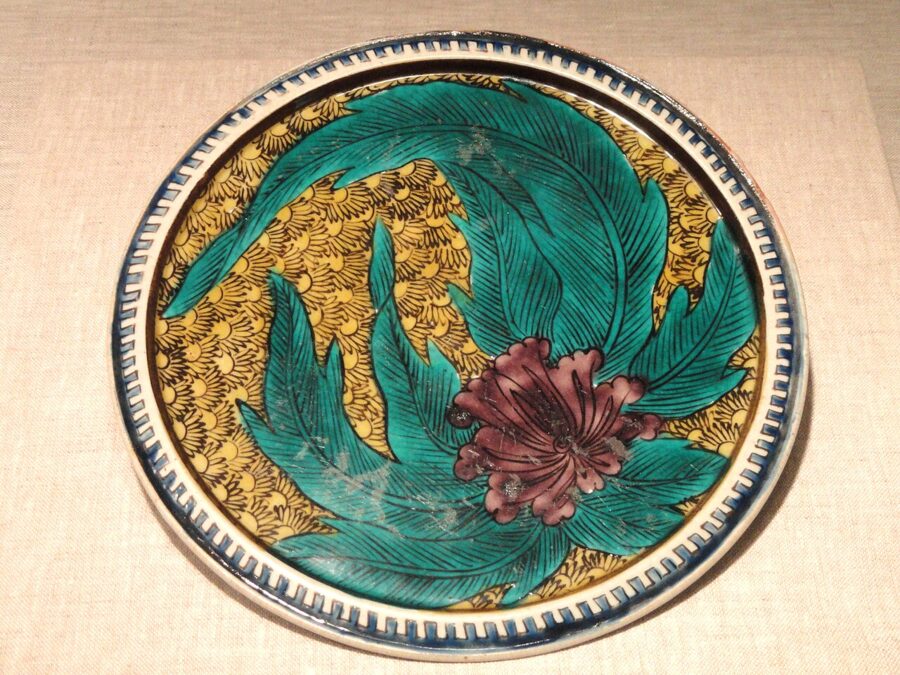
Kutani porcelain takes its name from a mountain village in the Daishoji domain, a branch of Kaga, where kilns worked for a few decades from around the 1650s and then stopped. The wares they left, now called Ko-Kutani, are thick and boldly painted in heavy overglaze enamels. Kutani was revived in the early 1800s and has been made in southern Ishikawa ever since.
The signature palette is gosai, five colors: green, yellow, purple, deep blue and red. On good pieces the enamel stands slightly proud of the glaze, and you can feel the edge of each color. Kutani was among the first crafts designated, in 1975.
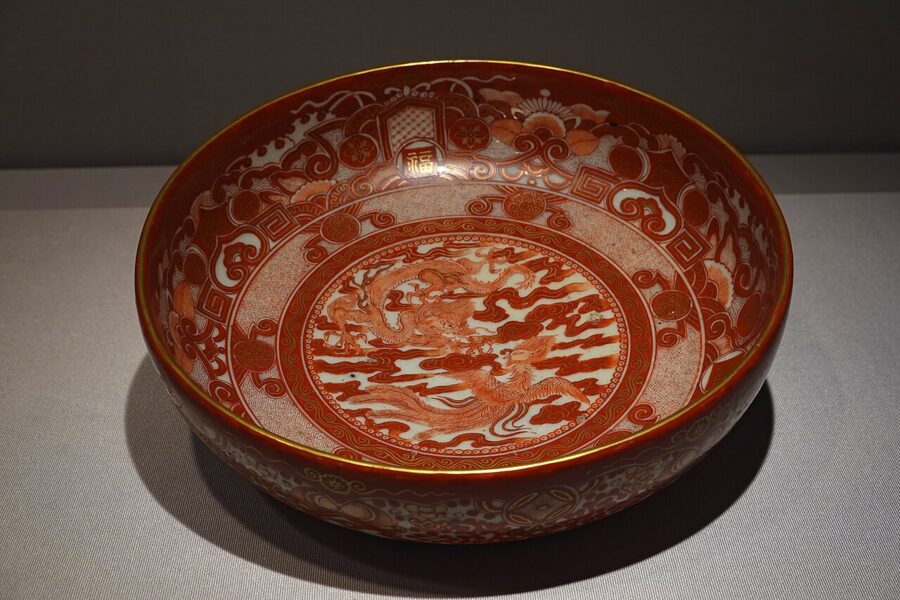

To see the range in one place, go to the Kutani Pottery Village in Nomi, with a museum, a working studio and a hands-on room. It opens 9:00 to 17:00, closes Mondays, and a combined ticket costs ¥430 (about $3), as of November 2026.
Bizen (Okayama): no glaze, long fires
Bizen ware is made around Imbe in Okayama from a dense, iron-rich clay dug from rice paddies, and it is not glazed. Pots fire in wood-burning kilns for about ten days or more, and ash, flame and position do the decorating. Red straw-burn lines called hidasuki, specks of melted ash called goma (“sesame”), and dark patches where one pot shielded another are accidents the potter arranges in advance.
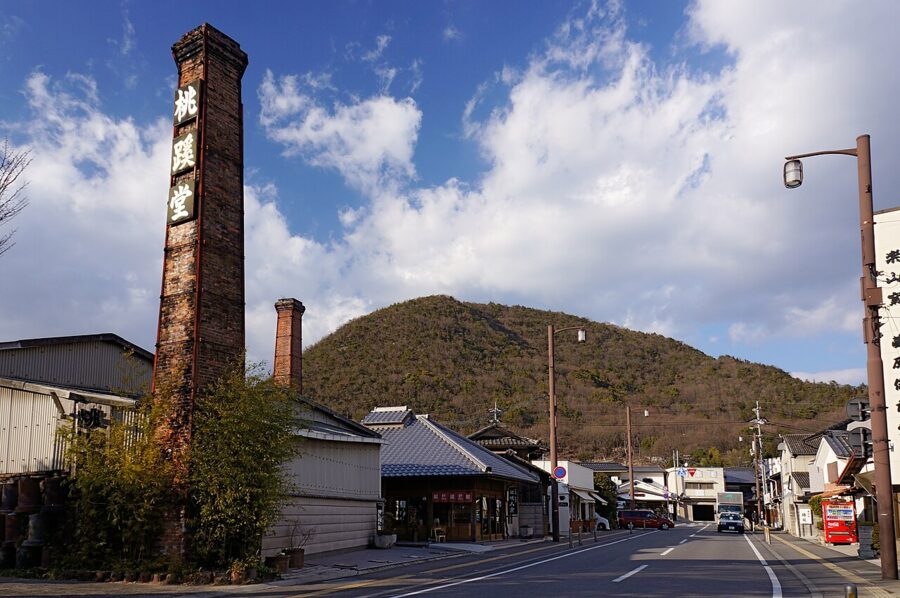

Bizen was designated in 1982, and Kaneshige Toyo became the first Living National Treasure for Bizen ware in 1956. Go for the Bizen Pottery Festival around JR Imbe Station, held on October 17 and 18 in 2026 (the 42nd), with free entry.
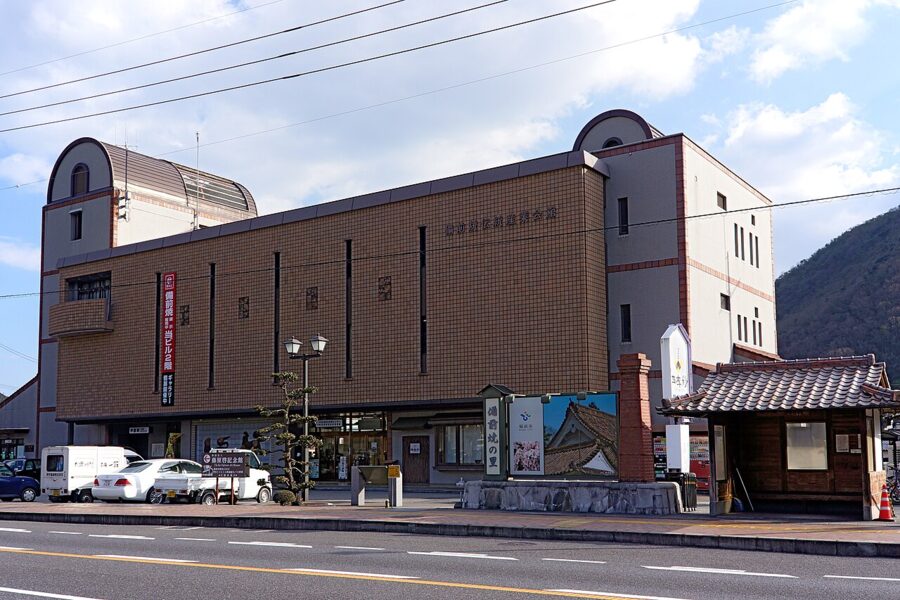

Mashiko (Tochigi): everyday pots and the mingei potters
Mashiko started making pots in 1853, when Otsuka Keisaburo, trained in nearby Kasama, built a kiln. It made kitchen jars and mortars for Tokyo until Hamada Shoji settled there in 1924 and made it the home of mingei, the folk-craft movement that valued useful pots over showpieces. Mashiko ware was designated in 1979, and it is still the town for plates you will actually eat from.
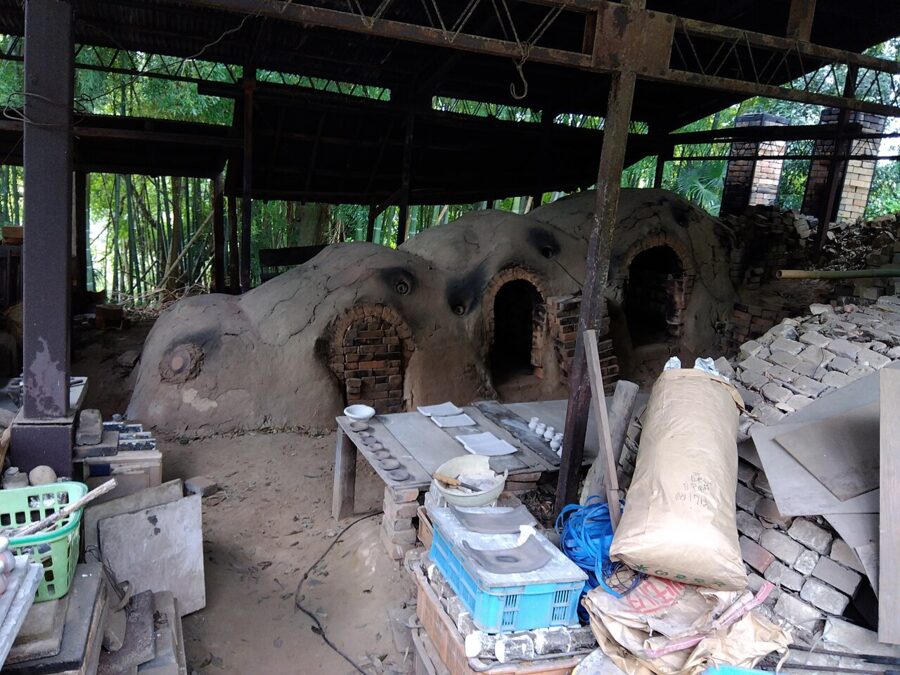

Mashiko holds a pottery fair in spring around Golden Week and another in autumn around November 3. The 114th autumn fair ran from October 31 to November 3, 2026, and drew about 190,000 people. The Mashiko Museum of Ceramic Art is showing Ezaki Issei, Kamoda Shoji and Mori Togaku until November 29, 2026.
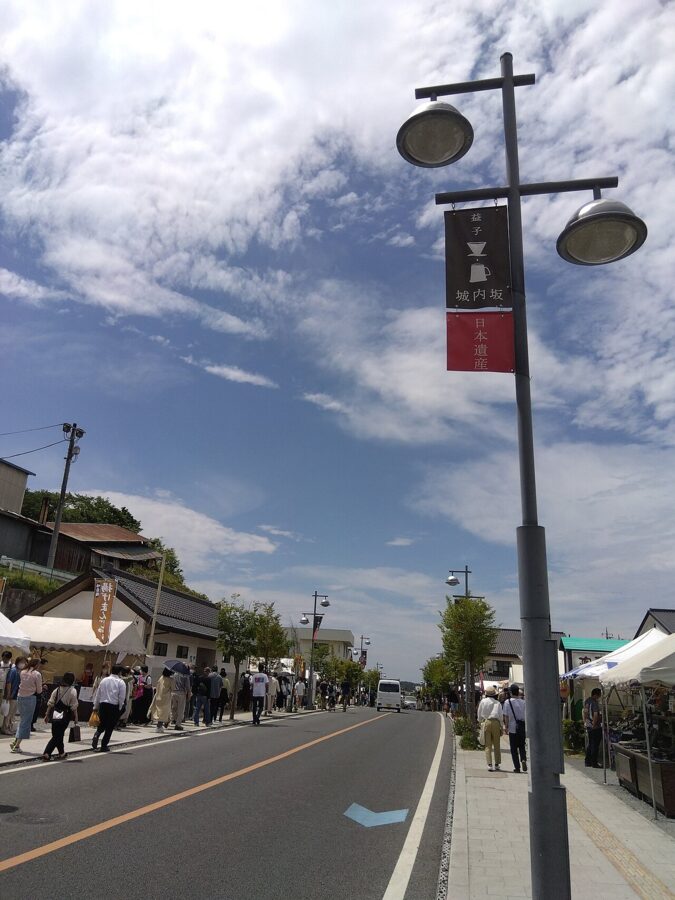

Hagi (Yamaguchi): the tea bowl that changes
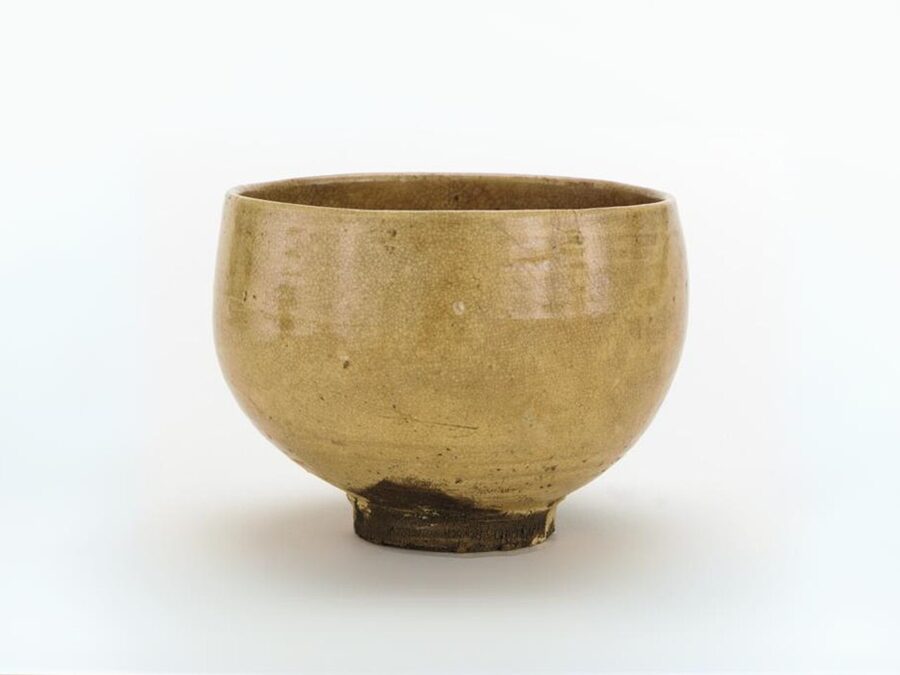
Hagi ware began in the early 1600s, when the Mori clan set up kilns run by Korean potters at their new castle town on the Sea of Japan. It is soft, porous stoneware under a pale glaze, made for tea; tea people say “first Raku, second Hagi, third Karatsu”. Its quirk is Hagi no nanabake, the seven changes of Hagi: tea seeps through the fine crackle, and over years of use the bowl darkens in a pattern of its own.
Hagi was designated in 2002. If you buy one, use it; a new Hagi bowl is not finished yet.
One more stoneware town is worth a detour. Tokoname, south of Nagoya, is among Japan’s oldest kiln sites and a designated craft since 1976, best known for red clay teapots.
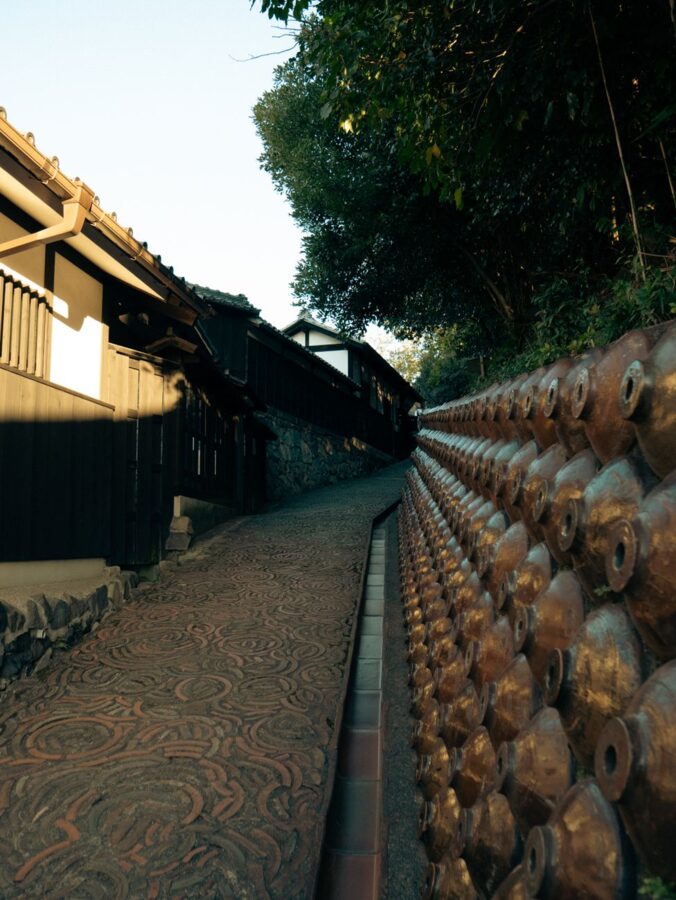
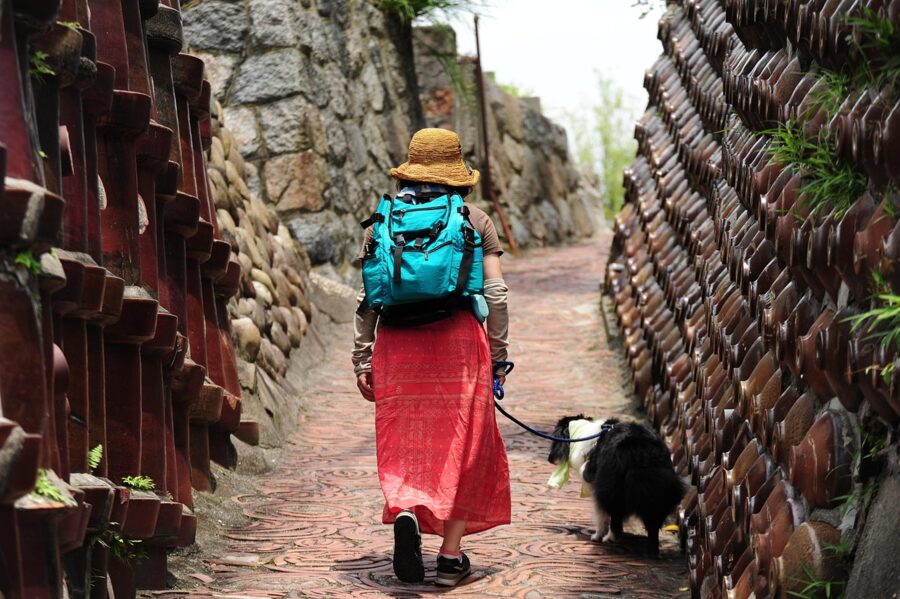
Lacquer: Wajima, Aizu and what urushi does
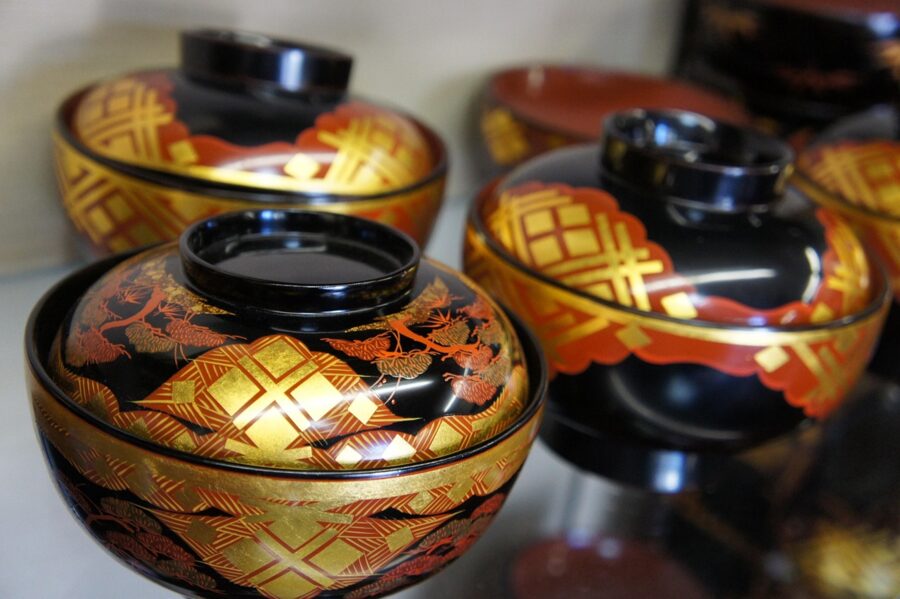
Japanese lacquer is urushi (漆), the sap of the lacquer tree, tapped and refined. It hardens by curing in warm, damp air, and once cured it shrugs off hot soup, alcohol and acid. A lacquer bowl is wood sealed in a plastic made by a tree, which is why good pieces last generations and why the same sap holds together a kintsugi repair. Each coat has to cure before the next, so nothing about it is quick.
Wajima (Ishikawa): 124 steps, and a town rebuilding
Wajima, near the tip of the Noto Peninsula, makes the toughest lacquerware in Japan. The cooperative counts up to 124 steps for a piece. The key one is the base coat mixed with jinoko, a powder of fired diatomaceous earth found in Wajima, and cloth is glued over rims and joints where a bowl takes knocks. Wajima-nuri was designated in 1975 and is also an Important Intangible Cultural Property.
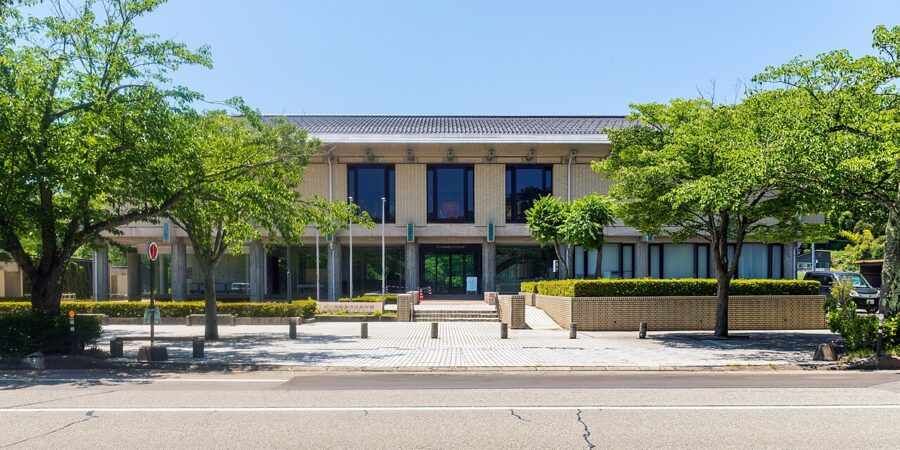

The earthquake of January 1, 2024 hit Wajima hard, and the fire that followed burned the old morning-market district; heavy rain in September 2024 flooded it again. As of November 2026 the cooperative’s hall, the Wajima-nuri Kaikan, still carries a notice that it is closed for the time being, and the cooperative reports a temporary lacquer-refining plant now at work. The museum has stayed open, with repairs still to be scheduled.
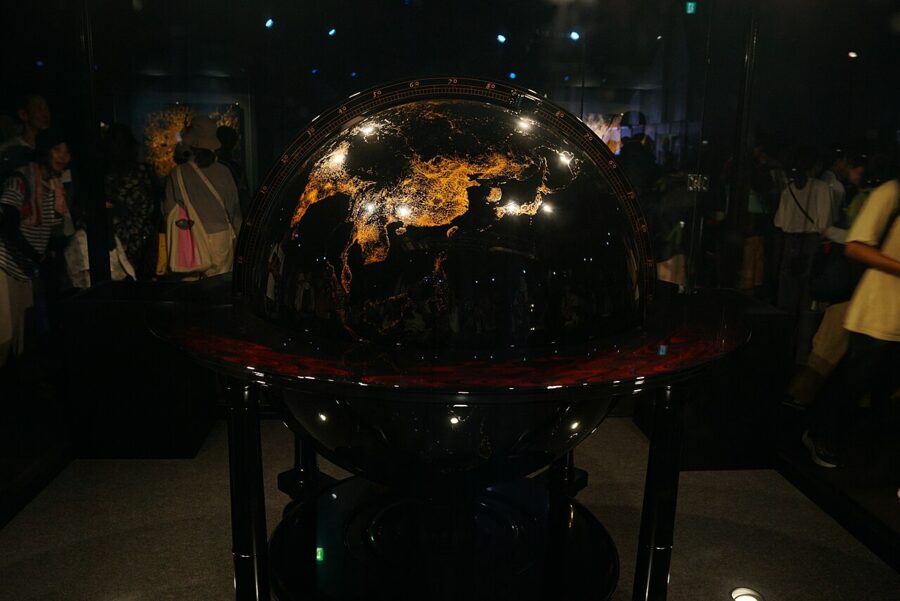

Buying Wajima ware now keeps the workshops going. Buy from a named maker or the cooperative, and ask whether the piece is hon-katanji, the jinoko base; that is what you pay Wajima prices for.
Aizu (Fukushima) and the Tohoku lacquer towns
Aizu lacquer goes back to 1590, when the lord Gamo Ujisato brought lacquer workers from his home province of Omi to Aizu-Wakamatsu. It grew into a big commercial industry making bowls, trays and stacked boxes, often painted in gold and colored lacquer. Aizu-nuri was designated in 1975.
Aizu is one of several lacquer towns in Tohoku, the north-east. In Iwate, Hidehira-nuri carries gold-leaf diamonds, and Joboji in the same prefecture taps more lacquer sap than anywhere else in Japan.
Textiles and dyeing
Textiles make up the biggest share of the national list, because every region once wove its own cloth for its own kimono. The broad split is ori, cloth with the pattern woven in, and some, cloth with the pattern dyed on afterwards.
Nishijin (Kyoto): the obi looms
Nishijin, in north-west Kyoto, is named after the “western camp” of the Onin War of 1467 to 1477. When the fighting ended, weavers set up where the western army had camped, and the district has made Kyoto’s luxury silk ever since. Its weavers brought in French Jacquard looms in the 1870s, and punched cards still drive many looms in town. Nishijin-ori was designated in 1976.
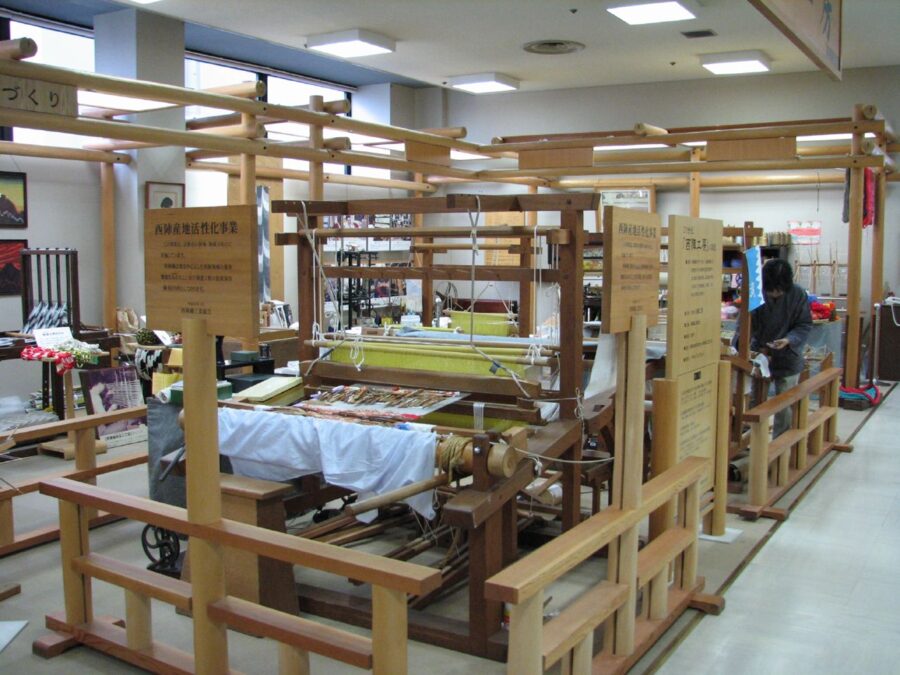

The Nishijin Textile Center on Horikawa-dori is free. It opens 10:00 to 16:00 in the October to March season and 10:00 to 17:00 in summer (April to September). It closes Mondays and over the New Year (as of November 2026). An exhibition from its collection runs until March 28, 2027.
Kurume kasuri (Fukuoka): indigo cotton ikat
Kasuri is ikat: threads are bound and dyed before weaving, so the white in the pattern is where the dye never reached. Kurume kasuri is credited to Inoue Den, a girl of about twelve who around 1800 studied the white flecks in a faded indigo garment and worked out how to make them on purpose. It became the work cloth of Kyushu and was designated in 1976.
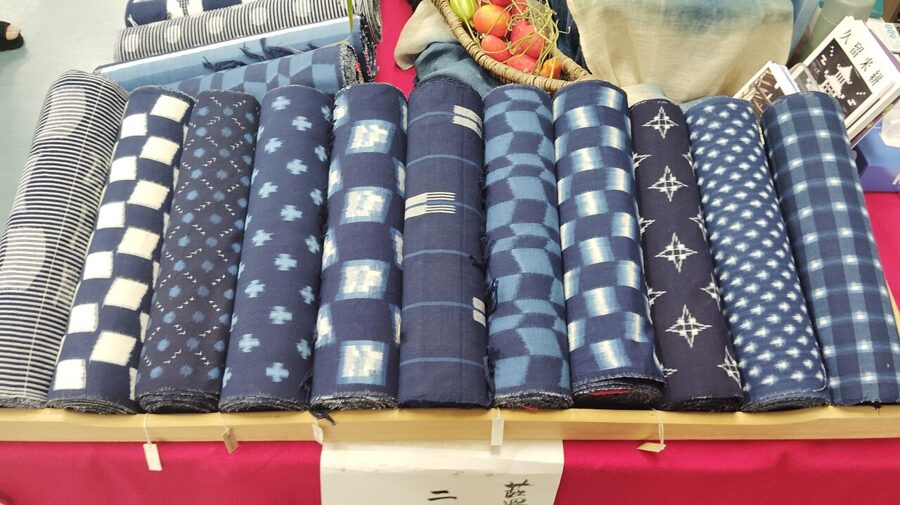
It is the indigo-on-cotton tradition that people who care about Japanese denim tend to find next, and I think shirts made from it are a better buy than most fashion brands’ indigo.
Oshima tsumugi (Kagoshima): dyed in mud
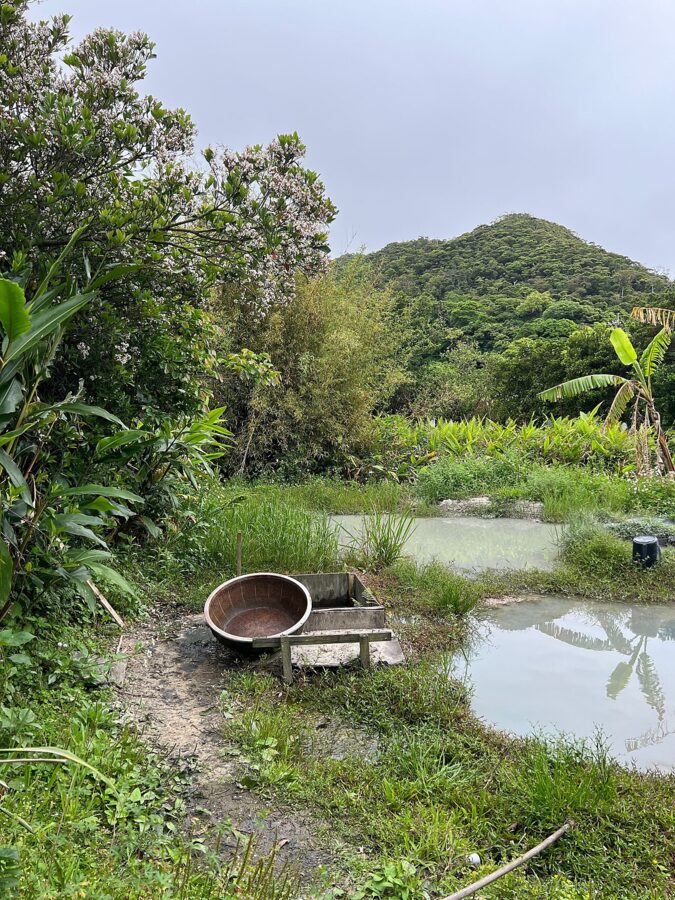
Honba Oshima tsumugi from Amami Oshima is silk dyed with tannin from the sharinbai tree and then soaked in the island’s iron-rich mud. Tannin and iron react, and after dozens of cycles the silk turns a deep, glossy black-brown. The patterns are double ikat, fixed by weaving the threads into a tight temporary cloth, dyeing it, then unpicking it. It was designated in 1975.
Bingata and yuzen: painting with paste
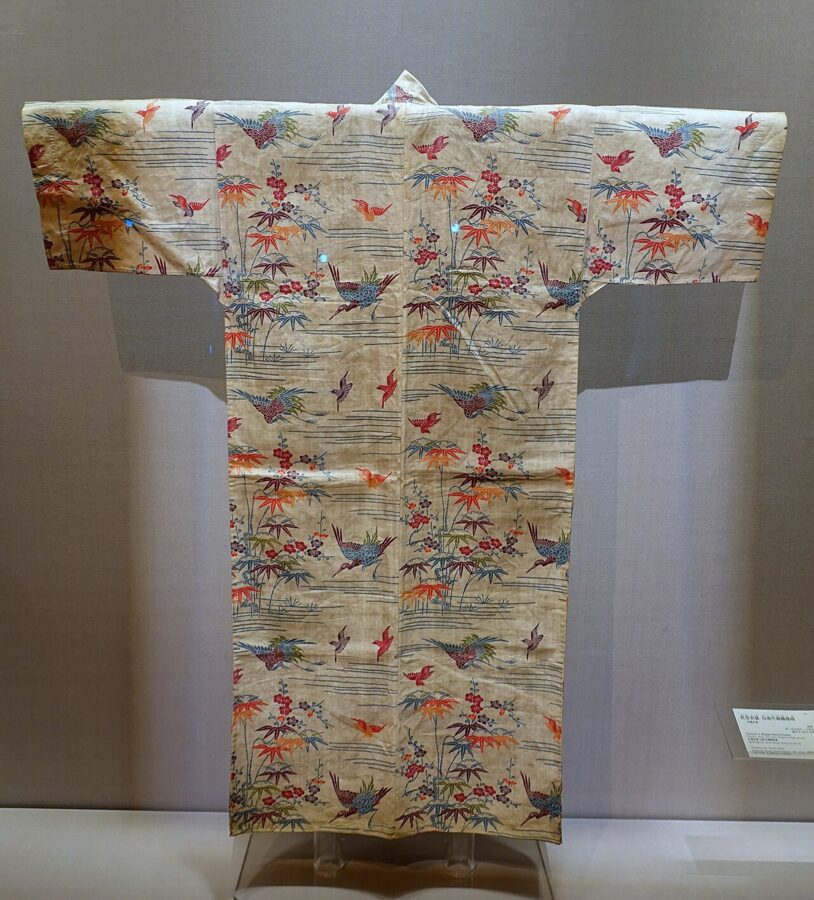
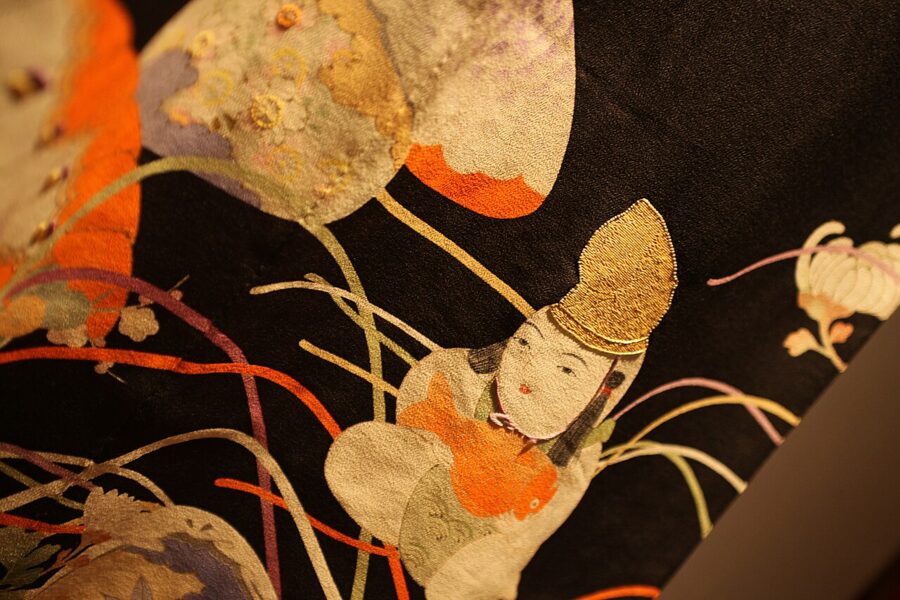
Japan’s dyed textiles mostly use resist: rice paste laid where the color should not go. Ryukyu bingata from Okinawa lays the paste through cut stencils, then brushes in bright pigments; it dressed the Ryukyu court at Shuri and was designated in 1984. Kyo-yuzen in Kyoto draws the paste freehand around every motif so colors sit side by side without bleeding, a method credited to the fan painter Miyazaki Yuzensai around 1700.

Metal: iron, copper and tin
Nambu ironware and Takaoka copperware are cast in moulds; Tsubame’s copper is raised by hammer from a flat sheet. In all three, good work shows in weight and wall thickness that make sense for the object.
Nambu ironware (Iwate): kettles from Morioka and Mizusawa
Nambu ironware comes from two places in Iwate: Morioka, where the Nanbu lords brought in kettle makers in the 1600s, and Oshu’s Mizusawa district, whose casting is said to go back to the twelfth century. It was designated in 1975. Two of the best-known foundries are Iwachu in Morioka, founded in 1902, and Oigen in Mizusawa, founded in 1852.
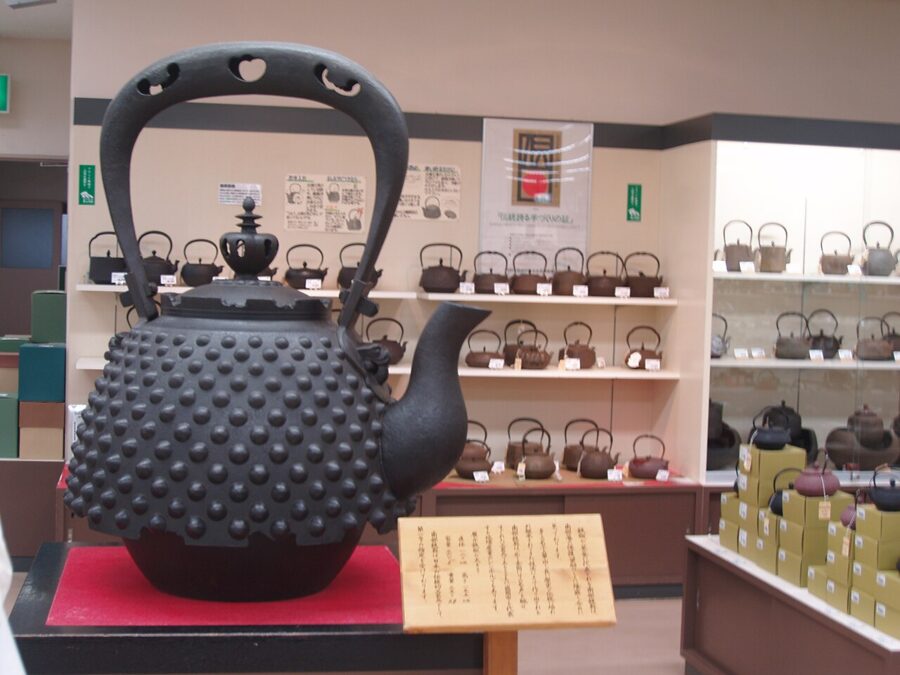

Know the difference before you buy. A tetsubin is a kettle for boiling water, bare iron inside. A tetsu kyusu is a teapot with an enamel lining that must never go on the stove. Oigen’s kettles run from ¥13,200 (about $83) for 0.4 liters to ¥121,000 (about $760) for a large dragon kettle, and Iwachu’s start at ¥18,700 (about $118), as of November 2026.
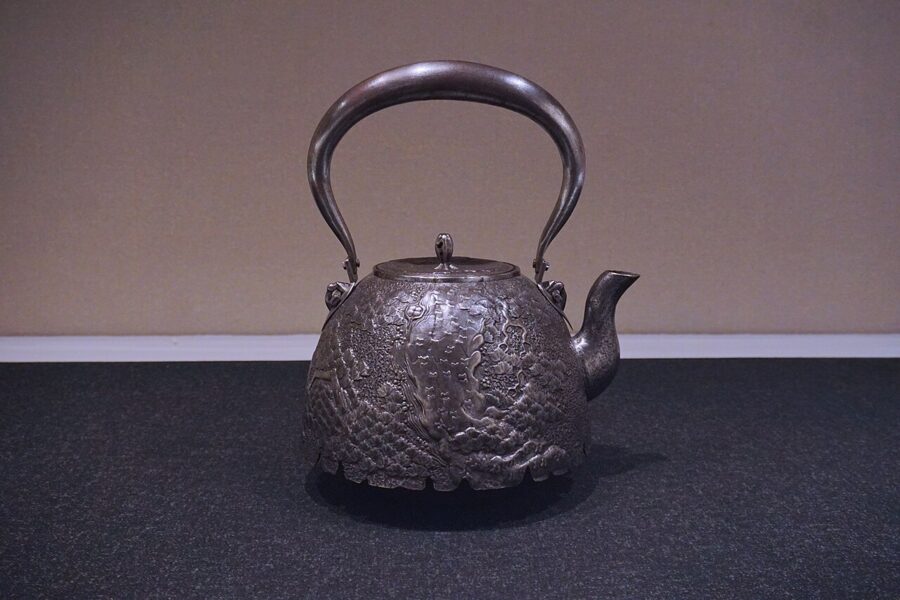

I would buy a plain bare-iron kettle before a decorated teapot. It lasts a lifetime if you empty it and let the heat dry it after each use, and the step up from a factory kettle to a foundry’s own is smaller here than in most crafts.
Takaoka copperware (Toyama): bells, Buddhas and tin
Takaoka’s casting began in 1611, when the lord Maeda Toshinaga invited seven casters to his new castle town and gave them land in what is still called Kanayamachi. The town went on to cast temple bells, Buddhist statues and much of Japan’s bronze. Takaoka copperware was designated in 1975.
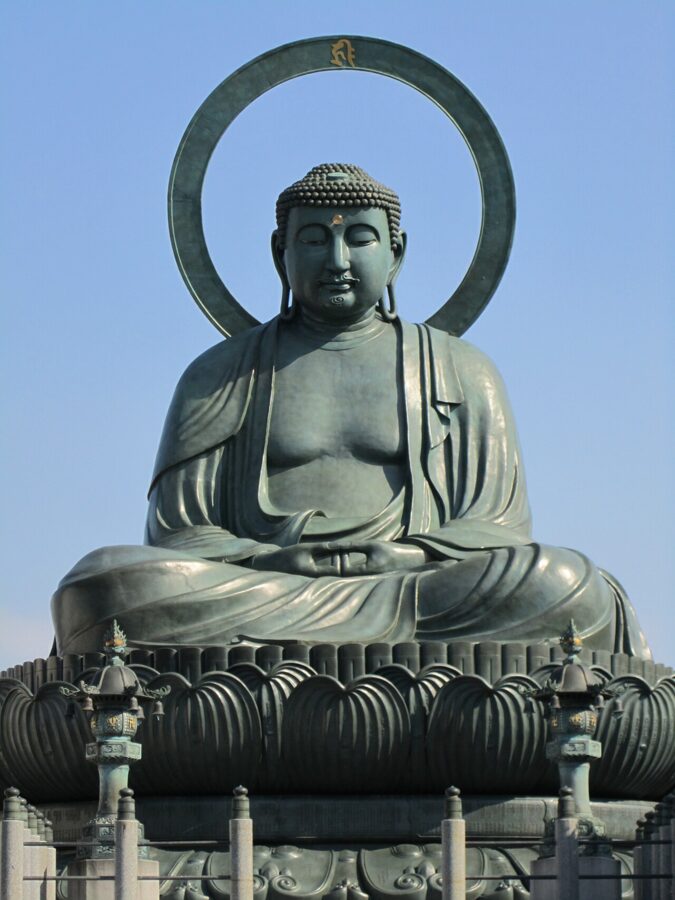

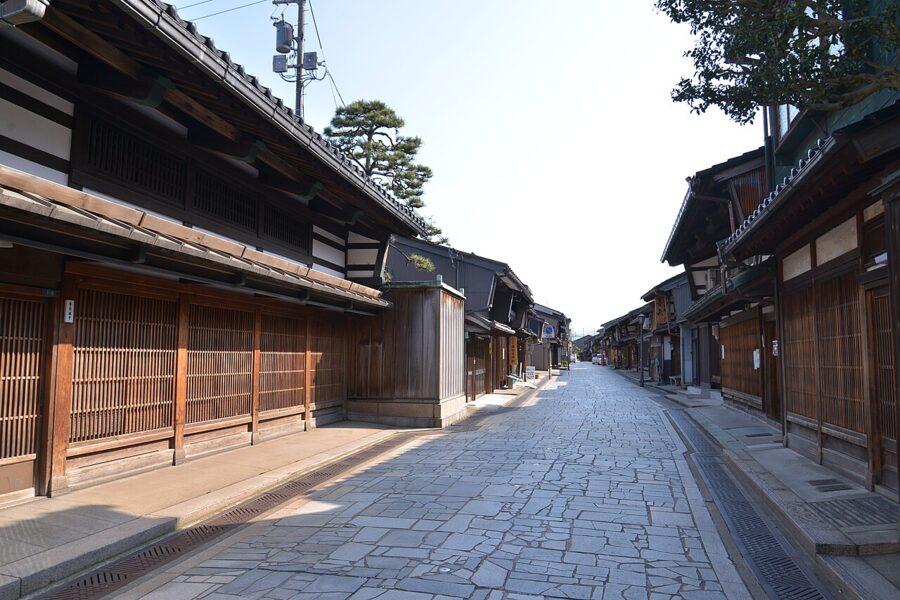

The name most people know now is Nousaku, a Takaoka foundry founded in 1916 that turned to pure tin and makes bowls soft enough to bend by hand. Its free factory tour takes about 30 minutes and starts at 11:00, 13:00, 14:00, 15:00 and 16:00; it is closed Sundays, holidays and some Saturdays, and booking is advised (as of November 2026).
Tsubame (Niigata): copper hammered from a sheet
Tsubame’s tsuiki copperware starts as a flat sheet hammered over iron stakes, a little at a time, until it becomes a kettle or vase in one piece. The copper hardens as it is struck and has to be softened in a fire again and again. It was designated in 1981.
Gyokusendo has hammered copper in Tsubame since 1816. Its free factory visits run at 10:00, 11:00, 13:00, 14:00 and 15:10, last 15 to 20 minutes, and are closed Sundays and holidays; groups of six or more pay (as of November 2026). The Tsubame-Sanjo Factory Festival, when local factories open their doors, ran from October 1 to 4 in 2026 with 158 companies. Forged blades from Sakai, Echizen and Tosa also hold national designations; see my guide to Japanese knives.
Wood and bamboo
Two wood crafts make good first purchases because they show their technique on the surface: Hakone marquetry and Beppu basketry.
Hakone yosegi zaiku (Kanagawa): a mosaic of woods
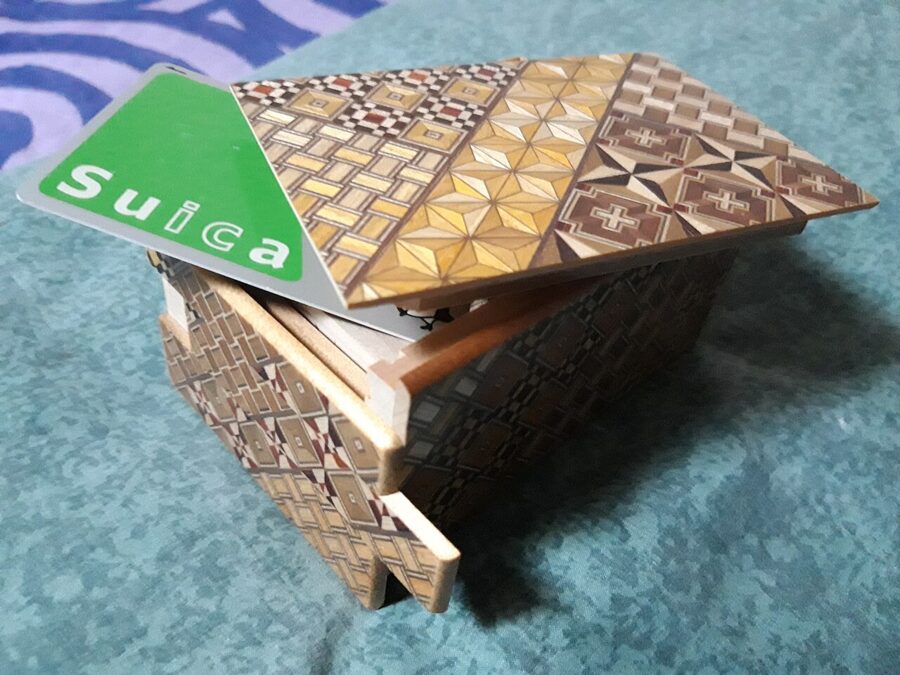
Yosegi zaiku is marquetry without paint. Strips of naturally different woods, pale, yellow, red-brown and dark, are glued into a block whose end shows a geometric pattern. Most pieces are covered with zuku, a paper-thin slice shaved off the block with a big plane. Dearer pieces are muku, turned or carved from the solid block so the pattern runs right through.
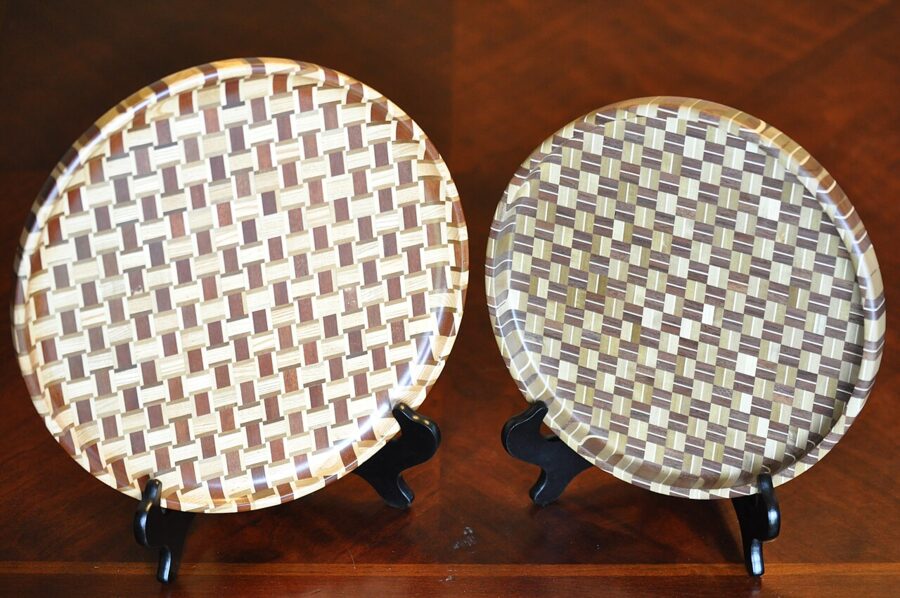

The craft grew up in the late Edo period at Hatajuku, on the old Tokaido road over the Hakone pass, and was designated in 1984. Its famous product is the himitsu-bako, a puzzle box that opens only after a sequence of hidden sliding panels.

Beppu bamboo (Oita): baskets from the hot-spring town
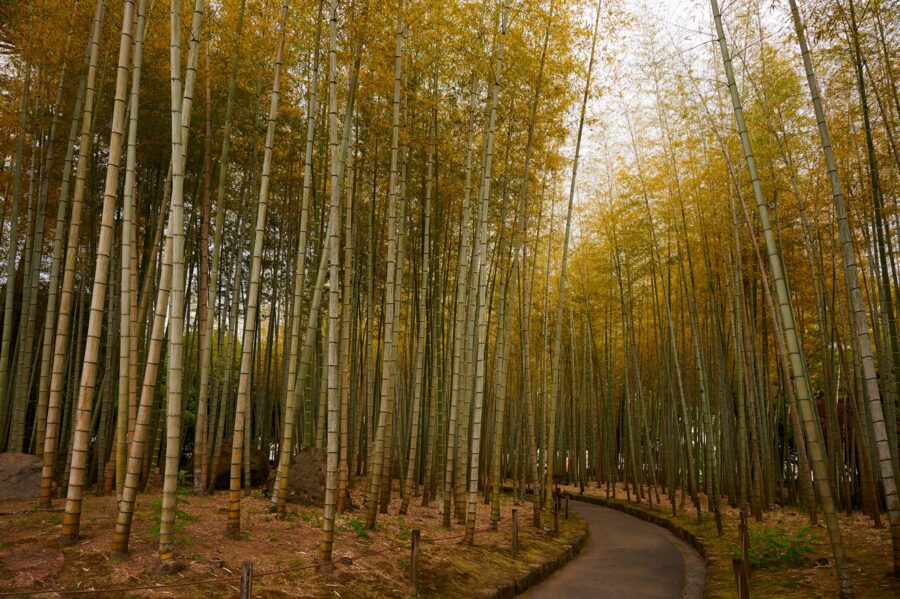
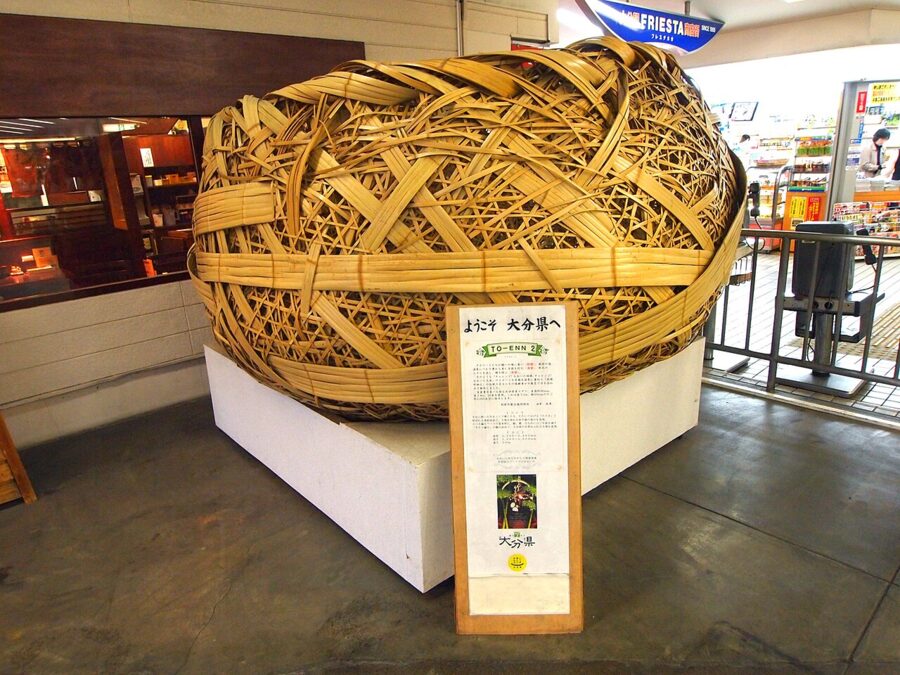
Beppu’s bamboo work grew in the Edo period around its hot springs, as people staying for the cure bought baskets for cooking and carrying. Makers split madake bamboo into fine strips and weave baskets, trays and flower holders. It was designated in 1979, and in 1967 the Beppu craftsman Shono Shounsai became the first Living National Treasure in bamboo. Oita Prefecture also runs a bamboo crafts training school in Beppu, which keeps new makers arriving.

Paper: Mino, Echizen and the 2014 UNESCO listing
Washi (和紙) is paper made from the inner bark of shrubs, mainly kozo (paper mulberry). The long fibers are beaten, suspended in water with a slimy root extract called neri, and scooped up on a screen that the papermaker rocks back and forth. That rocking, nagashi-zuki, crosses the fibers and makes the sheet strong for its weight.
In November 2014 UNESCO listed “Washi, craftsmanship of traditional Japanese hand-made paper” as Intangible Cultural Heritage. It covers three papers: Sekishu-banshi from Hamada in Shimane, Hon-minoshi from Mino in Gifu, and Hosokawa-shi from Ogawa and Higashichichibu in Saitama. Echizen is not part of it, though you will often read that it is.
Mino (Gifu): the oldest paper in Japan
Japan’s oldest surviving paper includes household registers from 702 made in Mino province, kept in the Shosoin treasure house in Nara. Hon-minoshi is made only from domestic kozo and only by hand, thin and even enough to hold light like frosted glass. Mino washi as a whole was designated in 1985.
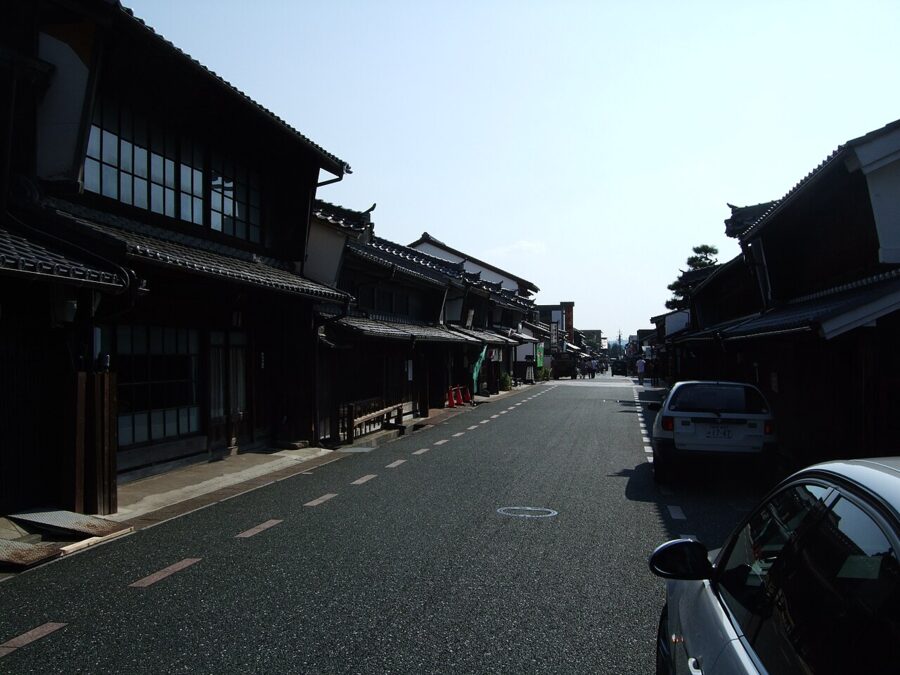
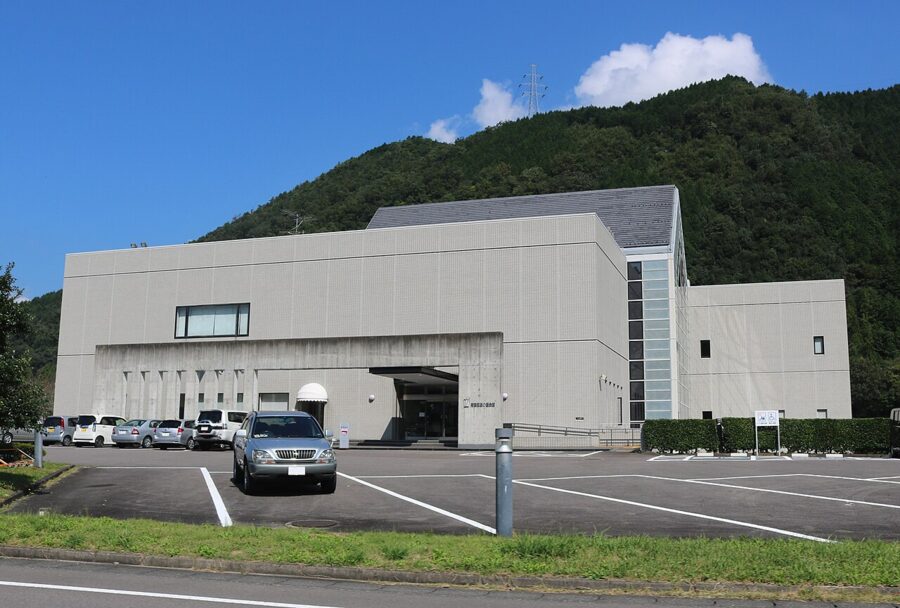
The Mino Washi Museum, a short drive out of town, lets you make a sheet yourself. It opens 9:00 to 17:00, costs ¥500 (about $3), and closes Tuesdays and the day after a public holiday (as of November 2026).

Echizen (Fukui): the papermakers’ goddess
Echizen has made paper for about 1,500 years by its own account. The goddess Kawakami Gozen is said to have taught the villagers the craft, and she is still worshipped at Okamoto Otaki Shrine above the paper district. The town made official paper for the court and the shogunate, including hosho, a thick, soft white sheet used for documents and woodblock prints. Echizen washi was designated in 1976.
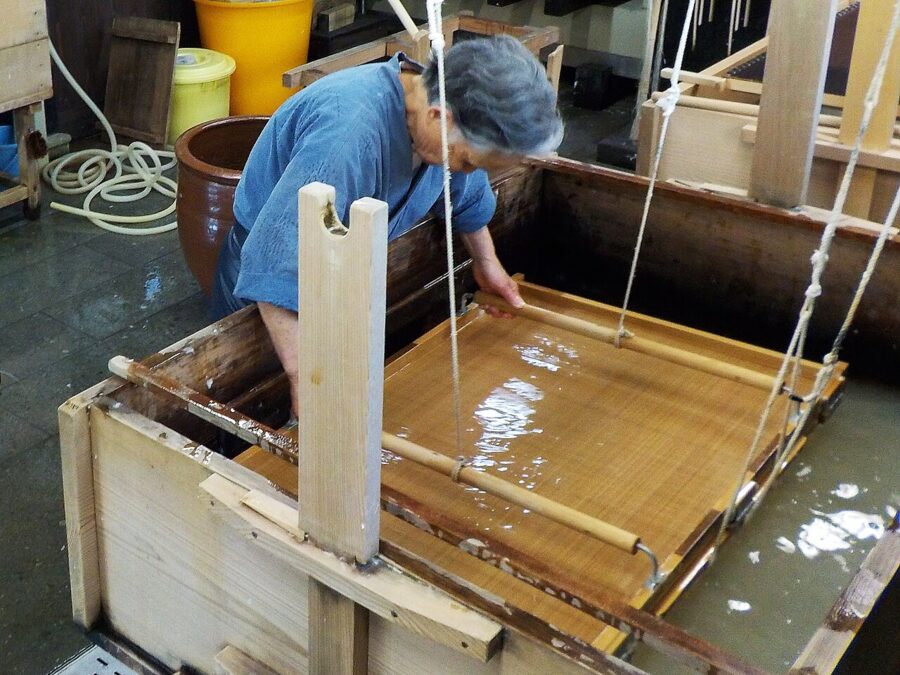

The Echizen Washi Village groups Papyrus House, where you can make a sheet in 20 to 40 minutes, with the Udatsu Paper and Craft Museum and the Paper and Culture Museum. Papyrus House and its shop close on Tuesdays (as of November 2026).
Glass: Edo kiriko and Satsuma kiriko
Kiriko is cut glass. The cutter marks a grid on the glass, grinds the pattern in on wheels of diminishing coarseness, then polishes the cuts until they shine. The patterns have names: nanako, fish roe; kikutsunagi, linked chrysanthemums; yarai, a bamboo fence.
Edo kiriko (Tokyo): crisp cuts
Edo kiriko dates from 1834, when a glass merchant in Edo began cutting patterns into glass, and Tokyo has made it ever since. The style is sharp: deep cuts with hard edges through a thin skin of color. It was designated a national craft in 2002, and the name is a registered trademark of the Edo Kiriko Cooperative Association.
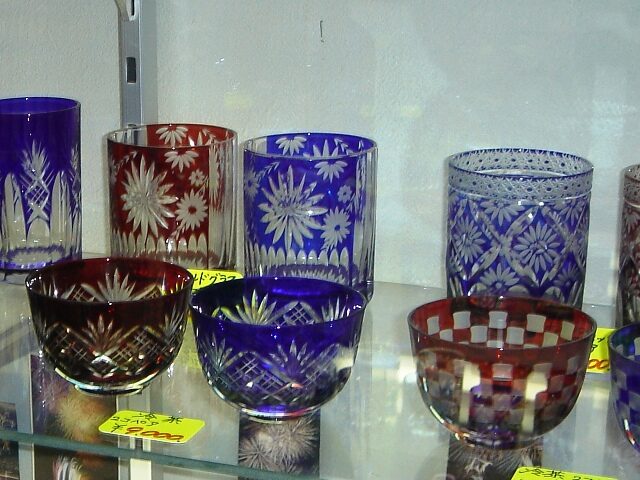
The cooperative’s showroom in Nishi-Ojima, Koto ward, shows about 400 pieces and opens 10:00 to 18:00, closed Mondays. Its catalogue sells a soda-glass tumbler for ¥19,800 (about $125) and crystal rock glasses for ¥40,700 to ¥50,600 (about $256 to $319), as of November 2026.
Satsuma kiriko (Kagoshima): the color fades
Satsuma kiriko began in the 1840s and 1850s under the Shimazu lords of Satsuma as part of their push for Western industry. It faded after the death of Shimazu Nariakira in 1858 and was gone by the early Meiji period, until Shimadzu Limited revived it in 1985. Its colored layer is thick, so a sloping cut leaves a gradient from color to clear called bokashi. That fade is the thing to look for.
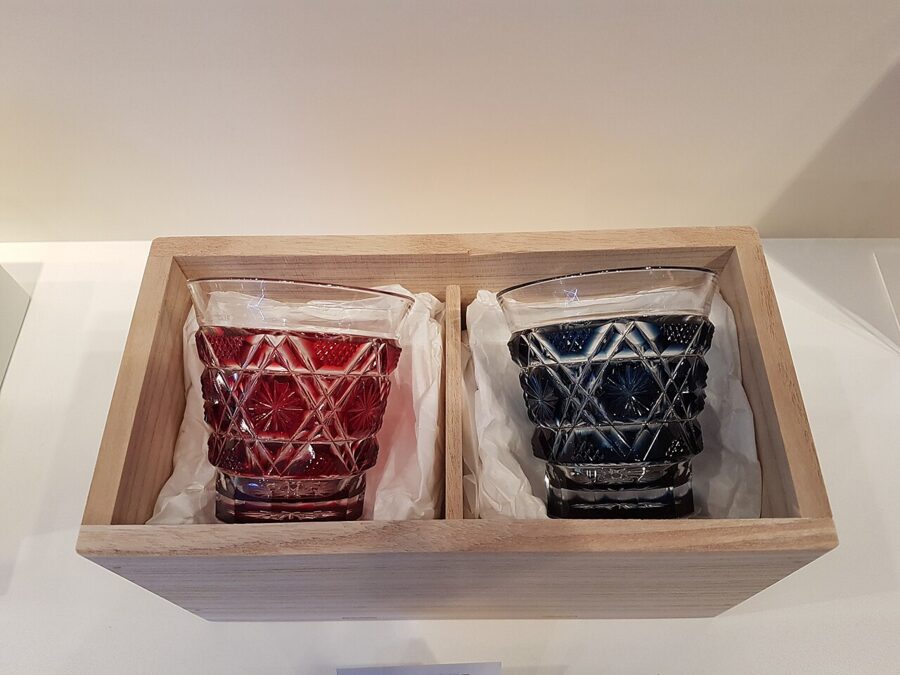

Shimadzu’s gallery shop, Iso Kogeikan, stands beside Sengan-en garden in Kagoshima, and its official shop sells a single cold-sake glass for ¥41,800 (about $263), as of November 2026.
Where to see and buy
Japan Traditional Crafts Aoyama Square (Tokyo)
Aoyama Square is the showroom of the Association for the Promotion of Traditional Craft Industries, the body behind the national list. It sells designated crafts from across the country and holds changing exhibitions, demonstrations and workshops; it is the one shop where you can hold a Wajima bowl in one hand and an Aizu bowl in the other. It is on Aoyama-dori near Aoyama-itchome Station and opens 11:00 to 19:00 as of November 2026. Workshops are booked by phone.
Kyoto Museum of Crafts and Design
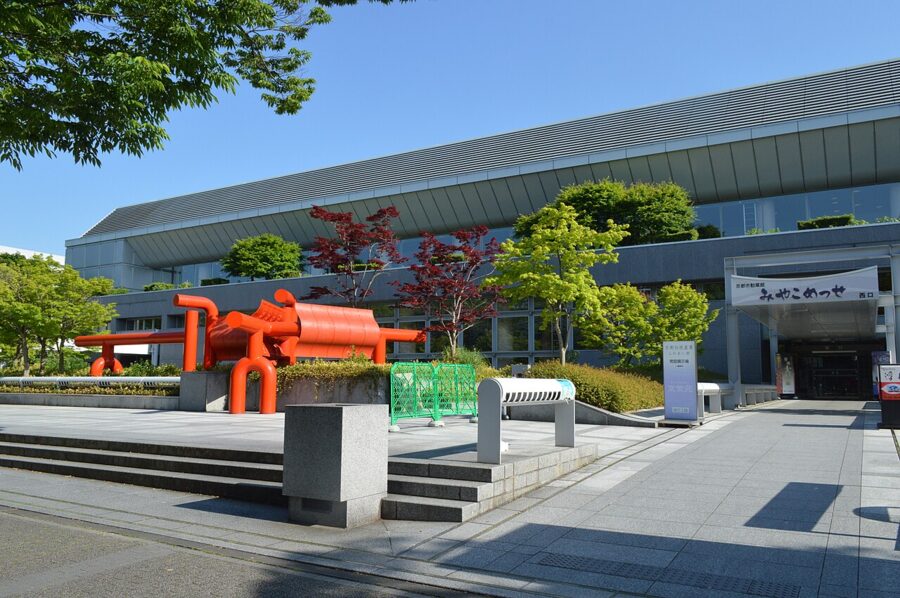
Kyoto keeps its own list of traditional industries, and this museum in the basement of Miyako Messe in Okazaki shows 74 of them, from Nishijin weaving and yuzen dyeing to lacquer, Kiyomizu ceramics and fans. Craftspeople demonstrate on a daily rota, and watching a yuzen artist draw resist lines explains the craft better than any label. It opens 10:00 to 18:00 (last entry 17:30), costs ¥500 for adults, and closes on set days shown on its calendar (as of November 2026).

The craft fairs
Fairs are where prices drop and you meet the makers. The 2026 dates, which change little from year to year:
| Fair | Town | 2026 dates |
|---|---|---|
| Arita Pottery Fair | Arita, Saga | April 29 to May 5 |
| Tsubame-Sanjo Factory Festival | Tsubame and Sanjo, Niigata | October 1 to 4 |
| Bizen Pottery Festival | Imbe, Okayama | October 17 and 18 |
| Mashiko autumn Pottery Fair | Mashiko, Tochigi | October 31 to November 3 |
Buying well: what makes a piece genuine, and what it costs
Much “Japanese-style” craft, abroad and in Japan, is made elsewhere or by machine. That is fine, but it should not cost what handwork costs. These are the checks I use.
- Look for the paperwork. The dento shoshi sticker, a cooperative’s certificate or a signed wooden box. Nishijin obi carry a numbered certificate stamp from the weavers’ cooperative.
- Read the material. Real urushi has a warm, deep gloss; synthetic coating over resin looks glassy and flat. A “lacquer” bowl at ¥1,000 (about $6) is not urushi on wood.
- Check the unglazed parts. The foot ring shows the clay: porcelain fine and white, Bizen dense and dark, Mashiko coarse and sandy.
- Weigh it in your hand. A cast kettle should be heavy, and thick-layered cut glass heavier than its plain neighbor.
- Buy from the town or the maker. A cooperative shop, a kiln’s showroom, Aoyama Square or a maker’s own website is the shortest chain back to the hands that made it.
The Nishijin cooperative makes a point that holds for every craft: it guarantees quality with its certificate but cannot set retail prices, so a certified piece can still be overpriced. Compare before you pay.
Prices as of November 2026:
| Piece | Maker or seller | Price |
|---|---|---|
| Small Nambu iron kettle, 0.4 L | Oigen, Oshu | ¥13,200 (about $83) |
| Nambu iron kettle | Iwachu, Morioka | from ¥18,700 (about $118) |
| Large dragon kettle, 1.7 L | Oigen, Oshu | ¥121,000 (about $760) |
| Kettle cast from iron sand | Iwachu, Morioka | ¥440,000 to ¥627,000 (about $2,800 to $3,950) |
| Edo kiriko tumbler, soda glass | Edo Kiriko Cooperative | ¥19,800 (about $125) |
| Edo kiriko rock glass, crystal | Edo Kiriko Cooperative | ¥40,700 to ¥50,600 (about $256 to $319) |
| Satsuma kiriko cold-sake glass | Shimadzu Satsuma Kiriko | ¥41,800 (about $263) |
Ceramics and lacquer vary too much by maker for one figure. At the pottery fairs, everyday plates by young potters sell for a few thousand yen; signed work from established kilns in Arita, Bizen or Hagi costs far more.
Then turn the piece over. The bottom of a bowl, the inside of a kettle lid, the cut edge of a yosegi box: the part nobody looks at is where handwork shows, and where a cheap copy gives itself away.