
The new PLAY T-shirts that went on sale in Japan on November 7 start at ¥11,220 (about $71), and the red heart on them was drawn once, run through a photocopier and sent to Tokyo by FedEx in 2002. The illustrator who drew it, Filip Pagowski, thought nobody would use it. Three months later the company called to ask whether it could be a logo.
That company is Comme des Garçons, and the heart pays for a great deal. The same firm sent a black sweater knitted full of holes down a Paris runway in 1982, padded gingham dresses with lumps in 1997, and now runs seven Dover Street Market stores from Ginza to Los Angeles. Rei Kawakubo, who started it in Tokyo in 1969, still runs it at 84, and it still answers to no luxury group.
Kawakubo is one of three designers, with Issey Miyake and Yohji Yamamoto, who put Japanese clothing brands into the center of Paris fashion in the early 1980s. Of the three, hers is the company that grew widest: around twenty labels, a retail chain that sells other people’s clothes, a perfume house, and a run of collaborations from H&M to Hermès. It is also the one whose runway work is hardest to wear and easiest to argue about.


In this article
- A stylist who could not find the clothes
- Paris, 1981 and 1982
- Body Meets Dress, Dress Meets Body
- The collections since
- One company, about twenty labels
- Dover Street Market
- Collaborations
- The Met, 2017
- Who runs it, and why it costs what it does
- Where to shop Comme des Garçons in Tokyo
- Telling real PLAY from fakes
A stylist who could not find the clothes
Kawakubo was born in Tokyo on October 11, 1942. Her father was an administrator at Keio University, and she went through Keio’s schools and took a degree there in aesthetics and art history in 1964. She had no training in dressmaking. She joined the advertising department of the textile and chemicals company Asahi Kasei, left in 1967, and worked as a freelance stylist for photo shoots.
The clothes came out of that job. When she could not find the garments she had in mind for a shoot, she made them, and by 1969 she was making and selling women’s clothes under the name Comme des Garçons. The name is French for “like the boys”; the story most often told traces it to a line in a Françoise Hardy song. She incorporated the company, Comme des Garçons Co., Ltd., in 1973, held her first show in Tokyo in 1975 and opened a shop in Aoyama the same year.
The 1970s clothes were quiet: white, unbleached cotton, brown, gray, navy and black, cut loose. They sold. A menswear line, Comme des Garçons Homme, followed in 1978, and by 1980 the label had about 150 franchised shops across Japan. Kawakubo has always called herself a businesswoman as much as a designer, and the company she built in that decade is what paid for everything that came after.
Paris, 1981 and 1982
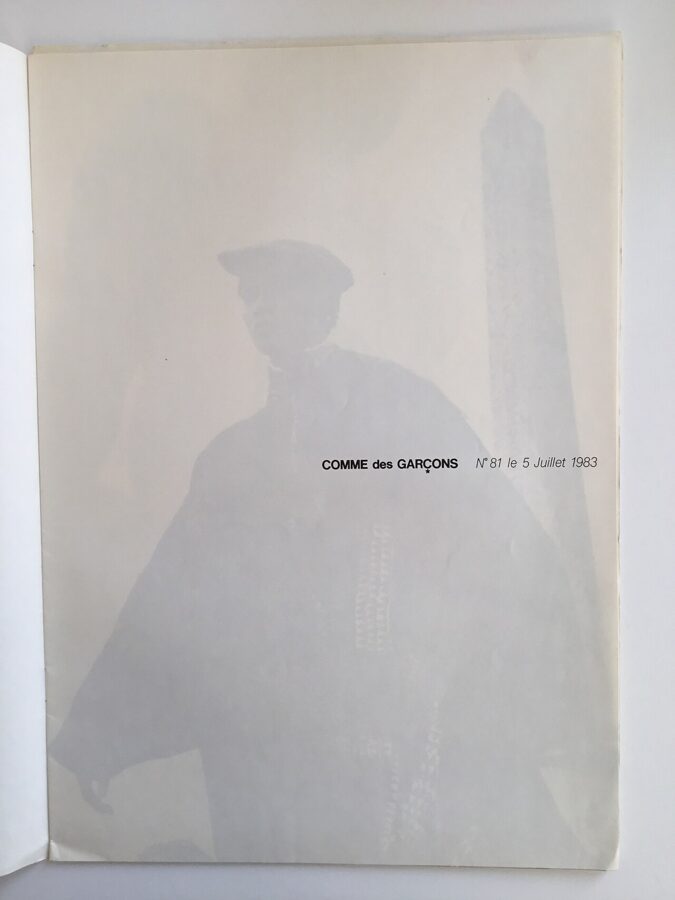
In 1981 Kawakubo took the label to Paris, the same year Yohji Yamamoto did, and set up a French company the following year with a shop in the city. The collections she showed in 1981 and 1982 were almost all black, cut flat and wrapped around the body rather than fitted to it, with uneven hems, raw edges and knitwear deliberately left full of holes. Around them, Paris was showing bright, fitted, shoulder-padded clothes for women with money.
Part of the press hated it. The clothes were called rags, “Hiroshima chic”, a bag lady look; one critic named the knit with holes the “Swiss cheese sweater”. Others wrote that it was a new kind of beauty for a new kind of working woman, and the argument went on for seasons. Japanese writers gave the moment its lasting name, kuro no shogeki (黒の衝撃), the black shock.
At home the black spread to the street. Young Tokyo shoppers dressed head to foot in Comme des Garçons and Yohji Yamamoto were nicknamed the karasu-zoku, the crow tribe.
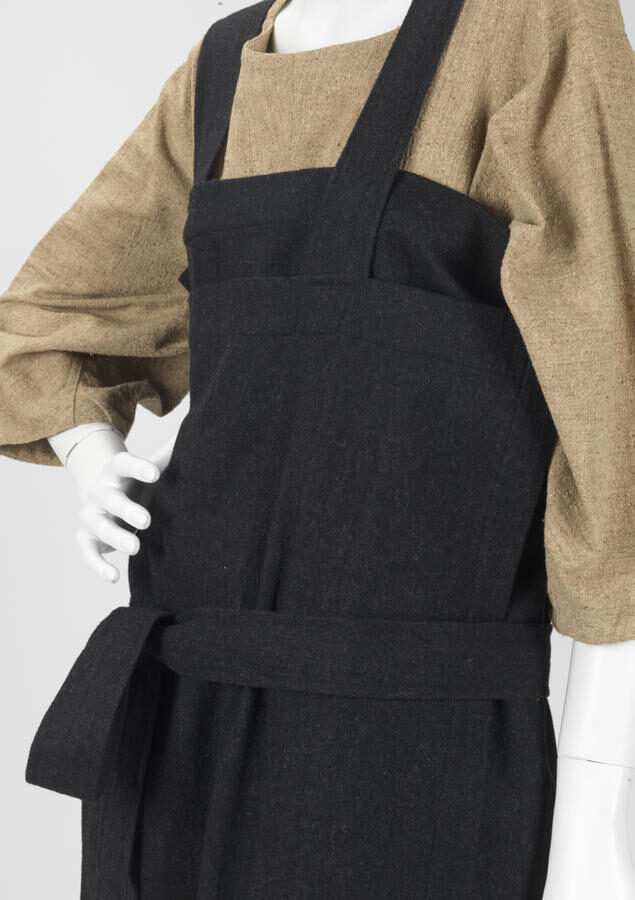
The cut is what to look at. Western dressmaking shapes cloth to the body with darts and seams. Kawakubo’s early pieces start from the flat cloth and let it hang, twist or bunch, and an edge is left raw because finishing it would make it look like every other coat. For Spring/Summer 1992 she put the seam allowances on the outside, so the garments looked as if they had stopped halfway through being made.
Body Meets Dress, Dress Meets Body
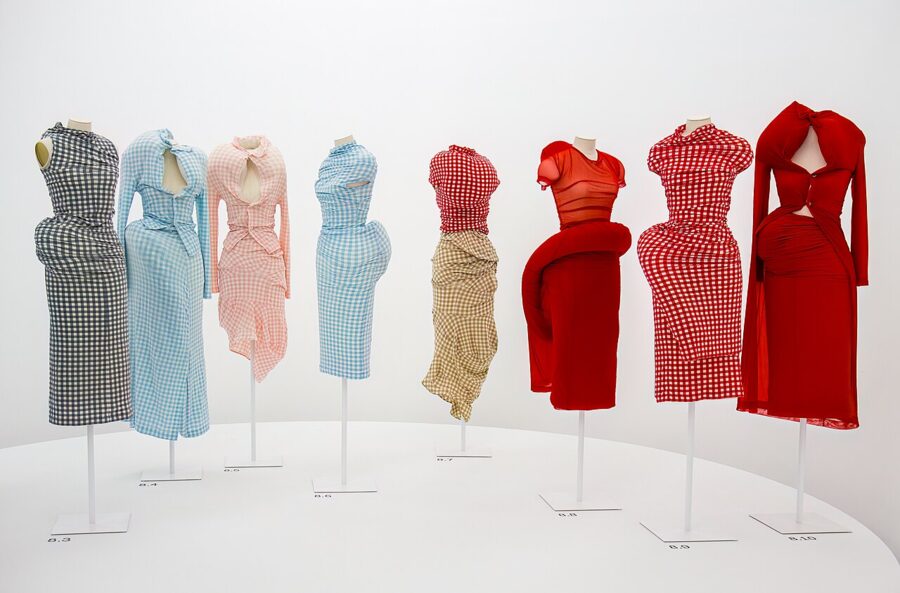
The collection that still starts arguments is Spring/Summer 1997, shown in Paris in October 1996. Kawakubo called it “Body Meets Dress, Dress Meets Body”. Everyone else calls it Lumps and Bumps. She took stretch dresses in pale pink and blue gingham and sewed pads, stuffed with down, into the hips, the back and the shoulders, so the body underneath seemed to swell in places where bodies do not.
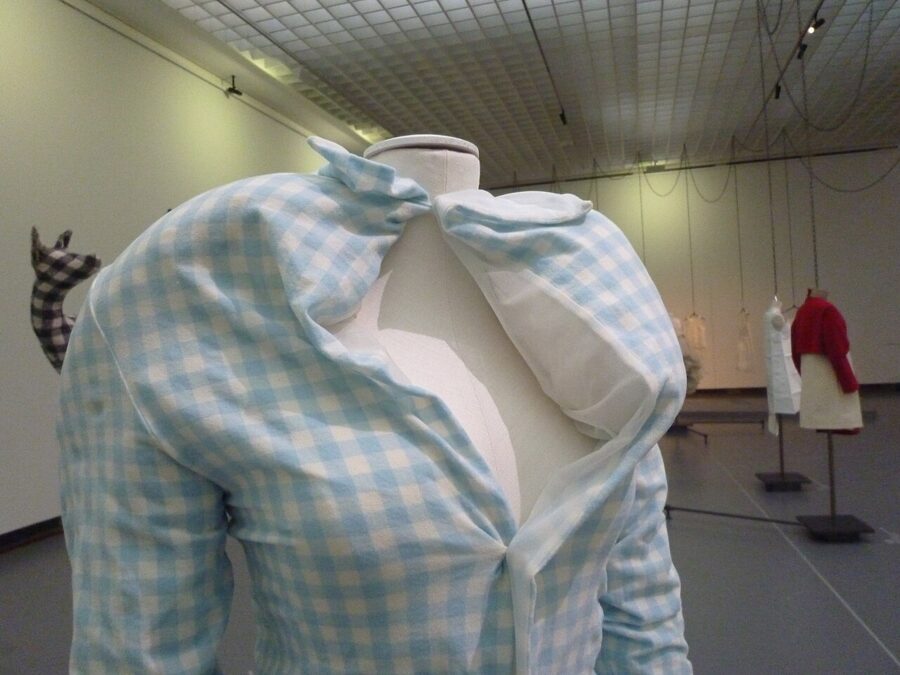

It asked who decides what a beautiful body looks like, using the plainest fabric she could find. Kawakubo later said that when she first showed the pieces to staff outside the design room, nobody said anything, and she felt alone. She then dressed Merce Cunningham’s 1997 dance Scenario in versions of the same padded clothes, which is how many people outside fashion first saw them.

The collections since
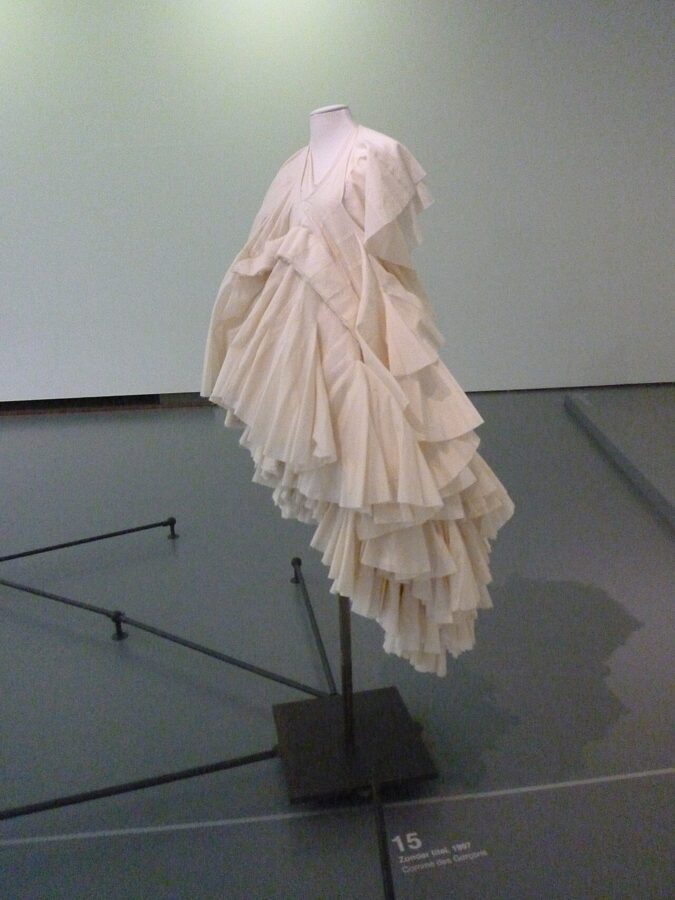
Kawakubo has never held a press conference to explain a show. She gives each collection a title, sometimes a line of show notes, and leaves the rest to the clothes. The titles read like a list of provocations: Transcending Gender in 1995, Beyond Taboo in 2001, with bras and corsets strapped over men’s tailored jackets, then Ballerina Motorbike, Adult Delinquent, 18th-Century Punk and, in 2014, Not Making Clothing, the season she set out to make things that were not clothes in the usual sense.
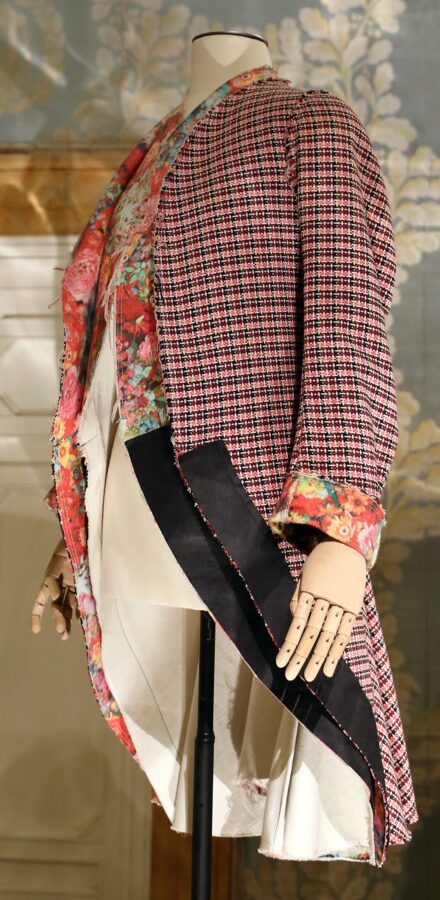

Since that 2014 turn the women’s shows have been sculpture as much as clothing: felt, foam and wadding built into shapes that stand away from the model. You cannot buy most of them as shown; the shop versions are simpler.
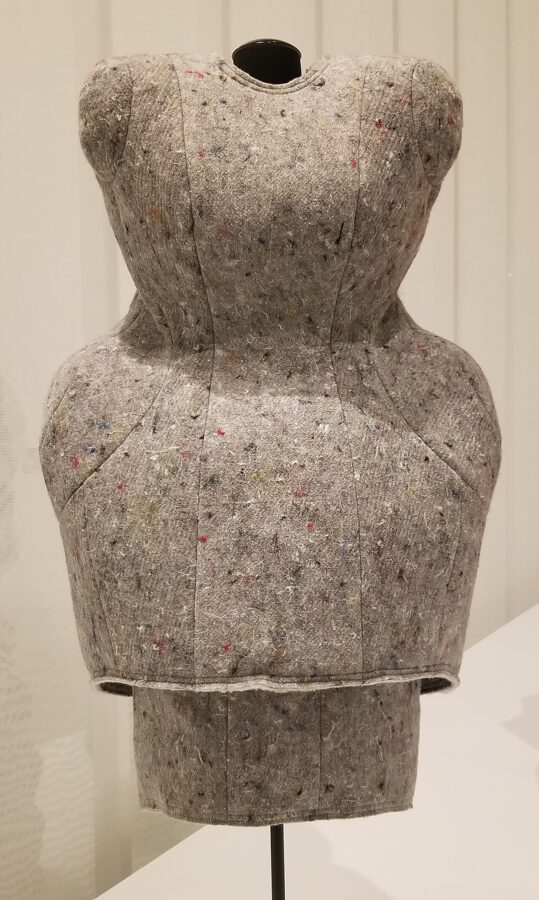

The recent seasons have been about war and about black. The Comme des Garçons Homme Plus show for Fall/Winter 2025 was called “TO HELL WITH WAR”. In June 2026 she titled the Spring/Summer 2027 men’s collection “If The War Were To End”, all pink, navy, stripes and bright primaries, and said in Paris that, put simply, she wants the wars to end soon. The women’s Fall/Winter 2026 collection was “Ultimately Black”, and its notes said it outright: “I have come to realize that, after all, black is the colour for me.”
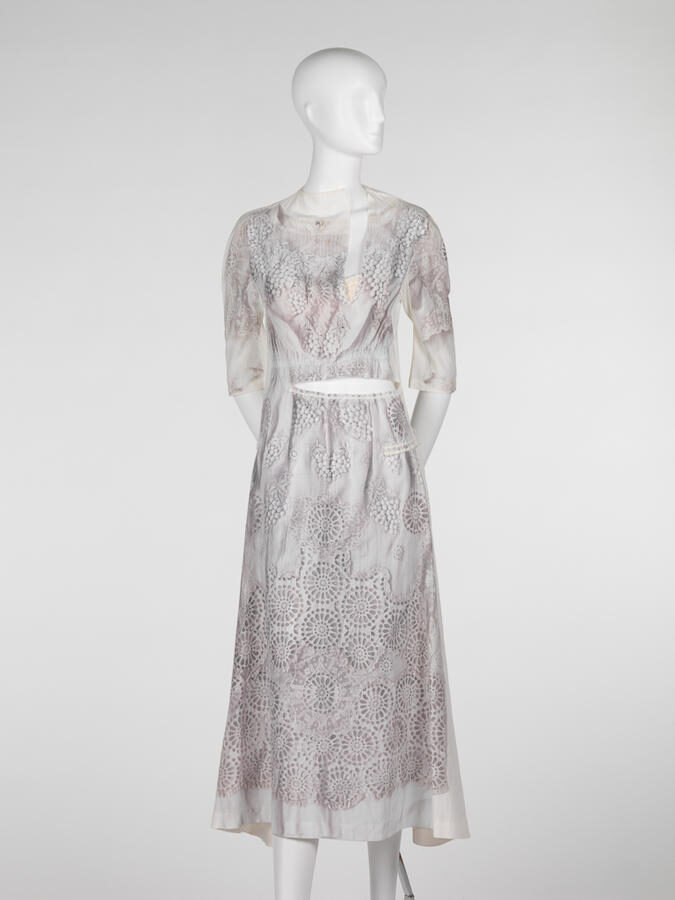
The newest show, Spring/Summer 2027, shown in Paris this autumn, had the theme “When royal life and everyday life become one”. It opened with denim, the most everyday cloth there is, swollen into round, doll-like dresses with red ruffles bursting through torn openings, and white crowns by the hat maker Nobuki Hizume. If you know Japanese denim as a craft of selvedge and slow looms, look at what Kawakubo does with it: she treats it as cloth with no prestige at all, which is exactly why she uses it.
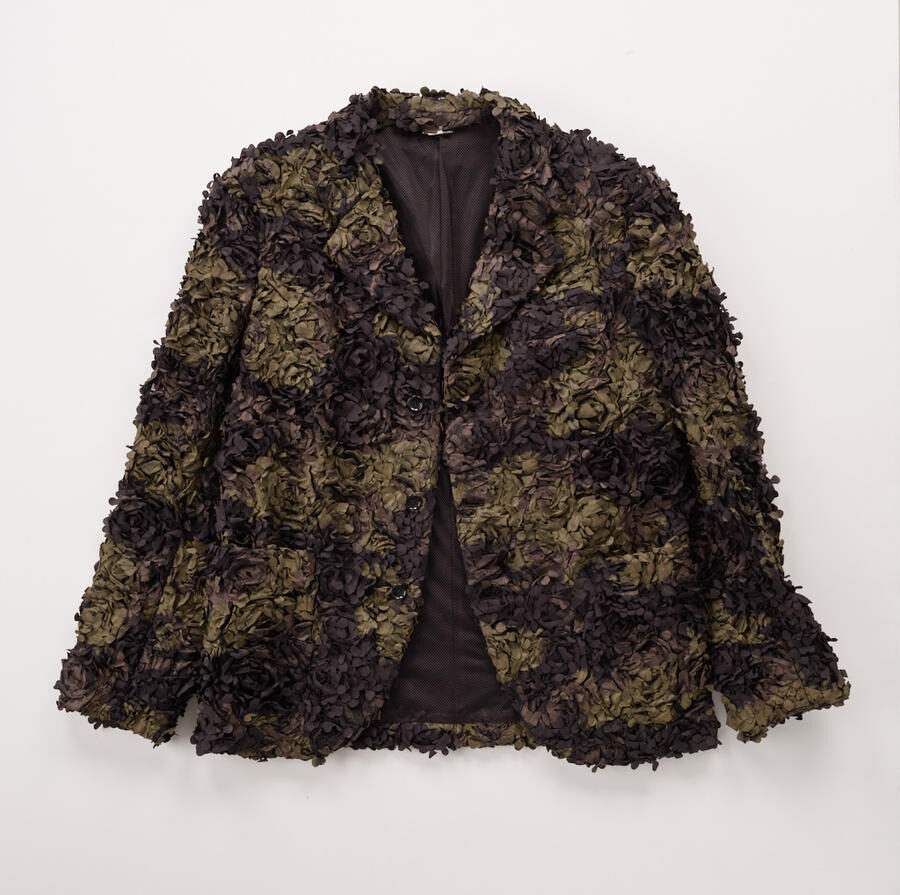
One company, about twenty labels
The runway shows work like research. What keeps the company independent is a family of lines at lower prices, most designed in-house in Aoyama and sold through its own shops. Kawakubo herself, in a 2019 interview, ran through them in the order they arrived: “Homme and Tricot. And then there was Comme des Garçons Shirt.”
Homme, Homme Plus and Shirt
Comme des Garçons Homme (1978) is the oldest and most wearable: workwear-based menswear, designed by Junya Watanabe with Kawakubo since 2002. Homme Plus (1984) is Kawakubo’s own men’s runway line, the one with the anti-war titles. Homme Deux (1987) does tailored suits. Comme des Garçons Shirt (1988), launched through the company’s Paris arm, takes an ordinary cotton shirt and changes one thing, a wrong collar, a panel of another fabric, a pattern cut across the grain.
If you want one piece that shows how the company thinks without paying runway prices, I would buy a Shirt line shirt before a PLAY T-shirt. The heart tells people what you bought. The shirt only tells people who look closely, which is more in the spirit of the thing.
PLAY and the heart
PLAY Comme des Garçons began in 2002 as a basic line: striped T-shirts, cardigans, polo shirts and plain tees, each with the red heart sewn on. Pagowski, a Polish-born illustrator who had drawn for The New York Times and for the company before, has said that he sketched the heart with eyes while working on another job for it, photocopied the drawing and sent it by FedEx because he did not own a computer. Nothing happened for three months; then Adrian Joffe, the company’s president, rang to say they were starting a new line called PLAY and wanted the heart as its logo.
Kawakubo tells it slightly differently. In 2019 she said she had wanted a mark that could stand for a brand the way the crocodile stands for Lacoste (“I want to make my own crocodile”), and that the heart arrived by chance on work Pagowski had sent for something else: “It was a signature. It was an accident.” Either way, nobody commissioned a logo, and the first drawing is the one on the shirts.
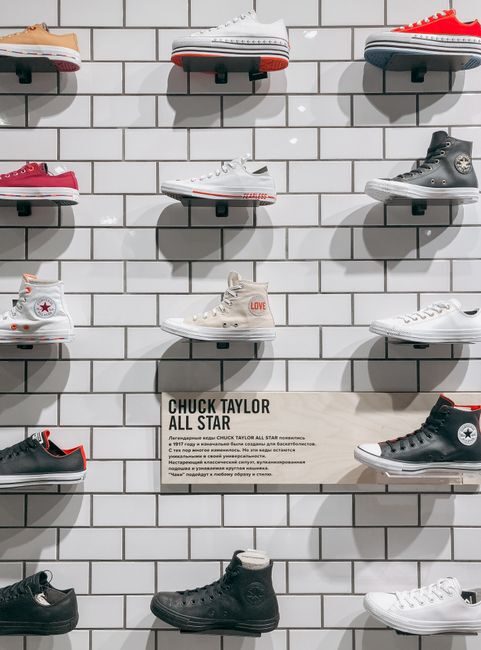
PLAY is the line most people know, stocked by department stores around the world, with Converse sneakers, cardigans and a growing run of outerwear. The November 2026 T-shirts, in khaki and blue camouflage hearts and red and navy dotted hearts, cost ¥11,220 to ¥21,450 (about $71 to $135) in sizes from XXXS to XXL. At the MARKET PLAY pop-up in Isetan Shinjuku’s men’s building this autumn, a “LIVE FREE” T-shirt was ¥12,100 (about $76), a hoodie ¥36,300 (about $228), and a Lewis Leathers riders jacket with the heart over ¥580,000 (about $3,650).
Junya Watanabe, Tao and Kei Ninomiya
The company’s other habit is growing designers from inside and giving them their own names. Junya Watanabe, born in Fukushima in 1961, joined straight out of Bunka Fashion College in 1984 as a patternmaker, designed the Tricot knit line from 1987, and got his own label, Junya Watanabe Comme des Garçons, in 1992, showing in Paris from 1993. He added menswear in 2001 and has been the company’s vice president since 2005.
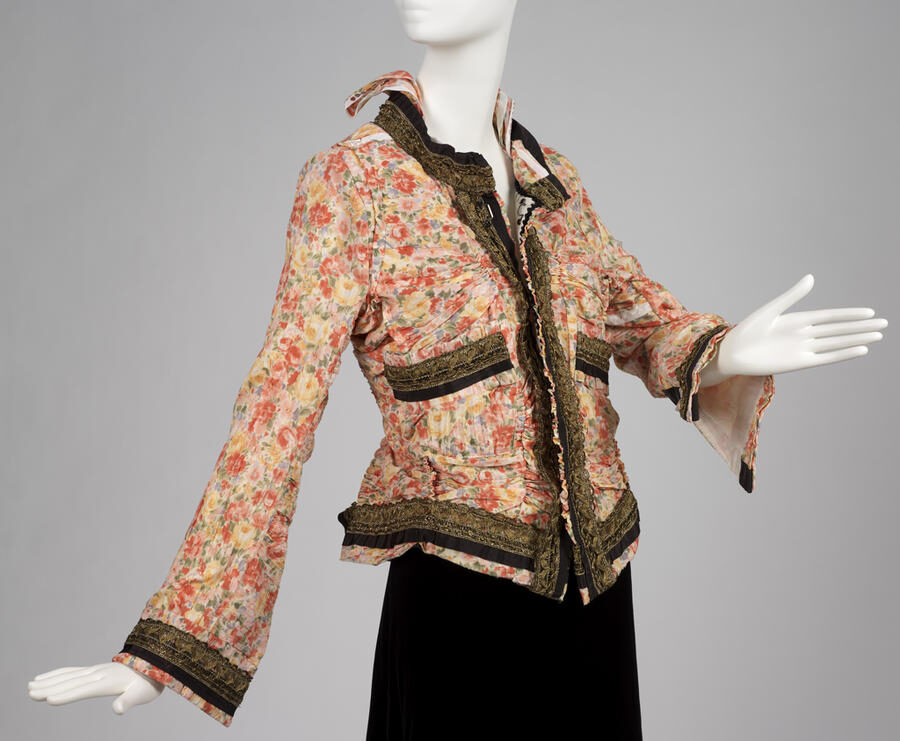
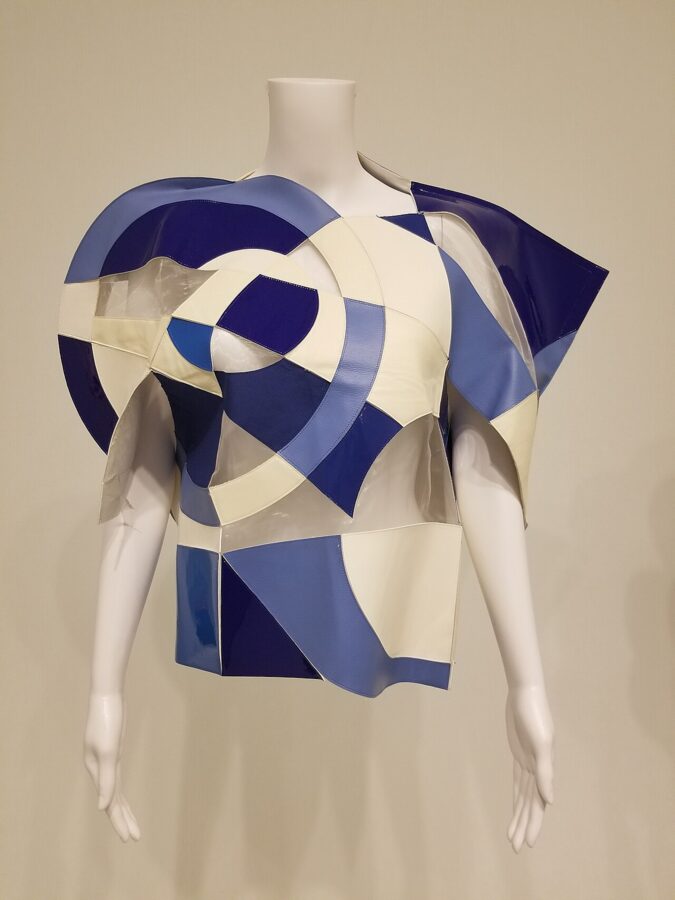

Tao Kurihara joined in 1998 from Central Saint Martins, took over Tricot in 2002, and ran her own Tao Comme des Garçons line from 2005 to 2011; since 2021 the old Tricot label has carried her name, as tao. Kei Ninomiya, the youngest of the in-house designers, started noir kei ninomiya in 2012, building black clothes from small cut pieces often joined with metal rings rather than seams. His Spring/Summer 2027 show in Paris was called “Petal Rebellion”: flower-covered armor, shown in the old Salle Wagram ballroom.
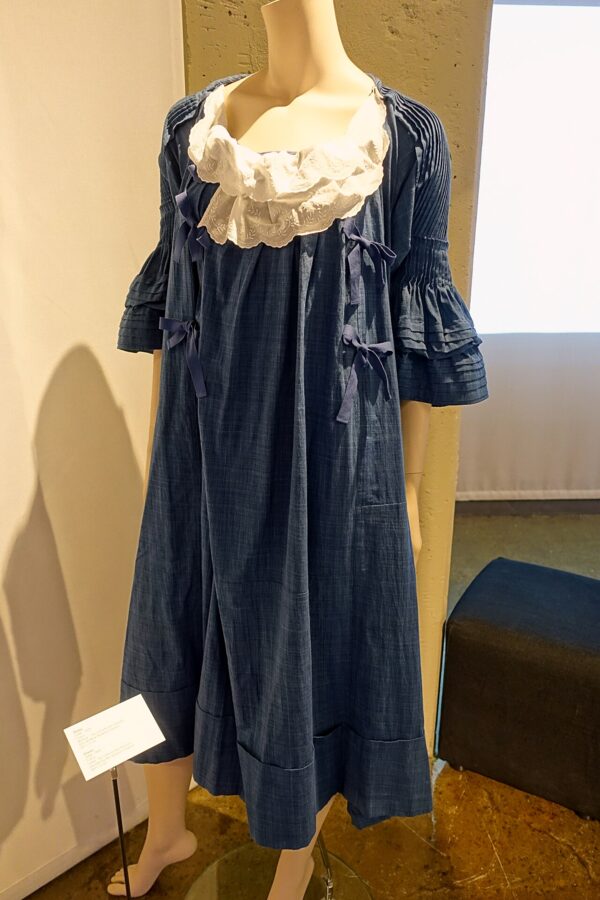

Around these sit the rest: Black Comme des Garçons, Comme des Garçons Comme des Garçons, Girl, the wallets, the logo line CDG, and Comme des Garçons Parfums, started in 1993, whose 1998 Odeur 53 was sold as an anti-perfume. You do not need to learn the list; the shop staff will tell you which rail is which.
Dover Street Market
In September 2004 Kawakubo and Joffe, her husband since 1992 and the chief executive of Comme des Garçons International, opened a shop at 17-18 Dover Street in Mayfair, London. It sold the whole Comme des Garçons family alongside other designers they admired, famous and unknown, on floors fitted out like an art installation and changed twice a year. Kawakubo called the idea beautiful chaos.
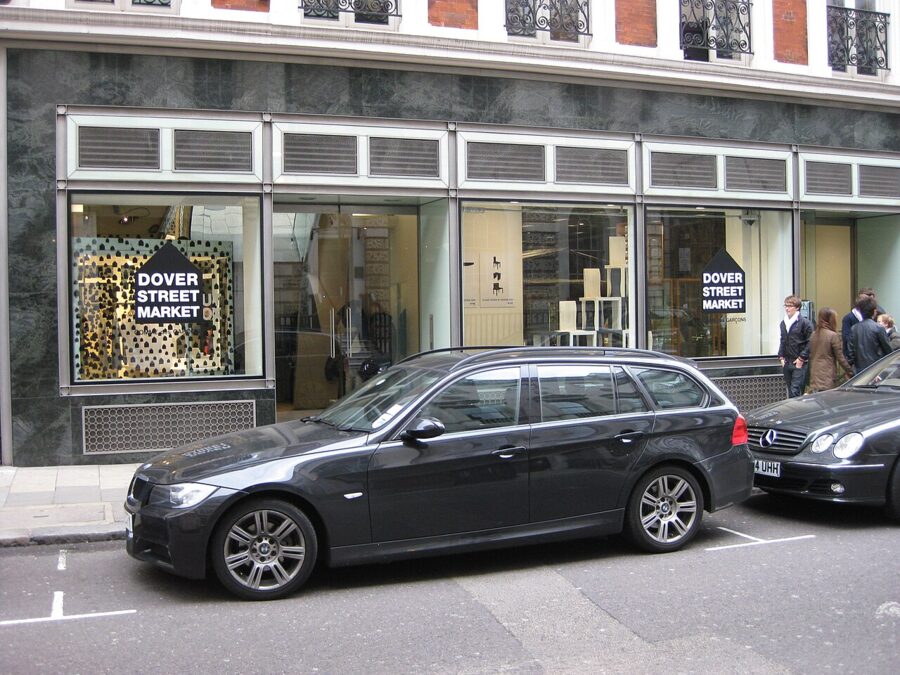

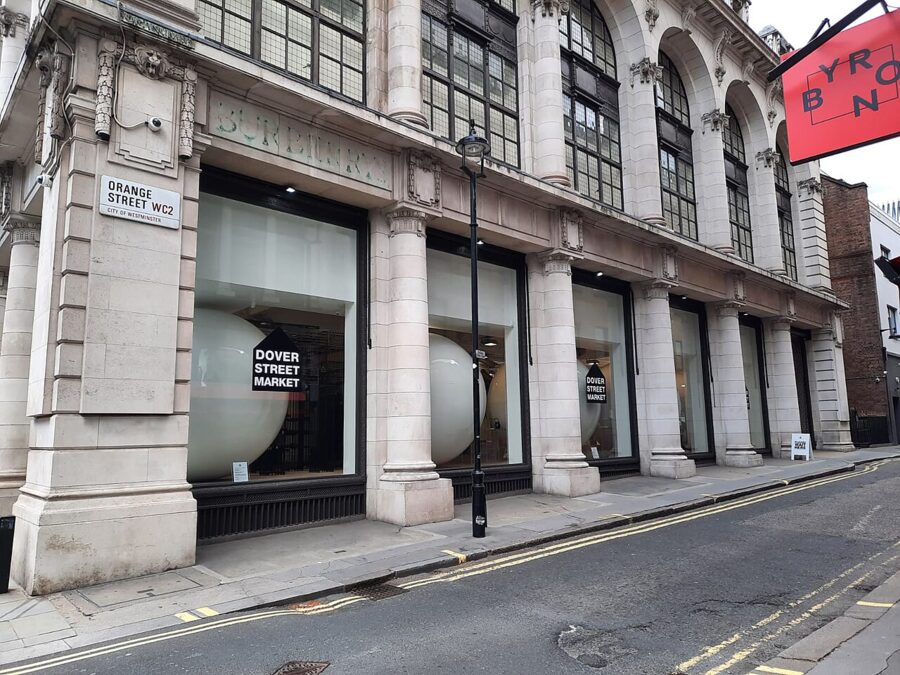
The model worked, and it traveled. There are now seven stores: London (in the former Burberry building on Haymarket since 2016), Ginza (2012), New York (2013), Singapore, Paris, Los Angeles and Beijing, plus a separate perfume shop in Paris. It is shrewd retail for a company built on refusing trends: Gucci, Nike, Supreme and The Row hang next to Comme des Garçons, and many of them make pieces only for it.

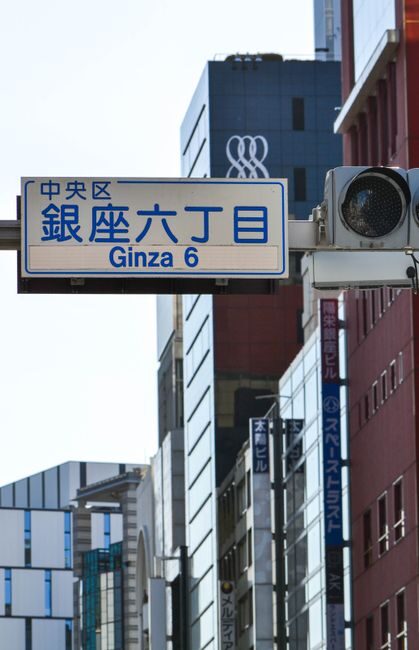
Dover Street Market Ginza is the one to visit if you only see one. It fills seven floors of the Ginza Komatsu West wing at 6-9-5 Ginza, with Comme des Garçons lines spread through the building and a branch of Rose Bakery inside. It is open every day from 11:00 to 20:00 (as of November 2026), and the nearest exit is A2 of Ginza Station on the Ginza, Marunouchi and Hibiya lines.

The same idea ran the Guerrilla Stores, which the company opened from 2004 to 2009 for one year each in empty buildings in Berlin, Barcelona, Singapore and elsewhere. One is back now in Fukuoka, in the Taiko Building at 2-16-14 Yakuin, from October 27 until mid-December 2026, with sixteen labels and archive pieces.
Collaborations
Comme des Garçons collaborates more than almost any house its size, and treats the partner as material, the way it treats denim. In 2008 it designed a full men’s and women’s collection for H&M. It worked with Speedo on its LZR Racer swimsuits in the Beijing Olympic year, made silk scarves with Hermès in 2013 under the name Comme des Carrés, and has a long-running Converse sneaker through PLAY.
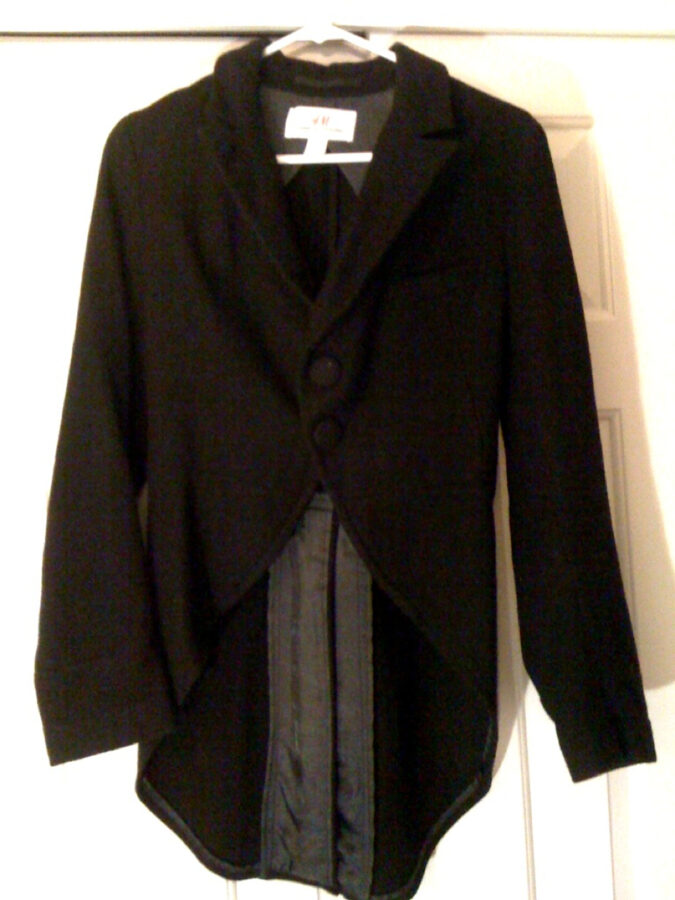

The pace has not slowed. This autumn brought a twelve-piece CDG and Stüssy collection, sold first at Shibuya Parco, a New Balance 1890A with Comme des Garçons Homme, and a Parfums scent with Denim Tears. Most collaborations sell out fast and reappear on resale sites at a markup. For a collaboration T-shirt, skip the resale and wait for the next one; there is always a next one.
The Met, 2017
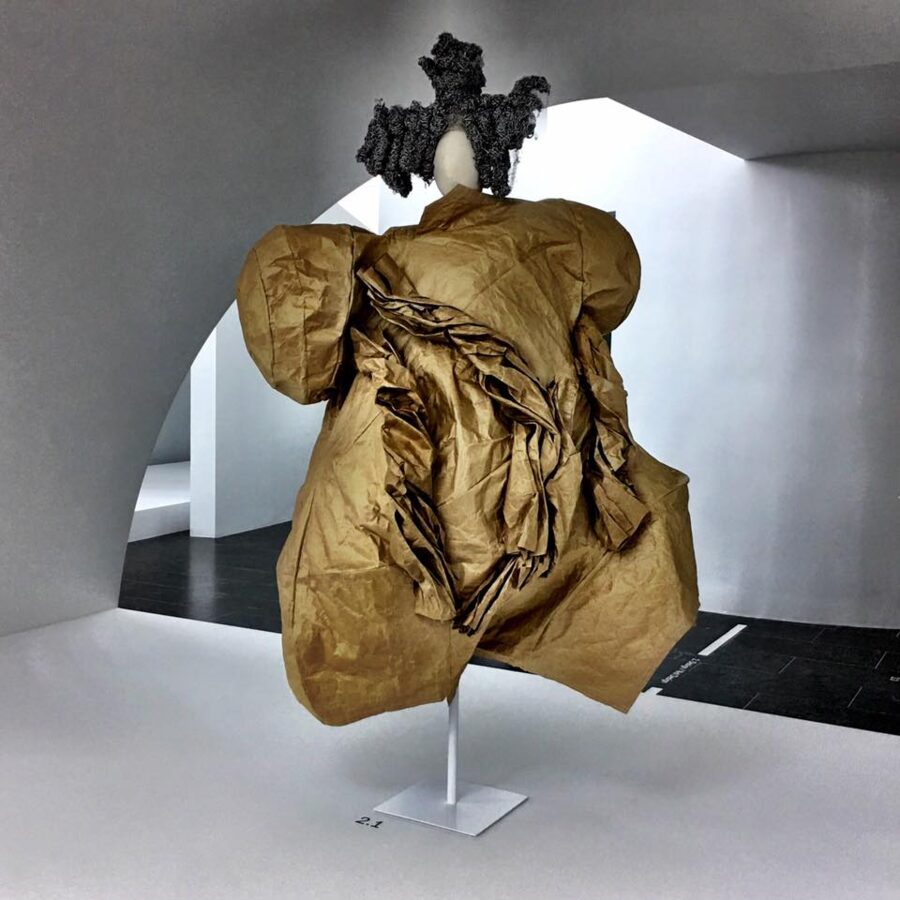
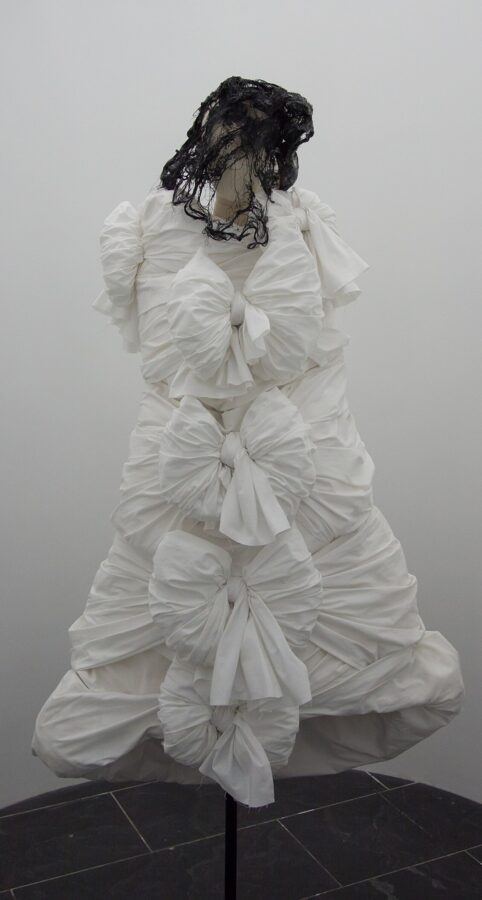
From May 4 to September 4, 2017, the Costume Institute at the Metropolitan Museum of Art in New York showed “Rei Kawakubo/Comme des Garçons: Art of the In-Between”, organized by the curator Andrew Bolton. It was the Costume Institute’s first show devoted to a living designer since Yves Saint Laurent in 1983. About 140 pieces of her womenswear, from the early 1980s to the latest collection, stood in a white, cell-like set that Kawakubo designed herself.

Bolton grouped the clothes under nine pairs of opposites that the work sits between, among them Absence/Presence, Fashion/Antifashion and Self/Other. Wall texts were kept to a minimum, which suited a designer who explains nothing.

Honors followed: the Isamu Noguchi Award in 2019, the first to go to someone from fashion, and Japan’s Person of Cultural Merit in 2023. Her shop in New York still sits behind the old sign of an auto body shop on West 22nd Street that the company never took down.


Who runs it, and why it costs what it does
Kawakubo is president of Comme des Garçons Co., Ltd., the company she founded in 1973. Joffe runs the international business and Dover Street Market. Watanabe is vice president. There is no outside group taking a cut or asking for a hit, which is why the shows can be as strange as they are.
The prices come from small runs, Japanese factories and a company that pays for its own experiments. Most of the lines are made in Japan (Shirt is largely made in France), and PLAY T-shirts carry a Made in Japan label.
Is it worth it? For the runway pieces, if you love them, yes; nobody else could have made them. For a heart T-shirt you are paying for good Japanese cotton jersey and a logo, and I would rather put that money toward a Shirt line piece.
Where to shop Comme des Garçons in Tokyo
Opening hours vary from shop to shop, so check before you make a special trip, especially around public holidays.
Comme des Garçons Aoyama
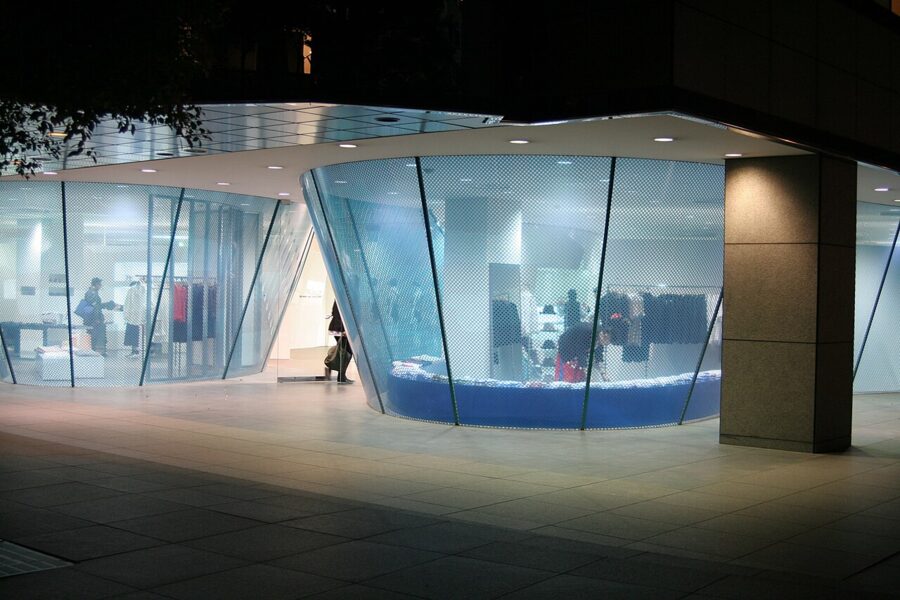
The flagship is at 5-2-1 Minami-Aoyama, a few minutes’ walk down Miyuki-dori from Omotesando Station (Ginza, Chiyoda and Hanzomon lines). It is the company’s flagship, and PLAY has released T-shirts sold only here.
GYRE, Omotesando
Up the hill on Omotesando, the GYRE building at 5-10-1 Jingumae holds three Comme des Garçons shops. Trading Museum Comme des Garçons and the CDG logo shop share the second floor, and the PLAY shop, PLAY BOX, is on the third. Trading Museum mixes Comme des Garçons pieces with other designers’ work and objects, and I find it the best place to see what the house is looking at this season. Between GYRE and the flagship, the side streets of Jingumae and Minami-Aoyama hold the small shops of independent Tokyo menswear, worth an hour if the big names wear you out.
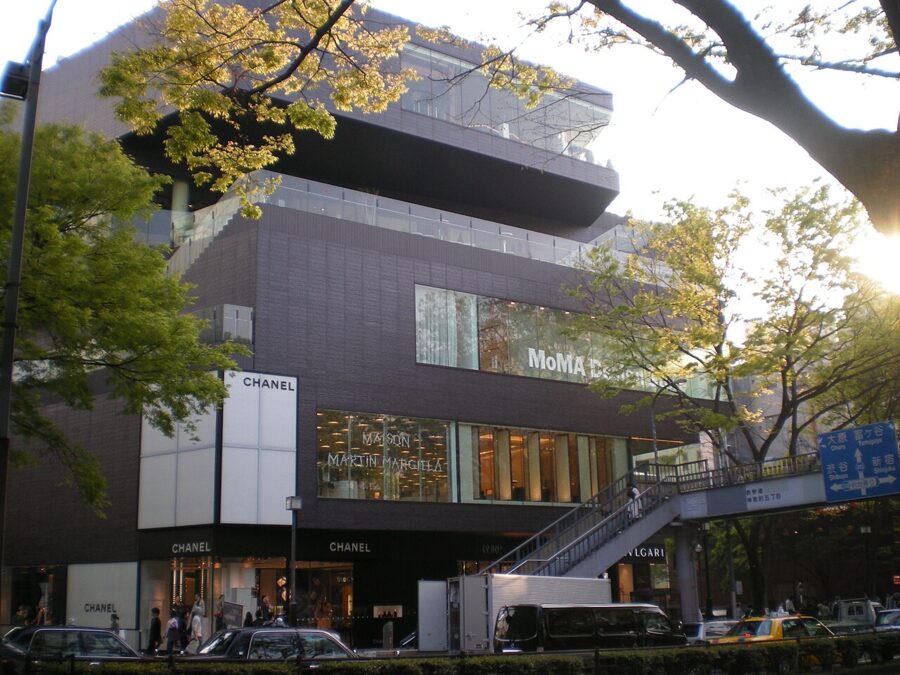

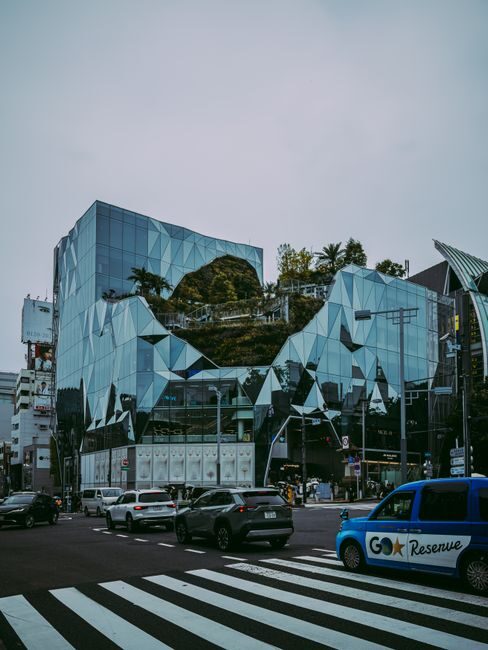
Ginza, Shibuya, Shinjuku and Akasaka
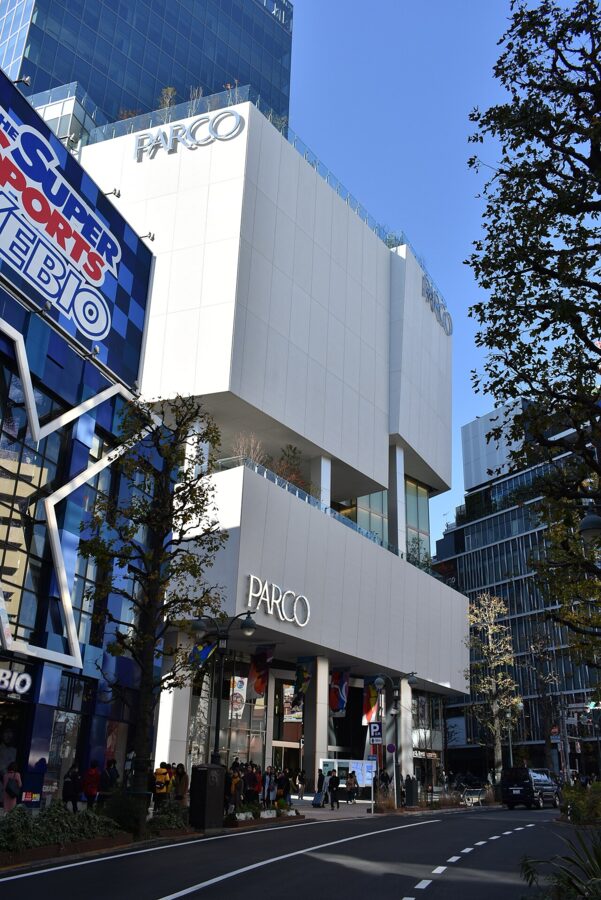
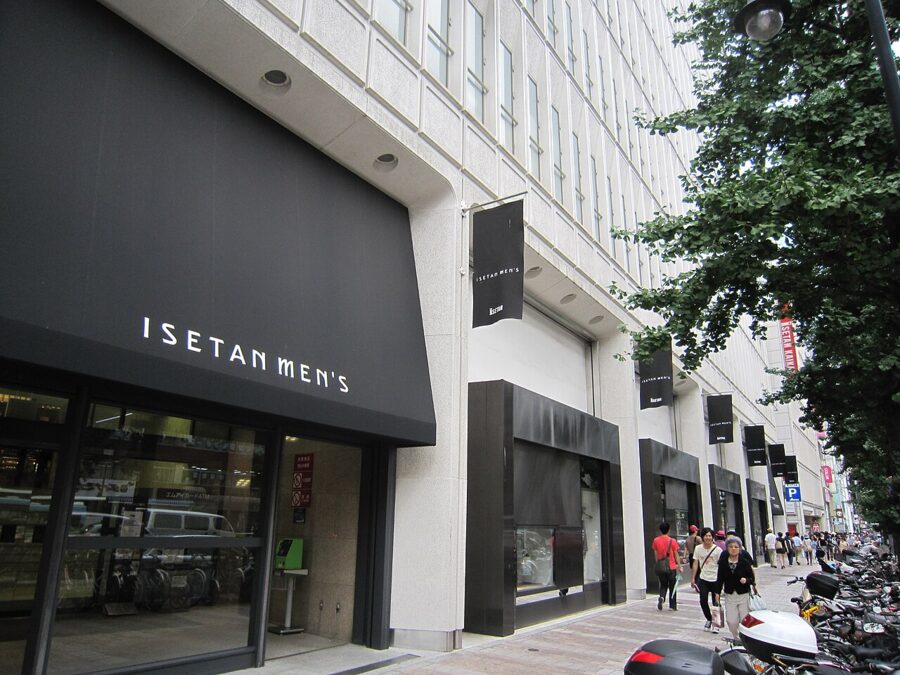
Dover Street Market Ginza (above) has the widest range under one roof. Shibuya Parco, at 15-1 Udagawacho, has Comme des Garçons Girl on the first floor and several Comme des Garçons and Junya Watanabe shops on the second and third. Isetan Shinjuku stocks the most labels of any department store: Comme des Garçons, Black, Junya Watanabe, noir kei ninomiya and tao on the third floor of the main building, and more in the men’s building next door.


In Akasaka, a second Trading Museum sits on the first floor of Tokyo Midtown, at 9-7-4 Akasaka. There are also Comme des Garçons shops at 2-1-1 Marunouchi near Tokyo Station, in Ginza Mitsukoshi and in Seibu Ikebukuro.

Second-hand and archive
Tokyo is the best city to buy used Comme des Garçons, because so much of it was sold there first and Japanese owners look after their clothes. The big used-designer chains in Harajuku and Shibuya grade condition carefully, and PLAY and Shirt pieces turn up there all the time. For older runway pieces, LAILA PARIS, which opened this autumn at 5-18-4 Minami-Aoyama, sells archive Comme des Garçons alongside Yohji Yamamoto and Issey Miyake, open 12:00 to 19:30 (as of September 2026).
Archive prices have climbed. In September 2026 the London auction house Kerry Taylor Auctions sold 265 lots of Comme des Garçons from a single collector’s archive, from 1970s pieces through the 1982 Holes collection and the 1997 lumps. If you see an early piece in a Tokyo shop at a fair price, it will not be cheaper next year.
Telling real PLAY from fakes
PLAY is the line counterfeiters go for, because the heart is simple and the shirts sell on the logo alone. Fakes are good now, so check several things, not one.
- The heart’s shape. The top of a real heart is two rounded lobes, never a sharp V, and the outline is slightly irregular because it comes from a hand drawing. Counterfeits are often too neat, too pointed or too curved.
- The eyes. On the T-shirts and knits the heart is sewn or embroidered on, and the black pupils are stitched, not printed. The pupils are not perfect circles. On PLAY Converse, the pupils touch the heart’s outline at top and bottom.
- The color. Compare the red (or gold, or pink) against a shirt in a shop. Fake reds tend to run too bright or too dark, and fake gold hearts look yellow and shiny.
- The labels. The neck label should be matte, not glossy. The care labels in the side seam say Made in Japan and carry a style code; PLAY T-shirt codes start with P1T.
- The inside. Turn the shirt inside out. The back of the heart patch should be cleanly finished, without thick, messy stitching.
- The sneakers. PLAY Converse come in whole sizes only. A pair in a half size is not real.
The surest test is price and place. The company’s own shops and the department stores above sell it new, and this month’s new heart T-shirts start at ¥11,220 there. A new one offered far below that deserves questions.
So in the Aoyama shop, pick up a PLAY shirt and turn it inside out. The heart was drawn once, by hand, and someone in Japan sewed it on; you can see both in the stitches.