
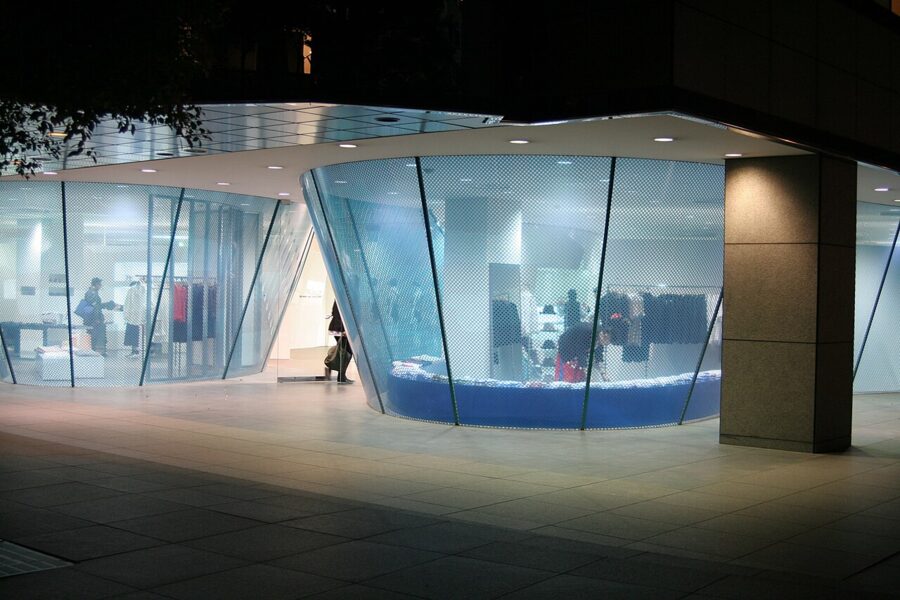
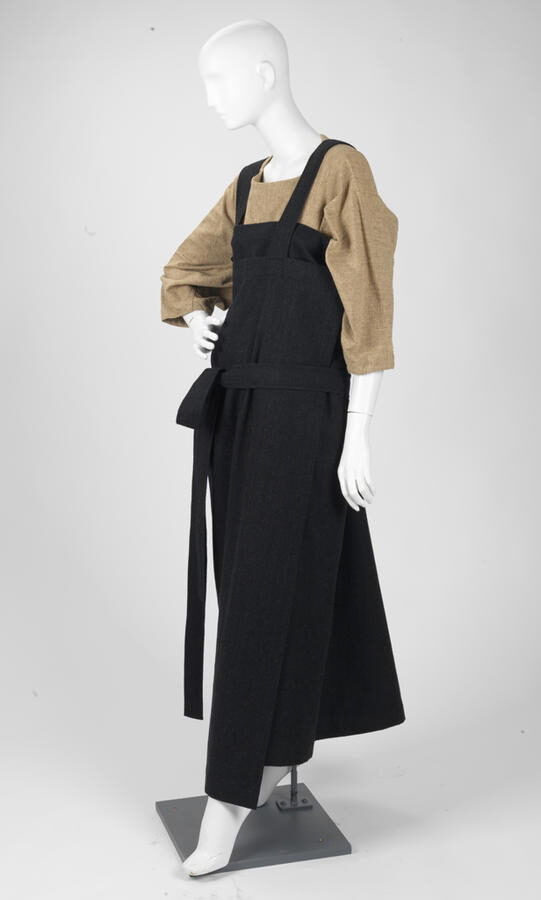
The black jumper Rei Kawakubo sent out in 1982 was knitted with holes in it on purpose, scattered at random across the body, and the V&A in London keeps one in its collection. It sits with a padded, washed-out gray skirt and a pair of flat black boots. Forty-four years later the company that made it still has a glass shop front on a side street in Minami-Aoyama, and you can walk in and buy a shirt.
That jumper is a good place to start with Japanese clothing brands, because almost everything since has been an argument with it or an answer to it. The 1980s designers made black, holes and loose cutting respectable in Paris. Ten years later a few students from the same fashion school opened a tiny shop in the back streets of Harajuku and built streetwear out of T-shirts, magazines and queues. After them came labels like Kapital, Visvim, Sacai and Needles that care most about cloth, dye and how a garment is put together, and under all of it sit Uniqlo, Muji and Beams, which dress most of the country.
The Tokyo shops for all four layers sit in a tight loop of neighborhoods: Aoyama, Harajuku, Daikanyama and Shibuya, with addresses and opening hours at the end, as of November 2026.

In this article
Paris, 1981
Japanese designers were not new to Paris in 1981. Kenzo Takada had been selling his own label there since the start of the 1970s, Hanae Mori showed couture there from the late 1970s, and Issey Miyake was a regular on the Paris calendar. What changed in 1981 was the mood.
That year Comme des Garçons and Yohji Yamamoto both made their Paris debuts. Kawakubo had been making clothes under the Comme des Garçons name in Tokyo since 1969 and set up the company in 1973. Yamamoto, who studied law at Keio University before going to Bunka Fashion College, launched his label in 1972 and first showed in Tokyo in 1977. Both were already successful at home.
In Paris they were a provocation. Comme des Garçons’ first show there caused a storm of controversy for its near-total black and its distressed surfaces. The clothes were cut loose, asymmetric and wrapped around the body rather than fitted to it, with tears and raw edges left in. Around them, the season’s clothes were bright and fitted, so the contrast was the story.
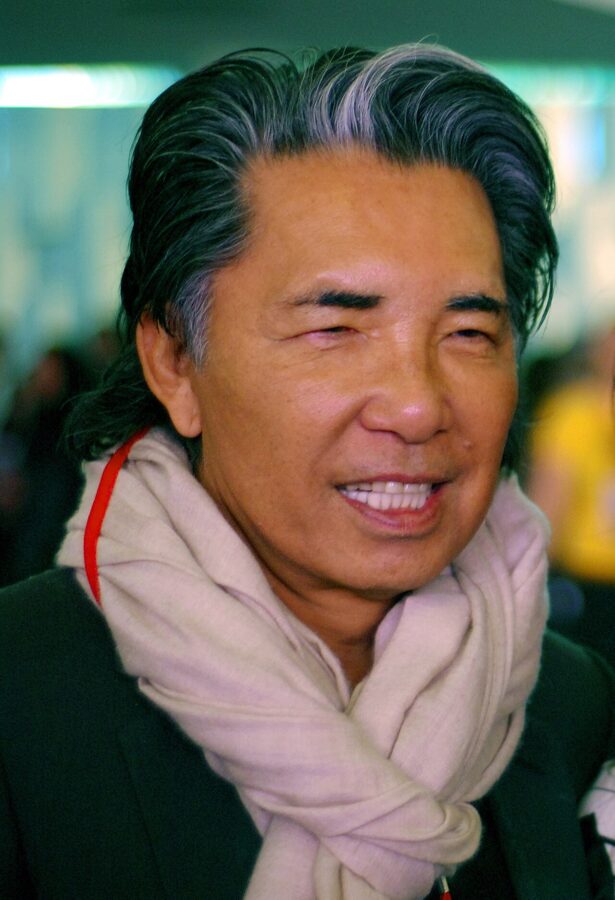

Comme des Garçons
The name is French for “like boys”, and the company is independent, with Kawakubo at its head. That matters more than it sounds: there is no group above her asking for a hit, which is part of why the shows can be as odd as they are. The 1997 collection everyone calls “Lumps and Bumps” put stuffed pads under gingham dresses so that the body’s outline bulged in the wrong places.
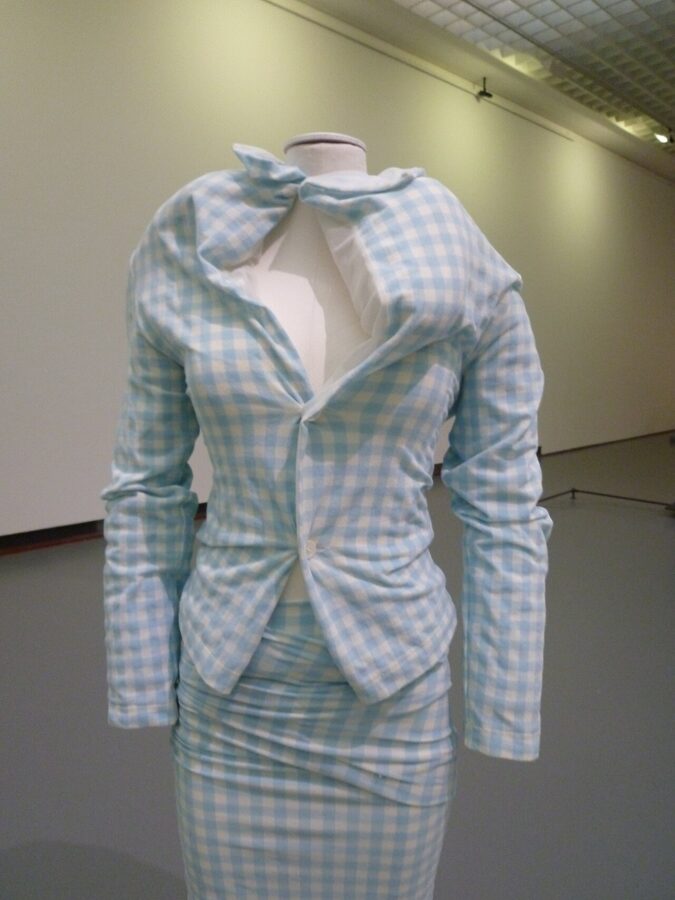

The Metropolitan Museum’s Costume Institute gave her a whole show in 2017, Art of the In-Between, with about 140 pieces of her womenswear from the early 1980s on. Under the same company roof sit other designers’ lines, including Junya Watanabe and Noir Kei Ninomiya, plus a long list of diffusion labels: Comme des Garçons Shirt, Play with its heart logo, Homme, and the CDG line. If you want one thing that shows the label’s thinking without the runway price, I’d look at the Shirt line, where ordinary cotton shirts get one wrong collar or a panel of the wrong fabric.
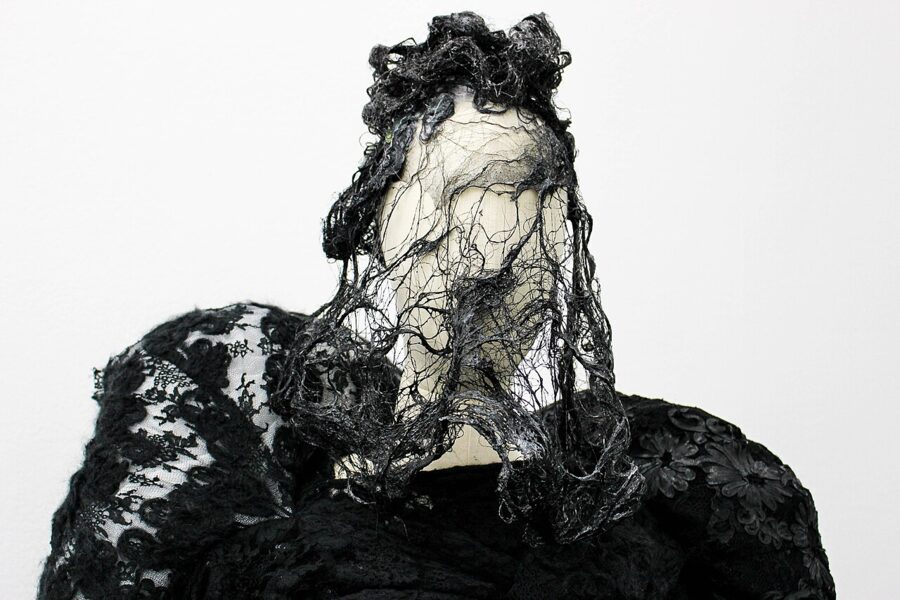

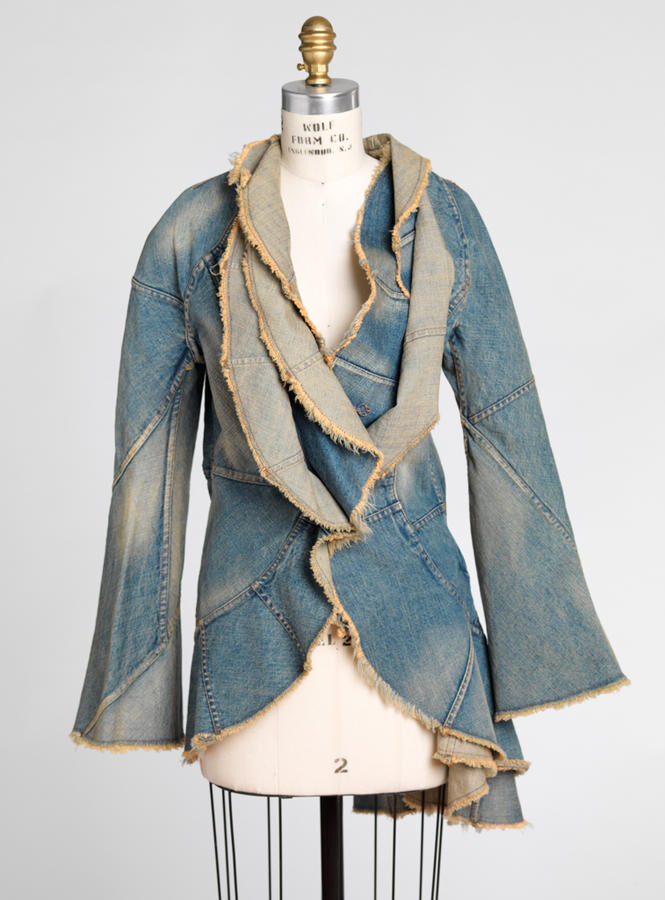
Yohji Yamamoto
Yamamoto cut differently from Kawakubo: long, heavy, mostly black, and built around the space between the cloth and the body rather than around the waist. His tailoring borrows from men’s suits and workwear, and the women’s clothes often wear like men’s coats. The V&A has a 1995 coat of his cut in five curved layers at the back, a reworking of a design from 1986.
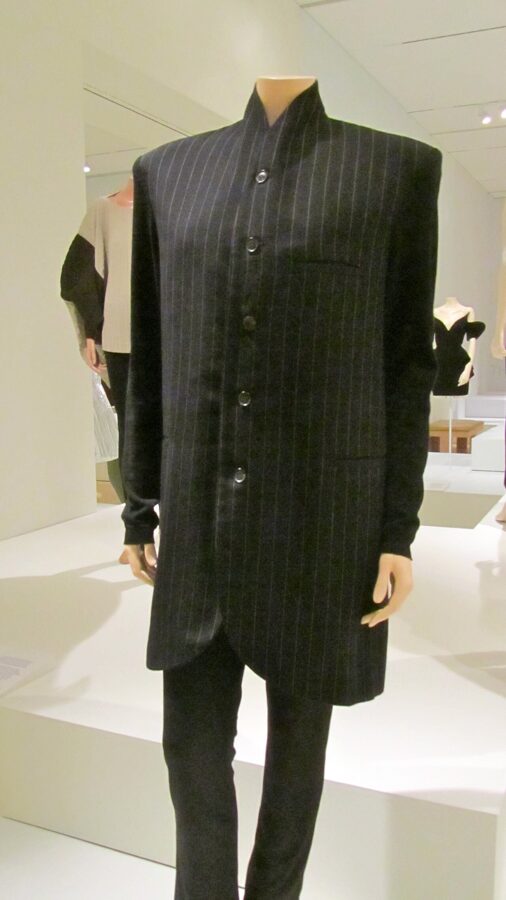

The company now runs a cluster of lines: Yohji Yamamoto and Pour Homme for the runway, Y’s, Ground Y, S’yte, and the Y-3 line made with adidas. In Tokyo the main store is the Yohji Yamamoto Aoyama flagship at 5-3-6 Minami-Aoyama, open 11:00 to 20:00 and closed only on New Year’s Day, as of November 2026.


Issey Miyake
Miyake first showed in New York in 1971 and built his work on an idea he called “a piece of cloth” (一枚の布, ichimai no nuno): the garment starts from a single length of fabric and the space it leaves around the body. His studio developed its own fabrics from the yarn up, which is why the clothes feel unlike anyone else’s.
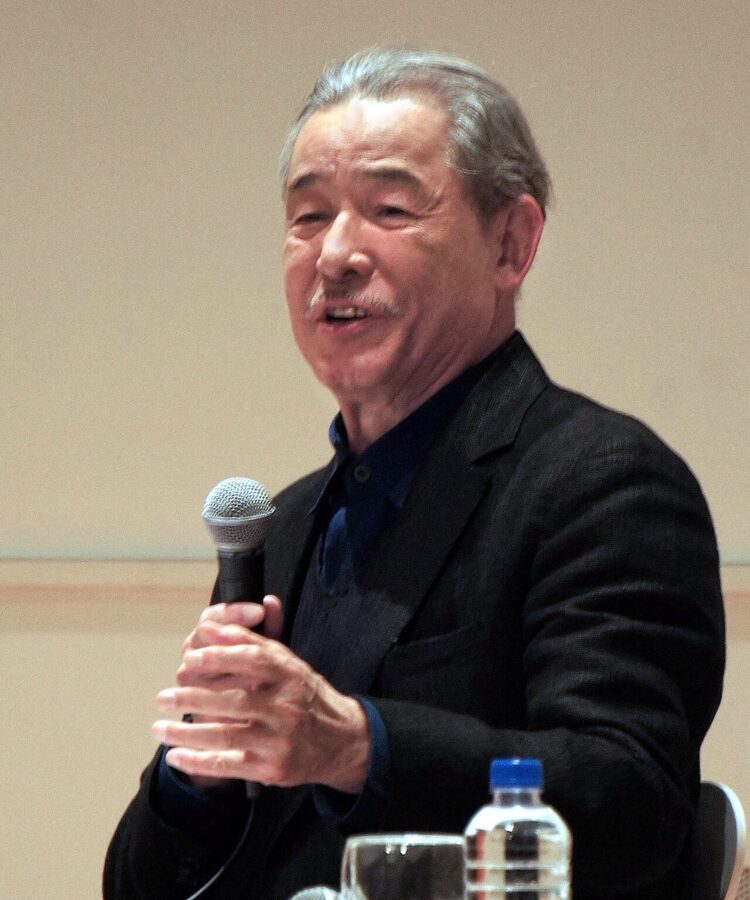

The pleats are the process worth understanding. Normally you pleat the fabric first and then cut and sew it. Miyake’s studio reversed that: the garment is cut and sewn oversized, then pressed and heat-set into pleats as a finished piece, which the company calls garment pleating (製品プリーツ, seihin purītsu). He showed the technique in his 1988 women’s collection, and it became its own line, Pleats Please Issey Miyake, from spring/summer 1994.
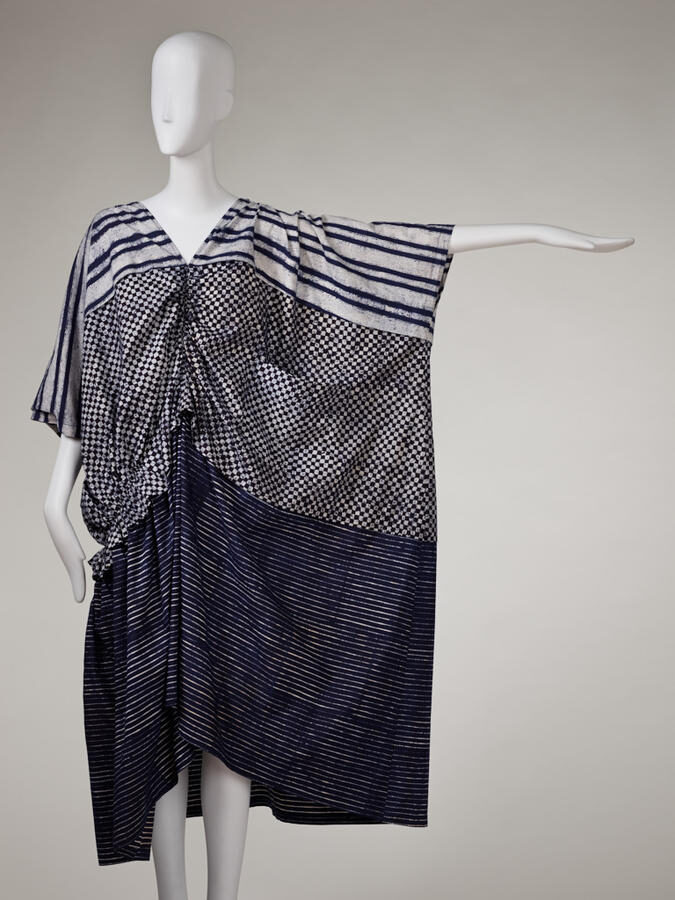
Because the pleats are set by heat into polyester, they survive the washing machine and pack flat in a suitcase. As of November 2026 the Pleats Please basics sell for ¥24,200 to ¥33,000 (about $150 to $210), and the men’s Homme Plissé line, started in 2013, runs from about ¥29,700 (about $190) upward. A-POC, the 1998 project that cut whole garments from a single knitted tube, now continues as A-POC Able Issey Miyake under an engineering team led by Yoshiyuki Miyamae.
Ura-Harajuku: two students and a shop with no sign
The second wave came from Bunka Fashion College, the same school Yamamoto went to. Jun Takahashi, born in 1969, and Tomoaki Nagao, born in 1970 and better known as Nigo, met there in 1989; Takahashi was in apparel design and Nigo in the editing course. In 1992 they took over a culture column in the magazine Takarajima from Tiny Punx, the duo of the DJ Hiroshi Fujiwara and Kan Takagi, and used it to tell readers which sneakers, records and films mattered.
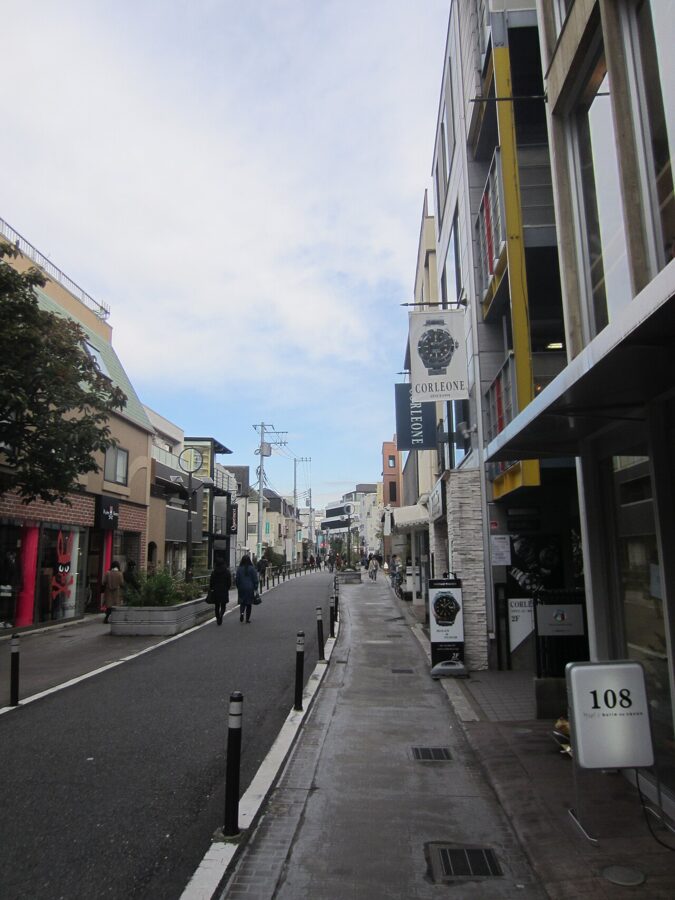

In April 1993 the two opened a shop called Nowhere on a back lane known as Propeller Street, one block in from the crowds on Takeshita Street and Omotesando. Fujiwara later put the boom down to rent: after the bubble burst, the side streets of Jingumae were cheap enough for people in their twenties to lease a room. Half of Nowhere sold Undercover, the label Takahashi had started in 1990; the other half sold things Nigo had bought abroad. The area got a name, Ura-Harajuku (裏原宿), “back Harajuku”.
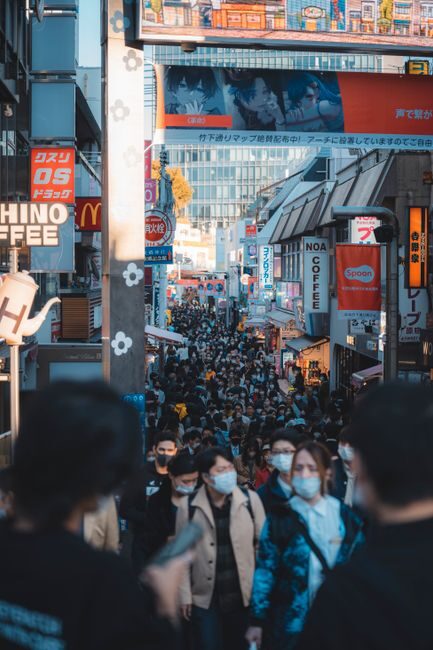
That November Nigo started A Bathing Ape with the graphic artist Sk8thing, who was also designing for Goodenough, the label Fujiwara had started in 1990. BAPE went from tiny T-shirt runs to a sale to a Hong Kong retailer in 2011, and scarcity was the business model all the way. By the mid-1990s a new release from Goodenough, Undercover or BAPE meant an overnight queue, and resale prices ran to more than ten times retail.
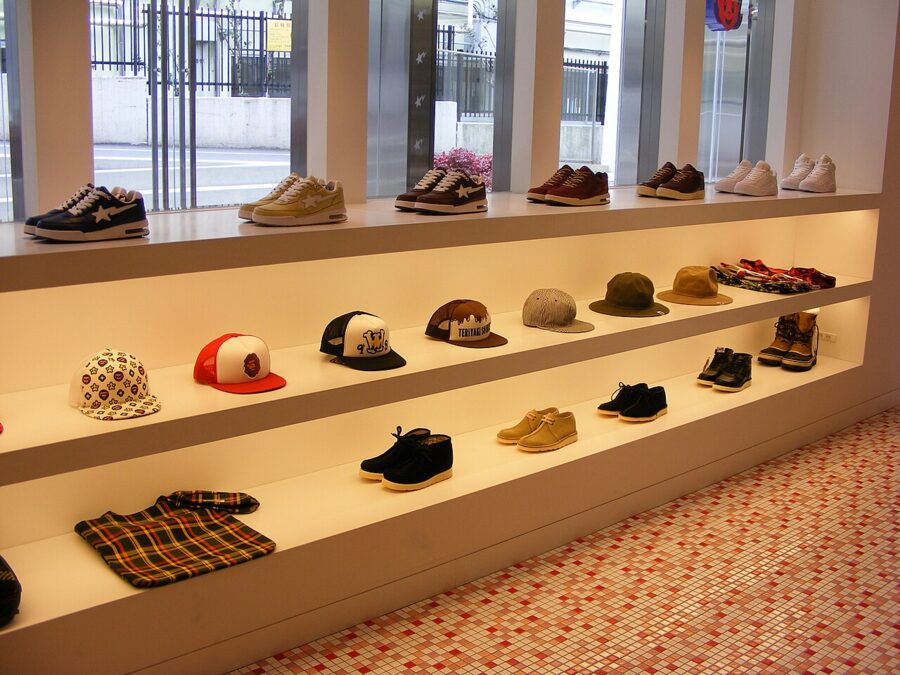

Fujiwara was the hinge of all this. He rarely ran a big label himself; his Fragment design mark turned up on other companies’ products, from Nike sneakers to Louis Vuitton, and a nod from him could sell out a release. Other labels grew from the same few blocks, including Neighborhood and WTAPS, both built on military and motorcycle references and both still trading.

Where the two of them went
From the 2000s the two founders went separate ways. Undercover showed in Tokyo from 1994 and moved to Paris with its spring/summer 2003 collection; Takahashi now makes clothes that end up in museums, and the Met used one of his spring/summer 2024 dresses as the lead image for its 2024 Costume Institute show. Nigo left BAPE in 2013, two years after its sale, and put his energy into Human Made, a label he had started in 2010, then became artistic director of Kenzo in 2021.

The story has come round in a loop this year. Human Made listed on the Tokyo Stock Exchange’s Growth market in December 2025, and in June 2026 it resolved to sign an agreement to buy all of Undercover’s shares, with the transfer planned for February 2027. Thirty-three years after Nowhere, Nigo’s company is set to own Takahashi’s.
Ura-Harajuku also left a quieter habit: buying used clothes and cutting them up. Labels like Nincompoop Capacity, which started in Koenji in 2007 and now sells from a third-floor room in Jingumae, take secondhand garments apart and sew them into new ones.

The craft labels: cloth, dye and the factory
The labels that came up in the 2000s and 2010s mostly turned away from logos. Their pitch is the cloth: where it was woven, how it was dyed, who sewed it and on what machine. This is where I’d spend serious money, because the price buys you work you can see.
Kapital
Kapital is a Kojima company, from the denim town on the Inland Sea in Okayama, and its company record dates the firm to March 1985. It is run by Kazuhiro Hirata and, unusually for a label this well known, still owns its production: four sewing factories (the head office plant, Mitsu, Yamashiro and Yanagida) and its own dye works. The same town weaves and sews the jeans of Momotaro and much of the selvedge that made Japanese denim famous.
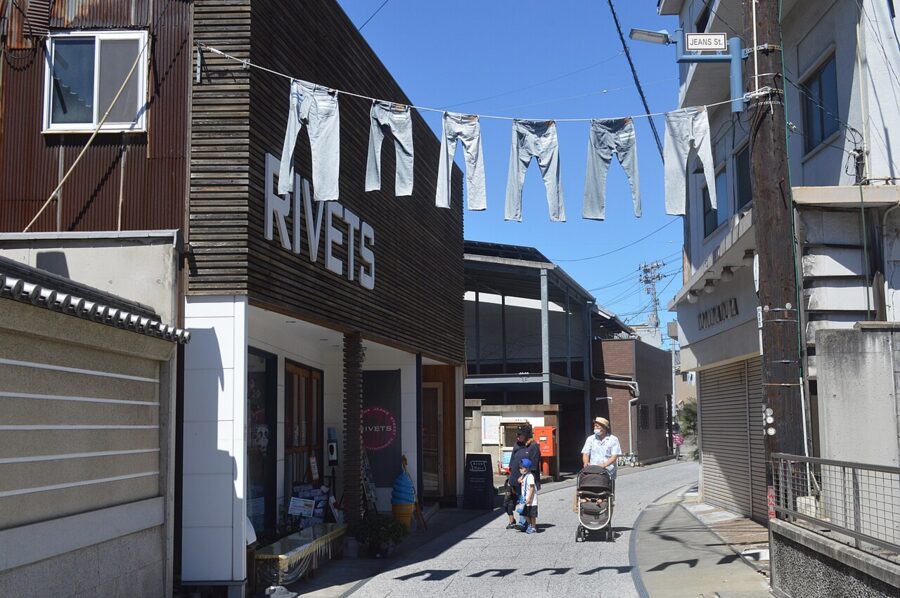

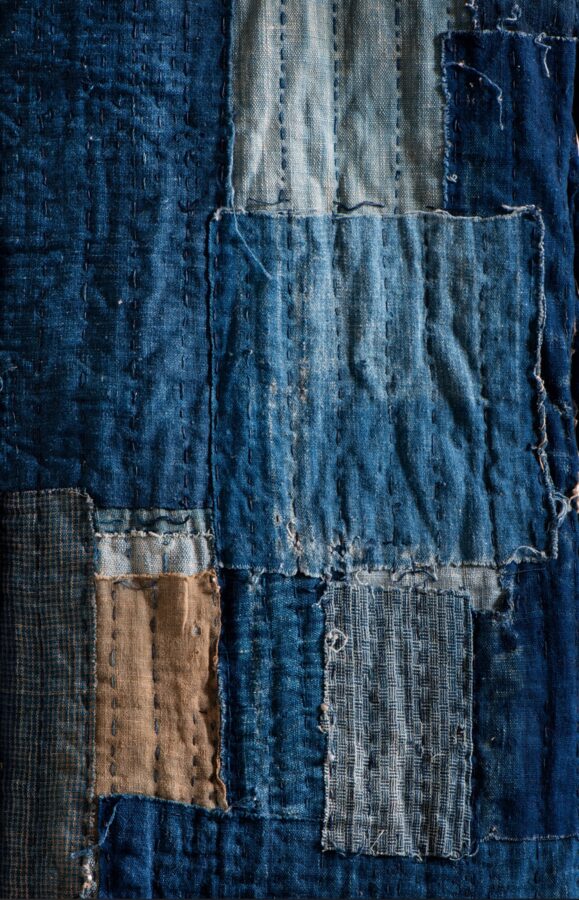
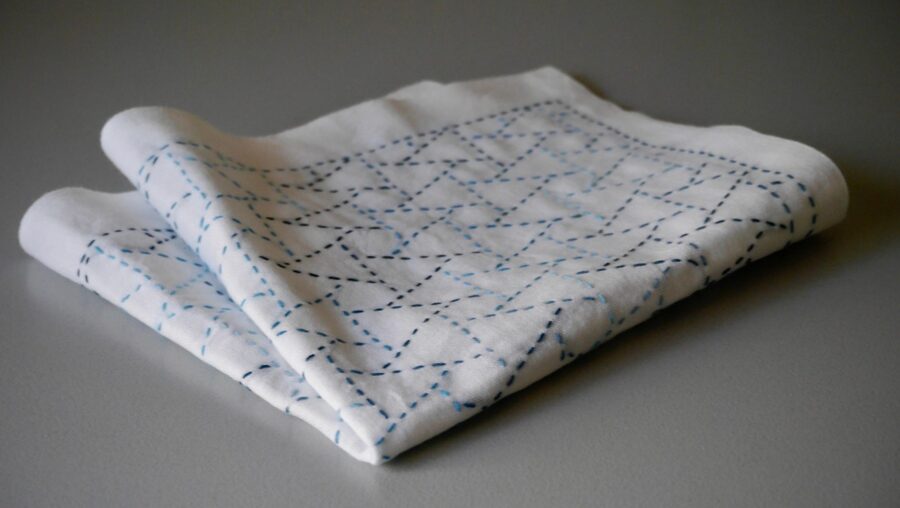
What makes Kapital look like Kapital is patching and stitching. A lot of its range borrows from boro (襤褸), the patched and re-patched indigo cottons that rural families kept mending for generations, and from sashiko (刺し子), the running stitch that holds the layers together. On a good Kapital piece the stitching does a job: it reinforces a knee or anchors a patch, and it isn’t just printed on.

In Tokyo, Kapital has three shops a few minutes apart in Ebisu-Minami, a short walk from Daikanyama. The Tokyo Naked Store at 2-20-2 Ebisu-Minami opens 11:00 to 20:00 as of November 2026, as do Duffle with Kapital and the Legs Craftsman Store on the same street.
Visvim
Visvim is Hiroki Nakamura’s label, and its own long essays (it calls them dissertations) are mostly about suppliers. One of the best is about the Kurume kasuri (久留米絣) it buys from Fuku Orimono, a weaving workshop in Hirokawa, Fukuoka. In kasuri the pattern is dyed into the thread before weaving: bundles of yarn are tied tight, dipped in indigo, and the tied parts stay white, so the pattern blurs slightly at its edges once it is woven.
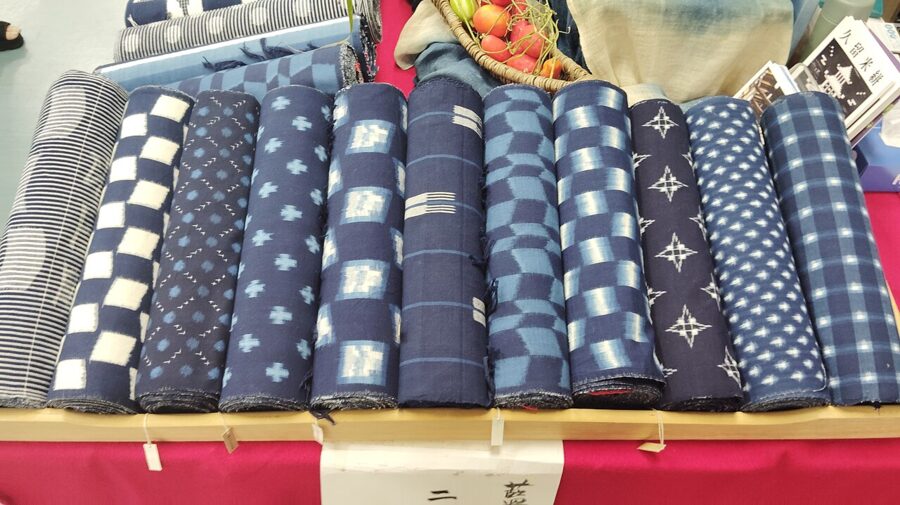
A single bolt goes through about 30 steps, and the looms at Fuku Orimono have been running for about a century. The trade that once made two to three million bolts a year now makes about 70,000, and about 1,500 weaving houses have shrunk to a little over twenty. That is what sits behind a Visvim price tag. The flagship, Visvim General Store and Visvim Gallery, is at 1-22-11 Aobadai in Naka-Meguro and opens 11:00 to 20:00; WMV, the women’s line Kelsi Nakamura started in autumn 2013, has its own shop at 1-22-1 Aobadai, as of November 2026.
Sacai
Chitose Abe started Sacai in Tokyo in 1999, added menswear from spring/summer 2009, and began showing her women’s collection in Paris in October 2009. Her idea is hybrid clothing: a knit sweater with a pleated chiffon back, a trench coat crossed with a bomber. The joins are the design, so look at where two fabrics meet: that seam is where the money goes.
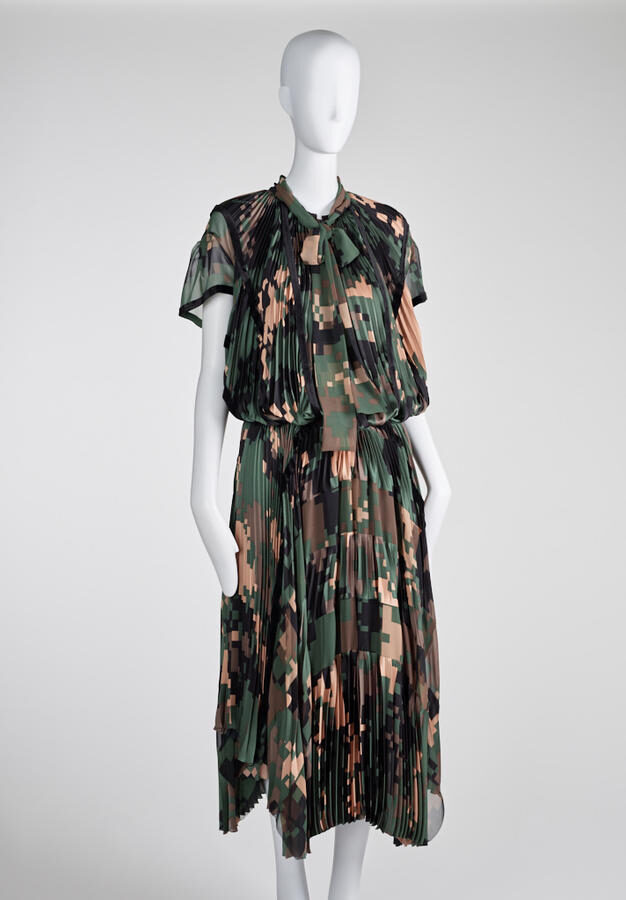

The Aoyama flagship opened in September 2011 in a building by the architect Sou Fujimoto, with interiors put together by the collage group Gelchop from mismatched wood, steel, acrylic and mirror. It sits on the first and second floors of Minamiaoyama City House, 5-4-44 Minami-Aoyama; the label lists no opening hours online, so check its Instagram before you go.
Needles
Needles comes out of Nepenthes, the shop and distribution company Keizo Shimizu founded, and Shimizu started the label in 1995. Its best-known piece is a track pant with a butterfly embroidered at the hip, and in 2010 it launched Rebuild by Needles, which takes vintage and deadstock garments and reconstructs them; the classic version is a flannel shirt pieced together from several old ones.
Nepenthes Tokyo is at 5-44-1 Jingumae and opens every day from 11:30 to 20:00 as of November 2026; the Engineered Garments shop, the New York-made sister label, is at 5-45-12 a minute away. If you only have time for one of these craft shops, I’d make it this one, because you can see Needles alongside the company’s other labels in one stop.
The everyday layer: Uniqlo, Muji and Beams
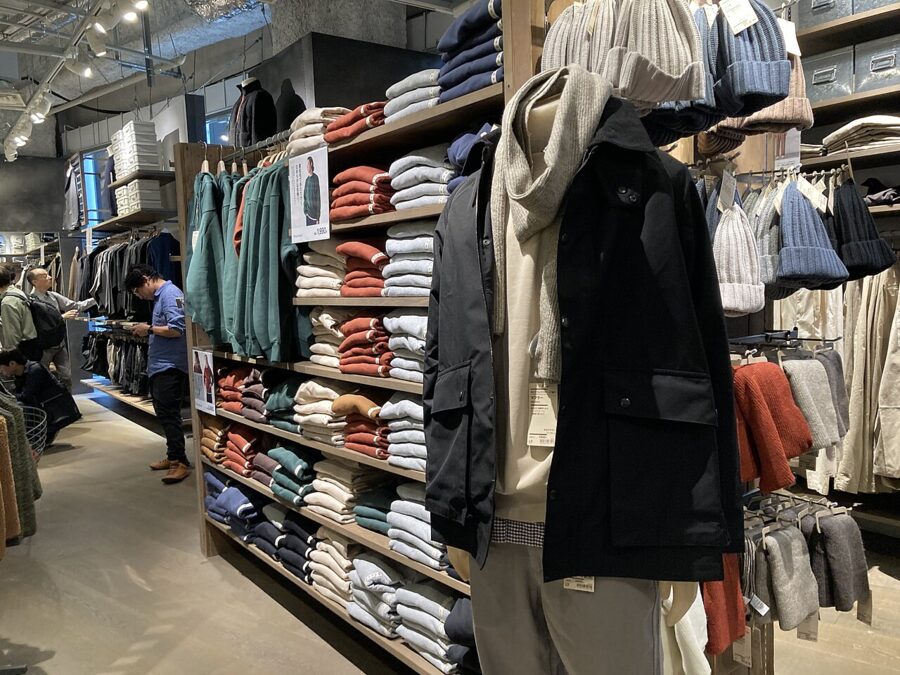
Most Japanese people don’t wear any of the labels above. They wear Uniqlo, Muji and whatever the big select shops pick for them, and those three companies explain a lot about why Japanese basics are so good.
Uniqlo
Uniqlo began as a sideline of a men’s clothing shop. Ogori Shoji opened its first shop in Ube, Yamaguchi, in 1949, and in June 1984 it opened a casual-wear store in Fukuromachi, Hiroshima, called Unique Clothing Warehouse, which is where the name comes from. The company became Fast Retailing in 1991. The turning point came in October 1998, with a fleece jacket at ¥1,900 (about $12 at today’s exchange rate), and the next month Uniqlo opened its first city-center store, in Harajuku.
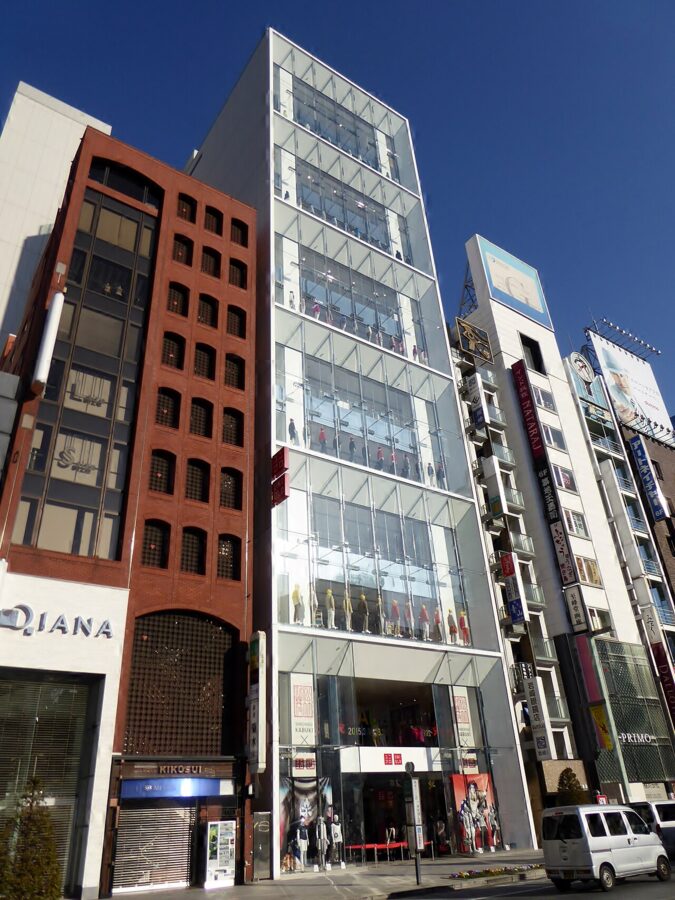
For the year to August 2026 Fast Retailing reported revenue of ¥3.9633 trillion (about $25 billion), a record for the fifth year running, with Uniqlo Japan alone at ¥1.08 trillion (about $6.8 billion). For a visitor, the reason to go is the fabric work in the basics: the merino, the heat-retaining and cooling ranges, the long-running collaboration lines. Undercover has made collections with Uniqlo since the early 2010s, and Nigo became the first creative director of its UT T-shirt line in 2013, which tells you how far Ura-Harajuku has moved into the mainstream.

Muji
Muji, or Mujirushi Ryohin (無印良品, “no-brand quality goods”), started in 1980 as a private label for the supermarket chain Seiyu: 40 products, 9 for the home and 31 food. Clothing followed in 1981, the first stand-alone shop opened in Aoyama in 1983, and Ryohin Keikaku was set up as its own company in 1989. The clothes are plain on purpose, in undyed or quietly dyed cotton, linen and wool, and I think the socks and the organic cotton shirts are among the best value in Japan.

Beams
Beams also began as someone else’s sideline. Etsuzo Shitara ran a cardboard box and packaging company, and after the oil shocks of the 1970s he opened an apparel division. In 1976 it opened American Life Shop Beams in Harajuku, a shop of 6.5 tsubo, about 21 square meters (230 square feet), done up like an American West Coast student’s room. The men’s magazine Popeye launched a few months later and helped make it famous.
Beams turned 50 in 2026, and it is now the archetype of the Japanese select shop, a store that edits other people’s brands alongside its own lines.
The Beams Harajuku shop is at 3-24-7 Jingumae, open 12:00 to 20:00 on weekdays and 11:00 to 20:00 on weekends and holidays as of November 2026. Beams Plus Harajuku, the separate shop for the label that reworks American work and uniform clothing of the 1940s to the 1960s, is the one I’d head for.
Where to shop for Japanese clothing brands in Tokyo
Four districts cover nearly everything above, and you can walk between three of them. Start in Aoyama in the morning, cross Omotesando into Harajuku after lunch, and leave Daikanyama and Ebisu for a separate half day.
Aoyama
Minami-Aoyama 5-chome is where the 1981 designers keep their flagships, mostly along and off Miyuki-dori, the street running down from Omotesando station. Comme des Garçons Aoyama is at 5-2-1, the Yohji Yamamoto flagship at 5-3-6, Undercover’s men’s and women’s shops in the basement of Bleu Cinq Point at 5-3-22, and Sacai at 5-4-44. Issey Miyake Aoyama, with interiors by Tokujin Yoshioka, is a few blocks away at 3-18-11, open 11:00 to 20:00, and the Pleats Please, Homme Plissé and A-POC Able shops are close by.
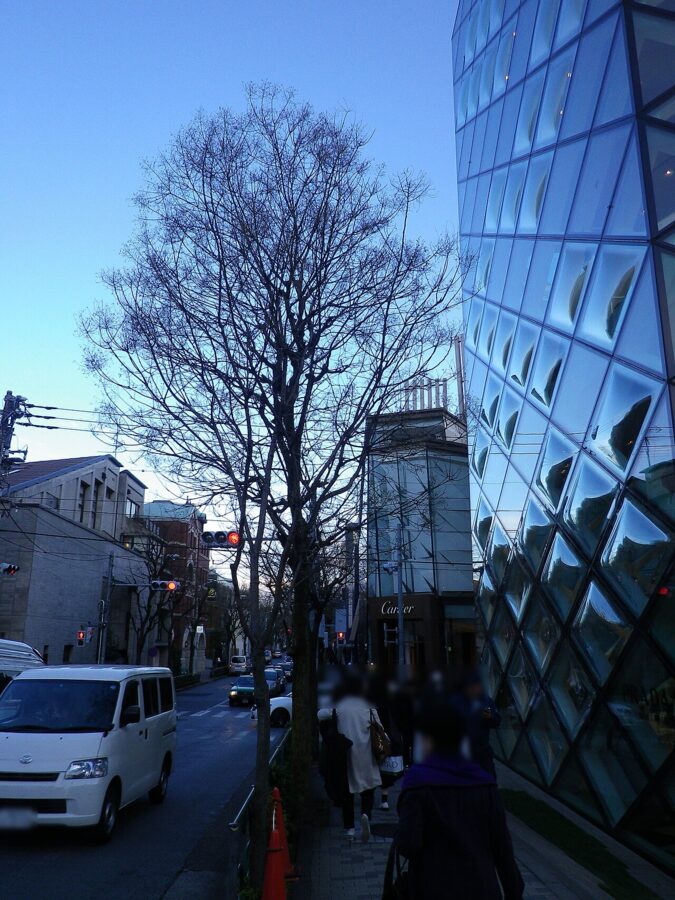

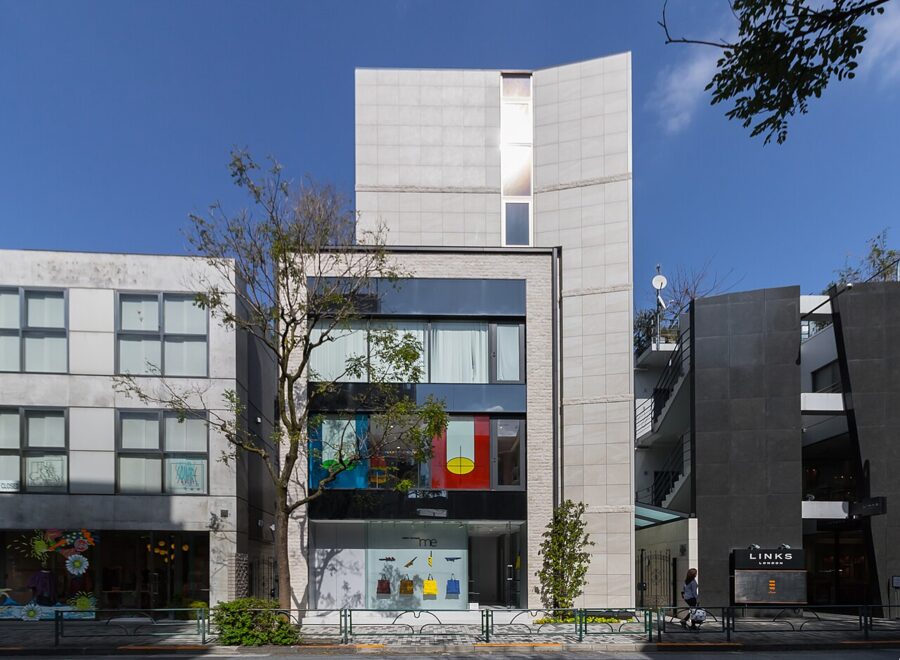

Comme des Garçons lists no opening hours on its own store page, so treat 11:00 as a safe arrival time and confirm by phone. The Aoyama shops are spread out and quiet on weekday mornings, which is the best time to try things on without a queue.
Harajuku and Omotesando
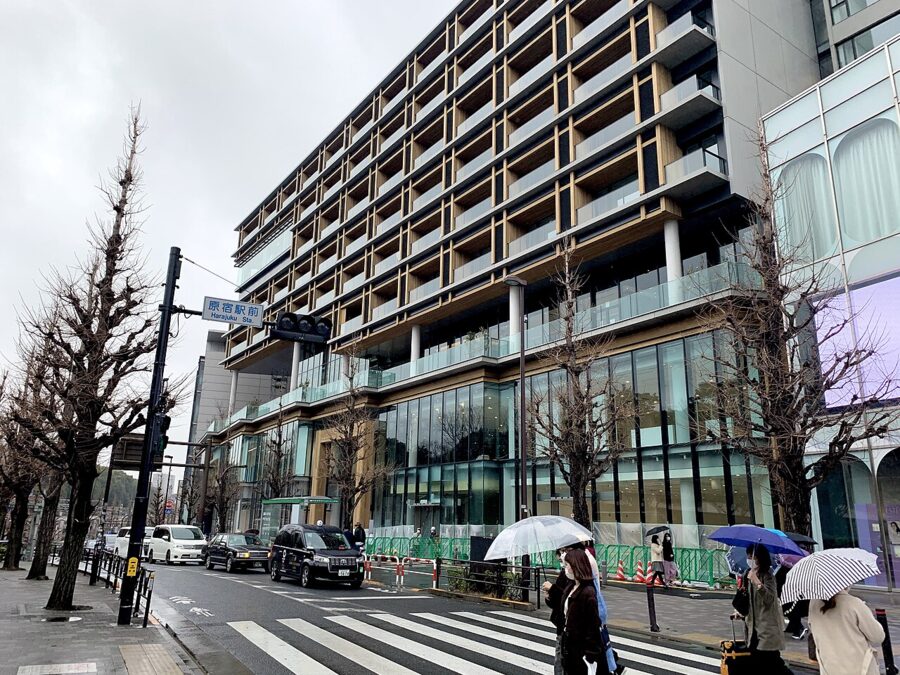
On Omotesando itself, the GYRE building at 5-10-1 Jingumae holds Comme des Garçons’ CDG shop and Trading Museum on its second floor, and a Visvim shop on the same floor, open 11:00 to 20:00. North of the avenue, in the Ura-Harajuku lanes, the BAPE Store Harajuku is at 4-21-5 Jingumae, open 11:00 to 20:00, and Nepenthes Tokyo is on the south side of the avenue, at 5-44-1. Uniqlo Harajuku, in WITH HARAJUKU at 1-14-30 Jingumae, opens 11:00 to 21:00, and Y’s has a two-floor shop in Omotesando Hills at 4-12-10 Jingumae, open 11:00 to 20:00.
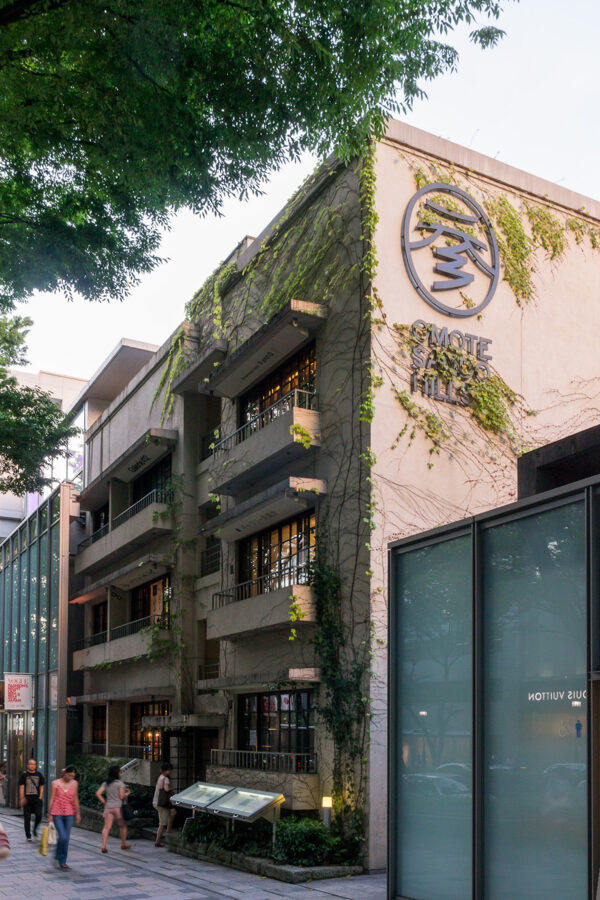

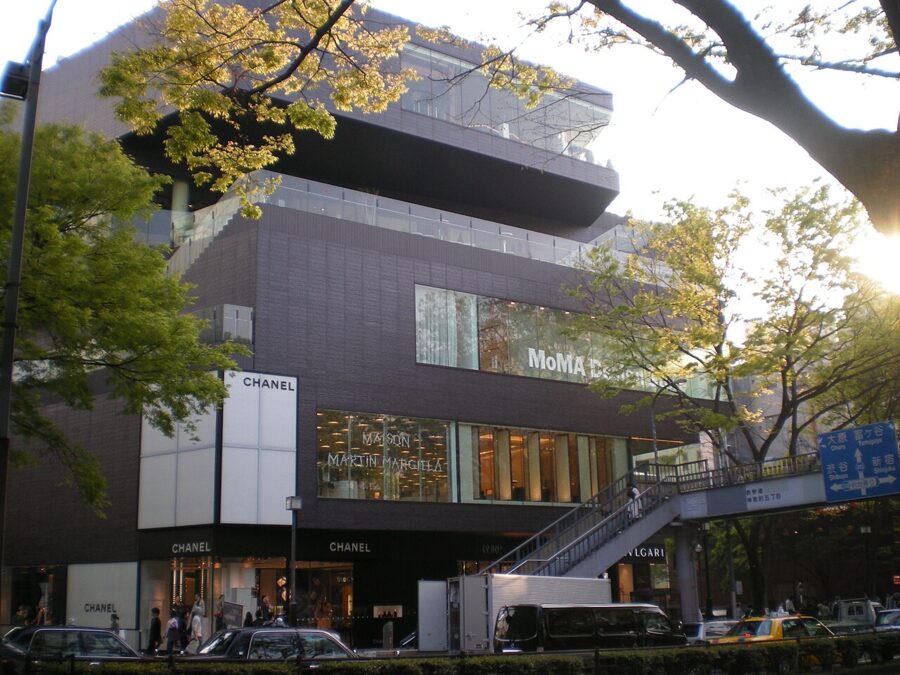

For older pieces, RAGTAG Harajuku at 5-17-9 Jingumae sells used designer clothing, Comme des Garçons and Yohji included, and opens 11:00 to 20:00 except over the New Year holiday. Secondhand shops like this are the cheapest way into the 1980s and 1990s labels, and in Tokyo the stock is usually clean and carefully graded for condition.
Daikanyama, Ebisu and Naka-Meguro
Daikanyama is quieter and greener than Harajuku, and its anchor is the Hollywood Ranch Market group. The original shop opened in Sendagaya in 1972 selling used denim and work shirts and moved to Daikanyama in 1979; it is at 28-17 Sarugakucho, open 11:00 to 20:00. A few minutes away, Okura, at 20-11 Sarugakucho, opened in April 1993 in a building made to look like an old kura storehouse and sells the group’s indigo-dyed Blue Blue Japan line; it opens 11:00 to 19:00 on weekdays and 11:00 to 20:00 on weekends and holidays.
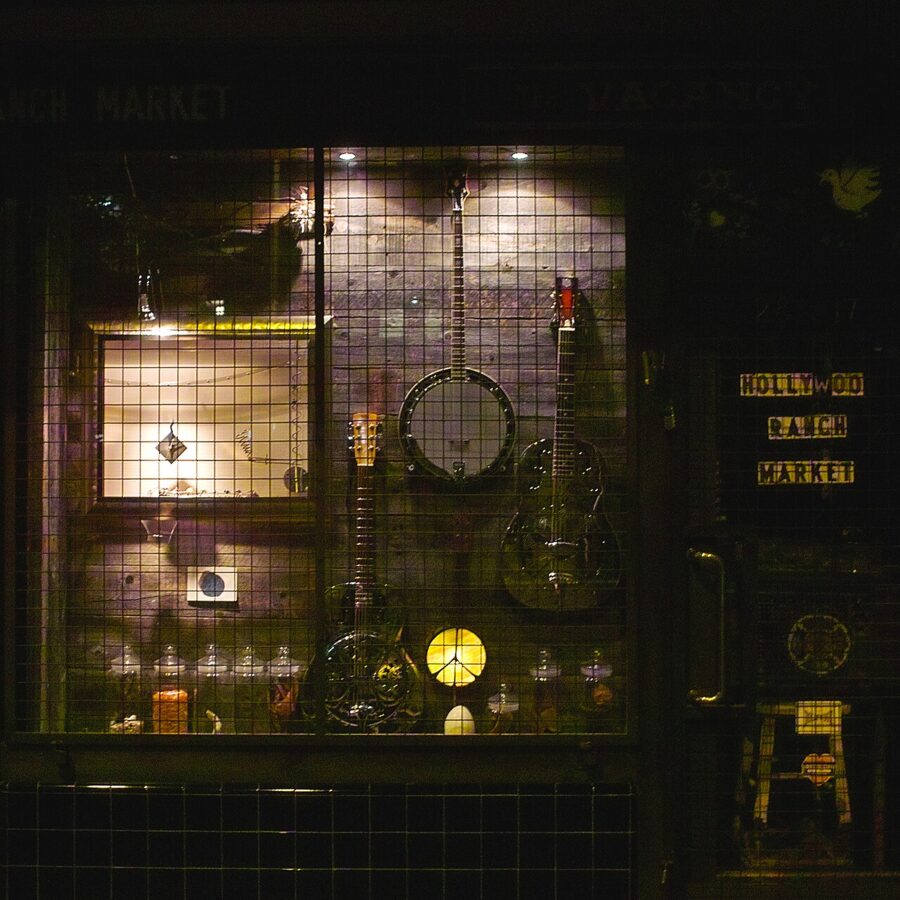

From there it is a short walk to Kapital’s three shops in Ebisu-Minami, and ten minutes the other way to the Visvim flagship in Aobadai, Naka-Meguro. Issey Miyake also runs a Homme Plissé shop in Daikanyama.
Shibuya
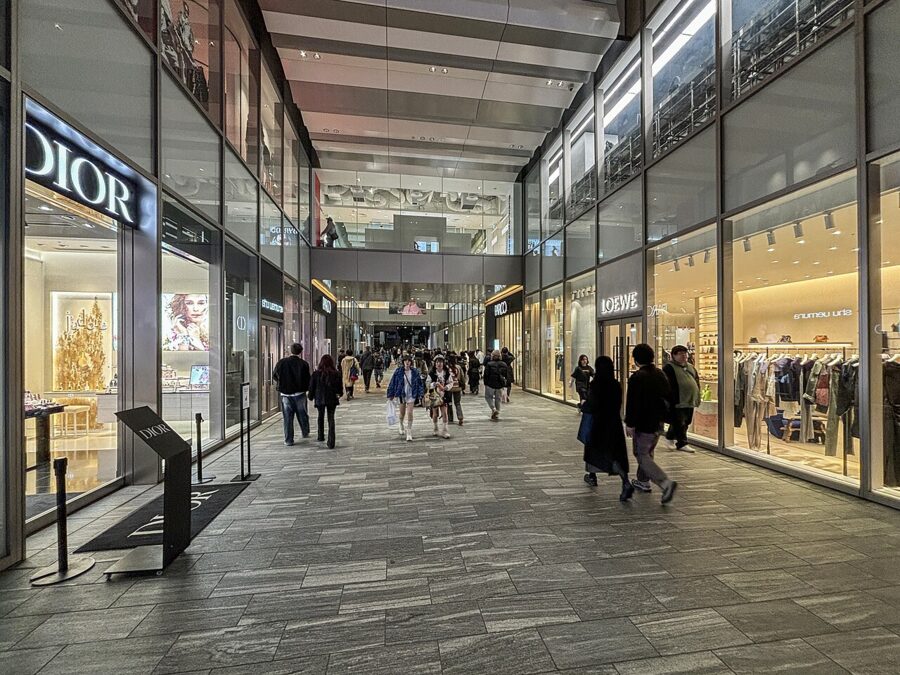
Shibuya Parco, at 15-1 Udagawacho, is the easiest single stop for the big Japanese labels, with shop hours of 11:00 to 21:00. Its floors hold several Comme des Garçons shops (including Comme des Garçons Girl on the ground floor), Undercover’s Noise Lab, Wildside Yohji Yamamoto, and Y’s on the third floor. RAGTAG Shibuya, at 1-17-7 Jinnan, keeps the same hours as the Harajuku branch.

| Shop | Address | Hours (as of November 2026) |
|---|---|---|
| Comme des Garçons Aoyama | 5-2-1 Minami-Aoyama | Not published; call ahead |
| Yohji Yamamoto Aoyama | 5-3-6 Minami-Aoyama | 11:00 to 20:00, closed Jan 1 |
| Issey Miyake Aoyama | 3-18-11 Minami-Aoyama | 11:00 to 20:00 |
| Sacai Aoyama | 5-4-44 Minami-Aoyama | Not published; call ahead |
| BAPE Store Harajuku | 4-21-5 Jingumae | 11:00 to 20:00 |
| Beams Harajuku | 3-24-7 Jingumae | 12:00 to 20:00 weekdays; 11:00 to 20:00 weekends |
| Nepenthes Tokyo | 5-44-1 Jingumae | 11:30 to 20:00 daily |
| Visvim (GYRE) | 5-10-1 Jingumae, 2F | 11:00 to 20:00 |
| Okura | 20-11 Sarugakucho | 11:00 to 19:00 weekdays; 11:00 to 20:00 weekends |
| Kapital Tokyo Naked Store | 2-20-2 Ebisu-Minami | 11:00 to 20:00 |
| Visvim General Store | 1-22-11 Aobadai | 11:00 to 20:00 |
| Shibuya Parco | 15-1 Udagawacho | 11:00 to 21:00 |
Paying, and getting the tax back
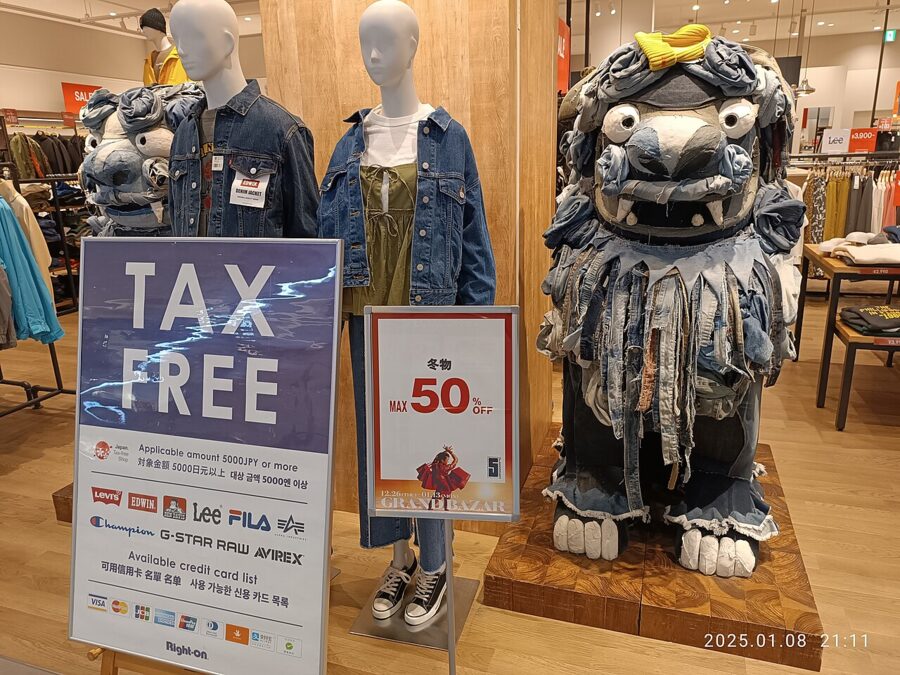
Japan changed how tax-free shopping works on November 1, 2026. You now pay the full price, including the 10 percent consumption tax, at the till; customs confirms the goods leave with you when you depart within 90 days of purchase, and the shop then refunds the tax by whatever method it offers, such as a card refund, a transfer or cash at the port. The rules still apply only when you spend at least ¥5,000 (about $32), before tax, in one shop in one day, so bring your passport and ask how that shop pays refunds before you buy.
If you buy one thing, make it the thing you can’t get at home. For me that’s a Pleats Please piece bought in Aoyama, or a Kapital shirt with real hand stitching, and on the cheaper end, Muji socks and a Uniqlo collaboration you missed online. And when you are in the Comme des Garçons shop at 5-2-1 Minami-Aoyama, look at how the knitwear is finished. If an edge is left raw or a hole sits where it shouldn’t, someone in Aoyama decided it should, and that decision is what the price pays for.