
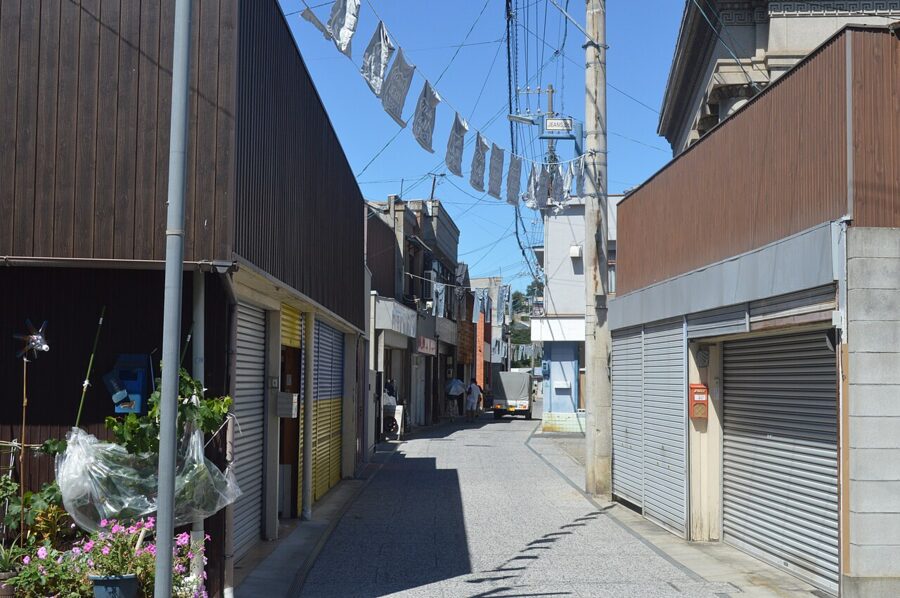
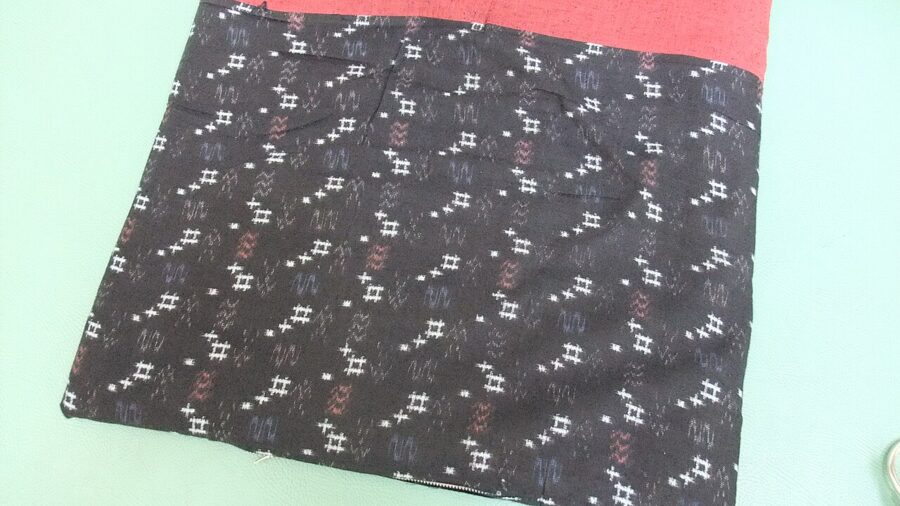
Kaihara, a mill on the northern edge of Fukuyama, says one pair of jeans in every two sold in Japan is cut from its cloth. It started in 1893 as a hand-weaver of indigo kasuri, the cotton with blurred white patterns that farmers wore to the fields, and it turned what it knew about indigo into denim in 1970. Most people who own Japanese jeans have never heard its name.
That is the shape of Japanese denim. The famous names on the leather patches mostly belong to small companies that buy their cloth. The cloth comes from a handful of mills in southern Okayama and eastern Hiroshima, the old provinces of Bizen, Bitchu and Bingo that the trade still calls Sanbi, and the sewing is done in workshops around Kojima. Sanbi wove 23.9 million square meters of denim in 2023, close to all the denim made in Japan.
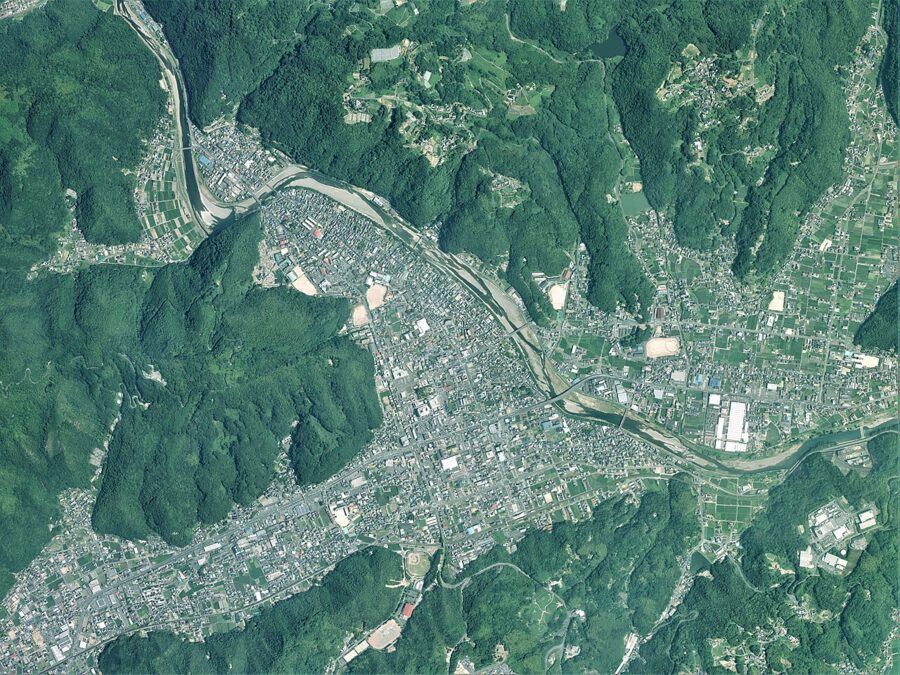
Three towns hold most of the trade. Kojima sews, Ibara weaves, and Fukuyama spins, dyes and weaves as well, and all three have shops, a station store or a museum where you can see the cloth close up.


In this article
Why the cloth comes from here
The Seto Inland Sea coast grew cotton for three centuries before it made a pair of jeans. In Kojima, land reclaimed from the sea in the Edo period was too salty for rice, so farmers planted cotton, and the town wove it into sailcloth, braid and the split-toe socks called tabi. In Ibara, mills of the Meiji era wove a heavy cotton called Bitchu kokura, and one kind of it, urajiro, had an indigo face and a white back on the same three-by-one twill as denim. Across the border in Fukuyama, the cloth was Bingo kasuri, which by 1960 made up about 70 percent of Japan’s kasuri.
Jeans arrived with the American army and were sold secondhand in Tokyo’s Ameyoko market. In April 1965 Maruo Clothing in Kojima sewed the first jeans made in Japan, from American denim, on imported machines; the company later became Big John. How Kojima got from school uniforms to jeans, and how a Kojima cloth company turned into Momotaro Jeans, is a longer story than there is room for here.
The cloth caught up quickly. Kurabo, the Kurashiki spinner, moved into denim for jeans in 1970. The same year Kaihara built its own rope-dyeing machine and became the first company to put rope-dyed denim on the Japanese market. By 1973 Big John could sell jeans with Japanese cloth, Japanese dye, a YKK zip and Japanese buttons, sewn in Kojima.
The part the world noticed came later. From 1979 a run of small companies, most of them in Osaka, began taking apart old American jeans and copying them down to the thread. They needed cloth that faded the way 1950s denim did, and the mills of Sanbi turned out to have kept the old machinery that could make it.

Rope dyeing
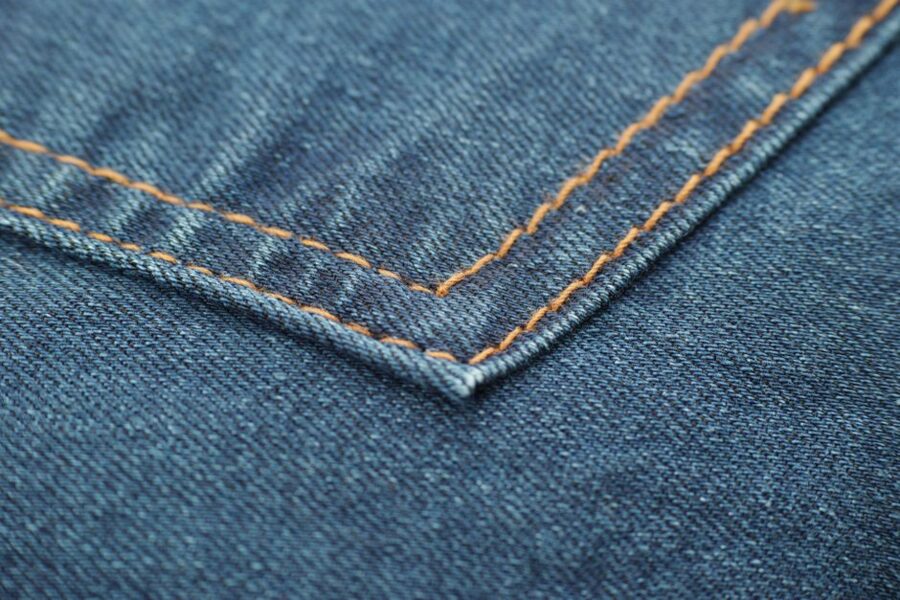
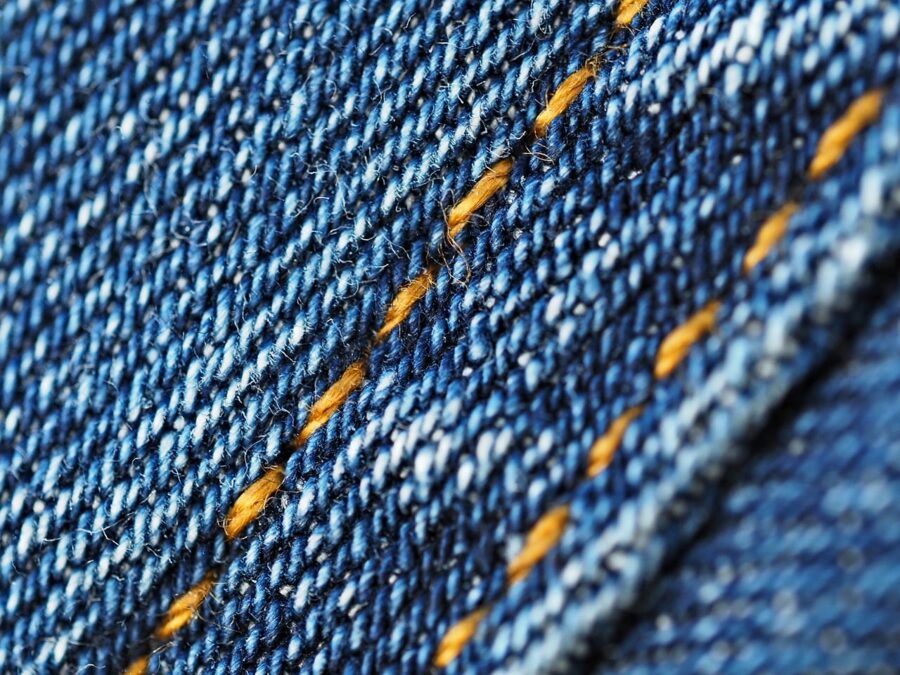
Denim’s warp, the yarn that runs the length of the cloth, is dyed before weaving. In rope dyeing, a few hundred yarns are twisted into a loose rope and run through a vat of indigo, up into the air so the green dye can oxidize to blue, and back into the next vat, over and over. Indigo clings to the outside of cotton and barely soaks in, so each yarn ends up blue on the surface and white at the core.
That white core is the whole point. Wear rubs the surface off at the knees, the pockets and the hem, the core shows through, and the jeans fade in lines that follow the way you move. Kaihara had to learn this the hard way: its kasuri dyeing colored yarn right through, which gave denim that faded flat. Its first rope-dyeing machine, built in seven months in 1970, adapted a vat technique it had patented for kasuri in 1954.
Slub yarn
Modern spinning makes yarn of an even thickness. Vintage American yarn was lumpier, and the lumps, called slubs, catch the light and fade faster than the thin stretches between them, which gives old denim its streaky, vertical fade. Japanese spinners now make slub on purpose, to order. Collect in Kojima works with its spinning partner to repeat a pattern of thick and thin at random, which is harder to do well than making yarn even.

Selvedge and the shuttle loom
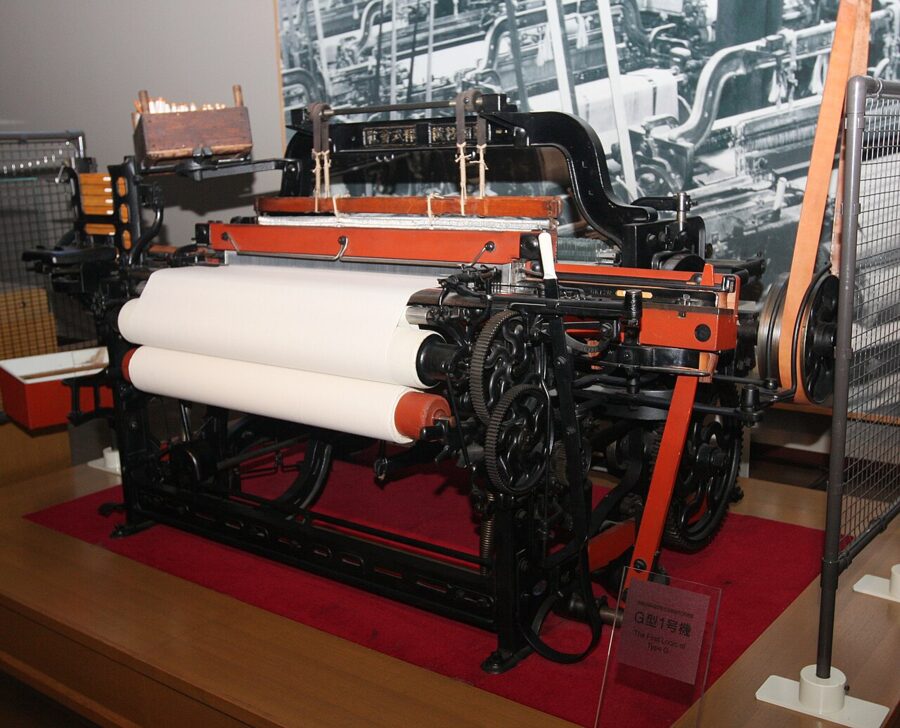
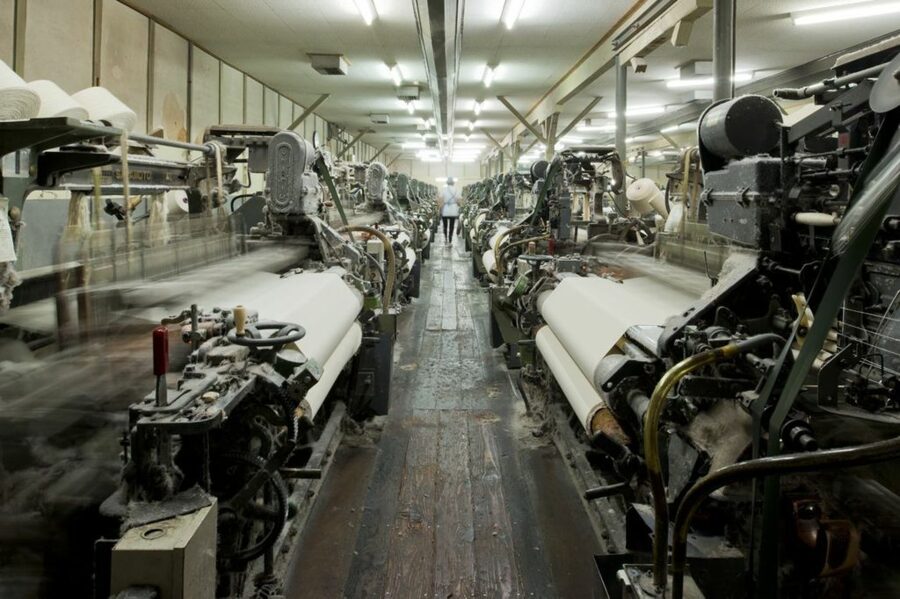
A shuttle loom throws a shuttle carrying the weft yarn across the warp and back, so every pass turns at the edge instead of being cut. The edge, the selvedge, cannot fray, and mills mark it with a colored thread. Shuttle looms weave narrow cloth, which is why selvedge jeans carry the edge down the outseam, and they produce a third or less of what a modern loom does.
Speed is the reason they survive. A fast projectile or air-jet loom has to hold the warp very tight, and the cloth comes out flat and even. A shuttle loom can be run slowly and loosely, so slub yarn keeps its lumps and the cloth gets an uneven, textured face. The shuttle looms named by Okayama mills are old Toyoda machines from Aichi and Enshu machines from around Hamamatsu, kept running with parts stripped from other looms.

Sanforized, one-wash or raw
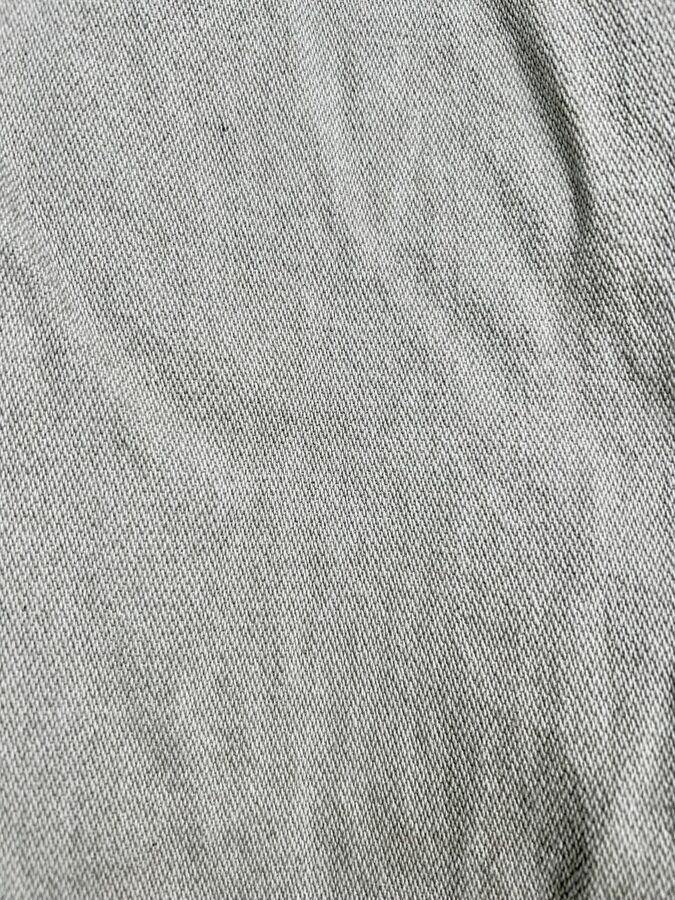
Cloth straight off a loom is fuzzy, twists and shrinks. A finishing works singes off the fuzz, skews the weave so the legs will not twist, and usually pre-shrinks it, a process sold under the American trade name Sanforized. Unsanforized cloth, which many replica makers prefer for its rougher feel, can lose an inch or more of length in the first soak.
The label tells you which you have. “One wash” means the finished jeans went through water once at the factory, which removes most of the shrinkage and softens the cloth. “Rigid” or “raw” means nobody has washed them, and you will.
The mills
Japanese denim mills rarely sell to the public, and most will not say which brands they weave for. What they publish is their history and their customers’ names in general terms, which is enough to tell them apart.
Kaihara, Fukuyama
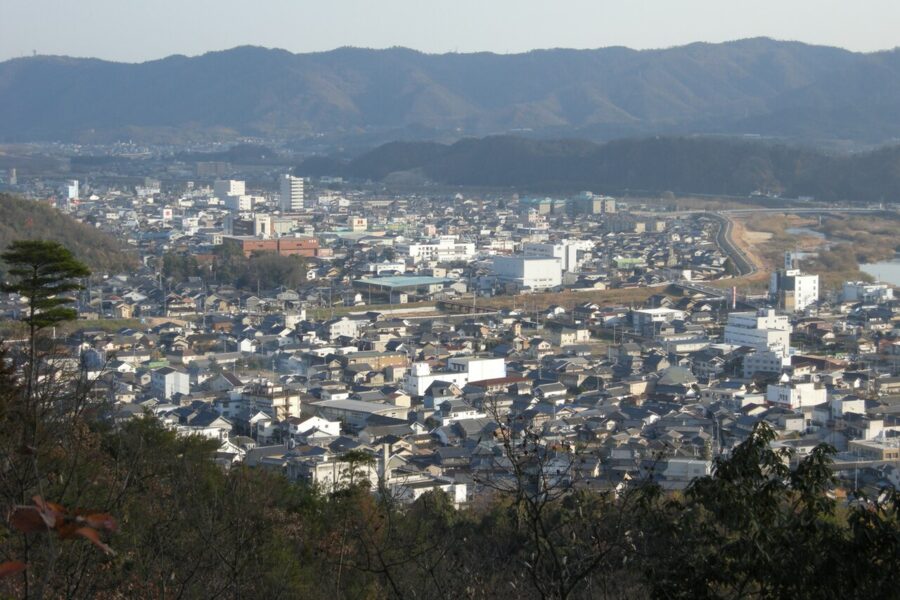
Kaihara Sukejiro founded the business in 1893 in what is now Shinichi, Fukuyama, weaving hand-dyed indigo Bingo kasuri. After the war the company nearly folded, recovered by weaving wide kasuri and sarong cloth for the Middle East, and lost that trade in the late 1960s when Britain withdrew from Aden and the pound fell. Weavers and garment makers then asked it to apply its indigo skills to denim, and it built the rope-dyeing machine that made its name.
Levi’s placed an order in 1973. In 1991 the company finished a spinning mill and became the first in Japan to do every stage of denim itself, from spinning to finishing. It began weaving vintage-style denim on shuttle looms in 1994, alongside its faster machines. Today it runs four mills in Hiroshima Prefecture and one in Thailand, supplies cloth to about 30 countries, and lists Uniqlo, Edwin, Momotaro, Levi’s, Lee, A.P.C., J.Crew and Ralph Lauren among the brands that use it.

That range is why Kaihara divides denim fans. The same company weaves for Uniqlo and for Momotaro, and the name on the patch does not tell you which grade of its cloth you are holding. Kaihara is large and consistent rather than small and quirky, and for a first pair I would rather have consistent.
Kuroki, Ibara
Kuroki began in 1950 as Kuroki Orifu, a weaver in Ibara, and moved seriously into denim in the 1970s. It added its own rope-dyeing range in 1996 and now dyes, weaves and finishes on one site in the hills about 20 minutes by car from central Ibara. It runs everything from shuttle looms, which it modifies for output, to wide Sulzer machines, and it produces about 500 denim fabrics a year.
Kuroki sold mainly in Japan until the premium-jeans years of the early 2000s, then went to the United States and, from 2004, to the Première Vision fabric fair in Paris. About 60 percent of its sales are now overseas. In 2023 it became the first Japanese company named as a partner of LVMH Métiers d’Art, the luxury group’s supplier arm.

Kurabo, Kurashiki
Kurabo, short for Kurashiki Boseki, was founded in Kurashiki in 1888 and opened its first mill there the following year. It was a cotton spinner for most of a century before it entered the denim market in 1970. Big John’s all-Japanese jeans of 1973 used cloth developed with Kurabo, and in the 1980s Kurabo worked with Denime to make one of the first Japanese selvedge denims.
Kurabo is now a diversified company that makes chemicals, building materials and engineering systems as well as textiles. Its old mill in Kurashiki has been a hotel and museum complex, Kurashiki Ivy Square, since the 1970s.

Collect and Shinya
Collect is the cloth side of the company behind Momotaro. It was founded in Kojima in November 1992 and bought five old power looms the next year. Its own weaving shed, across the road from the group’s head office by Kojima Station, now runs nine Toyoda GL-9 shuttle looms built in 1980, plus two more kept only for parts.
Most of Collect’s selvedge has always come from Shinya, a weaver founded in 1951 that began making selvedge denim in the early 1980s, when, by its own account, a big American brand came to it wanting to revive its original selvedge jeans. Shinya runs more than 70 old Enshu looms from Hamamatsu, heavier machines that suit thick cotton but need skilled hands, and it keeps enough spare parts to repair them for another decade. Collect calls it its lifeline.

Behind these names are dozens of smaller firms you will never see on a label: yarn dyers, warpers, finishers such as Kotosen in Kojima, and weavers such as Nihon Menpu in Ibara, which runs a factory shop. That division of work is why a small brand can order a few hundred meters of a custom denim and get it.
The brands
Asking for the best Japanese denim brand is like asking for the best Japanese knife. There is no official grading, and the same mill may weave for three labels at three prices. What separates the brands is the cloth they commission, the fit and the details, and the clearest way to tell them apart is where they came from. Most of them make far more than jeans, and a few, Kapital above all, sit as comfortably among Japanese clothing brands in general as among denim makers.
The Okayama makers
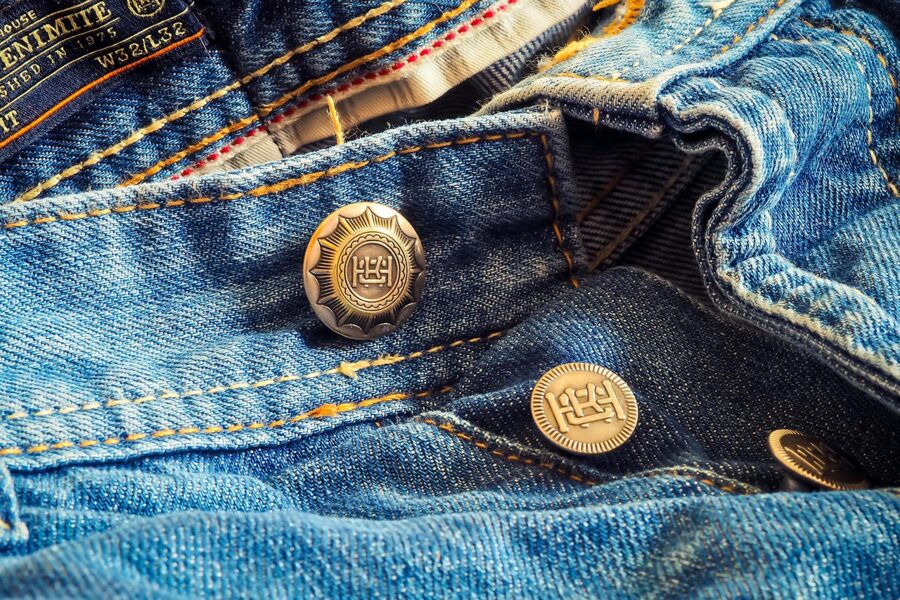
Momotaro. The Kojima label of Japan Blue, named in 2006 after the peach boy of Okayama folk tale. Its Classic jeans are 15.7 oz (about 530 g/m²) Zimbabwe cotton selvedge with two white lines printed on the back pocket, ¥33,000 (about $208) in Japan.
Japan Blue Jeans. The same company’s second label, started in 2011 for buyers abroad and now sold at home too. It is the cheapest way into the group’s jeans: a 14 oz selvedge straight costs ¥30,800 (about $194), a 12 oz pair ¥27,500 (about $174).
Big John. The company that sewed Japan’s first jeans in 1965 still sells from its main store on Kojima Jeans Street. Its current core jeans cost ¥34,900 (about $220), and its Rare line, cut from Japanese selvedge, ¥63,500 (about $401).
Pure Blue Japan. Founded in 1997 in Okayama and known for slubby, deeply textured cloth that looks almost knobbly when new and fades in high contrast. If the Momotaro Classic is smooth, this is the opposite, and it is the brand to try if texture is what you are after.
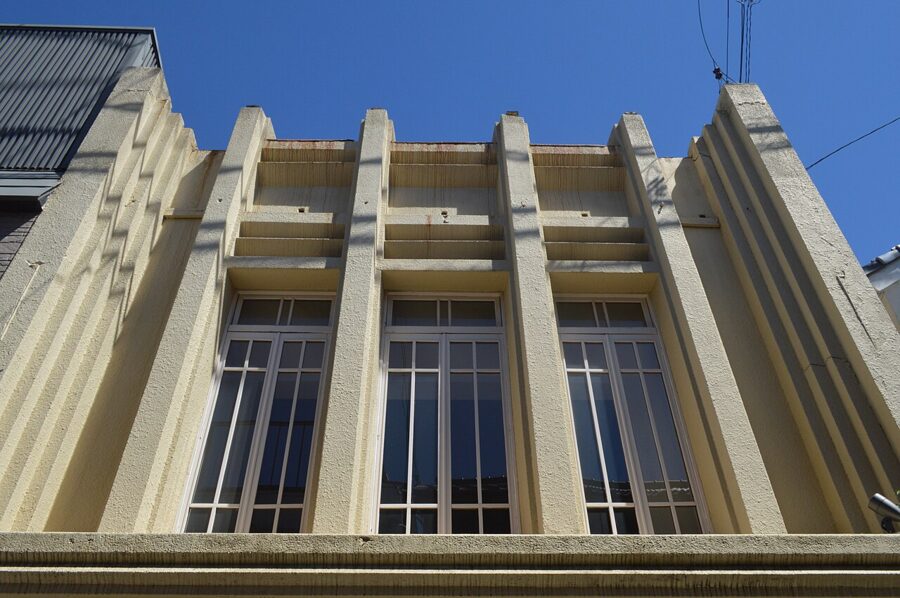

Kapital. Hirata Toshikiyo set up a jeans factory in Kojima in the mid-1980s and turned it into a label; his son Kazuhiro (Kiro) Hirata now leads the design. Kapital uses denim as a starting point for patchwork, boro-style mending, sashiko stitching and odd dyes, and its “Century Denim” line runs alongside clothes that have little to do with jeans. It still has a store in Kojima, at 3672-10 Ogawa-cho, and others in Tokyo, Kyoto, Osaka, Nagoya, Sapporo and Fukuoka.
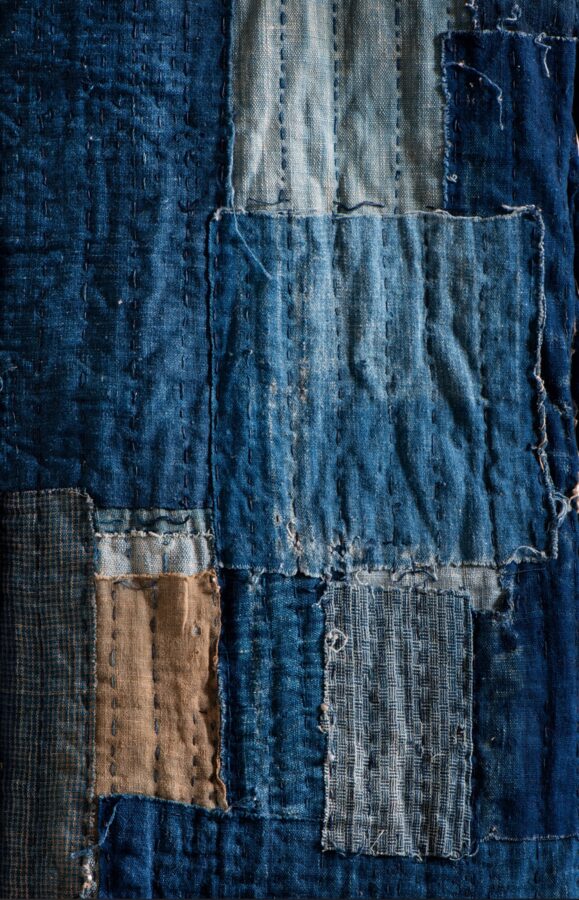

The Osaka Five
Overseas denim writers gave this name to the replica makers that set the rules in the 1980s and 1990s. The five did not form a group, and one of them began in Kobe, but they share a method: find an old pair, work out how it was made, and remake it.
Studio D’Artisan. Founded in 1979 by Tagaki Shigeharu, the oldest of the five. Its patch shows two pigs pulling a pair of jeans apart, a parody of the Levi’s two horses, and its D01 jeans have been in the range since 1986. It made its name with natural indigo dyed in skeins, at a time when Japanese shops were full of acid-washed jeans.
Denime. Founded in 1988 and named after serge de Nîmes, the French cloth that gave denim its name. In the 1980s, before the rest of the world caught on to vintage jeans, it developed a selvedge denim with Kurabo. Since 2023 it has been remade by Warehouse from its earliest recipes.
Evisu. Yamane Hidehiko started making replica jeans around 1989 while working at an Osaka vintage shop, and set up on his own in 1991. His jeans carried a gull painted on the back pocket instead of stitched.
From the late 1990s they were worn by David Beckham and Jay-Z, which made Evisu, like BAPE a few years later, a Japanese label that famous people abroad wanted to be seen in. The company is now owned in Hong Kong. Its painted-gull selvedge jeans cost ¥45,100 to ¥62,150 (about $285 to $392) on its Japanese store.
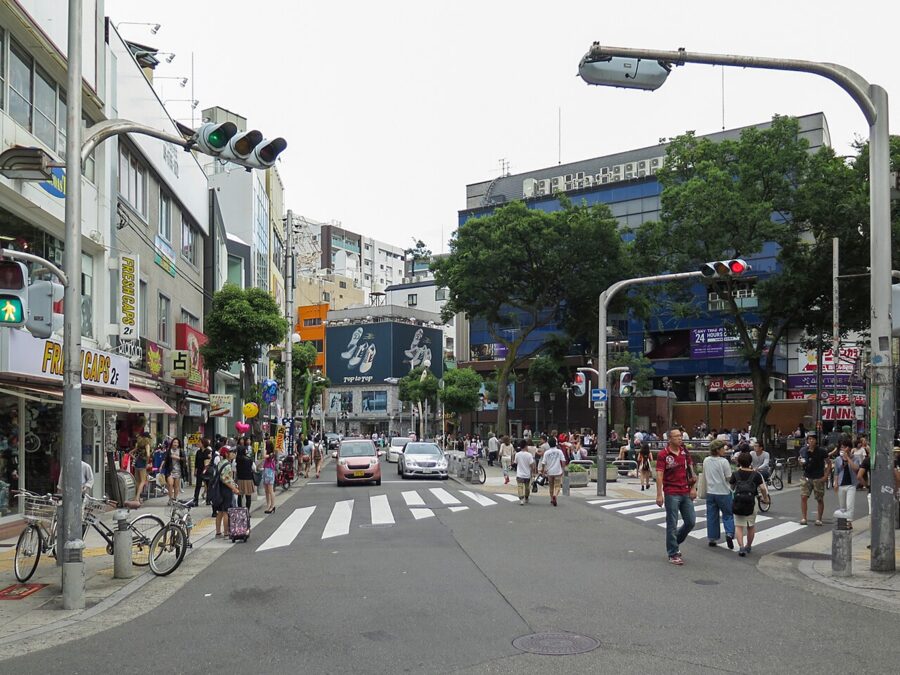

Full Count. Tsujita Mikiharu was the regular customer Yamane brought in to help develop Evisu’s first jeans. He left to start Full Count in Osaka in the early 1990s (sources give 1992 or 1993) and is known for Zimbabwe cotton, which spins into a smooth, soft yarn that still fades well.
Warehouse. Founded in 1995 by the Shiotani brothers, and the most literal of the five. It picks one vintage garment and studies the era it was made in, from the yarn to the sewing and the washing, and it says plainly that its clothes are not designer clothes. If you want a jean that a 1950s workman would recognize, start here.
The heavyweights
Samurai. Nogami Toru started Samurai in Osaka in the late 1990s (the brand gives 1998; other sources give 1997). It is known for heavy cloth woven tight from lumpy yarn, with a selvedge it calls katana-mimi, the sword edge. Its 15 oz S0510XX II regular straight costs ¥31,800 (about $201) and its 19 oz slim straight ¥32,800 (about $207) on its own store; there are 17 oz and 21 oz jeans above those.
Iron Heart. Haraki Shinichi founded Iron Heart in the early 2000s to make jeans for motorcyclists, and its 21 oz selvedge became the brand’s signature. The 634S straight in 21 oz costs ¥34,100 (about $215) in Japan, the 25 oz XHS version ¥37,400 (about $236), and there is a 14 oz version at ¥26,400 (about $167) for people who do not ride. The Japanese store does not ship abroad; a separate Iron Heart business in the United Kingdom handles international orders.
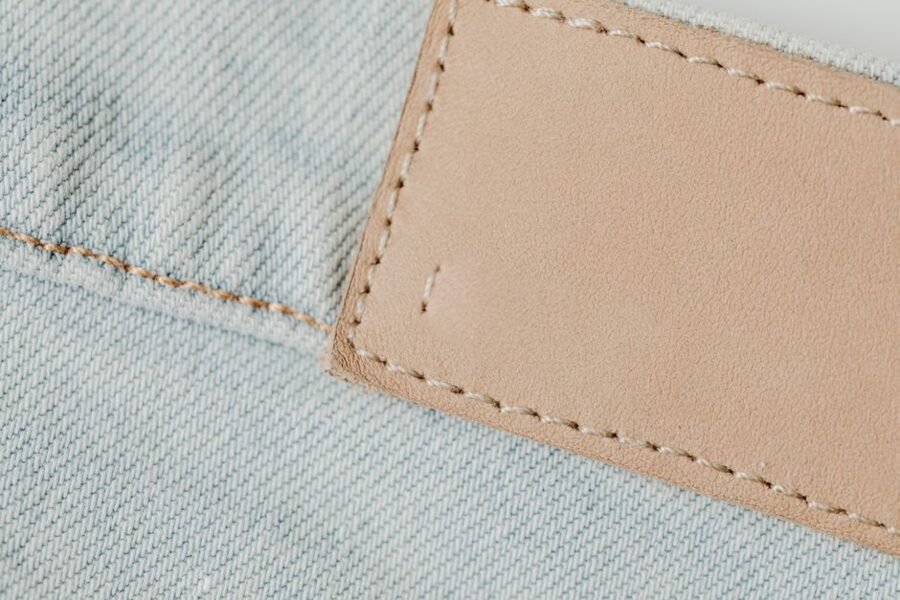
Heavy denim is a hobby. A 21 oz pair takes months to soften, it is hot in a Japanese summer, and it fades in bold, blocky marks. Buy it because you like the cloth, not because heavier sounds better.
Choosing a first pair
Is Japanese denim expensive? In Japan, a core pair of selvedge jeans from any of these makers costs ¥27,000 to ¥35,000, about $170 to $220, and the same jeans cost noticeably more abroad through importers. The price buys slow dyeing and weaving, small production runs and, from some makers, repairs for as long as you own the jeans. It does not guarantee a better pair than a well-made jean from anywhere else; it buys a particular kind of cloth.
Here is what core jeans cost in Japan as of November 2026, tax included. Prices change often, so check before you go.
| Brand and jeans | Cloth | Price in Japan (Nov 2026) |
|---|---|---|
| Japan Blue Jeans selvedge straight | 12 oz | ¥27,500 (about $174) |
| Japan Blue Jeans selvedge straight | 14 oz | ¥30,800 (about $194) |
| Samurai S0510XX II regular straight, one wash | 15 oz | ¥31,800 (about $201) |
| Momotaro Classic | 15.7 oz | ¥33,000 (about $208) |
| Iron Heart 634S straight | 21 oz | ¥34,100 (about $215) |
| Japan Blue Jeans selvedge straight | 16 oz | ¥35,200 (about $222) |
| Evisu selvedge jeans #2020 | not listed | ¥45,100 (about $285) |
Start with the weight. Under 13 oz is light and easy from the first day. Between 13 and 16 oz is the comfortable middle, and it is where I would start: a 14 or 15 oz pair softens within a season and still fades clearly. Over 17 oz is a project.
- Raw or one-wash. Raw unsanforized jeans shrink, often by an inch or more in length and a little at the waist, so buy them a size up and ask the shop how much to expect. One-wash and sanforized jeans should be bought in your true size.
- Fit. Japanese numbering varies by brand, but most offer a regular straight modeled on 1950s jeans, a slimmer tapered cut and something wider. If you are unsure, the regular straight is what most of these makers built their names on.
- Length. Buy long and have them hemmed in the shop. Specialist shops usually offer hemming, often on a chain-stitch machine, so ask how long it takes before you leave.
- The label. 日本製 (Made in Japan) tells you where the jeans were sewn, not where the cloth was woven. Brands that use their own or a named mill’s cloth usually say so.
Wash raw jeans inside out in cold water, on their own the first few times, and hang them to dry. The longer you wait for the first wash, the sharper the fades, but there is no rule that you must wait six months. Wash them when they need it.
Where to see it made
The three towns sit close together on either side of the Okayama and Hiroshima border, and a day with a car or a patient day on local trains covers two of them. Mills are working factories and rarely take walk-in visitors, so plan around the shops, the station store and the museums.
Kojima
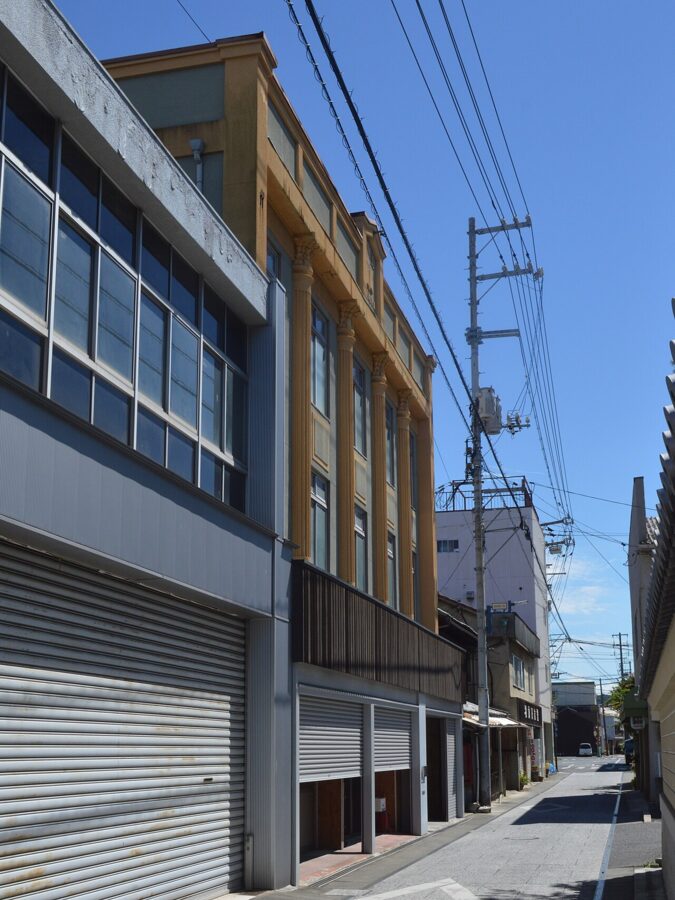
Kojima is the easy one. It is about 25 minutes from Okayama by rapid train on the JR Seto-Ohashi Line, Kojima Jeans Street has more than 40 shops, cafés and workshops, and Betty Smith’s jeans museum is a short bus ride away. Go in the morning, because the small shops close early and some shut midweek.

Ibara
Ibara is where the weaving is, and it is quieter than Kojima. Around 1970 about three quarters of the jeans made in Japan were made here, and “Ibara Denim”, meaning denim woven in the city, has been a registered regional trademark since 2019. The town has no jeans street, but it has a few places worth the trip.
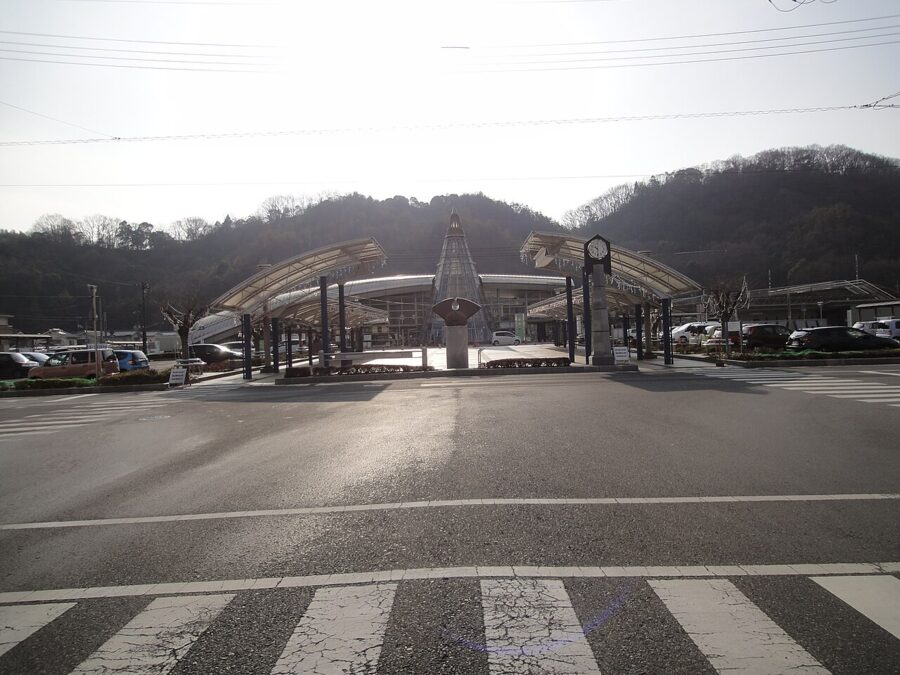

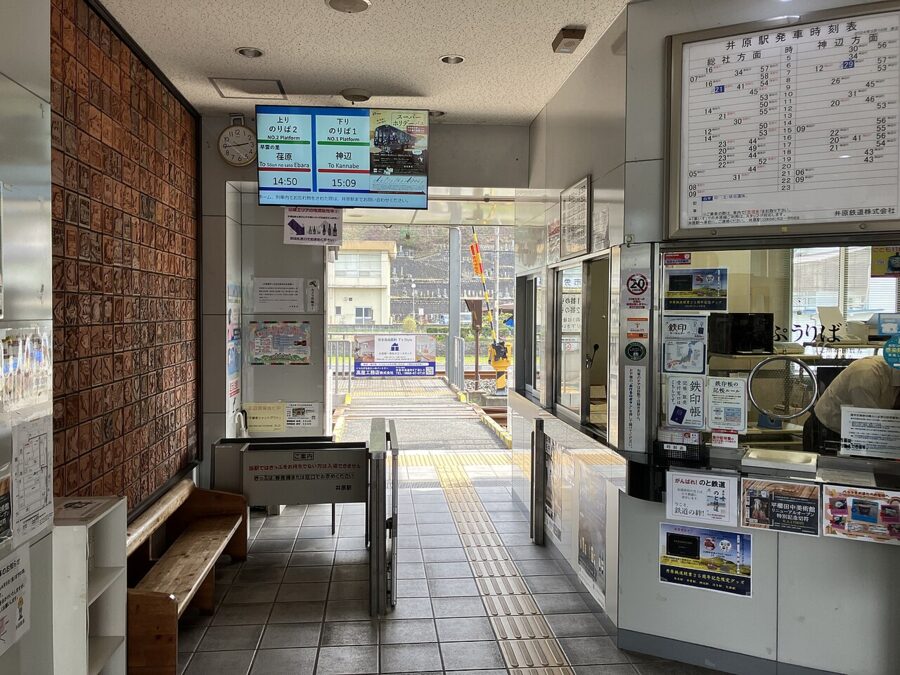
- Ibara Denim Store, inside Ibara Station, is run by the Ibara Clothing Cooperative and sells jeans, suits, ties and small goods made from the town’s cloth. It is open 10:00 to 18:00 and closed on Wednesdays (Thursday when Wednesday is a holiday) and over New Year (as of 2026).
- Ibara Denim Square Garden, on the Shinmachi shopping street about ten minutes by bus from the station, opened in April 2020 with denim shops, a café and a courtyard. Hours vary by shop, and it is closed on Thursdays.
- BlueTrick, about five minutes’ walk from the station, is a workshop and shop working with indigo in different techniques. It opens 11:00 to 17:00 on weekdays and 10:00 to 18:00 at weekends and on holidays, with irregular closing days (as of March 2026).
- NMP Shop, the factory shop of the weaver Nihon Menpu, is about ten minutes’ walk from Soun-no-Sato Ebara Station on the same railway. It is open 9:00 to 17:00 and closed on Sundays (as of March 2026).
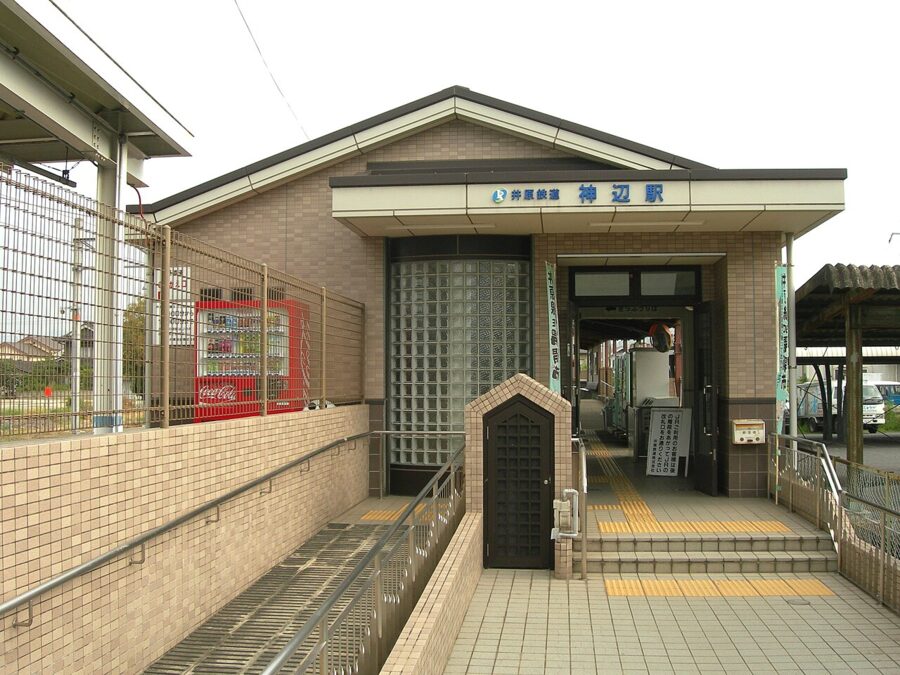

The Ibara Railway, which runs between Soja in Okayama and Kannabe in Fukuyama, has run a Denim Train since 2025, wrapped in a denim print with denim curtains and headrest covers. It runs as an ordinary service on some days and not others, so check the railway’s schedule, which it posts about ten days ahead, if you want to ride it. A Route Inn hotel decorated in denim opened in Ibara in March 2025 if you want to stay over.
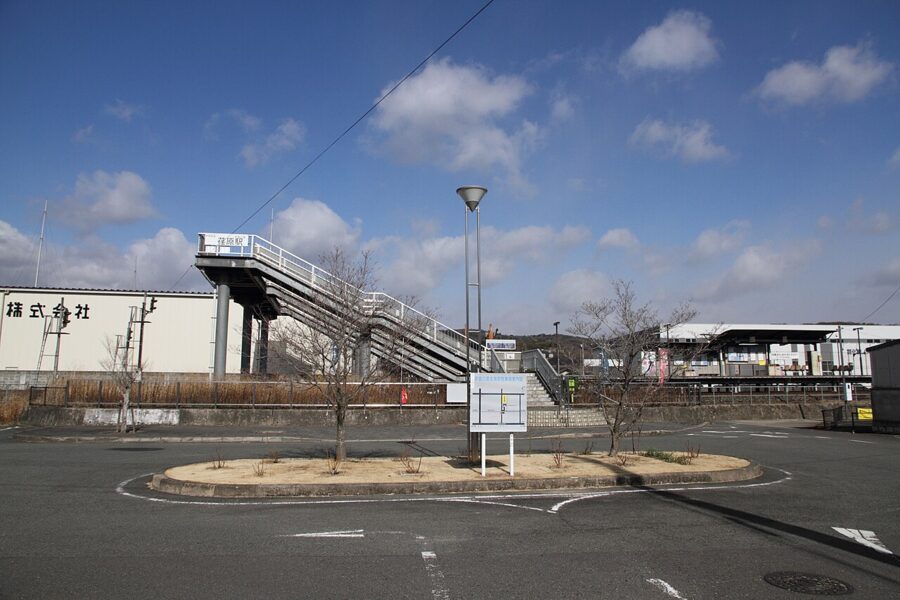

Fukuyama
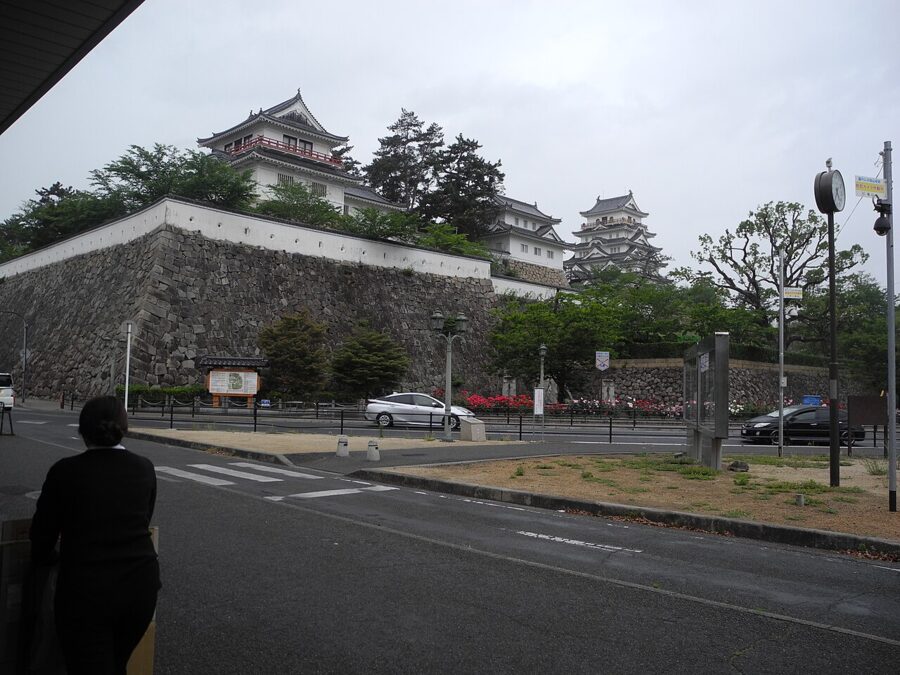
Fukuyama is a Shinkansen stop and a big industrial city, and denim is a small part of what you see. The reason to come is Shinichi, in the north, where Bingo kasuri was woven and Kaihara still has its head mill. Local tradition credits Tomita Kyusaburo with inventing the cloth in the 1860s by binding warp yarn with bamboo bark before dyeing it. The kasuri trade once filled the valley with looms; by 2010 two makers were left, and its cooperative closed at the end of fiscal 2023.
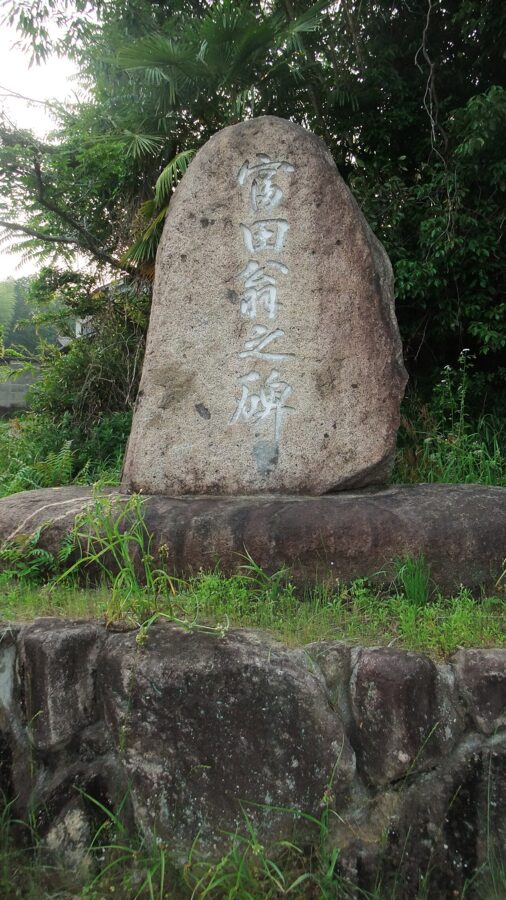

Kaihara opens its company museum, the Kaihara History Museum, on a few set days a year. It covers the company from its kasuri beginnings, explains how Bingo kasuri and wide kasuri were made, and has an indigo-dyeing corner. The remaining dates are December 12, 2026, then January 11, February 11, March 26, April 29, July 30, September 23 and November 3, 2027. It is open 10:00 to 16:00, entry is free, dyeing costs ¥500 (about $3) a person for children from the third grade up and adults, and you have to book by phone first (as of November 2026).
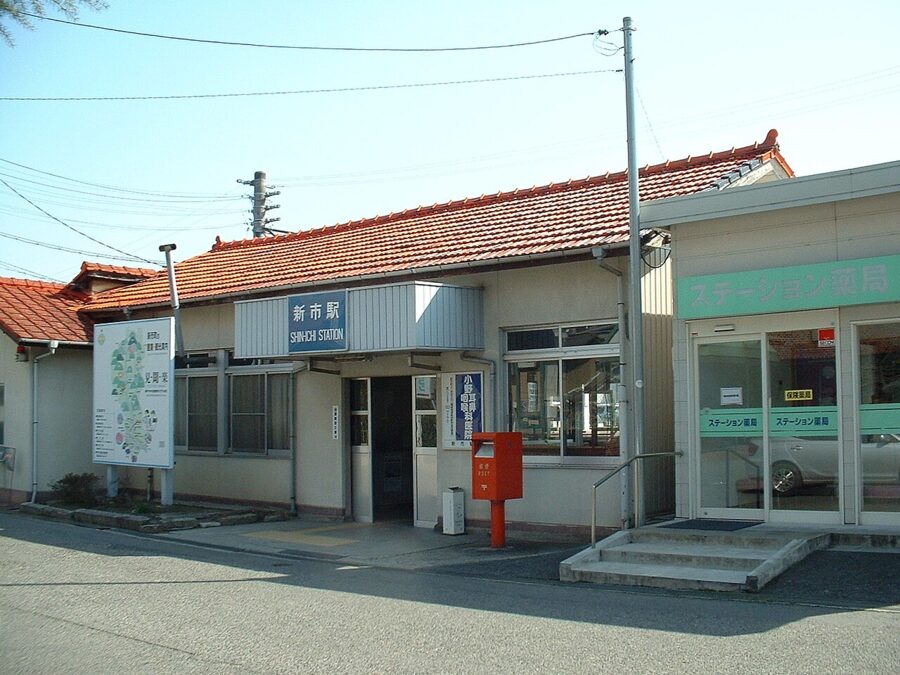

Getting between them
Kojima connects to Okayama by the JR Seto-Ohashi Line. Ibara sits on the Ibara Railway, which you can join at Soja on the Okayama side or at Kannabe on the Fukuyama side, where it meets the JR Fukuen Line. Shinichi is further up the Fukuen Line beyond Kannabe. A car makes it far easier to reach the factory shops, which are spread out between the rice fields.
If you only have a day, do Kojima in the morning and Ibara in the afternoon, or time a Fukuyama trip for one of Kaihara’s open days. In Ibara, buy something from the station store and turn up the hem. The cloth inside was probably woven within a few kilometers of where you are standing.