
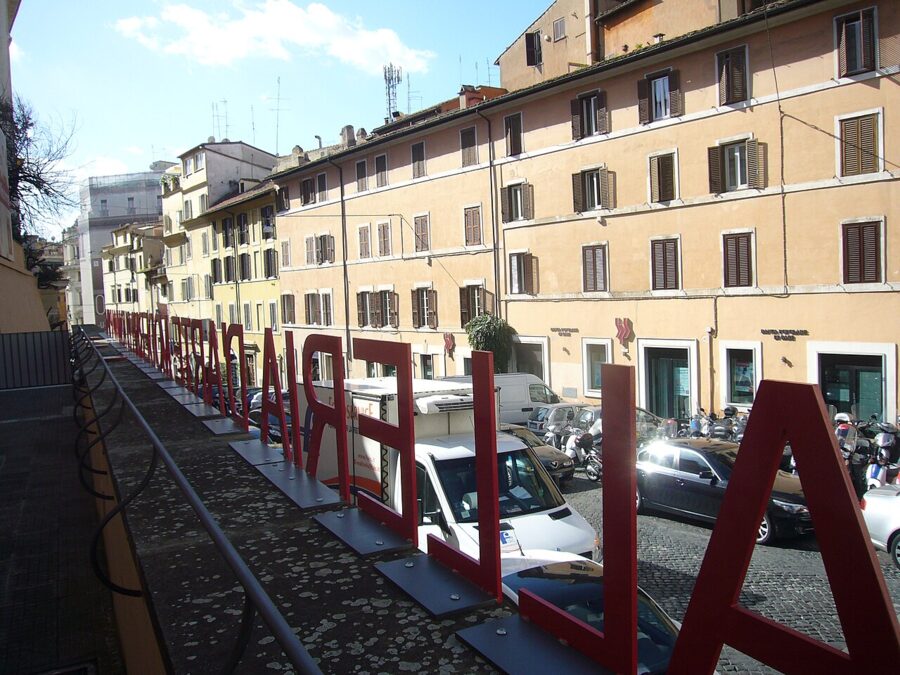
Two dragons, each painted across nine panels and each eighteen meters long, went up in a former bank building on Via Francesco Crispi in November 2010. They were monochrome, one red and one indigo, and they came from a painter better known for smiling rainbow flowers and a mouse-eared character called Mr. DOB. Gagosian billed the show, which opened on 13 November 2010 and ran into January 2011, as Takashi Murakami’s first solo exhibition in Rome, and it opened while his work was still filling the state rooms at Versailles.
That autumn is a good place to start with Murakami, because it shows both halves of him at once. In France he was the Japanese pop artist dropped into a royal palace. In Rome he was a trained Japanese painter answering an eighteenth-century master, brush problem by brush problem, at a scale nobody in that century would have tried.
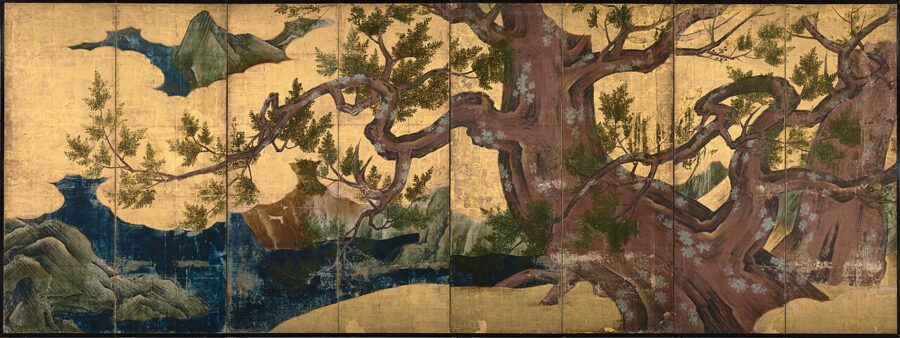
The two Rome paintings were Dragon in Clouds, Red Mutation and Dragon in Clouds, Indigo Blue. Their model was the unryuzu (雲龍図), the cloud-and-dragon picture long painted for Japanese temples, and above all the version by Soga Shohaku, the Edo-period eccentric whose ink runs so wet it nearly turns abstract. Murakami’s statement for the show was short: the work, he said, “resembled a prayer offering.”
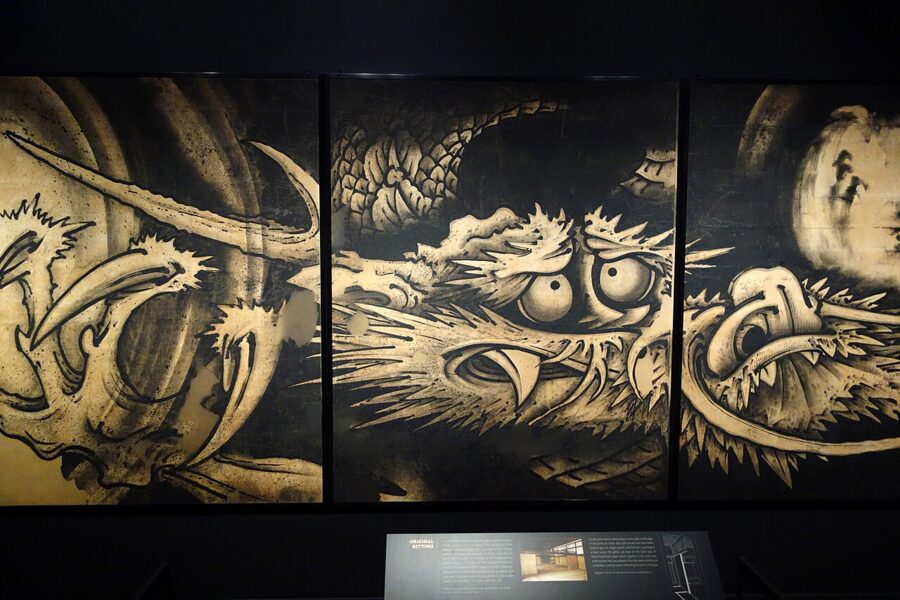
Gagosian’s press release listed more sources than a temple painting. The red dragon also pointed at Thomas Harris’s novel Red Dragon and the William Blake watercolors at its center, and the indigo one borrowed from Blue Dragon, a Japanese video game. That mix of the sacred, the pulp and the game console is the whole method in miniature. To see where it came from, you have to go back to a student who wanted to make anime and ended up with a doctorate in Japanese painting.

In this article
From nihonga student to the Hiropon Factory
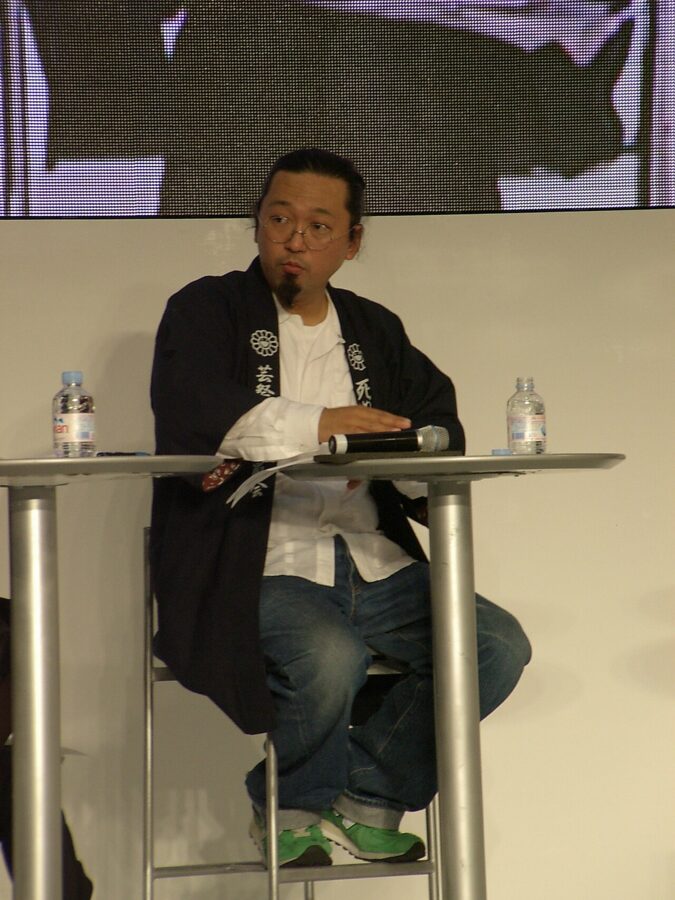
Murakami was born in Tokyo on 1 February 1962 and grew up on anime. He has named Hayao Miyazaki as the director he admires most, and his first plan was to become an animator. He failed the entrance exam for Tokyo University of the Arts twice before getting in, and he got in through the nihonga department, the school of Japanese-style painting with mineral pigments, ink and gold leaf.
He stayed for the full course: a BFA in 1986, an MFA in 1988 and a PhD in 1993, the first doctorate the university’s nihonga department ever awarded. The thesis carried the title he would reuse for years, “The Meaning of the Nonsense of the Meaning.”

Nihonga gave him the tools, but he found its exhibition world closed and political. In 1991 he made his debut as a contemporary artist with a show called TAKASHI, TAMIYA, in which he swapped his own name into the logo of the Tamiya model kit company. The same year he exhibited randoseru, the stiff Japanese school backpacks, made from the leather of animals protected under the Washington Convention. Tamiya was not amused: he had permission to use its mark, not to put his own name in it.
Kaikai Kiki’s own company history describes how he worked then. With no budget and no staff, he looked up suppliers and assemblers in the telephone directory, ordered parts by phone from his apartment and saw some finished pieces for the first time at the opening. His volunteers were students from the cram school where he taught, and on some nights the whole operation was a group of young people building plastic models in his flat.
New York, and a studio built like an anime house
In 1994 an Asian Cultural Council fellowship sent him to the P.S.1 International Studio Program in New York for a year. He came back convinced that ready-made objects would always look second-rate next to American work, and that he needed something only a Japanese painter could make. His answer was painstaking handmade painting, done by a team.
That team became the Hiropon Factory in 1996, and in 2001 it was incorporated as Kaikai Kiki Co., Ltd. The model was the Kano school workshop of the Edo period and the modern anime studio, both of which turned out large, finished pictures through many hands under one name. Kaikai Kiki now says it has around 250 permanent staff, branch offices outside Japan included, plus about 100 exclusive subcontractors.
The name says a lot about his ambitions. Kaikai kiki was an old term of praise applied to the paintings of Kano Eitoku (1543-1590), the leading painter of his day, and The Broad in Los Angeles glosses it as a blend of refinement and eccentricity. Murakami later turned the two words into a pair of characters: Kaikai in white and smiling, Kiki with fangs.
From 2002 he also ran GEISAI, an art fair with a twist: instead of renting booths to vetted galleries, it let young artists take a booth themselves and sell straight to buyers. Kaikai Kiki still lists GEISAI among its projects. It was the first sign that he meant to build an art market in Japan, not just sell into the one abroad.

Superflat, one work at a time
Superflat started as an exhibition before it was a slogan. Murakami put the show together for Parco Gallery in Shibuya in April and May 2000, then took it to the Museum of Contemporary Art, Los Angeles, from January to May 2001, and on to the Walker Art Center in Minneapolis and the Henry Art Gallery in Seattle. The catalog essay made the argument: Japanese pictures, from Edo screens to anime cels, have always worked on a flat plane, with outlines and blocks of color instead of Western perspective.

The second half of the argument was social. In postwar Japan, he wrote, the line between high and low culture had flattened too, so an otaku figurine and a gallery painting could share a room without anyone flinching. Two more exhibitions finished what he called a trilogy: Coloriage at the Fondation Cartier in Paris in 2002, and Little Boy: The Arts of Japan’s Exploding Subculture at Japan Society in New York in 2005. Little Boy, named after the Hiroshima bomb, won the AICA-USA award for best thematic museum show in New York.

Mr. DOB and 727
Mr. DOB is the round, mouse-eared head first drawn in the early 1990s, borrowing from Doraemon and Sonic the Hedgehog. Over thirty years he has gone from cute to teeth-baring to a melting monster, and Gagosian calls him a stand-in for the artist himself. 727 (1996), a large DOB painting now in the Museum of Modern Art in New York, was the early proof that a cartoon head could carry a museum-scale picture.
Tan Tan Bo is DOB in his ugly phase. In Tan Tan Bo a.k.a. Gerotan (2018), owned by The Broad, the character floats in the sky vomiting, and the museum notes that Murakami painted it partly as a picture of his own pain from gout. I find the later DOB works the most rewarding of all his paintings: the surface is still flawless, but the character has started to look sick of being a logo.
Hiropon, My Lonesome Cowboy and the auction records
The life-size figures are where Superflat got its notoriety. Miss ko2 (1996) is a blonde anime waitress; Hiropon (1997) skips rope with a stream of her own breast milk; My Lonesome Cowboy (1998) is her male counterpart, lassoing with something worse. Murakami has said he made the cowboy simply because Hiropon was female and he wanted a pair.
Their prices made the news. Miss ko2 sold at Christie’s in 2003 for $567,500, then the highest price paid for a Japanese contemporary work. In May 2008 My Lonesome Cowboy sold at Sotheby’s New York for just over $15 million, still his auction record. As for what he is worth, there is no audited figure; the numbers that circulate are estimates.
He pushed the same idea in the other direction. In December 2003, working with the figure maker Kaiyodo, he sold numbered miniatures of his sculptures as candy-box prizes in convenience stores for 350 yen each, about $3 at the time. His point, as he put it then, was the comedy of a work valued in the tens of millions of yen being copied endlessly and handed out with sweets.

The flowers
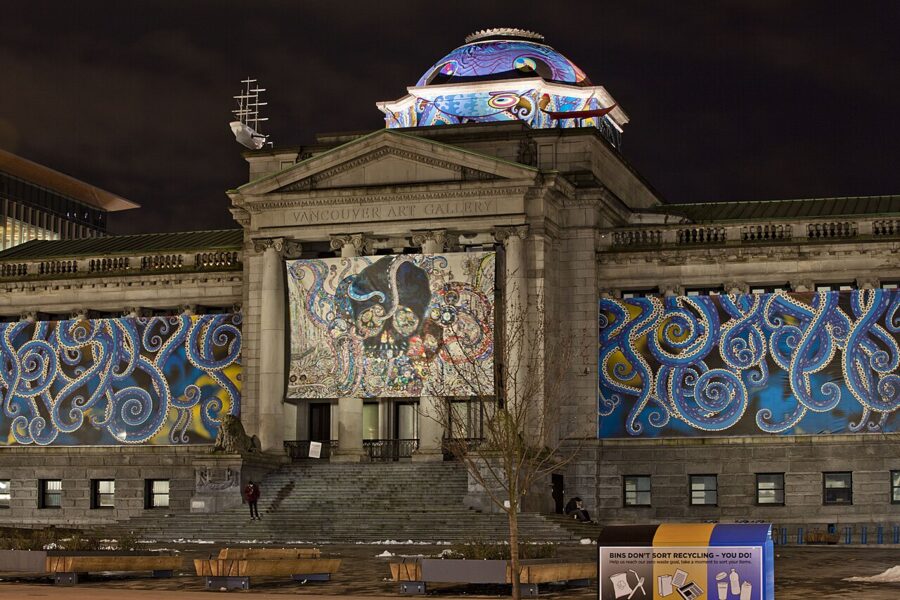
The smiling flower, a round face ringed with bright petals, is the image most people know without knowing the name behind it. It turns up in paintings, on Louis Vuitton bags, on album covers, on cushions and on cookies. In the large paintings the flowers are packed edge to edge until there is no background at all, which is the Superflat idea at its most literal: nothing recedes, everything sits on the surface and looks back at you.
The big shows, venue by venue
Murakami’s career is unusually easy to track through exhibitions, because the major ones were built as events.
©Murakami, 2007 to 2009
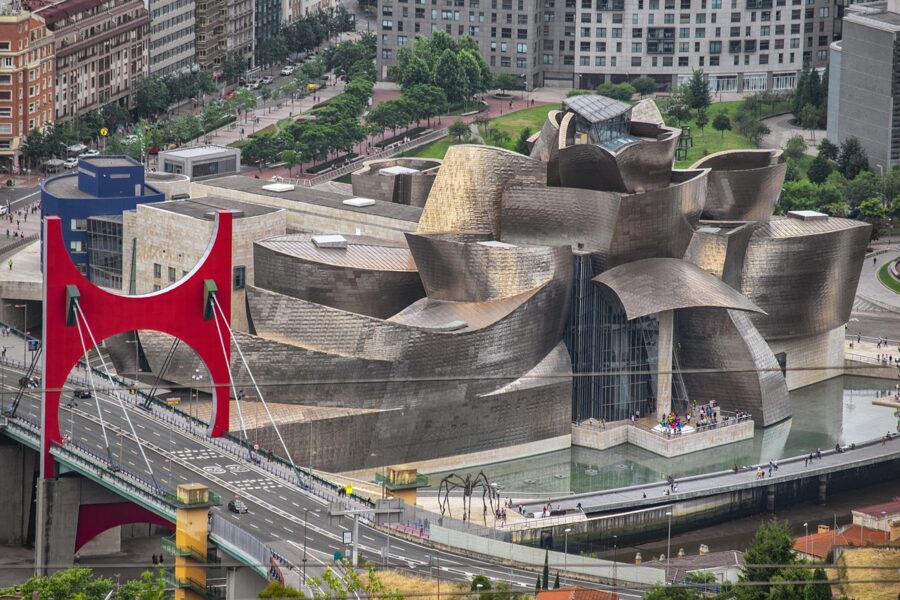
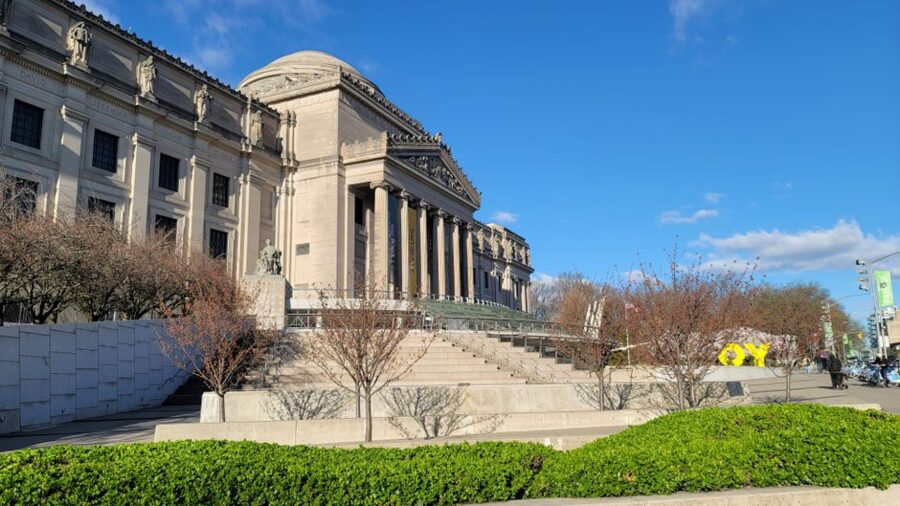
His first retrospective, ©Murakami, opened at the Museum of Contemporary Art, Los Angeles, on 29 October 2007 and ran to 11 February 2008. It traveled to the Brooklyn Museum (5 April to 13 July 2008), the Museum für Moderne Kunst in Frankfurt (27 September 2008 to 4 January 2009) and the Guggenheim Museum Bilbao (17 February to 31 May 2009). Its most argued-over exhibit was a working Louis Vuitton boutique inside the galleries, selling bags made with his designs.
In 2008 TIME named him to its list of the 100 most influential people, the only visual artist on it.

Versailles, autumn 2010
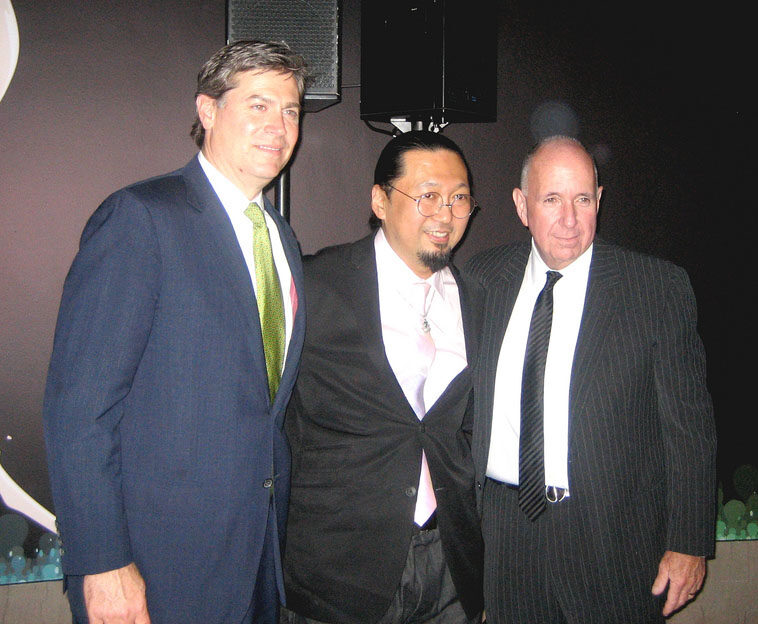
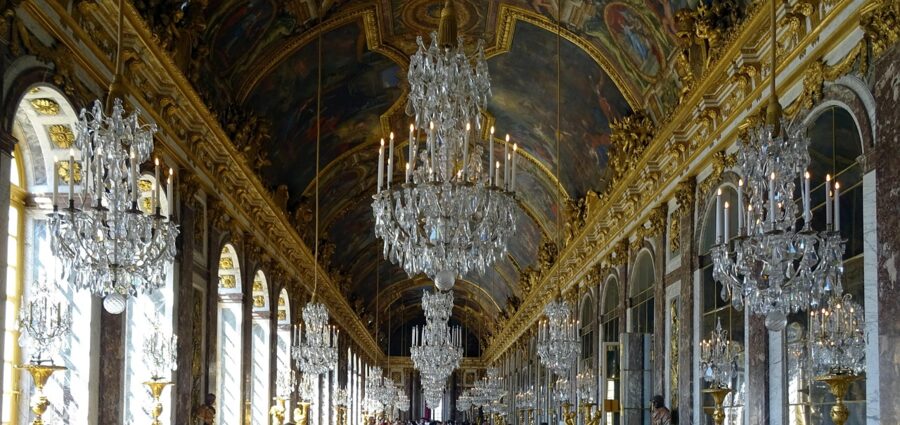
Murakami Versailles opened on 14 September 2010 and closed on 12 December. He was the third contemporary artist the palace had invited, after Jeff Koons in 2008 and Xavier Veilhan in 2009, and the first Japanese one. His sculptures, paintings, a carpet and lamps went into the state apartments, the Hall of Mirrors among them, and out into the gardens.
The reaction in France was loud. Protest groups petitioned against it before it opened, and in October one descendant of Louis XIV, Prince Sixte-Henri de Bourbon-Parme, announced legal action, calling the work pornography in a World Heritage site. The show ran its full term regardless, and Murakami also used it to premiere the first animation of 6HP (Six Heart Princesses).

Rome, November 2010
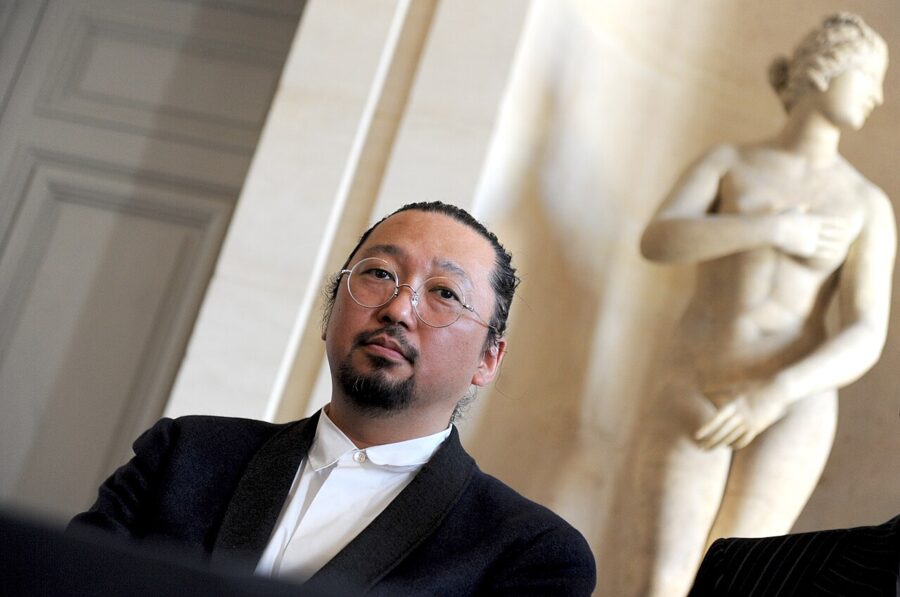
While Versailles was still open, the two dragons went up at Gagosian in Rome, Via Francesco Crispi 16, open Tuesday to Saturday. The gallery’s press release describes each painting as nine panels and eighteen meters, acrylic in a single color, and ties them to the unryuzu tradition and to Shohaku. The release, written before the opening, gives 13 November to 15 January; the gallery now gives 22 January, so the run was probably extended by a week.
The Rome dragons came out of his longest conversation with a scholar. From 2009 to 2011 Nobuo Tsuji, the art historian best known for his work on the Edo eccentrics, set Murakami historical works to answer in a 21-round painting contest. Round 6 was Shohaku’s Dragon and Clouds of 1763, and the full title of the red dragon, as shown in Boston in 2017, records the result: the version he painted himself “in annoyance” after Tsuji told him to paint something for once.
For a reader standing in front of one of these, the thing to look at is the scales. Shohaku’s ink pools and bleeds; Murakami reproduces the blur with crisp, flat acrylic gradients. It is a copy of an accident made with no accidents at all, which is about as concise a description of his method as I can offer.
The 500 Arhats: Doha 2012, Tokyo 2015
After the earthquake and tsunami of March 2011, Murakami painted The 500 Arhats, a picture 3 meters high and 100 meters long. The Mori Art Museum says he made it as thanks to Qatar, one of the first countries to offer aid, and it was unveiled at the Murakami: Ego exhibition in Doha in February 2012. More than 200 people painted it, many of them students recruited from art universities across Japan.
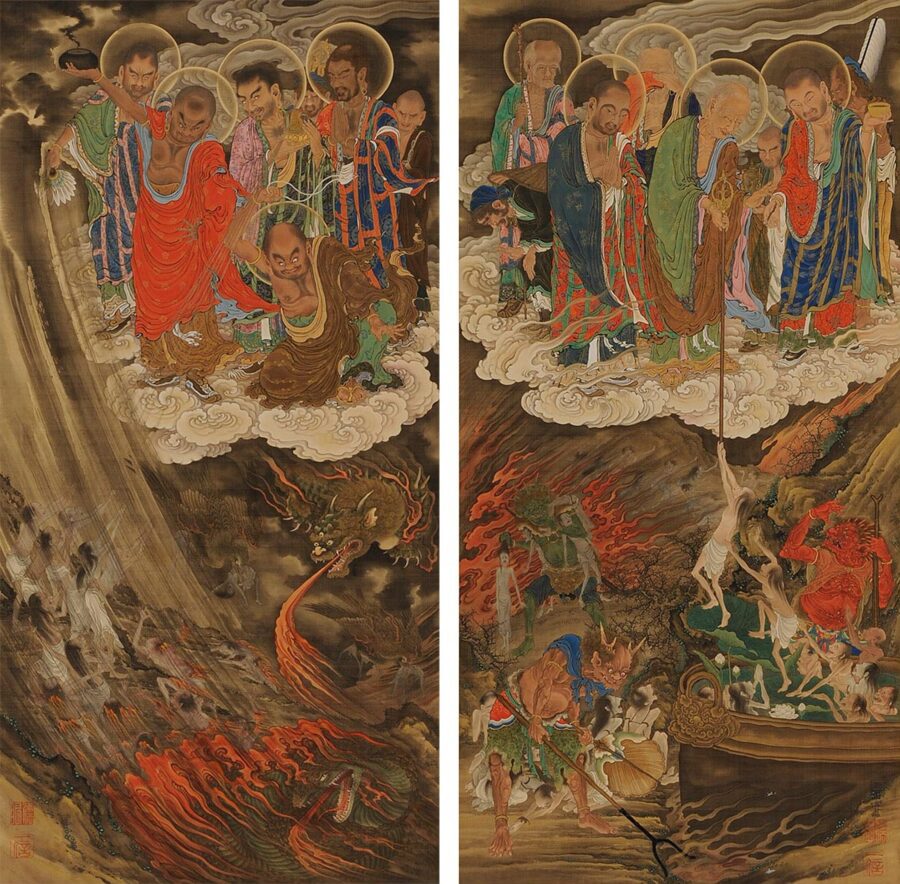
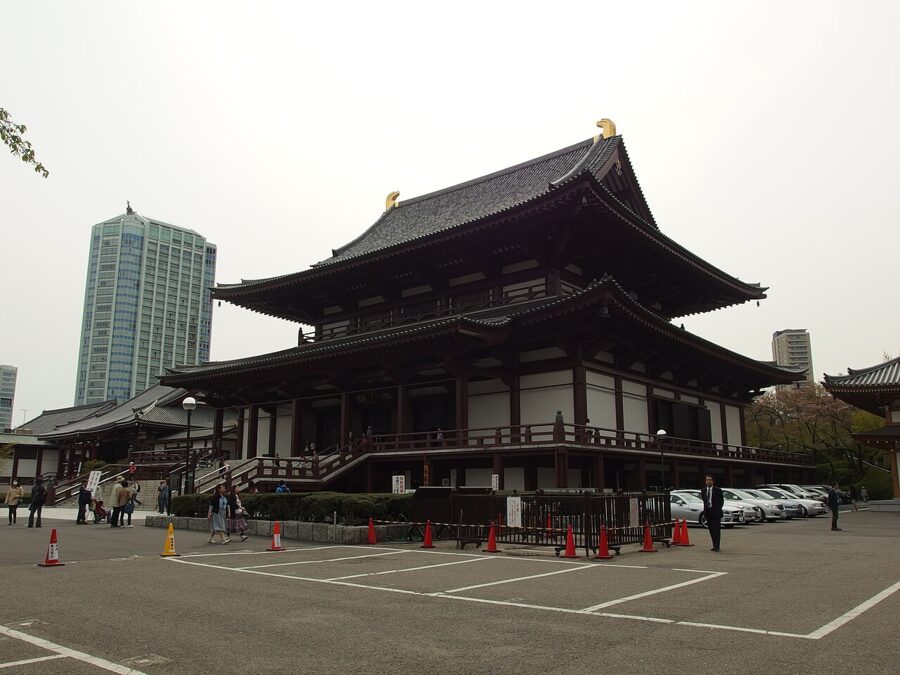
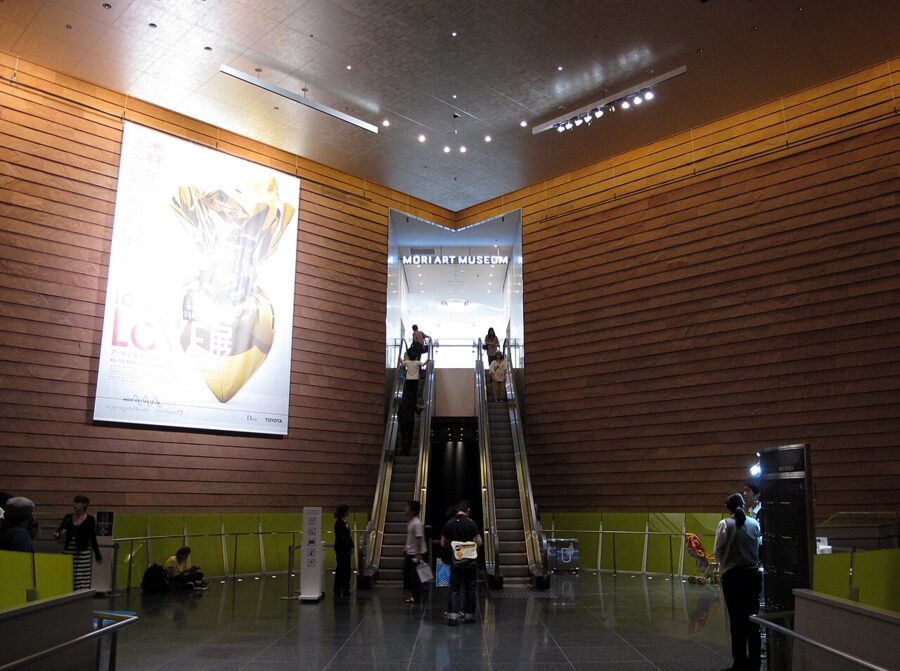
Its source was Kano Kazunobu’s set of one hundred hanging scrolls of the 500 arhats, painted between 1854 and 1863 and owned by Zojoji temple in Tokyo, a set Nobuo Tsuji had put in front of him. Japan finally saw the finished painting at the Mori Art Museum from 31 October 2015 to 6 March 2016, his first large solo show at home since 2001, and the exhibition won him the Minister of Education Award for Fine Arts.


Kyoto 2024, then Hiroshige
Abroad, the museum shows kept coming. At home, the big one was Takashi Murakami Mononoke Kyoto at the Kyoto City Kyocera Museum of Art, from 3 February to 1 September 2024 after an extension. The museum counted about 170 works, most of them new or never shown in Japan, in his first large domestic solo show in about eight years and his first ever in Kyoto.
Kyoto came to see it. The museum passed 100,000 visitors on 15 March, 200,000 on 7 May and 300,000 on 2 July. In March a gold sculpture more than 13 meters tall, Flower Parent and Child, made in collaboration with Louis Vuitton, was installed in the museum’s Japanese garden for the rest of the run.

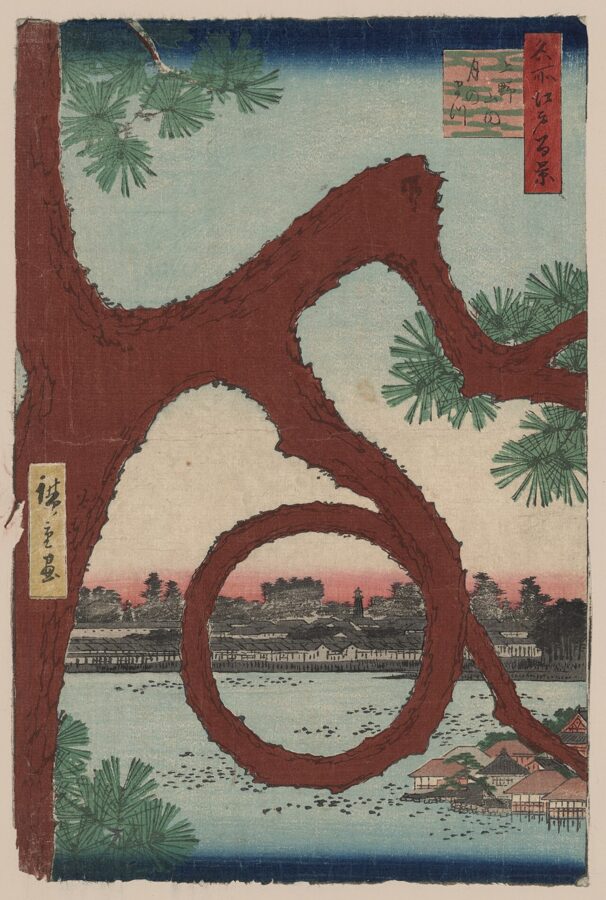
The latest turn is ukiyo-e. In 2024 the Brooklyn Museum invited him to respond to Utagawa Hiroshige’s One Hundred Famous Views of Edo, and he chose to copy the prints outright in his own style, the way Japanese students learn by copying a teacher. That series went to Gagosian in New York in 2025 as JAPONISME → Cognitive Revolution: Learning from Hiroshige, then to Kaikai Kiki Gallery in Tokyo over the winter, and a related show, Hark Back to Ukiyo-e, opened at Perrotin in Los Angeles in 2026.
Louis Vuitton, Kanye West and the flower merchandise
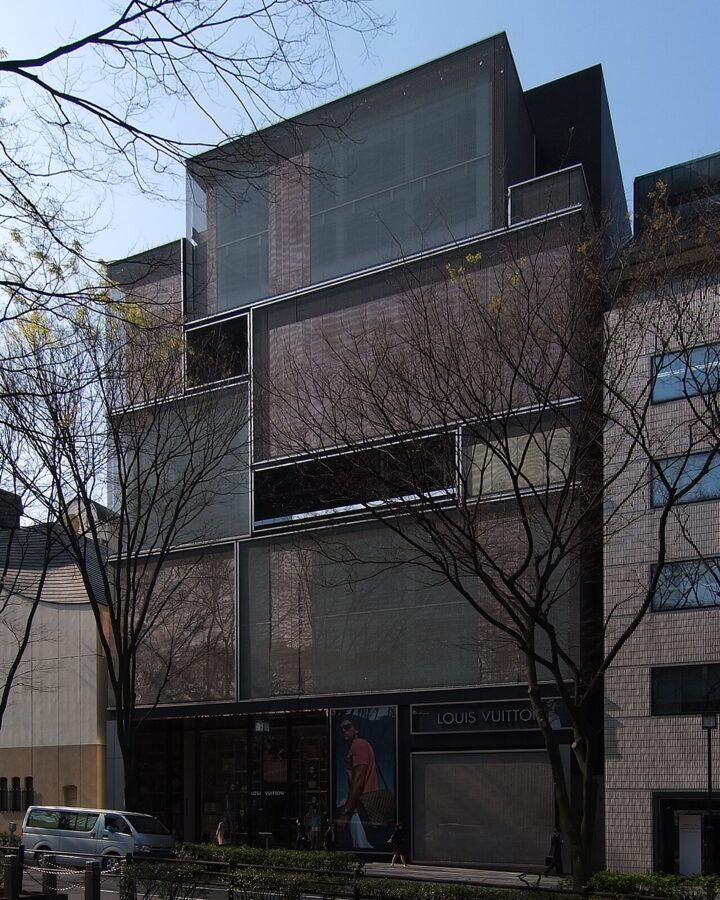
The commercial work is where many people first met Murakami, so here it is in brief. In 2002 Marc Jacobs invited him to rework the Louis Vuitton monogram, and the result, the LV monogram redrawn in many colors, went on sale in 2003. The bags sold for years; Louis Vuitton retired the Multicolore line in July 2015, then brought the collaboration back as a re-edition of about 200 pieces from 1 January 2025, with Zendaya fronting the campaign.

Music came next. He painted the bear on the cover of Kanye West’s Graduation (2007) and directed the animated video for “Good Morning,” then did the cover of Kids See Ghosts, West’s 2018 album with Kid Cudi. Later came an anime video for Billie Eilish (2019), album art for J Balvin (2020) and Juice WRLD (2024), and merchandise with NewJeans and Blackpink.
Fashion and streetwear never stopped either. In 2014 his Jellyfish Eyes characters went on a Billionaire Boys Club T-shirt, the label Pharrell Williams co-founded with Nigo of A Bathing Ape, and in 2020 Supreme gave the proceeds of a Murakami box-logo tee to a homelessness charity. My view: the collaborations are worth knowing about, but the paintings are the reason to care. If you buy one Murakami object, buy a print, not a cushion.
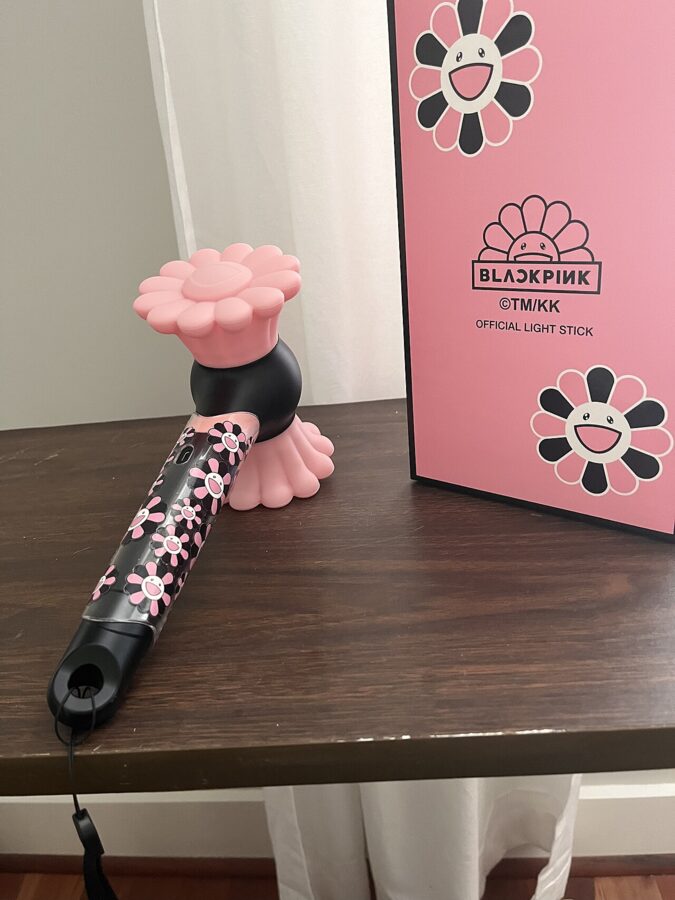

Kaikai Kiki also runs its own businesses, and these are the ones you can walk into. The company runs a souvenir shop, a coffee shop and a confectioner in Tokyo, a trading-card shop, and Kijakutei, a Chinese restaurant produced by Murakami in Asaka, Saitama, near where the company began. Kaikai Kiki says a 6HP television series and a second Jellyfish Eyes feature are due in 2027.
Where to see Murakami in Japan now
As of November 2026, the short version: there is no permanent public Murakami installation I can point you to in Japan, a museum group show is running in Sendai, and the most reliable place to stand among his work is Nakano.
Roppongi Hills
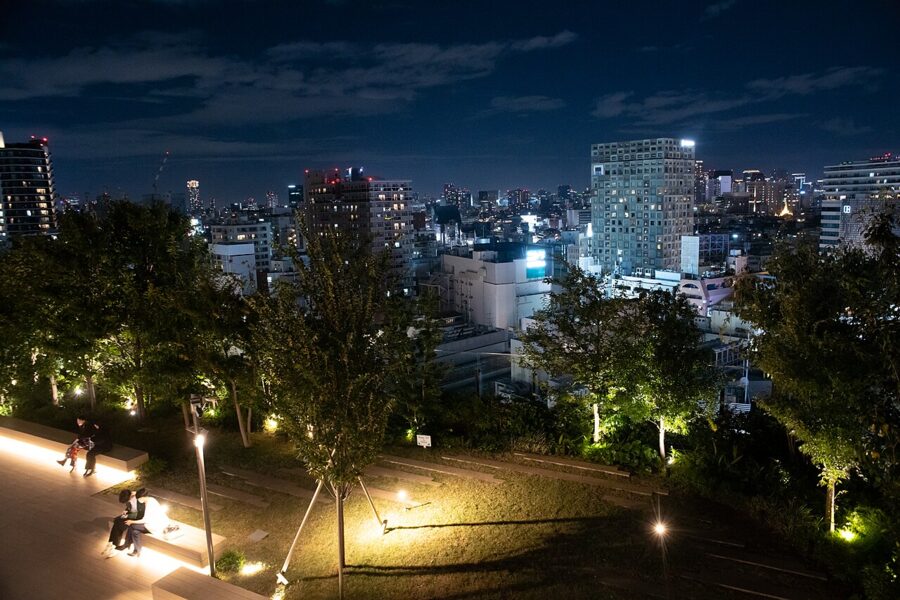
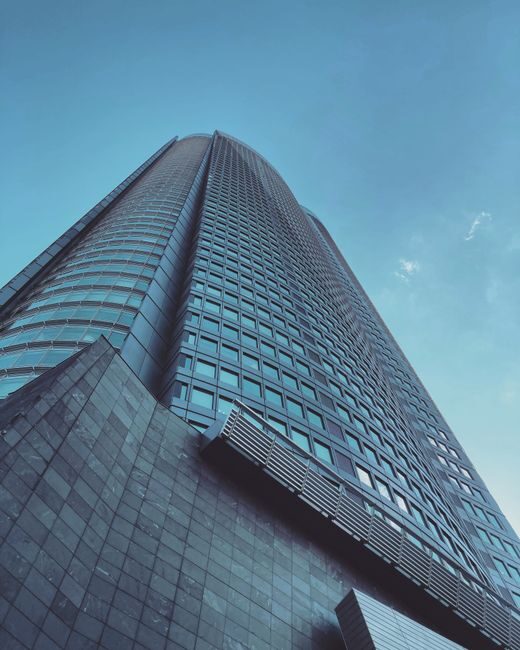
Murakami’s tie to Roppongi Hills goes back to the early 2000s: he designed its Roku Roku Seijin characters and floor-guide art. The 10-meter gold Flower Parent and Child stood at 66 Plaza from 26 November 2020, and its run was extended to 26 September 2021. Nothing there is listed as permanent, so go for the Mori Art Museum, which holds his work in its collection and shows it in rotation.
Museum collections
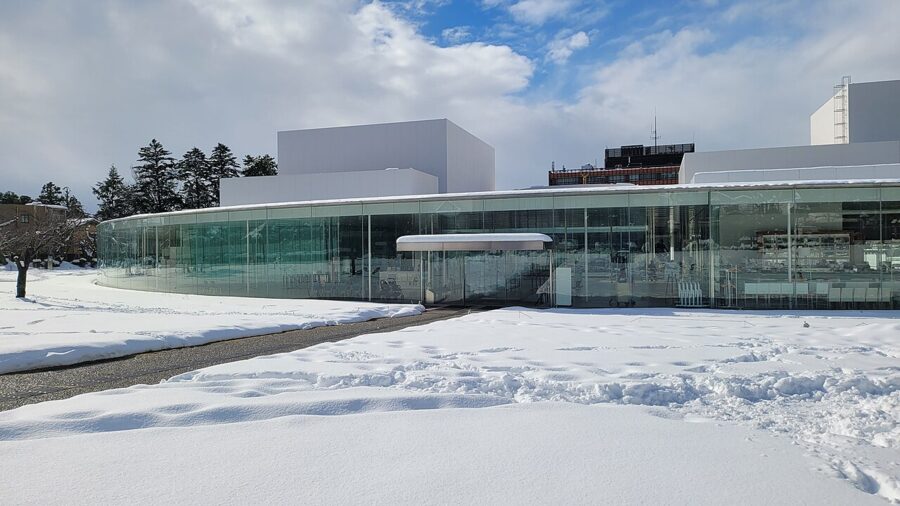
Gagosian lists two Japanese museums with his work in their collections: the Mori Art Museum and the 21st Century Museum of Contemporary Art, Kanazawa. Neither keeps Murakami permanently on view, so check the collection display before a trip.
The current exhibition: Miyagi Museum of Art, Sendai
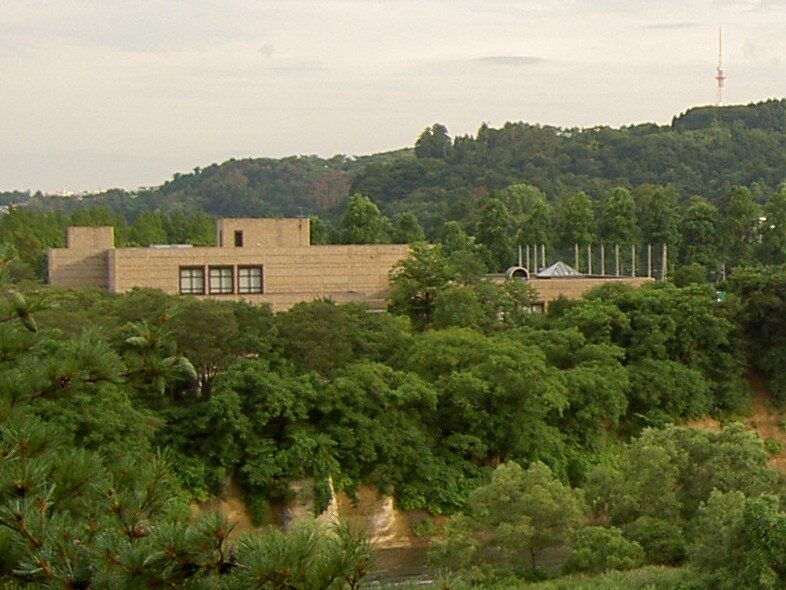
The Miyagi Museum of Art is showing Ima, watashi wa gendai ato to deau (Now I Meet Contemporary Art) from 14 November 2026 to 24 January 2027. It is about 70 works from one private collector, with Murakami listed beside Yayoi Kusama, Yoshitomo Nara, Andy Warhol and Banksy. The museum does not say which Murakami works are included.
- Hours: 9:30 to 17:00, last tickets 16:30 (as of November 2026)
- Closed: Mondays (open 23 November and 11 January), plus 24 November, 26 December to 6 January and 12 January
- Admission: ¥1,500 (about $9) for adults, ¥1,300 for university students, ¥750 for school students (as of November 2026)
- Address: 34-1 Kawauchi Motohasekura, Aoba-ku, Sendai
Kaikai Kiki Gallery, Motoazabu
Kaikai Kiki’s main gallery is in a basement at 2-3-30 Motoazabu, Minato-ku, in the Motoazabu Crest Building. It opens 11:00 to 19:00 only while an exhibition is on, closed Sunday, Monday and public holidays (as of November 2026). Its program is mostly other artists, and Utanhole’s Zipgunslingers runs until 28 November 2026.
A second space, Kaikai Kiki Gallery M Cubed, is on the second floor of Shinchosha SOKO and posts its program on Instagram.
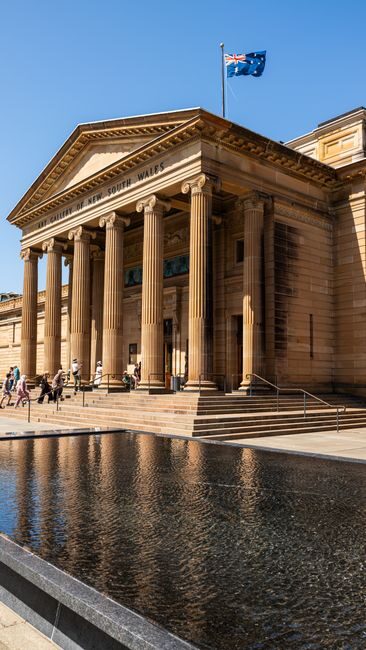
Outside Japan, the next major museum show is the Art Gallery of New South Wales retrospective in Sydney, 5 December 2026 to 18 July 2027, with more than 150 works and new pieces shown in the Tank.
Nakano Broadway: where to end up
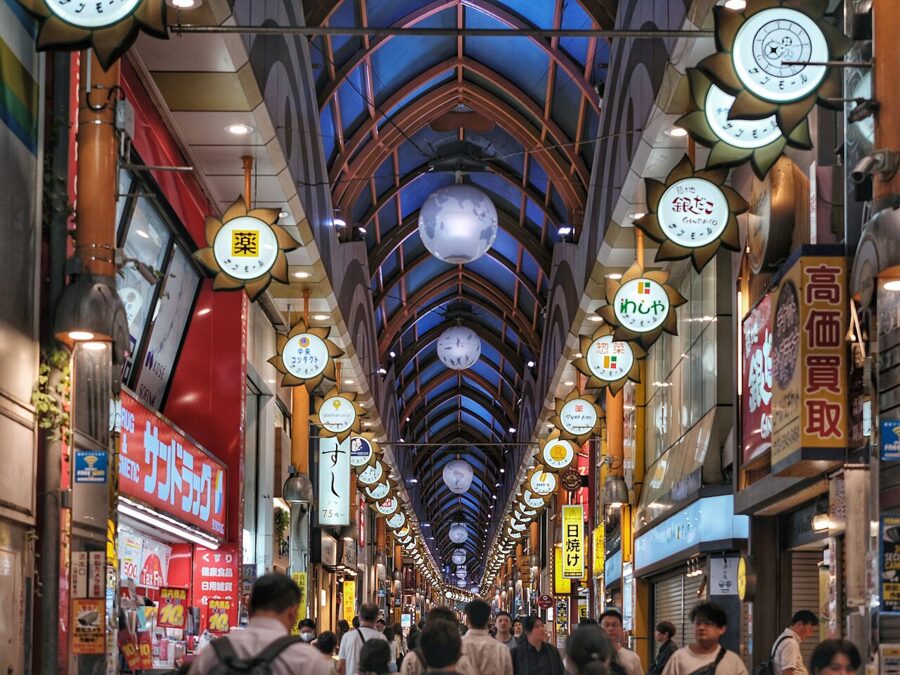
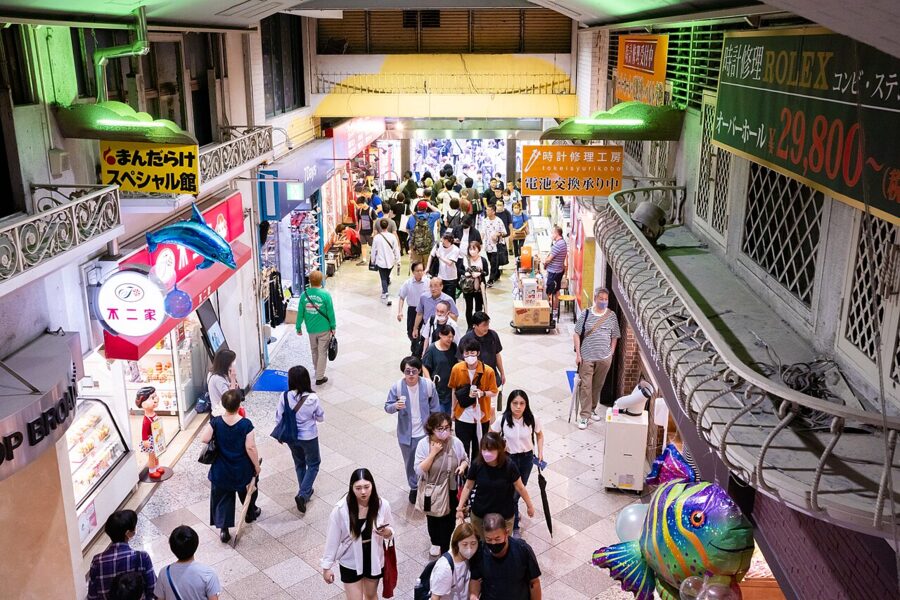
Nakano Broadway is an apartment-and-shopping complex a few minutes north of Nakano Station, packed with secondhand manga, figures, watches and vintage toys. Kaikai Kiki has several of its businesses on three floors of it, and on a single afternoon you can see a print show, buy a poster and eat a cookie shaped like the flower.
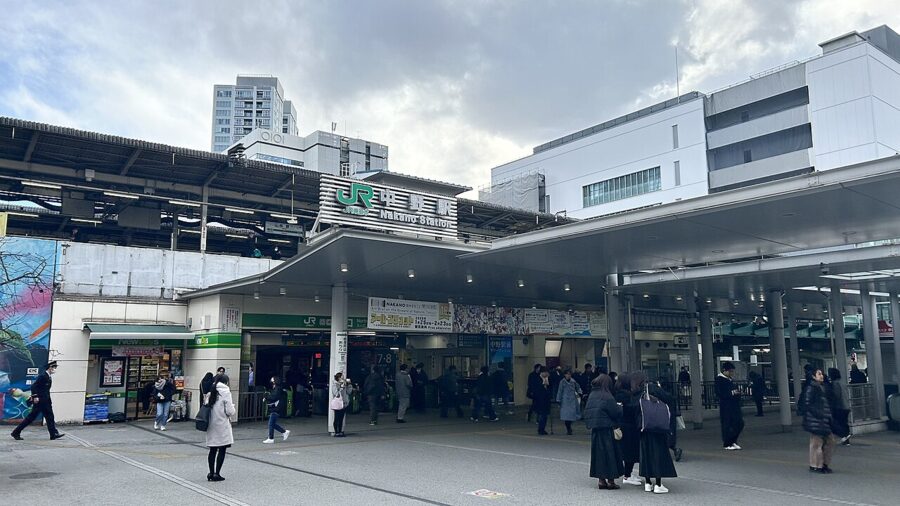
All three addresses are 5-52-15 Nakano, Nakano-ku. Hours are from Kaikai Kiki’s site as of November 2026; it warns that each shop can close at short notice and posts changes on Instagram.

| Floor | Place | What it is | Hours |
|---|---|---|---|
| 2F | Coffee Zingaro | Showa-style coffee shop with playable arcade-table games, neon and a little arched bridge; sells Tonari no Kaikado flower cookies | 12:00 to 19:00 Mon, Wed to Fri; 12:00 to 20:00 Sat and Sun; closed Tuesday |
| 3F | Hidari Zingaro | Gallery, often Murakami print and edition shows | Open only during exhibitions |
| 4F | Tonari no Zingaro | Kaikai Kiki’s authorized shop: merchandise, apparel, prints and posters by Murakami and its artists | 12:00 to 18:00; irregular closing days |

The name Hidari Zingaro comes from Hidari Jingoro, a legendary early Edo sculptor; Kaikai Kiki says “left” stood for the anti-establishment. Its edition shows, often seasonal print releases, are a direct way to buy a Murakami print in Japan. Check the gallery’s Instagram before going, because between shows the space is closed.
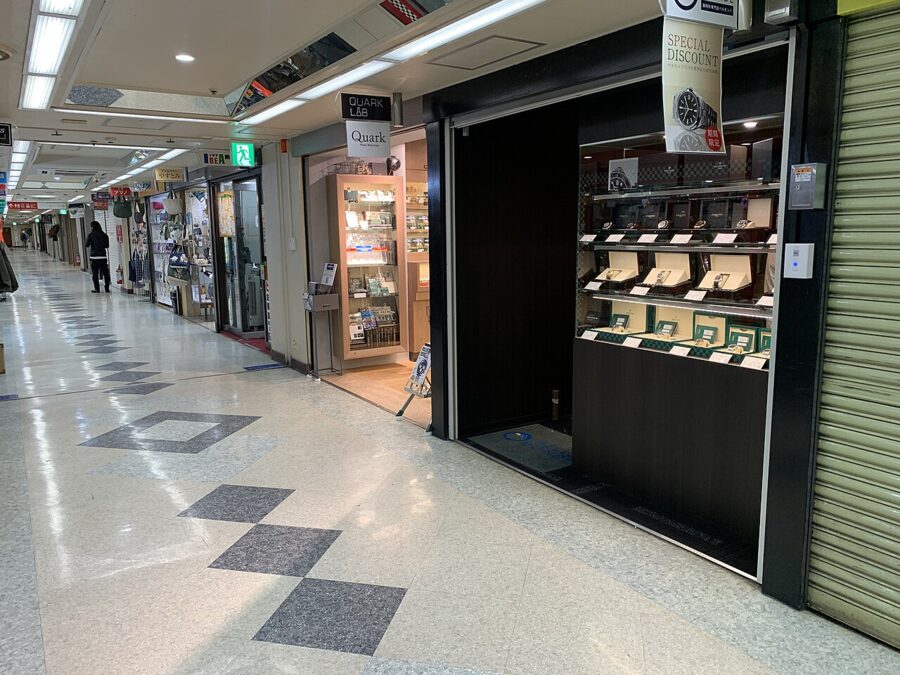

The dragons from Rome are not in Nakano, and neither is anything eighteen meters long. What is there is the other half of the 2010 story: the flower on a cookie tin, a print you can carry home rolled, and a coffee shop that treats an old arcade game with the care he gave Shohaku. Go after noon on any day but Tuesday, start on the third floor, and leave room in the bag for a poster tube.